






For many homeowners and renters alike, the weekly cleaning routine is often met with a heavy sigh of reluctance. Traditional upright vacuums, while historically praised for their raw power and deep-cleaning capabilities, have long carried a reputation for being cumbersome, heavy, and frustratingly tethered to the nearest wall outlet. The constant struggle with a tangled electrical cord that never seems quite long enough to span an entire room, combined with the sheer physical effort required to push a bulky machine across carpets and hard floors, has turned household chores into a dreaded weekly obligation. However, recent developments in cordless vacuum technology are beginning to shift that narrative, offering consumers a lighter, more agile alternative that promises to make cleaning less of a chore and more of a seamless daily habit.
Among the latest contenders entering the market to challenge the dominance of the traditional upright vacuum is a new cordless offering from Bissell. Testing and real-world usage of the device reveal that its standout characteristic is its remarkably lightweight frame and cordless architecture, which completely eliminates the physical friction typically associated with tidying up living spaces. Where standard upright vacuums demand muscle and maneuvering around fixed wall connections, this model allows users to navigate through a home with absolute ease. The freedom from a power cord means transitions from the living room to the playroom and onward into the kitchen happen with zero interruptions, allowing for continuous cleaning without the nagging concern of cord length or outlet proximity.
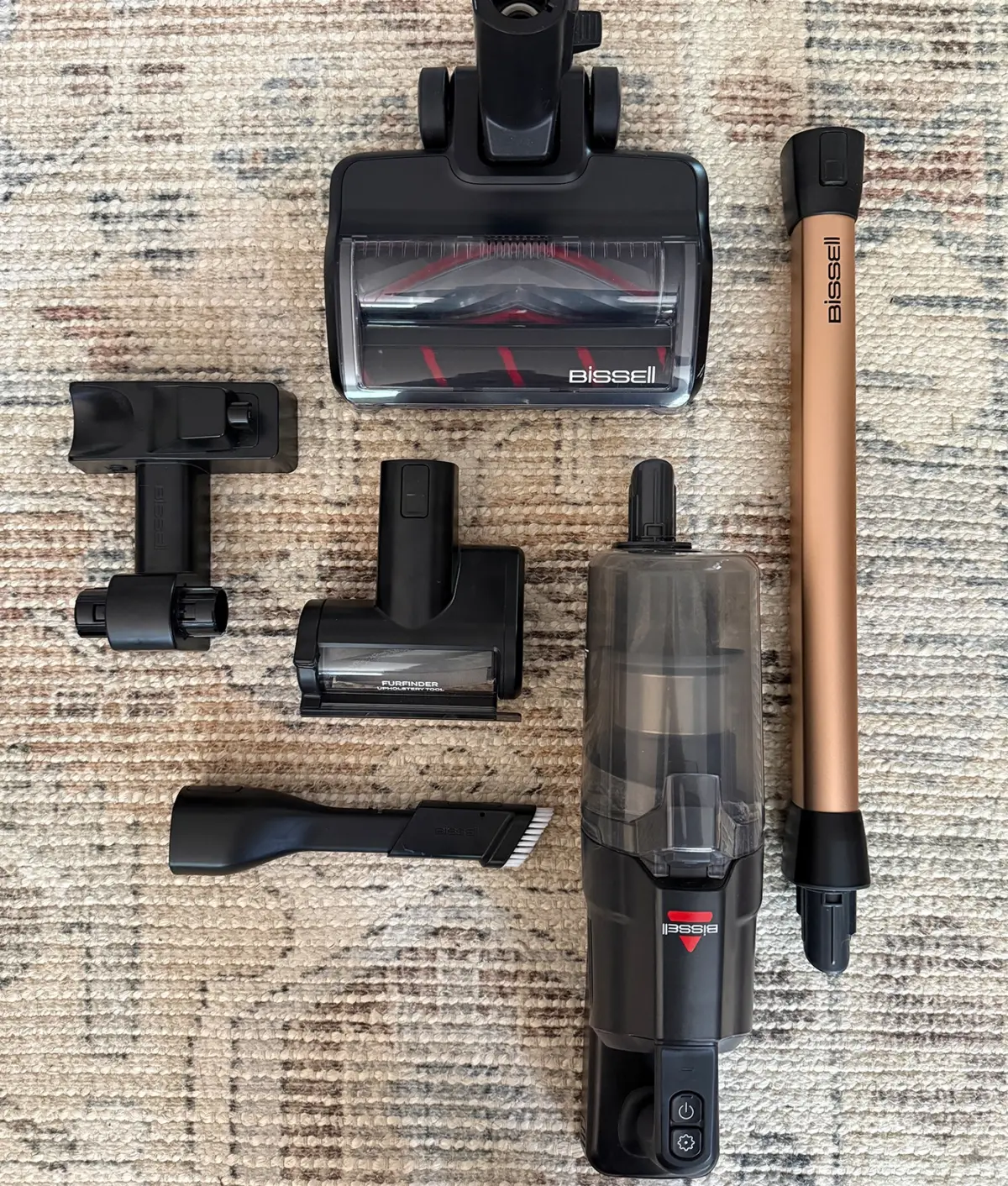
Beyond its physical agility, the vacuum addresses the diverse debris challenges found in modern households through targeted engineering. The inclusion of DualBrush technology allows the machine to function effectively across multiple surface types, seamlessly sweeping up stray items like abandoned cereal pieces and scattered pet food while simultaneously capturing the persistent dog hair and dust bunnies that tend to accumulate quietly in low-traffic corners and hallways. Furthermore, navigating through dim spaces and under furniture is aided by integrated LED headlights positioned on both the main cleaning head and the accompanying upholstery tool. According to user observations, these illumination features expose significantly more hidden dust, dirt, and debris than what is typically visible under standard ambient room lighting, effectively turning routine maintenance into a more thorough deep-cleaning process.
Accessory attachments, such as the dedicated crevice and upholstery tools, extend the vacuum’s versatility to soft furnishings, though deeply embedded pet hair may occasionally require multiple passes across couch fibers to achieve complete removal. Power management remains a central consideration for any battery-operated appliance, and the Bissell model approaches this challenge with a tiered power system designed to balance performance and runtime. When operating the hand vacuum in eco mode, manufacturers report a maximum runtime of up to 50 minutes. Practical testing, however, highlights a stark contrast between efficiency modes, noting that utilizing turbo mode significantly drains the battery, causing the device to power down after approximately 15 minutes of continuous high-intensity use.
To mitigate the rapid battery depletion associated with constant high-power operation, the manufacturer has integrated AutoAdapt technology. When left in its default automatic setting, the vacuum intelligently conserves energy by operating at a lower suction level during standard floor maintenance. Upon encountering a heavier concentration of debris or high-density messes, the system automatically detects the change and adjusts its suction power upward to handle the increased load. In practical residential applications relying on this adaptive technology, users have reported an average runtime of roughly 38 minutes—a duration found to be sufficient for completing a thorough cleaning of the first two floors of an average home on a single charge.
The Fun Factor
The psychological shift from viewing house cleaning as an onerous chore to finding a sense of satisfaction in the task often hinges on a single factor: efficiency and ease of execution. For many consumers, the appeal of modern cleaning technology lies in how effortlessly a machine can complete a job without introducing unnecessary physical strain or logistical hurdles. By combining functional design elements—such as illumination systems that reveal hidden debris and a featherlight, cordless framework that permits one-handed operation—manufacturers are transforming how individuals interact with everyday household maintenance. As lightweight stick vacuums continue to evolve and incorporate smarter power management systems, they are steadily proving that deep cleaning no longer requires heavy equipment, cumbersome cords, or an exhausting physical investment from the user.