


Bernhard Schobinger and Dorothea Prühl arrived at the vanguard of contemporary art jewelry from opposite sides of a divided Europe. Schobinger came of age within Switzerland’s postwar avant-garde, while Prühl developed her foundational practice in East Germany, working initially as a designer before becoming an influential educator at the art school in Halle, where she herself had trained.
In 1962, the year Prühl graduated, a 16-year-old Schobinger was just embarking on his art education in Zurich. Though both artists ultimately placed jewelry at the absolute center of their creative lives, they arrived at radically different philosophies regarding material, value, form, and wearability. Schobinger’s interventions have included prying metal directly out of city streets to incorporate into a necklace and setting a genuine meteorite into a ring. Prühl, conversely, carves refined, organic forms from the wood of fallen trees. Each artist, operating through a distinct lens, continuously interrogates where true preciousness in jewelry actually resides.
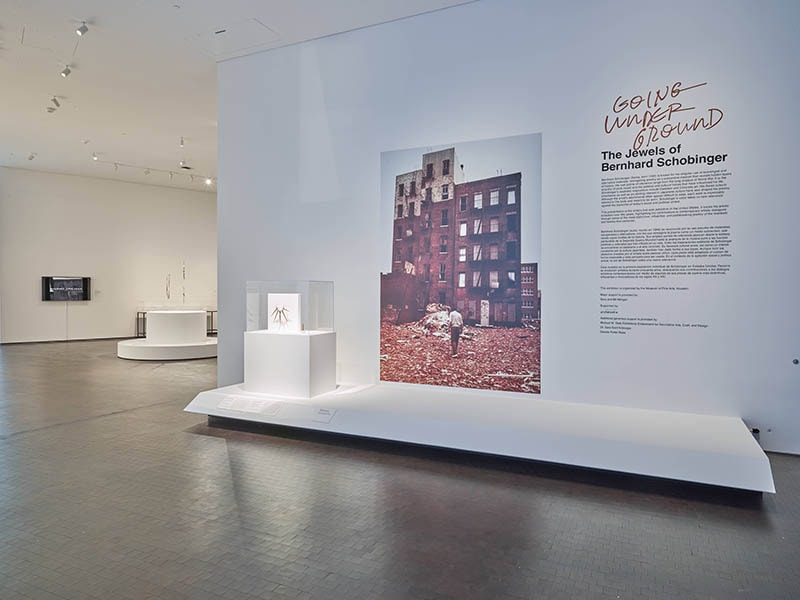
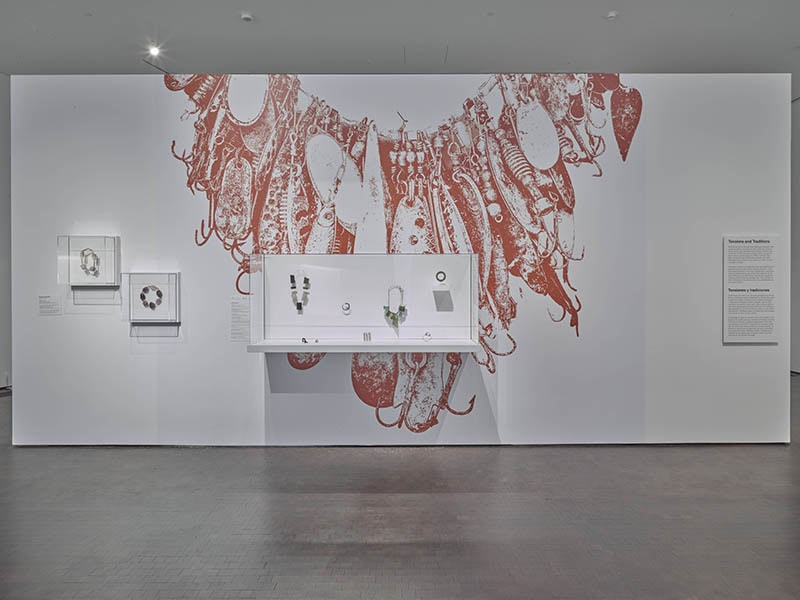
Currently, the Museum of Fine Arts, Houston (MFAH), is presenting concurrent, landmark retrospectives for both creators: Going Underground: The Jewels of Bernhard Schobinger and The Jewelry of Dorothea Prühl, both on view through January 3, 2027. These exhibitions mark the first solo US presentations for either artist.
To explore the cultural worlds that shaped these makers, how the twin exhibitions came to fruition, and the ways both artists have dramatically expanded the expressive boundaries of jewelry, an in-depth conversation was conducted with the co-curators of the exhibitions: Cindi Strauss, the MFAH’s Sara and Bill Morgan Curator of Decorative Arts, Craft, and Design, and Elizabeth Essner, the museum’s Windgate Foundation Associate Curator of Craft.
How the Concurrent Exhibitions Came to Be
The genesis of these exhibitions stretches back a few years, rooted in a major institutional acquisition. When Cindi Strauss learned that the renowned Rotasa Collection Trust—comprising Susan Cummins’s premier collection of contemporary art jewelry—was being gifted to the MFAH, she immediately began mapping out potential showcase exhibitions to celebrate the major addition.
In discussions with Susan Cummins, Strauss proposed mounting two concurrent solo exhibitions to kick off the institutional celebration of the gift. Strauss had long wanted to organize a comprehensive Bernhard Schobinger exhibition. With the museum poised to house more than 30 pieces of his jewelry across both the Rotasa and Helen Williams Drutt collections, a Schobinger retrospective was a natural fit. Simultaneously, because the Rotasa Collection also holds the largest institutional holding of Dorothea Prühl’s jewelry in the United States, featuring her work became an obvious choice as well.
Although mounting both shows concurrently initially arose as a matter of scheduling logistics within the museum’s calendar, Strauss and Essner quickly realized the profound intellectual potential of the pairing. Once the scheduling overlap was confirmed, both curators grew energized by the rich, dynamic dialogue that would naturally emerge between the two bodies of work.
While their visual aesthetics diverge sharply, their practices share striking commonalities: a singular, uncompromising dedication to their craft, and the profound importance of place and personal history in shaping their designs. Furthermore, both artists came of age during tumultuous, formative eras in European history. Although their lived experiences were vastly different, the socio-political climates of their respective environments imprinted themselves indelibly upon their creative outlooks.
Shaping Forces: Divided Climates and Artistic Evolution
Examining the backgrounds of the two artists reveals how geography, politics, and culture dictated their paths. Elizabeth Essner notes that Prühl was born nearly a decade before Schobinger. While their lives were not geographically distant, the cultural and political climates in which they matured were worlds apart.
Prühl was born in 1937 in Breslau, Germany—now Wrocław, Poland—meaning World War II and the subsequent reality of life within the German Democratic Republic (GDR) profoundly shaped her existence, casting a long shadow even after German reunification in 1990. Essner points out that it is impossible to completely untangle Prühl’s artistic trajectory from her daily experiences behind the Iron Curtain.
Yet, Prühl is an artist who looks inward for inspiration rather than engaging in overt political messaging. Her perspective adopts a much broader, longer view of civilization, contemplating the enduring ways jewelry has historically expressed the fundamental human experience.
Schobinger, conversely, was born in Zurich in January 1946, coming of age alongside the major cultural eruptions that reshaped the West after World War II. When he enrolled in Zurich’s School of Applied Arts, he was immediately immersed in the avant-garde. He found early inspiration in the geometric Concrete Art of Swiss masters Max Bill and Richard Paul Lohse, which heavily influenced his earliest jewelry designs.
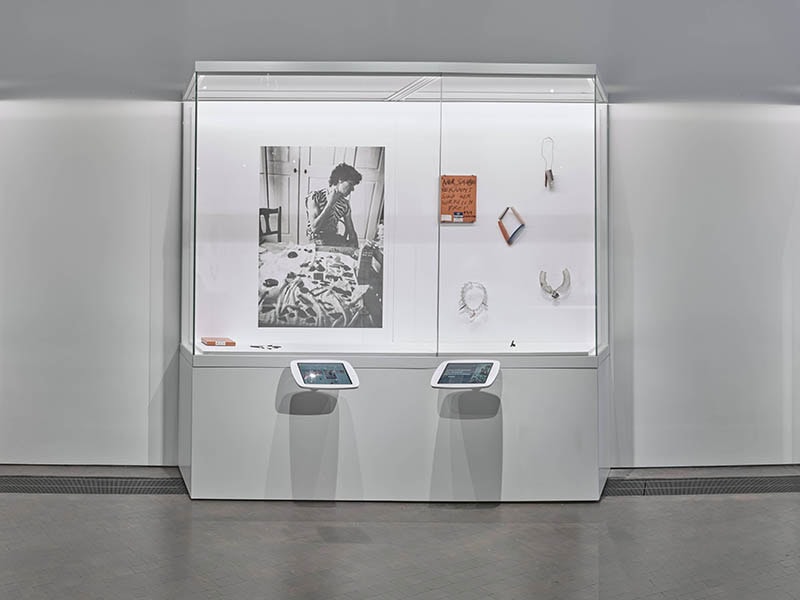
However, Schobinger’s artistic path shifted radically during the 1970s. Finding ideological and aesthetic kinship with the emerging international punk movement, he forged a volatile, rebellious vision. Detritus, industrial scrap, and discarded everyday objects became his primary materials as he set out to fundamentally redefine the essence of what jewelry could be.
Navigating Paradoxes and Craftsmanship
Schobinger has frequently characterized himself as "a human paradox." His jewelry routinely couples rigorous, traditional Swiss goldsmithing techniques with raw, disruptive elements like broken glass, industrial saw blades, and urban debris. His intellectual framework was heavily influenced by philosopher Paul Feyerabend, whose landmark 1975 book Against Method aggressively challenged the notion of fixed, immutable rules in science and human endeavor.
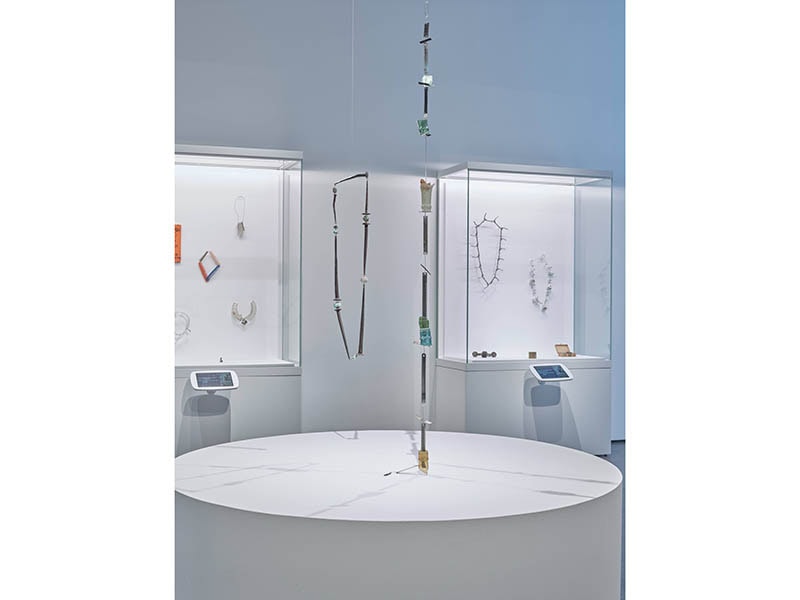
Cindi Strauss emphasizes that Feyerabend’s writings, combined with Schobinger’s lived experiences, are essential to understanding the core of his practice. Yet, a superficial glance at his work often misses its underlying complexity. For instance, while Schobinger incorporates found objects that might initially make a piece look unwearable, uncomfortable, or overtly hazardous, every single item is engineered to be eminently wearable. His dedication to structural wearability is absolute.
Complementing this conceptual rebellion is an uncompromising commitment to traditional craftsmanship. Schobinger is a fully trained goldsmith, and the absolute mastery of that discipline is legible in every piece he constructs, particularly in hidden structural details such as clasps, hinges, and secure connections.
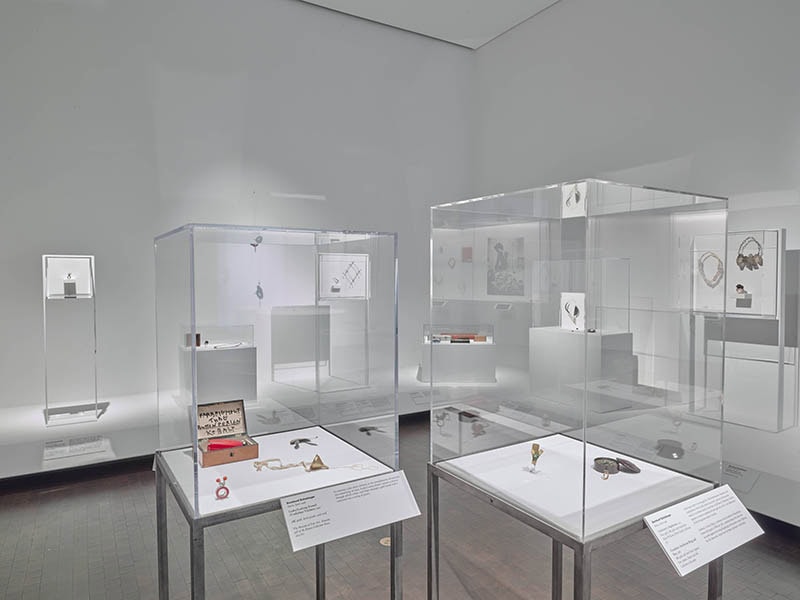
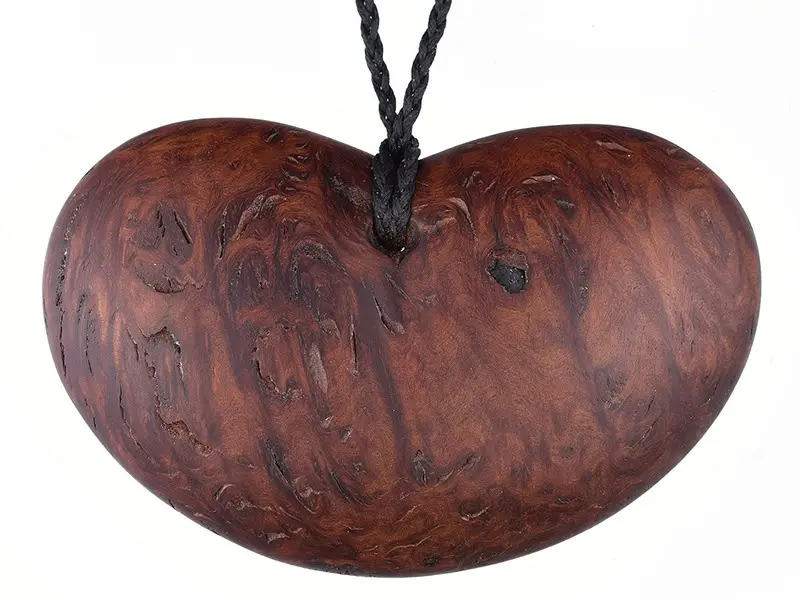
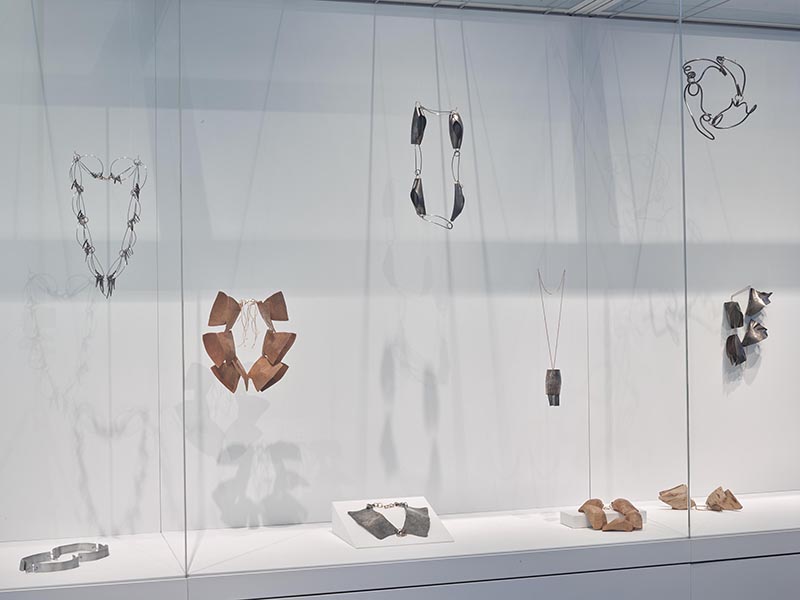
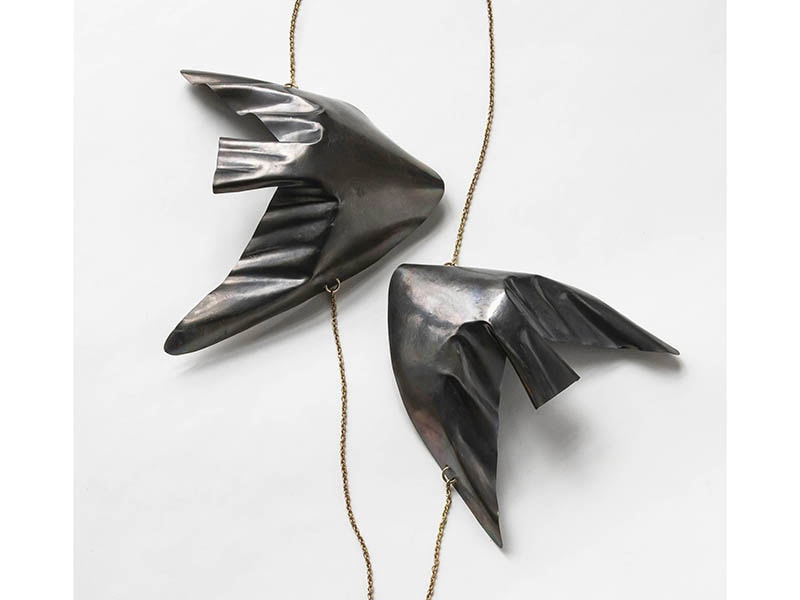
Prühl’s jewelry—crafted from carved wood, titanium, and other select metals—presents an entirely different aesthetic surface, often appearing deceptively simple. Elizabeth Essner explains that this apparent simplicity masks a deep well of complexity. Prühl produces only a handful of pieces annually, bringing decades of profound knowledge to every step of the fabrication process. She considers not merely how her chosen materials will manifest her desired forms, but how the finished objects will sound, how they will move with the body, and, most importantly, how they will make the wearer feel.
This relentless dedication yields jewelry that feels so organic and innate that it seems as though it must have always existed. Driven by an obsession with pure form—a direct legacy of her training at the prestigious Burg Giebichenstein in Halle (Saale)—form remains the undisputed anchor of her practice. Prühl is known to assert that if she has to verbally explain a piece of jewelry, she knows the form itself is simply not good enough.
Pivotal Works and Defining Methods
For visitors navigating the adjacent gallery spaces, the curators highlight specific touchstones that encapsulate each artist’s genius. For Schobinger, the 1980 necklace NYC 1980 serves as a critical turning point.
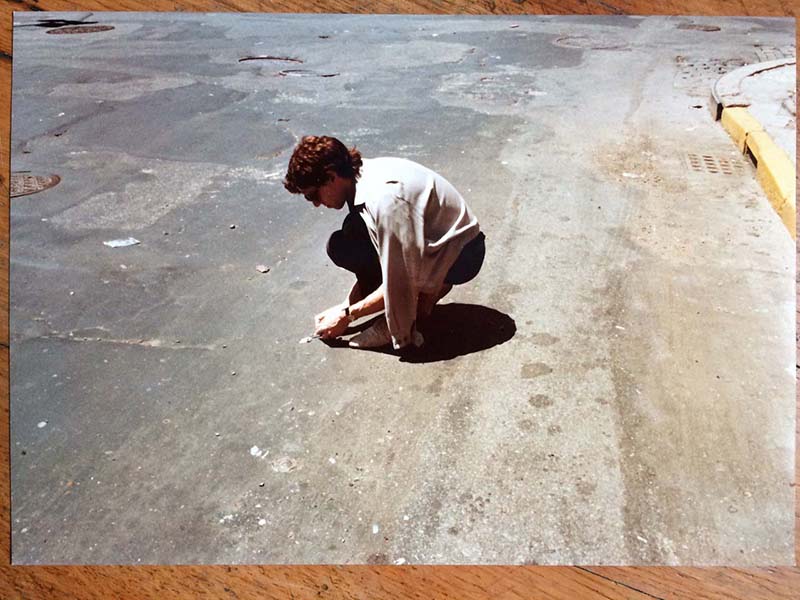
During this period, Schobinger shuttled between his quiet home in the Swiss village of Richterswil and the raw, underground punk scenes of Zurich, London, Berlin, and New York City. The chunky fragments of metal integrated into NYC 1980 were literally pried out of the asphalt on West Broadway in Manhattan.
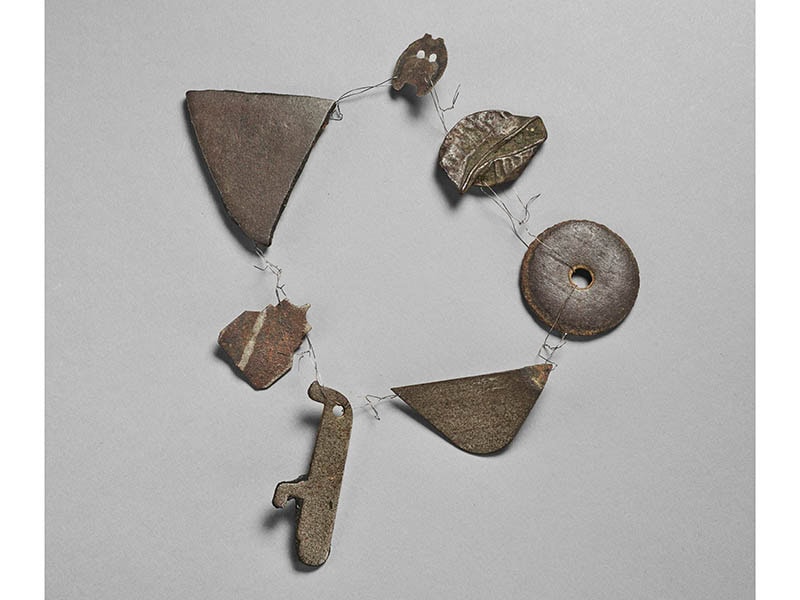
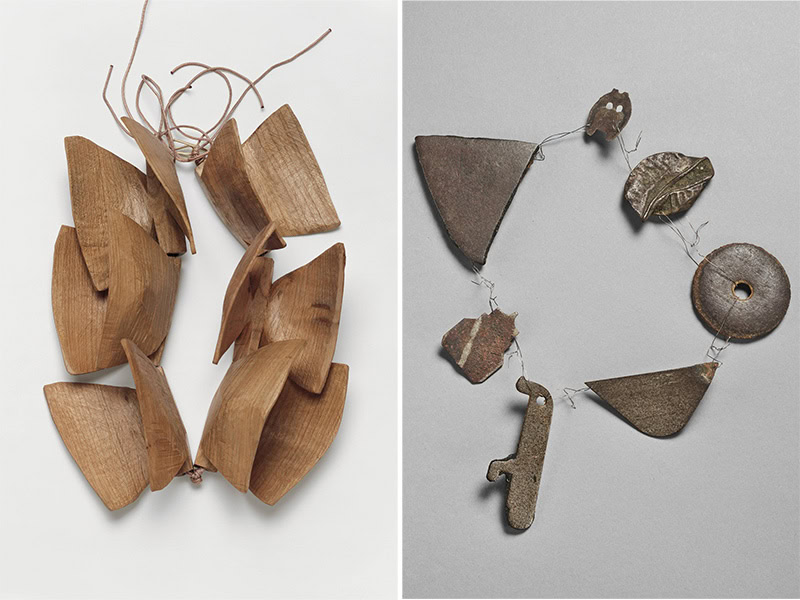
The necklace operates simultaneously as an aggressive talisman and defensive armor, retaining elemental shapes informed by his early interest in Concrete Art. Yet, a close inspection reveals the nearly invisible, fragile twists of wire holding the heavy metal chunks together. The construction feels precarious, as though the artist was frantically trying to capture the volatile, explosive energy of a historic moment while acutely aware of its ultimate fragility.
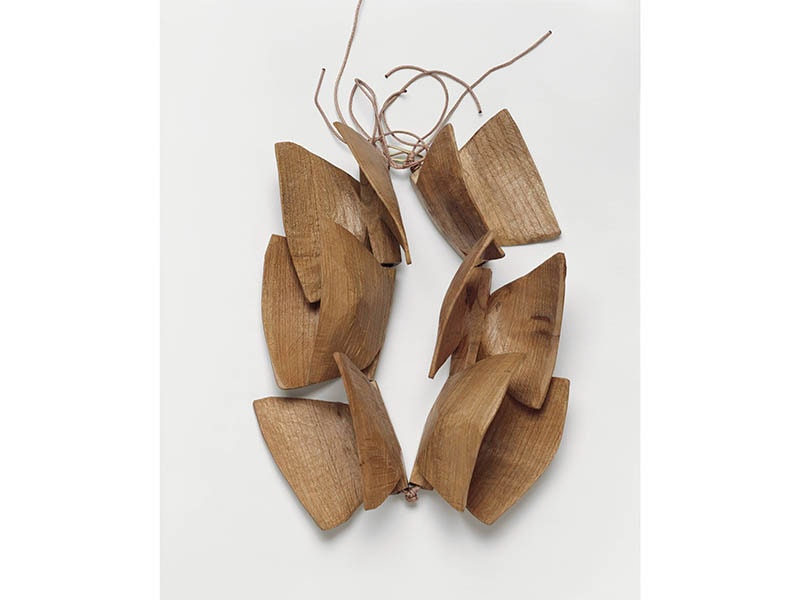
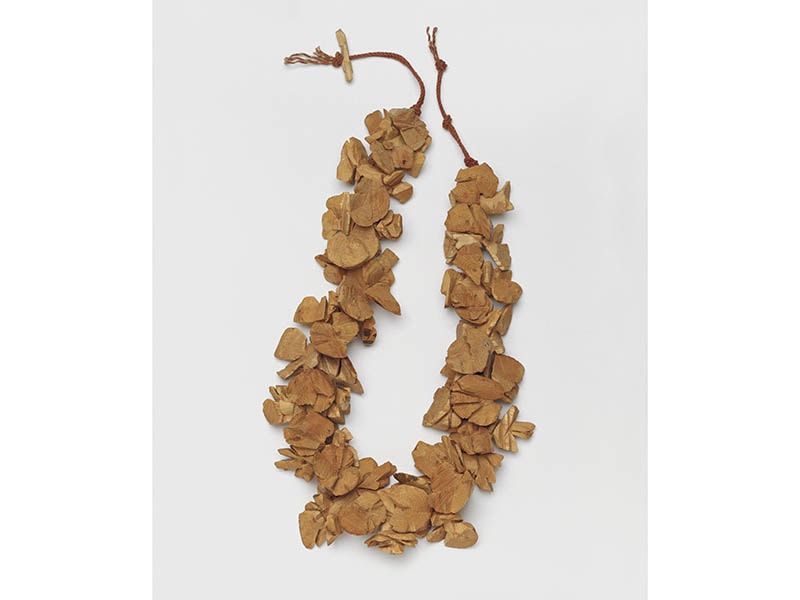
Prühl’s methodologies are equally singular, though quiet and earthbound. While her metal components are fashioned in her studio in Halle, her wood carvings take place in a remote forest located about three hours north. There, Prühl works in isolation within a simple farmhouse lacking running water, relying on a single heat source and an endless supply of wood harvested from fallen trees. Works like Flowers from Augustenberg (1989), named after that wooded hamlet, function as poetic odes to her rural upbringing, capturing the delicate, tender spirit of the natural landscape through a garland of carved alder wood and string.
Redefining the Long Arc of Creativity
Reflecting on the impact of organizing these comprehensive exhibitions, Cindi Strauss notes that working closely with both artists over the past quarter-century has profoundly deepened her appreciation for what it truly takes to achieve mastery in the field. The uncompromising dedication, the grueling daily effort, and the absolute devotion to craft—traits neither artist has ever abandoned—offer a powerful window into the long, enduring arc of artistic creativity.
Elizabeth Essner observes that while jewelry frequently serves as a repository for our most intimate personal narratives, Schobinger and Prühl demonstrate that the medium is equally capable of carrying humanity’s deepest philosophical inquiries.
Through works like Schobinger’s Meteor Iron Ring (1993)—which embeds a fragment of the Toluca meteorite alongside copper and brilliant-cut diamonds—the artist explicitly links adornment to a cosmic timeline far beyond human civilization. Meanwhile, Prühl honors viewers with visions of birds in flight, flowers, and butterflies. Though these subjects initially appear modest or mundane, slowing down to truly observe a butterfly or the sculpted span of a bird’s wing reveals an encounter with the profound, humbling miracle of the natural world.