





While Silicon Valley giants pour billions of dollars into developing autonomous artificial intelligence agents designed to shop on behalf of consumers, the man who pioneered Apple’s iconic retail stores believes the tech industry is severely overestimating how much of the shopping experience people are actually willing to hand over to machines.
Ron Johnson, the 66-year-old retail visionary, has heard predictions about the imminent demise of physical retail before. He joined Apple in the year 2000 to construct its retail business precisely as online shopping was beginning its meteoric ascent. Over the following decade, he helped build a physical store network that became an essential pillar of how Apple sells its products, shapes its brand, and connects directly with its customer base. Today, as a new wave of automation threatens to transform digital commerce, Johnson remains unconvinced that algorithms will fundamentally alter human shopping habits.
“AI is a new technology that will improve the online shopping experience,” Johnson said in a recent interview. “But I don’t know that it’s going to change which way we shop.”
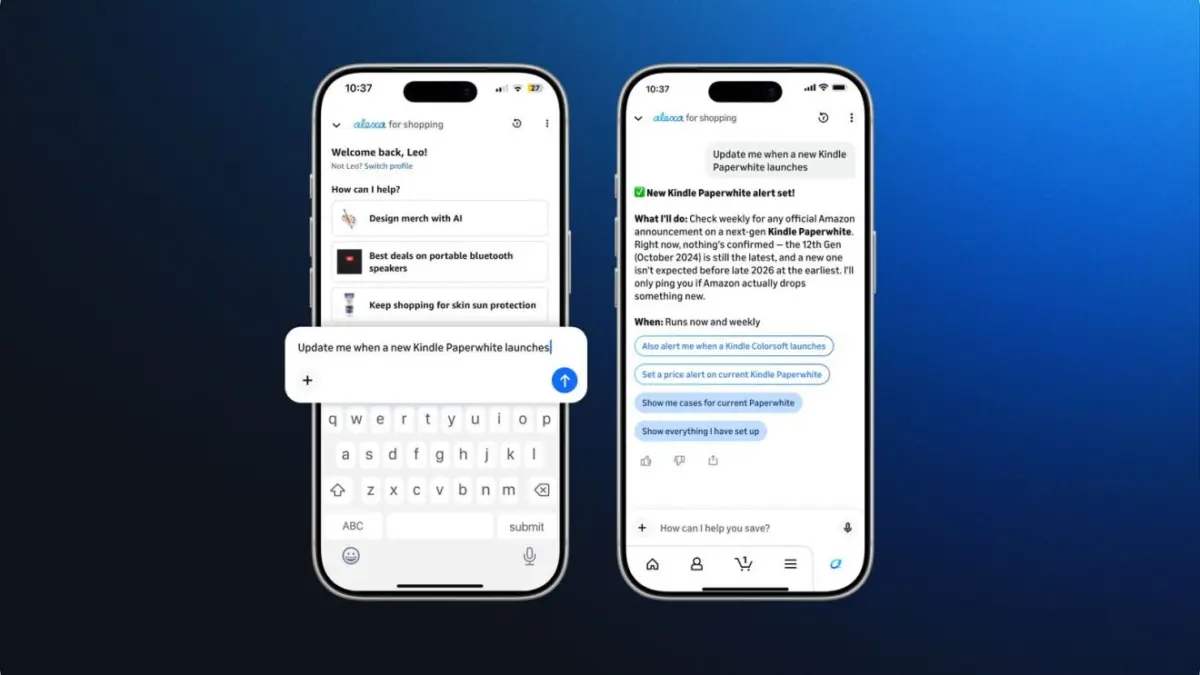
Johnson’s cautious perspective arrives at a time when some of the world’s most powerful technology companies are accelerating efforts to push artificial intelligence deeper into everyday consumer transactions. Major firms are betting heavily on a concept known as "agentic commerce," where software agents automate the entire journey of finding, comparing, and purchasing items. Google, for instance, has been pushing this frontier with its Universal Commerce Protocol, an initiative designed to establish technical standards that help AI agents guide consumers smoothly from product discovery all the way to final checkout. Simultaneously, OpenAI has been aggressively transforming ChatGPT into a comprehensive shopping destination, enabling users to research, cross-examine, and occasionally purchase products without ever leaving the conversational interface of the chatbot.
The core promise of agentic commerce is friction reduction: eliminating the need to browse dozens of tabs or visit multiple e-commerce websites. Yet when asked whether he could envision a scenario where a typical consumer would comfortably delegate the choice and purchase of a high-ticket item—such as a $1,000 or $2,000 laptop—to an automated software agent without ever visiting a website or stepping inside a physical store, Johnson offered an unequivocal response.
“Honestly, nobody’s going to do that,” he said.
Buying a sophisticated device like a laptop, Johnson argued, remains a deeply personal and sensory purchase that consumers are unwilling to entirely delegate to an automated agent. Prospective buyers want to physically feel the weight of the device, evaluate the clarity and color accuracy of the display, and determine firsthand which form factor or size aligns with their personal preferences. While artificial intelligence may successfully narrow down a sprawling list of technical specifications or filter choices based on specific criteria, Johnson emphasized that many consumers will always prefer to experience a product themselves before parting with significant sums of money.
“AI will never be able to have you physically experience a product,” Johnson noted. Instead of replacing the physical journey, he expects AI agents to serve a preparatory function—helping consumers become vastly more educated before they ever walk through the doors of a brick-and-mortar storefront. “They’ll just become more informed shoppers when they come to the store,” he added.
This deep-seated conviction stems directly from strategic decisions Apple made more than two decades ago when it launched its retail operations. Apple’s physical stores were never conceived merely as transaction hubs for purchasing Mac computers and accessories; rather, they were purposefully designed as interactive environments where people could touch products, learn how to utilize them creatively, and return for troubleshooting or assistance whenever something went wrong.
Many of these foundational retail philosophies are revisited in Shop Different: How Retail Revealed Apple’s Genius, a new book authored by Johnson alongside Zander Nethercutt that chronicles the creation of Apple’s retail ecosystem under the guidance of Steve Jobs. According to Johnson, numerous competitors attempted to mimic Apple’s retail blueprint by adopting glass-heavy architecture, minimalist open layouts, and even proprietary versions of the celebrated Genius Bar. However, these competing brands frequently missed the most critical element of the formula: the people.
“The secret sauce for Apple has always been its people, the people in the store, and how they treat the customer,” Johnson explained.
A central tenet of that strategy, Johnson pointed out, was that Apple Store employees have never been compensated on commission—a stark departure from the aggressive, sales-driven culture that has historically permeated much of the broader retail industry. The underlying philosophy was to systematically remove immediate pressure to close a sale, empowering employees instead to focus entirely on understanding what a customer genuinely needed and providing honest guidance.
Following his successful tenure at Apple, Johnson transitioned to a high-profile leadership role in 2011, taking over as CEO of J.C. Penney with an ambitious, sweeping mandate to reinvent the struggling department-store chain. However, the turnaround effort faltered dramatically, and he was ousted from the company less than two years later after sales experienced a steep plunge.
Reflecting on that turbulent period, Johnson acknowledges that he attempted to change too much, too quickly, without adequately bringing employees and loyal customers along for the journey. He observed that Apple’s retail stores had effectively functioned as a nimble startup that evolved organically alongside the company’s expanding hardware lineup. J.C. Penney, by contrast, was a legacy turnaround that demanded a completely different strategic playbook and operational pace.
“I applied a startup mentality to what needed to be a turnaround transformation,” he recalled.
Johnson later returned to the startup ecosystem by founding Enjoy Technology, an e-commerce venture designed to bring technology products and professional setup services directly to consumers’ homes. Despite its innovative premise, the startup faced severe economic headwinds and ultimately filed for bankruptcy in 2022, subsequently selling substantially all of its operational assets to Asurion.
Despite his skepticism regarding how artificial intelligence will ultimately reshape the mechanics of shopping and retail formats, Johnson maintains a broad optimism about the underlying technology itself.
“I’m a real believer in AI. I’m an AI optimist,” he stated.
Reflecting on the legacy of Steve Jobs, Johnson believes his former boss would have enthusiastically embraced artificial intelligence, though likely with strict boundaries regarding its application. Jobs, in Johnson’s view, would have treated AI as a powerful tool rather than an ultimate substitute for human judgment, intuition, and creative collaboration.
“There’s no substitute for human intuition,” Johnson said, recalling Jobs’ enduring faith in bringing intelligent people together in a room to vigorously debate complex problems and discover entirely fresh ways of looking at the world.