






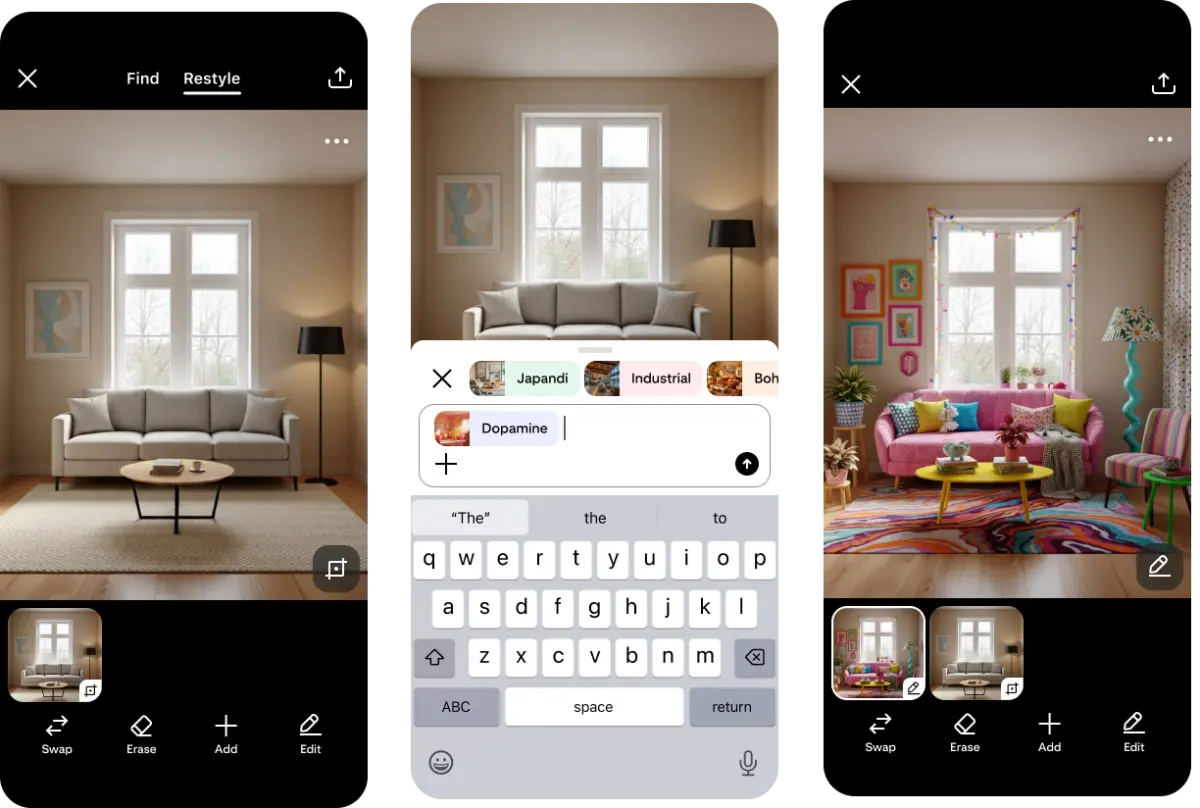
Pinterest is turning further to artificial intelligence to help consumers move seamlessly from searching for product inspiration to actually being able to imagine what it might be like to redesign a physical space or compare various home decor options as they would appear in their own rooms. On Thursday, the visual discovery platform announced the launch of a new consumer-facing feature called “Restyle” in beta across the United States and Canada, bringing advanced generative capabilities directly to its massive user base. The feature is powered by Pinterest Intelligence, a proprietary technological framework designed to understand and process visual data at scale.
The foundation of Pinterest Intelligence combines cutting-edge hardware and software, leveraging Nvidia Blackwell GPUs and Nvidia Dynamo alongside sophisticated open-source models and Pinterest-built technology, as the company shared on Monday. This strategic technical partnership is engineered to significantly improve the Pinterest Assistant’s overall ability to handle complex visual search requests. Furthermore, it aims to seamlessly turn people’s everyday searches into actionable signals for AI-driven discovery and shopping, bridging the gap between what users dream about and what they can ultimately buy.
With the introduction of Restyle, users will be granted the ability to take a photograph of their personal space, then test and compare a variety of different options directly within their own homes. By prompting the AI to perform specific tasks—such as adding wall art, furniture, accessories, or other home decor items, including products sourced directly from images they previously found and pinned on Pinterest—users can radically transform their environments digitally. The technology also allows individuals to modify existing elements by changing room lighting, adjusting paint colors, introducing plants, and executing other detailed modifications.

Beyond adding or altering individual elements, the system offers granular control over the design process. Users can click on specific items within a room to swap them out for alternatives, completely erase unwanted objects from the image, or make further targeted edits to refine the aesthetic. Alternatively, people can bypass minute adjustments altogether and ask the AI to visualize their entire room in a completely different aesthetic style. These options include popular and trendy looks such as “bohemian,” “industrial,” “whimsical,” or “dopamine,” among others, allowing for rapid experimentation with interior design concepts.
Although the core concept of restyling rooms digitally is not an entirely novel idea—as virtual room redesign has become a widely popular consumer use case for various AI assistants across the technology landscape—adding the feature directly to Pinterest changes the practical dynamic. Integrating these capabilities could allow people to do significantly more with the items they have diligently saved over time for inspiration and design ideas. By seeing specific items rendered directly in their own physical spaces, people may be substantially more likely to actually buy the products they have saved to their boards, effectively completing the commercial funnel from initial pinning to final purchase.
This major consumer feature was first publicly teased during Pinterest’s annual Pinterest Presents event. During that industry showcase, the company introduced a broad suite of new tools aimed at commercial partners and brands, including new visual search ads, app promotion features, and other specialized utilities designed to maximize advertiser value on the platform. The debut of Restyle anchors the consumer-facing side of these broader technological upgrades, demonstrating how backend infrastructure improvements directly manifest in everyday app experiences.
Restyle is initially rolling out exclusively as an early preview beta for users in the United States and Canada, but the company plans to make the feature available more broadly next month as testing progresses and infrastructure scales. As Pinterest continues to refine its technological stack and expand the reach of Pinterest Intelligence, the platform is positioning itself not just as a digital mood board for daydreaming, but as an active, functional marketplace where visual inspiration immediately translates into tangible commercial outcomes.