




The intersection of modernist architecture, contemporary film, and ephemeral culinary art converged on October 10, 2026, within the striking walls of Wolfhouse in Newburgh, New York. Designed originally in 1949 by legendary architect Philip Johnson, the historic residence served as the canvas for a site-specific exhibition titled Island on Land – A Landscape in Five States. Developed by artists Lang Lang, the founder of studio No.29, and Xie Peng, the ambitious project functioned as a physical, spatial translation of Lang’s 2024 experimental short film of the same name. By merging moving images, modular industrial hardware, and consumable sculptures across the home’s interior rooms, exterior terrace, and surrounding landscape, the exhibition created a dialogue between permanence and transience, architecture and memory.
The exhibition invited visitors to navigate the Hudson River-facing estate through a non-linear sequence, engaging with works that explored the complex relationships between human memory, physical landscapes, built environments, and the overall experience of place. Rather than functioning as a traditional gallery exhibition where objects remain static and untouchable, Island on Land relied heavily on participation and decomposition. As attendees moved through the architectural masterpiece, they consumed the perishable elements of the installation, leaving behind only the durable, fabricated armatures and modular structures designed by the artists. This contrast underscored a central theme of the project: the tension between the enduring legacy of mid-century modernist design and the fleeting, temporary nature of human experience and organic matter.
Aluminum Armatures and Acrylic Stands Map Five Film Chapters
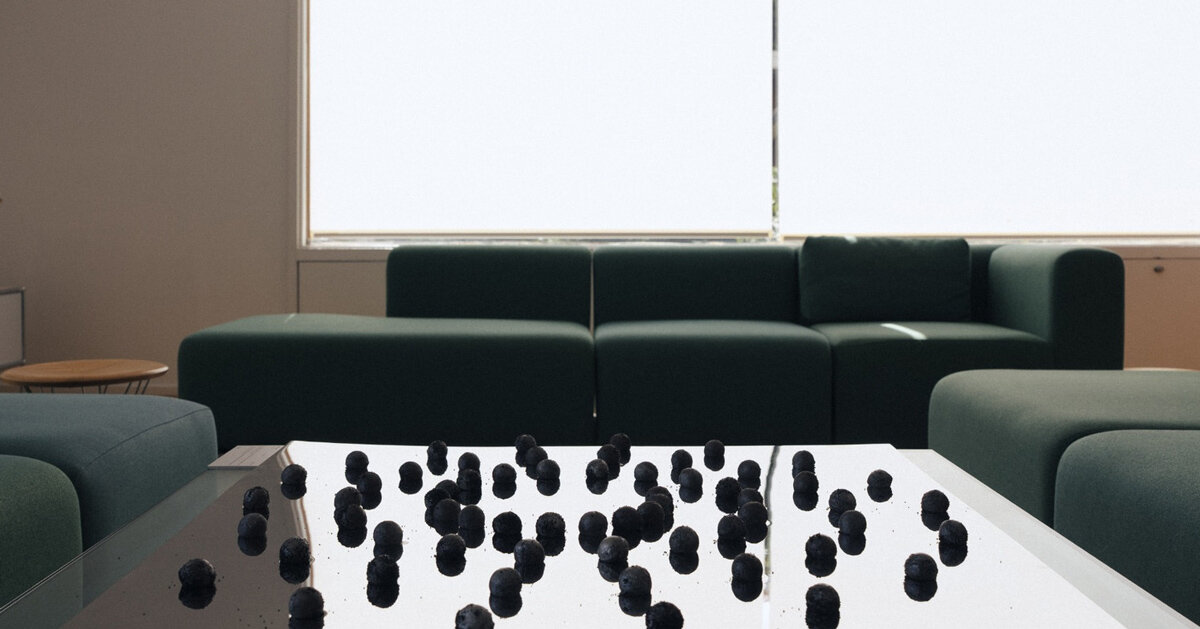
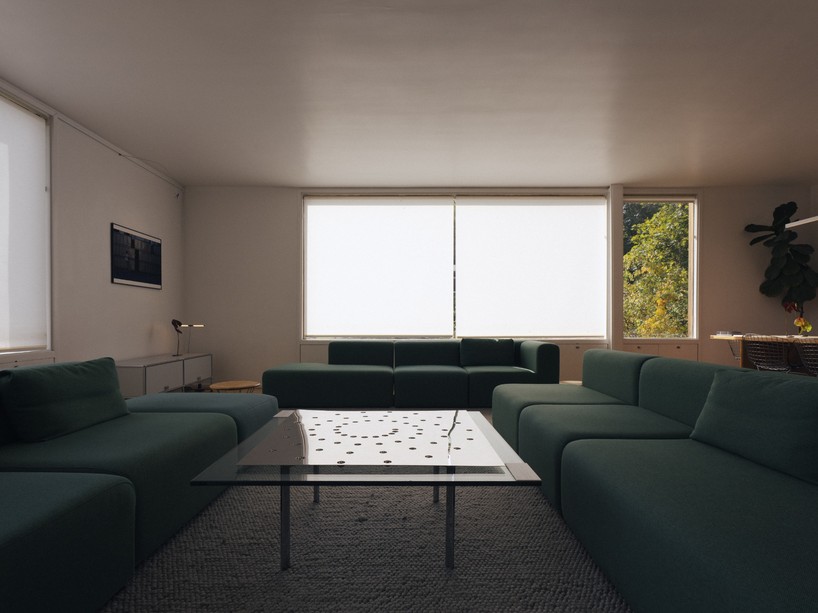
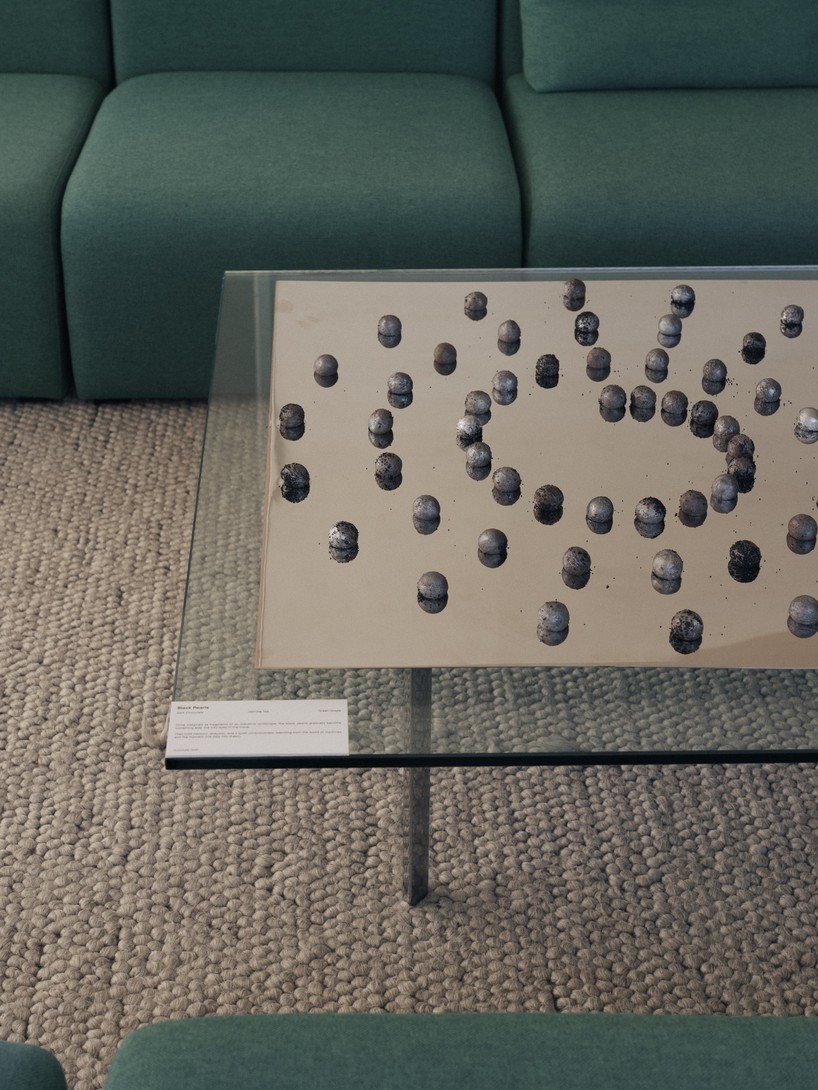
The installation by No.29 studio carefully mapped five thematic fragments from the original short film into tangible physical works that juxtaposed industrial hardware with biodegradable, consumable media. Indoors, the exhibition introduced visitors to Black Pearls, a series of textured chocolate spheres filled with grape jelly and jasmine cream. These delicate morsels sat within spiral spherical recesses carved into The Panel, a mirrored stainless steel tray created by Xie Peng. As visitors interacted with the installation and consumed the chocolate spheres, the reflective surface of the tray continuously captured and distorted the surrounding room, making the viewer and the interior architecture active participants in the shifting composition.
Nearby, another thematic chapter manifested as A Drop Within, featuring a translucent sphere with a deep-red core. This striking visual element was supported by The Stands, an intricate assembly of circular acrylic panels and curved metal joints. Notably, the structural integrity of The Stands relied on fashion-derived snap buttons rather than conventional threaded hardware. This subtle design choice bridged the worlds of industrial fabrication and soft textile assembly, demonstrating the artists’ commitment to reimagining standard structural methods. The juxtaposition of cold, manufactured aluminum and acrylic against organic, soft-centered edible forms established a recurring motif throughout the historic residence, highlighting a deliberate material duality.
Transient Edible Media Contrasts Modernist Architectural Space
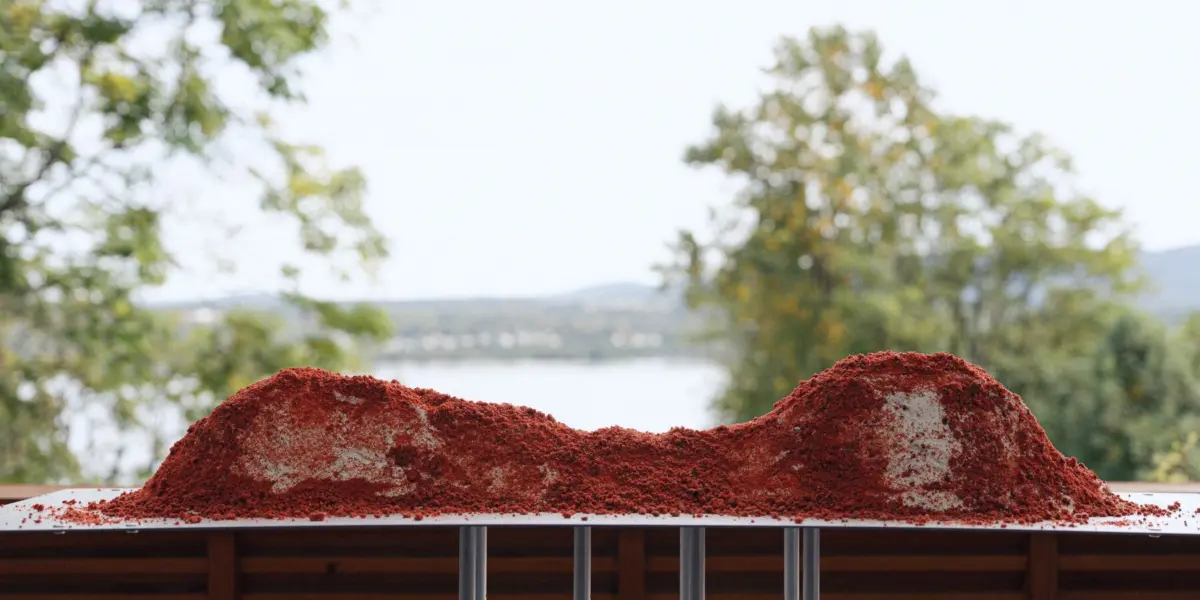
Moving outward to the exterior patio, which frames sweeping views of the Hudson River, the exhibition continued to unfold through tactile and gustatory experiences. Red Soil combined elements of buckwheat, fig, and chocolate terrain arranged atop The Table, a robust two-panel aluminum surface joined seamlessly with snap fasteners and stabilized by red steel rods. This culinary landscape echoed the earthy tones and rugged textures of the surrounding Hudson Valley, anchoring the modernist stone and glass architecture of the Wolfhouse firmly into its geographical context.
Further integrating the landscape into the artistic narrative, White Trace incorporated delicate rice-paper vessels holding refreshing watermelon and perilla syrups. These vessels were meticulously set into circular acrylic cutouts integrated into a folding, reconfigurable aluminum screen designated as The Partition. This modular barrier allowed the artists to dynamically alter spatial boundaries on the terrace, guiding sightlines toward the river while providing a physical threshold for the visitors.
Dispersed even further across the natural landscape of the estate, A Quiet Turn positioned biodegradable door handles directly onto the turf. These uncanny, functional objects removed from their architectural context forced viewers to reconsider the thresholds of interior and exterior space. Because the installation embraced a non-linear sequence, attendees were encouraged to explore the grounds freely at their own pace, consuming the perishable elements while the industrial armatures stood resilient against the autumn air. Through this delicate balance of permanence and decay, Island on Land – A Landscape in Five States successfully transformed Philip Johnson’s 1949 residential landmark into a living, breathing ecosystem where memory, architecture, and landscape converged.