





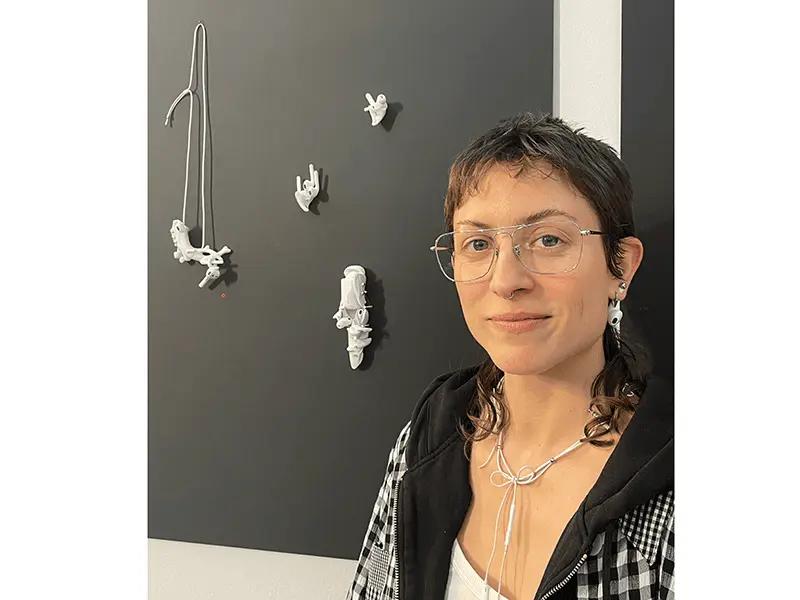
In the dynamic and ever-evolving landscape of contemporary art jewelry, few emerging makers have left as consistent or provocative a mark as Corrina Goutos. Originally hailing from upstate New York and now based in Hamburg, Germany, Goutos has officially secured her place in the history of the Art Jewelry Forum (AJF) by becoming a finalist for the prestigious Young Artist Award for an unprecedented third time.
The Young Artist Award, generously supported by patrons Karen and Michael Rotenberg, is presented every two years to spotlight exceptional promise, innovation, and distinct individuality in the work of an emerging jewelry artist aged 35 or younger. By championing bold, boundary-pushing creators, AJF aims to support new and exciting directions that will inspire future developments across the field. For Goutos—a graduate of the Savannah College of Art and Design who has completed a residency at the Françoise van den Bosch Foundation and delivered lectures at renowned institutions such as the DIVA Museum, Gerrit Rietveld Academie, and the Society of North American Goldsmiths (SNAG)—this latest milestone is a powerful validation of her enduring artistic vision.
A Fascination with Super-Charged Objects
Goutos’s journey into the world of art jewelry began long before she had formal terminology for her creative impulses. From an early age, she found herself deeply captivated by the way select objects achieve a "super-charged" status in human culture. Everyday things are routinely tasked with holding and placeholding significant human experiences, allowing them to transcend their basic material or market values. It was this unique capacity to foster a profound bond between humans and nonhumans that ultimately drew Goutos to jewelry over other traditional art forms.
Her creative process frequently revolves around utilizing universally recognizable objects to conjure immediate associations in the viewer’s mind, only to subvert those expectations swiftly. By doing so, she reveals the objects themselves as lively agents deeply entangled in modern capitalist schemes and sentimental human tendencies. Goutos is particularly energized by documenting and reproducing ambiguous objects that defy the tidy, traditional dichotomy separating nature and industry—effectively capturing objects in a state of constant transition.
A Historic Hat Trick
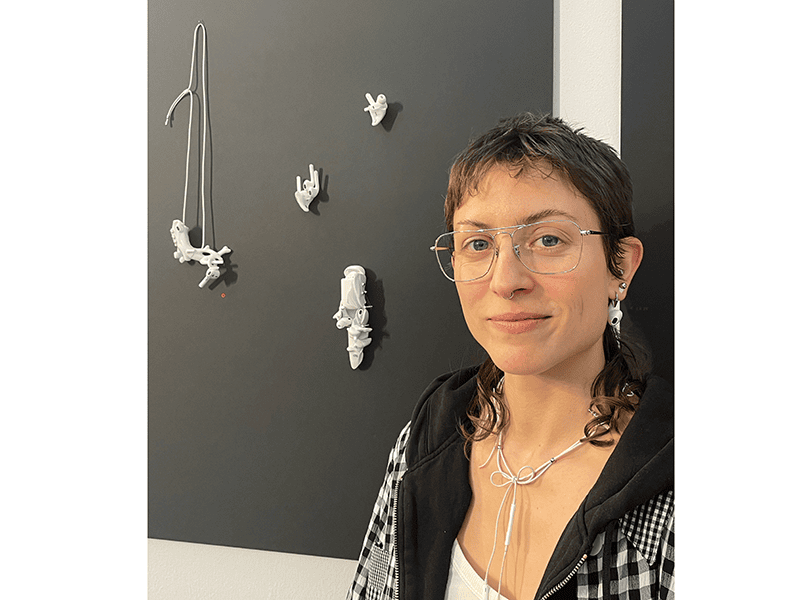
Achieving finalist status for the Young Artist Award three separate times is a rare distinction in the contemporary craft world. For Goutos, this achievement represents a powerful testament to the consistency and depth of the work she has systematically developed since her graduation. Notably, three distinct blind juries selected three entirely different bodies of work during her successive submissions.
This recurring recognition reflects exceptionally well on her artistic authorship and her rigorous dedication to her craft. It also provides her with the vital confidence that her overarching narratives are successfully resonating with audiences and critics alike, serving as a powerful motivator to continue pushing her storytelling forward.
The BlossomVerse: Reimagining Tech Implants and E-Waste
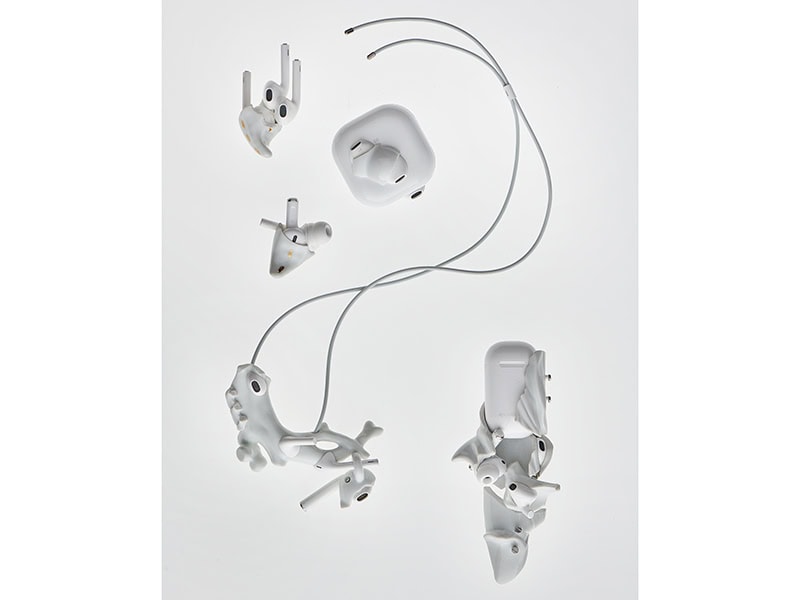
For her latest application, Goutos presented a wearable and holdable series titled The BlossomVerse. This provocative body of work imagines the hidden, embedded agency of modern technological implants, which seemingly overnight transitioned from external tools into seamless extensions of our own vital senses, operating within a framework of profit and symbiotic exchange.
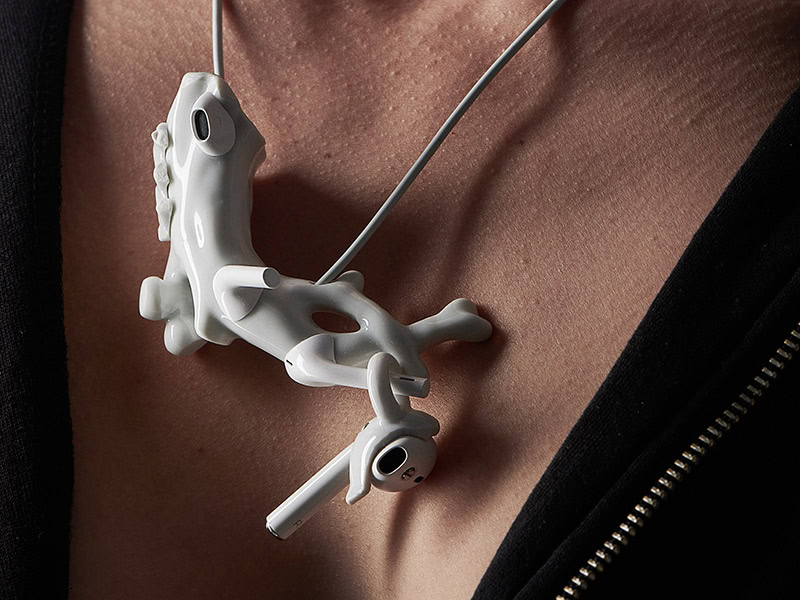
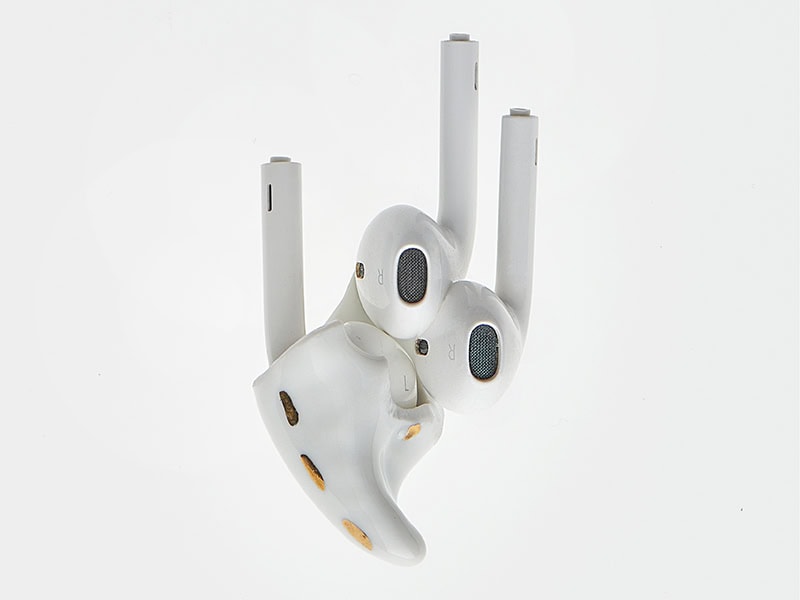
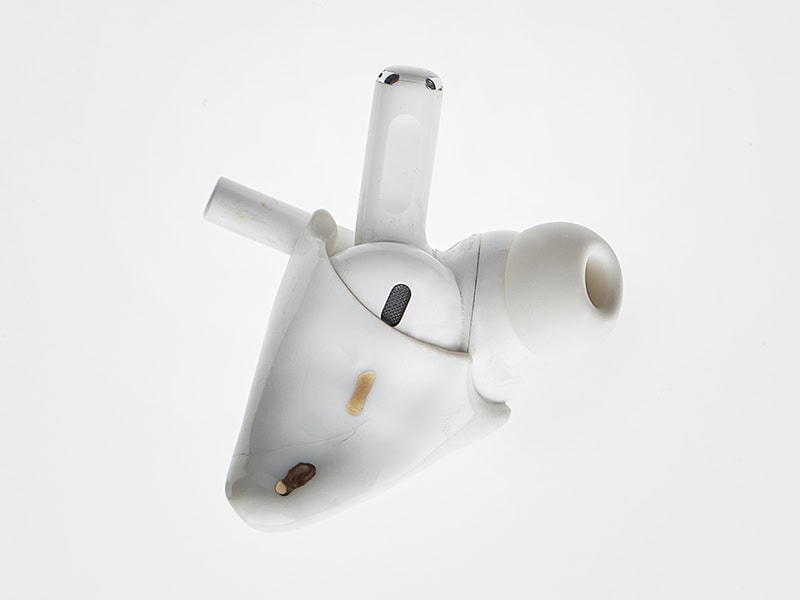
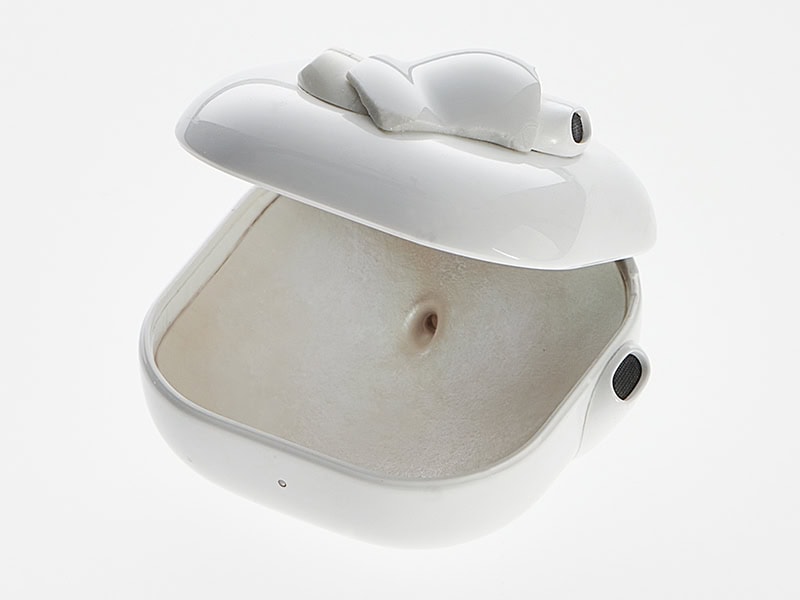
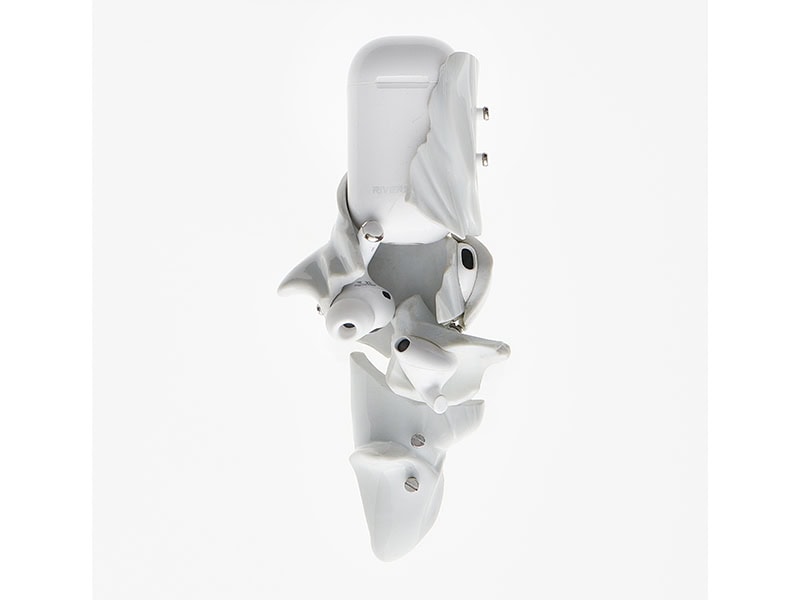
Fueled by human vitality, these speculative objects attempt a metaphorical "technojailbreak." Just centimeters away from their familiar resting places in our ears, along our necklines, and resting within the moisture of our palms, these speculative iOS-inspired mutations emerge from their cocoons right before the viewer’s eyes. Super seed pods appear to be actively germinating, while ordinary earbuds burst outward into what Goutos terms EarBlossoms.
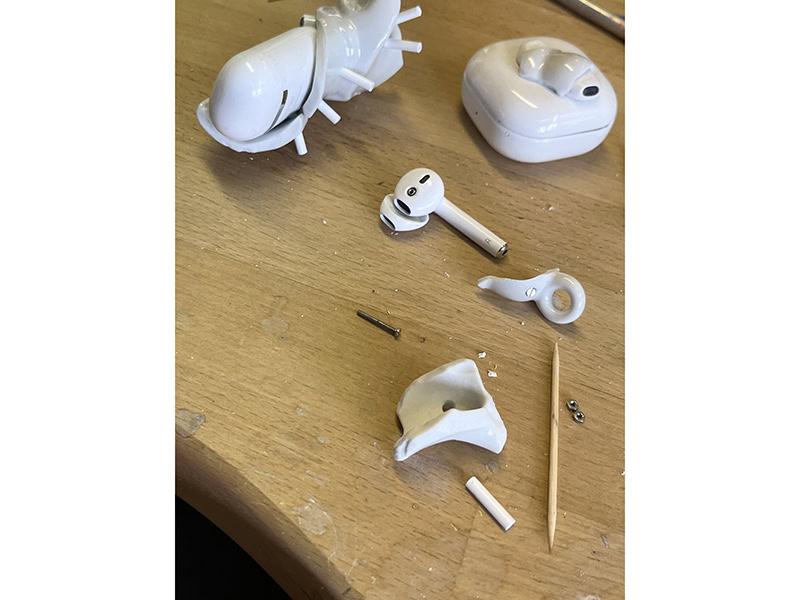
Throughout this series, Goutos deliberately invited entropy into her studio practice wherever possible, consciously quieting her own artistic voice in order to amplify the agency of nonhuman materials. On her workbench, broken porcelain figurines and discarded electronic waste begin an unexpected dialogue. Shapes mirror one another, and concave curves attract their perfect counterparts—evoking the precise, satisfying snap of AirPods settling into their charging cases.
Exploring the Details of EarBlossom
The defining ethos of The BlossomVerse crystallized for Goutos while she was crafting the signature piece EarBlossom. During the creative process, she began reflecting heavily on Apple’s strategic use of biomimicry and the various active states of nature embedded within the corporation’s visual language and marketing branding. She considered the fragile buds of the cherry blossom, which exist for only a brief moment in time before erupting into full bloom, and wondered what might happen if Apple’s organic metaphors were pushed to their ultimate logical conclusion: specifically, whether the natural heat and moisture of the human body could coax dormant earbuds into blossoming.
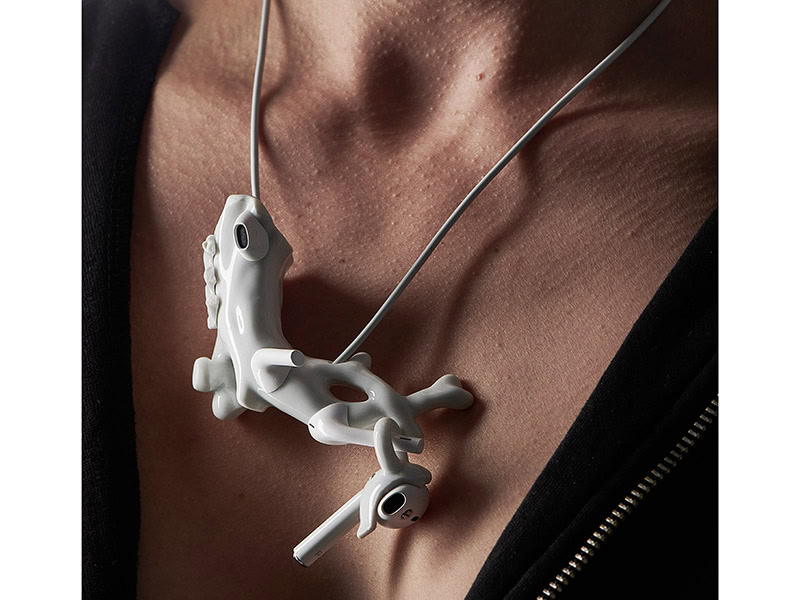
The foundation of the piece originated from a kitschy porcelain figurine of a baby resting beneath a tree branch. Liberated from its domestic life by a fateful fall, the resulting porcelain shards revealed a familiar, glossy allure not unlike the seductive finish of high-end consumer electronics. By coupling imagination with controlled entropy, Goutos rewilded the discarded fragments.
To capture an effortless yet complex composition, she repurposed microscopic components extracted from iOS devices and drew visual inspiration from the mounting armatures utilized by archaeologists to reconstruct historical artifacts. Through thread-cutting, porcelain lapidary, and urban mining techniques, she successfully adapted disparate, everyday materials into cohesive objects. The resulting post-Apple speculative pieces resist simple categorization as craft, design, or high art, actively provoking questions about the sanctity of luxury goods by dismantling and reconfiguring both their physical components and their perceived cultural value.
The Unique Power of Art Jewelry
Reflecting on the broader discipline, Goutos emphasizes that what truly excites her about art jewelry is its inherent resistance to determinism. Unlike paintings that remain static on a wall or sculptures locked on a plinth, a jewel is never truly finished when it leaves the maker’s hands. Instead, it only comes fully to life through the body, movement, and context of the wearer, shape-shifting with every lived experience it encounters.
Materials, in Goutos’s view, truly keep the score. They record wear, human touch, and the passage of time, ultimately becoming active collaborators in a shared history. Through this intimate process, a genuine kinship emerges between the human and nonhuman worlds. Art jewelry provides a rare space where conversations concerning these complex relationships can unfold without being prematurely dismissed as overly sentimental, esoteric, or unacademic. For Goutos, the field represents a community of like-minded individuals who share a common language, allowing her to contemplate intimacy, material agency, and attachment in ways that feel both rigorous and deeply personal.
Industry Shifts and Realities
Looking toward the future of the art jewelry field, Goutos observes a gradual but exciting shift as the insular "art jewelry bubble" begins to burst open. Initiatives such as The Body Collective are successfully expanding the intersection between art contextualized directly on the human body and the broader evocation of the sensory body within contemporary art. Furthermore, fringe mediums—such as decorative grillz and experimental headwear—are increasingly appearing on the art jewelry radar, alongside interactive works like inventive jewelry boxes and modular jewelry designs that challenge traditional display formats.
However, Goutos remains candid about her frustrations with the structural realities of the field, pointing specifically to the persistent disconnect between the public perception of artistic success and the harsh economic reality of sustaining a professional practice. Young artists entering the profession are frequently encouraged to believe that dedication, talent, and excellence alone will inevitably lead to financial stability. In practice, however, many of the most respected makers rely heavily on teaching, secondary careers, family support, or external sources of income to keep their studios afloat. Goutos argues that the creative community would better serve emerging makers by speaking transparently about these economic realities, ensuring that individuals are less inclined to internalize systemic financial struggle as a personal failure.
Linked to this challenge is the need for greater acknowledgment of how economic privilege shapes the contemporary craft field and determines who has access to its platforms. Increased transparency regarding the financial support required to pursue a rigorous craft-based practice could help foster a more welcoming environment for makers hailing from diverse economic and educational backgrounds, while simultaneously encouraging deeper engagement with artists from the Global South. A truly inclusive field must remain attentive to the systemic barriers that dictate who is able to participate in the conversation from the outset.
Looking Ahead
As she looks toward the next five years and beyond, Goutos envisions reaping the rewards of her demanding early career. Standing at what will soon be a two-decade benchmark in her professional journey, she hopes to work smarter rather than harder—producing fewer physical pieces while dedicating more time to writing and critical reflection. Her future goals involve exploring not only her own philosophy of "Anthrosmithing," but also examining broader movements in craftsmanship and emergent artistic philosophies grappling with the realities of living on a dying planet. This ongoing research is expected to culminate in collaborative workshops designed to offer a fresh perspective for makers navigating uncertain times.
Ultimately, Goutos views her practice as a continuous process of healing trauma one material at a time, with the ultimate hope of eventually sharing those hard-won lessons with the next generation of artists.