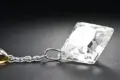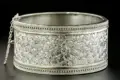





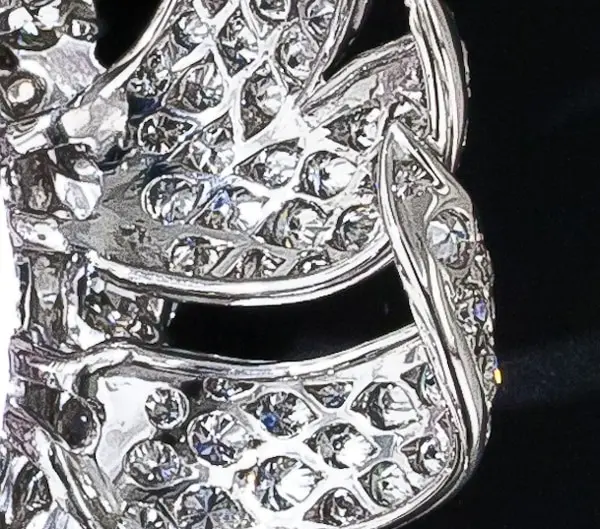
The French term à jour—derived from "jour," meaning day—holds a storied place in the vocabulary of master jewelers and fine gem setting, denoting an open-worked background meticulously crafted through sawing or piercing. This specialized technique leaves the pavilion or reverse side of a gemstone entirely open, exposing the stone directly to the light of day. By allowing natural light to pass freely through the bottom of the gemstone, à jour settings significantly enhance a stone’s intrinsic scintillation, brilliance, and overall color vibrancy, ultimately making the gem appear remarkably more lively and radiant to the observer.
Historically, the widespread adoption of à jour settings for gemstones mounted in fine jewelry began to flourish around the year 1800. Prior to this pivotal shift in goldsmithing and lapidary arts, the vast majority of precious and semi-precious gemstones were mounted within closed-back settings. In these earlier traditional mountings, metal foils—often referred to as foil backs—were frequently placed beneath the gemstone to artificially enhance its color or reflect light forward, as closed metal backings would otherwise cause the stone to appear dark and dull. The evolution toward à jour work marked a significant departure, reflecting a growing appreciation for the natural optical properties of gemstones and an advancing mastery of metalworking techniques that prioritized transparency and structural lightness.
Executing fine à jour work requires a high level of technical skill and precision, typically accomplished through the careful use of a graver. A graver is a traditional handheld cutting tool used by artisans to refine, shape, and carve metal, allowing the jeweler to create clean, well-formed openings on the reverse side of a jewelry item. This labor-intensive process demands a steady hand and a deep understanding of metal integrity, ensuring that the structural framework remains robust enough to securely hold the gemstone while maximizing the exposure of its lower facets.
The aesthetic potential of this technique reached new heights during the Art Deco era of the 1920s and 1930s. Art Deco jewelry customarily features exceptional à jour work that elevates the reverse of a piece to a level of craftsmanship almost as beautiful and intricate as the front. During this period, geometric precision and architectural design principles dominated the luxury jewelry landscape, and master artisans utilized open-worked metal matrices not merely as a functional optical enhancement, but as an integral component of the overall design aesthetic. The backs of Art Deco brooches, pendants, and rings were frequently adorned with delicate openwork patterns, filigree, and millegrain details that showcased the dedication of the maker to beauty from every conceivable angle.
Beyond traditional gemstone mounting, the underlying concept of the open-worked background has found a remarkable expression in the distinct discipline of enameling, where it evolved into a technique known as plique à jour. In this sophisticated enameling process, the term is used to describe an item characterized by an open background framework that is subsequently filled with transparent enamel rather than a gemstone. Because there is no backing metal behind the vitreous enamel, light passes directly through the colored glass material when the piece is held up to the light. This creates a stunning, stained-glass-like effect, producing a myriad of shimmering colors and luminous hues that have captivated collectors and connoisseurs of fine decorative arts for generations.