





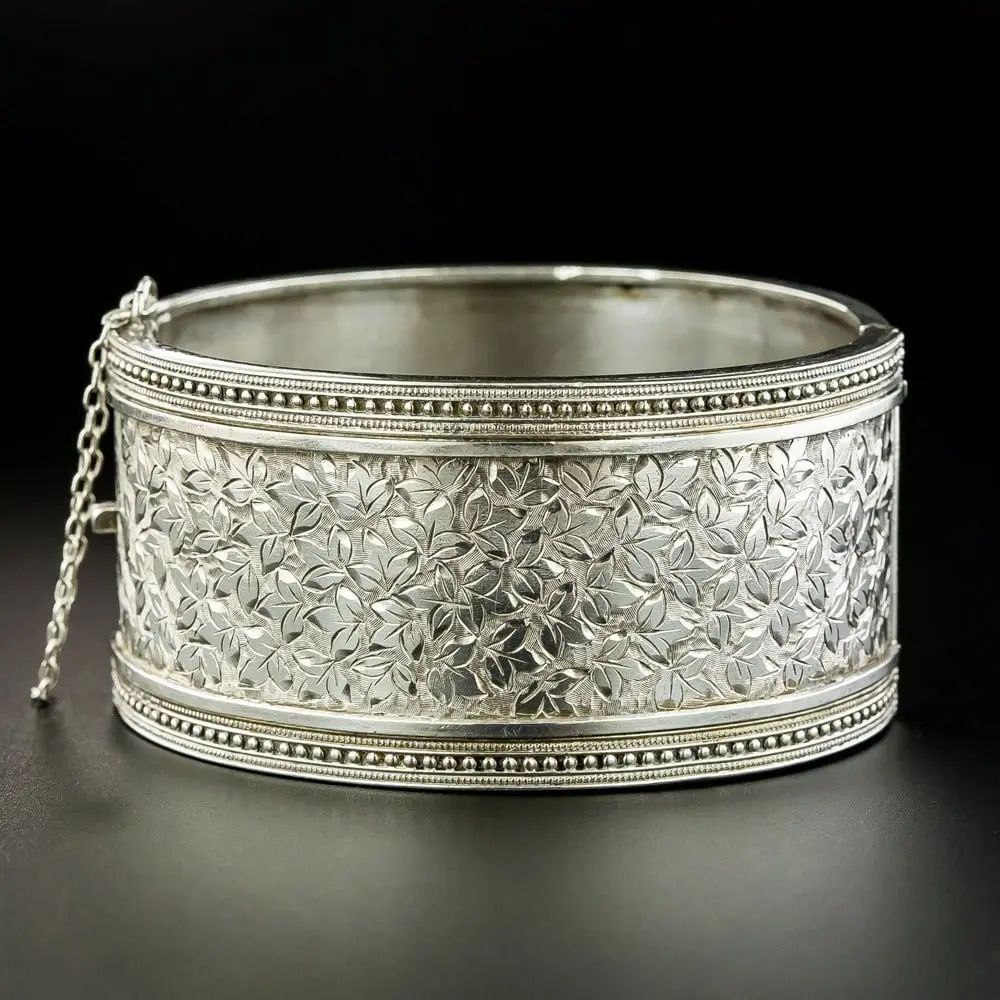
Long overshadowed in modern financial discussions by the blinding allure of gold and platinum, silver remains one of the most historically transformative and technologically vital elements in human history. Represented on the Periodic Table by the symbol Ag, silver is a white metallic element that is harder than gold, softer than copper, and second only to gold in its exceptional malleability and ductility. Because of its outstanding resistance to oxidation, it is classified as a noble metal. Throughout millennia, humanity has relied on silver not merely as an affordable alternative to gold, but as a foundational pillar of currency, an engine of global trade, a catalyst for technological breakthroughs in metallurgy, and a preferred medium for the creation of exquisite jewelry and objects d’art.
While contemporary markets often price silver well below other precious metals, assuming a lesser economic or cultural importance is a profound historical error. At various points across antiquity, silver was valued more highly than gold. When examining the sheer quantities utilized in jewelry and decorative artifacts throughout history, the consumption of silver vastly outweighs all other precious metals combined. Furthermore, the relentless pursuit of silver deposits triggered far more technological advancements in mining and metallurgy than its metallic cousins, dictating the rise and fall of entire economies and frequently shifting the tides of war.
The historical narrative of silver stretches back to the end of the fourth millennium BC, when inventive inhabitants of modern-day Turkey discovered a revolutionary metallurgical process: extracting silver from lead ores through cupellation. Though remarkably few surviving artifacts remain from this nascent era, those that do endure provide profound insight into the capabilities of Bronze Age silversmiths.
At the very dawn of written history, silver served as a vital currency across Mesopotamia. Rather than circulating in standardized coins, it was traded purely by weight or shaped into rings. The workshops of Mesopotamian silversmiths often mirrored—or were entirely identical to—those of goldsmiths. Although silver is slightly less ductile than gold and demands more frequent annealing during the manufacturing process, it can be seamlessly cast, hammered into exceptionally thin sheets, engraved, embossed, and decorated through repoussé work, filigree, and granulation. Ancient vessels, delicate statuettes, and jewelry recovered by archaeologists indicate that these early artisans worked with high-purity silver, yielding remarkably soft yet breathtaking objects.
In ancient Egypt, where society deeply cherished the rare and exotic, silver was viewed as fiercely exclusive. While gold could be sourced locally from the mountains of the Eastern Desert and Nubia, pure silver had to be imported over treacherous trade routes alongside prized Afghan lapis lazuli. Consequently, pure silver was initially valued higher than gold and remained strictly reserved for the upper echelons of society. By approximately 1600 BC, however, a growing global supply caused the value of silver to drop to roughly half that of gold, establishing it as an abstract, stable currency. The fluctuating popularity of the metal heavily depended on the whims of fashion; for instance, the legendary tomb of King Tutankhamun contained scarcely any silver items, whereas Pharaoh Sheshonq II was famously laid to rest in an all-silver sarcophagus.
Across the Mediterranean, the Minoans and Mycenaeans actively traded in silver, leaving behind a wealth of early Greek jewelry discovered across the mainland, Crete, and Cyprus. It was the Phoenicians, however, who truly revolutionized the Mediterranean world through their expansive colonization and maritime trade networks. By initiating the large-scale exploitation of rich Spanish silver deposits, the Phoenicians distributed the metal throughout the classical world, forever stripping silver of its purely exotic status and elevating its availability to unprecedented levels.
For both ancient Greek and Roman societies, a steady supply of silver was an absolute necessity, as their monetary systems relied heavily on properly minted silver coinage. While archaeological finds suggest gold was preferred for certain types of jewelry—partly due to the common historical practice of melting and recycling silver—surviving pieces demonstrate that silver was routinely fashioned into finger rings, anklets, and armlets.
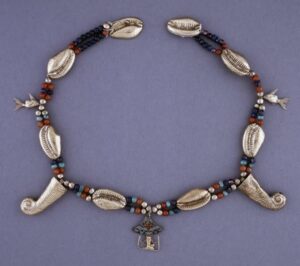
Romans also developed a deep fondness for niello, a surface decoration technique strikingly similar to enameling, executed using silver sulfate rather than glass. Offering a tougher surface and a distinct metallic luster, niello spread rapidly throughout Northern and Eastern Europe during the Roman occupation, a trend clearly visible in later Anglo-Saxon artifacts.
First-hand accounts from Roman historians like Pliny the Elder in his Naturalis Historia offer an incredible window into the Roman obsession with silver. Pliny documents the deep shafts sunk into the earth in search of silver ore, noting that Spanish mines worked by Hannibal centuries prior were still yielding hundreds of pounds of silver daily, supported by complex drainage systems operated by underground workers. Pliny also details the extravagant Roman taste for silver plate, where luxury escalated to such heights that elites plated their banqueting couches with silver, and Emperor Nero’s wife, Poppaea, famously ordered her favorite mules to be shod in gold. This insatiable appetite for foreign opulence, accelerated by the conquests of Asia and Achaia, fundamentally reshaped Roman society.
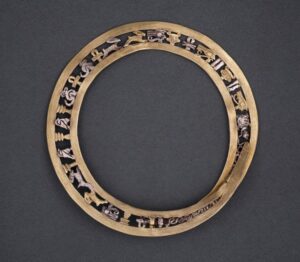
Celtic tribes similarly utilized silver alongside bronze for an array of decorated personal adornments, including intricate brooches, torcs, and lunulae. Prior to Roman conquest, the Celts relied on "ring money"—standardized rings of silver, copper, bronze, or gold—solely as a medium of exchange rather than for wear.
Following the collapse of Roman supply lines, gold became an extreme rarity in Europe, pushing silver to the forefront of jewelry production. Germanic and Anglo-Saxon jewelry during the early medieval period focused heavily on functional items such as fibulae, disc brooches, penannular brooches, and belt buckles, frequently crafted from silver and accented with gilded surfaces or inlaid with garnet gemstones.
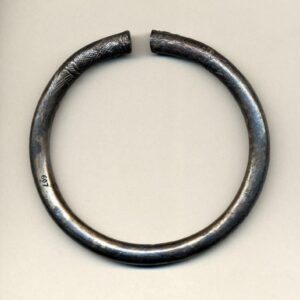
By the ninth century, Viking incursions along the northwest European coasts redirected massive quantities of silver northward to Scandinavia, where silversmithing thrived and silver jewelry became deeply engrained in local tradition. The discovery of major Swedish silver deposits around the turn of the first millennium further cemented this cultural preference, while the traditional use of niello persisted among Germanic tribes to create striking black-and-white contrasts on engraved metalwork. Among the most celebrated masterpieces of this era is the 9th-century Anglo-Saxon Fuller Brooch, housed in the British Museum. Crafted from hammered silver sheet and extensively inlaid with niello, the brooch features intricate allegorical personifications of the Five Senses and various motifs symbolizing Creation, showcasing the extraordinary technical mastery of medieval silversmiths.
As society evolved and trade routes to the East reopened during the later Middle Ages, gold reclaimed its status as the premier metal for fine jewelry. Nevertheless, this expansion of commerce fostered the rise of an affluent middle class eager to adorn themselves in ways previously reserved for monarchs. Those operating on a tighter budget readily turned to silver, transforming it into a widely accessible medium for finger rings, bangles, and pendants. By the end of the medieval period, the trade had matured to the point where silver assaying and hallmarking systems were formally established to guarantee metal purity.
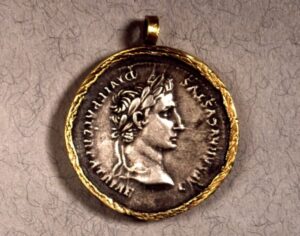
The Renaissance brought further transformation, propelled by the age of exploration following Christopher Columbus’s arrival in the Americas. Spanish conquistadors like Pizarro and Cortés subjugated the Incas and Aztecs, unlocking vast South American silver deposits—most notably after significant discoveries in modern-day Mexico in 1546. This influx of American silver fueled global commerce, with substantial amounts traveling directly across the Pacific to China to secure Asian luxury goods. While silversmithing techniques largely mirrored those of the medieval period, the sheer abundance of silver kept it economically viable both as currency and as an accessible precious metal for a prosperous European middle class.
During the Baroque period spanning the seventeenth century, European powers vied fiercely for control of the Atlantic trade routes, often engaging in naval battles over heavily laden treasure fleets returning from the New World. While traditional manufacturing methods endured, the era introduced exciting novelties, including the widespread production of silver timepieces and a groundbreaking shift in gemstone setting. For the first time, silver was extensively utilized to set diamonds, as the cool white metal perfectly complemented the colorless sparkle of stones newly imported from newly established Indian trade settlements.
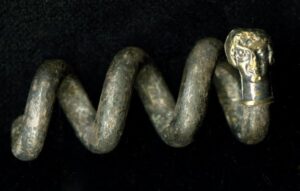
The Georgian era witnessed an unprecedented boom in South American silver production, alongside a massive influx of diamonds from both India and newly discovered deposits in Brazil starting in 1727. While fine jewelry frequently combined gold bodies with silver-topped fronts to showcase diamonds in cut-down collet settings, solid silver items remained common. Furthermore, the 1777 invention of die-striking revolutionized the industry. By stamping and cutting precious metal components using mechanical presses and drop hammers, manufacturers could rapidly assemble inexpensive jewelry lines. This mass-production technique flooded the market with affordable, die-struck silver jewelry.
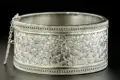
As the Industrial Revolution surged into the Victorian era, die-striking and stamping techniques were fully perfected. Silver was heavily utilized in mass manufacturing, while regional trends—such as Scottish agate jewelry popularized by Queen Victoria and Prince Albert following their purchase of Balmoral Castle in 1848—relied heavily on traditional Northern European silver settings.
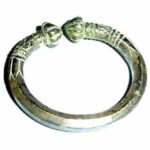
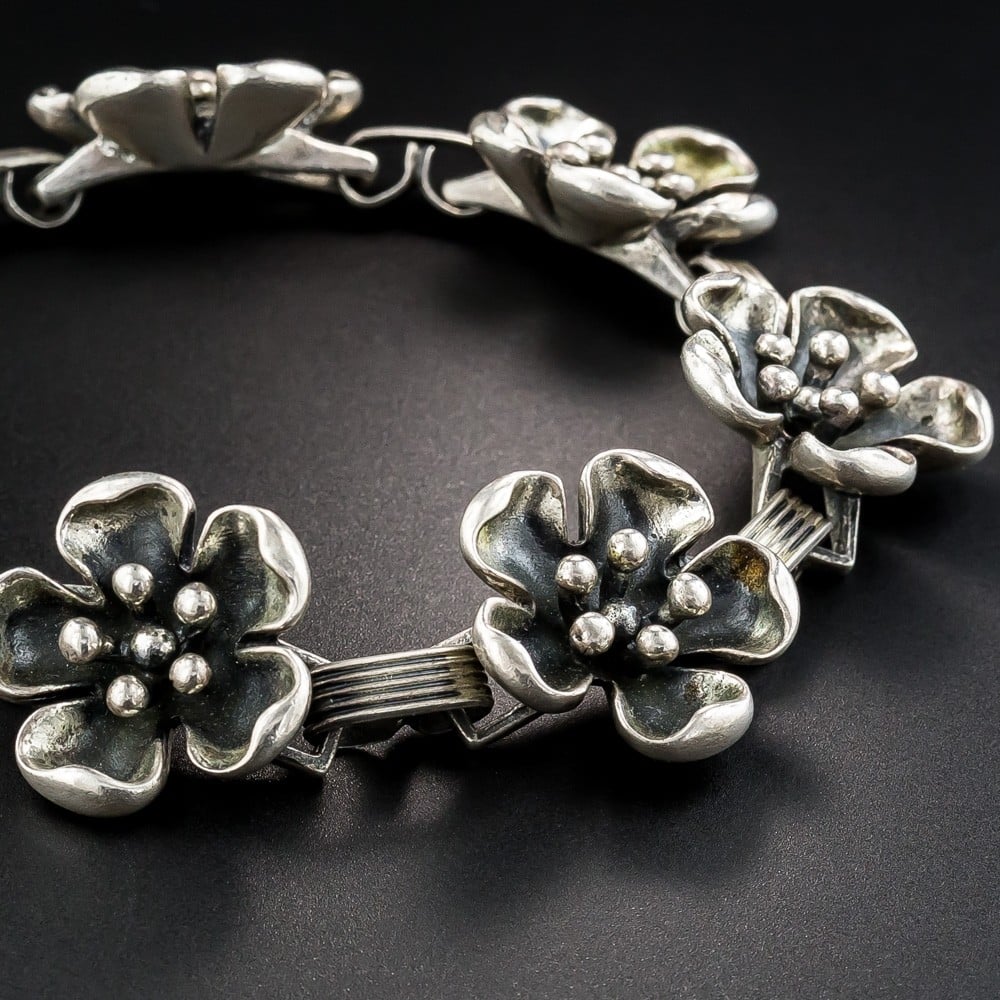
Toward the end of the Victorian period, the Arts and Crafts movement emerged as a direct artistic reaction against industrial mass production. Valuing artisanal craftsmanship and creative design far above the intrinsic financial value of raw materials, Arts and Crafts jewelers favored silver over gold, opting for bezel-set cabochon stones rather than heavily faceted gems. Through every technological revolution and shifting artistic movement, silver has continually reinvented itself, cementing its enduring legacy as one of humanity’s most versatile and indispensable treasures.