



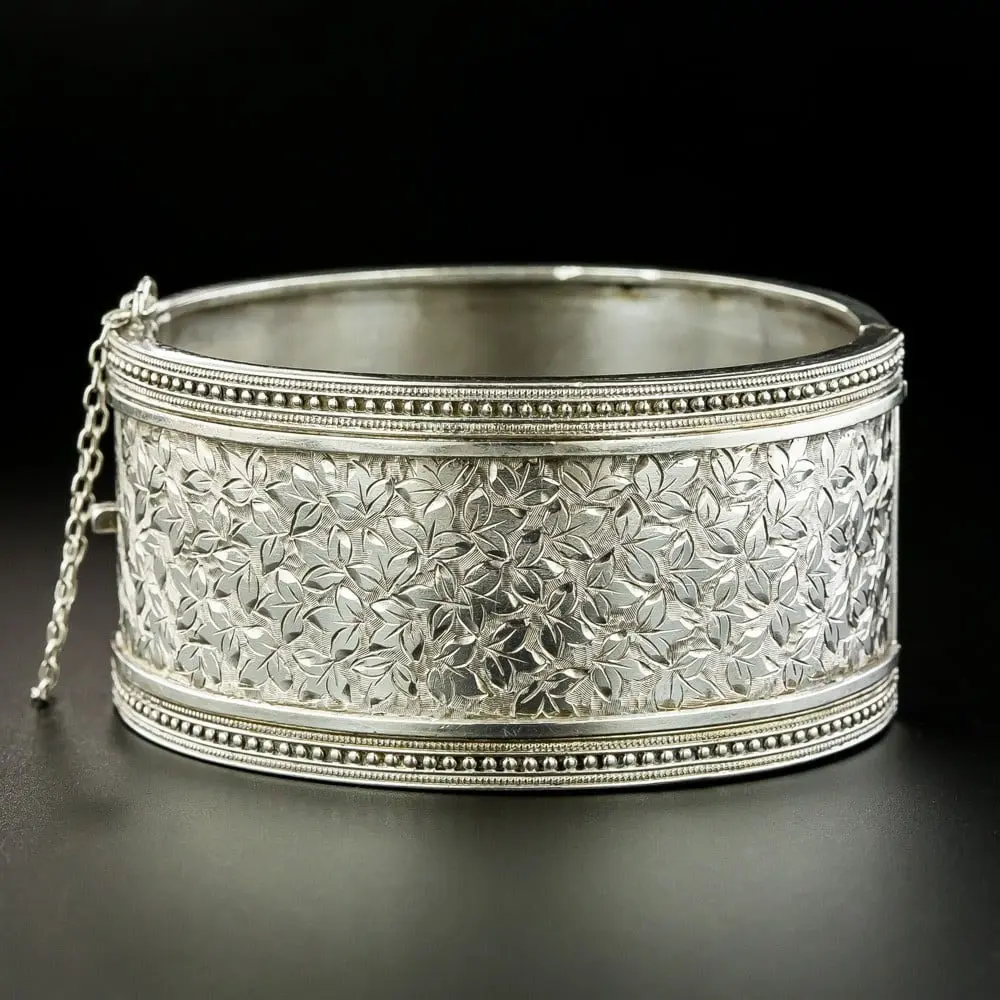
Silver—represented on the periodic table by the symbol Ag—is a brilliant white metallic element characterized by physical properties that have captivated humanity for millennia. Harder than gold yet softer than copper, silver ranks second only to gold in its exceptional malleability and ductility. It is also an extraordinary conductor of heat and electricity. Classified as a noble metal due to its remarkable resistance to oxidation, silver has historically anchored the production of fine jewelry and objets d’art. Because pure silver is inherently soft, artisans have traditionally alloyed it with other metals to provide the structural integrity required to maintain intricate shapes and fine decorative details.
Despite being valued less expensively than gold or platinum in contemporary markets, assuming silver lacks historical or economic weight is a profound mistake. At various points across human history, silver commanded a higher value than gold. Furthermore, the sheer quantity of silver utilized in jewelry and decorative arts outweighs all other precious metals by a substantial margin. This versatile white metal has triggered significantly more technological advancements in mining and metallurgy than its precious metallic counterparts. Entire economic systems have hinged upon its availability, and access to silver deposits has repeatedly altered the course of wars and shaped the trajectory of human history.
Bronze Age Silver: Mesopotamia, Egypt, and the Aegean
The historical narrative of silver begins near the end of the fourth millennium BCE, when innovative inhabitants of modern-day Turkey discovered that silver could be successfully extracted from lead through the process of cupellation. While surviving artifacts from this dawn of metallurgy are exceedingly rare, those that endure reveal the astonishing capabilities of Bronze Age silversmiths.
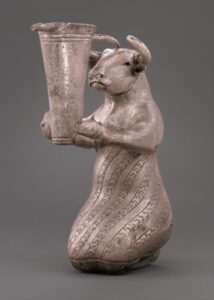
At the very dawn of recorded history in Mesopotamia, silver served a vital function as an informal currency. Rather than taking the form of standardized coins, silver was exchanged strictly by weight or shaped into utilitarian rings. The workshop of the Mesopotamian silversmith closely mirrored—and frequently overlapped with—that of the goldsmith. Although silver is slightly less ductile than gold and demands more frequent annealing during fabrication, it possesses immense working capacity. Artisans could cast it, hammer it into remarkably thin sheets, engrave it, emboss it, shape it through repoussé, and embellish it with delicate filigree and granulation. Archaeological excavations have uncovered vessels, statuettes, and jewelry crafted from high-purity silver, yielding objects of notable softness.
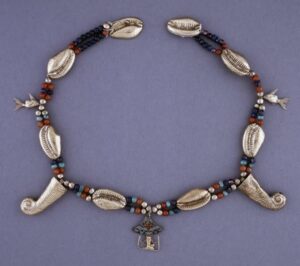
Meanwhile, the ancient Egyptians possessed an insatiable appetite for the rare, the exotic, and the distant. They went to extraordinary lengths to secure materials like Afghan lapis lazuli, which they considered among their most precious gemstones. Silver traveled along these very same trade routes into the Nile Valley. Because gold could be readily harvested close to home from the mountains of the Eastern Desert and Nubia—and potentially supplemented by local electrum—pure silver had to be imported from afar. Consequently, early Egyptian silver was valued far above gold, rendering it an exclusive commodity reserved exclusively for the societal elite.
By roughly 1600 BCE, however, the global supply of silver had expanded considerably, causing its market value to drop to about half that of gold. By this era, silver functioned as an abstract currency with a relatively stable value. Its popularity within Egyptian fashion ebbed and flowed; the famous tomb of King Tutankhamun contained surprisingly few silver artifacts, whereas Pharaoh Sheshonq II was laid to rest within a magnificent all-silver sarcophagus.
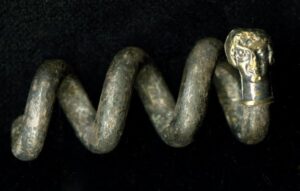
Further north and west, the Minoans and, subsequently, the Mycenaeans operated as prolific maritime traders, handling significant quantities of silver. Excavations across the Greek mainland, Crete, and Cyprus have yielded substantial amounts of early Greek silver jewelry. Concurrently, the Phoenicians played a transformative role in the Mediterranean basin through aggressive colonization and far-reaching trade networks. Phoenician enterprise initiated the large-scale exploitation of Spanish silver deposits, distributing the metal throughout the classical world and permanently shifting silver out of its strictly exclusive, exotic tier as availability surged to unprecedented heights.
Classical Silver: Greece, Rome, and Pliny’s Observations
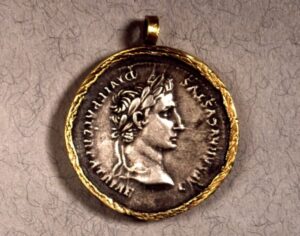
For both ancient Greek and Roman civilizations, the steady availability of silver was an absolute necessity, serving as the foundational backing for their newly minted coinages. While a greater volume of gold jewelry survives from the classical era—largely due to differing rates of survival and the continuous recycling of metals—surviving pieces demonstrate that silver was utilized across every conceivable category of personal adornment, including finger rings, anklets, and armlets.
The Romans harbored a particular fondness for niello, a surface decoration technique structurally akin to enameling, but executed using silver sulfate rather than vitrified glass. Niello proved significantly more durable than glass enamel and presented a striking metallic luster rather than a vitreous one. As Roman legions marched across Northern Europe, the technique diffused across the continent, leaving a lasting imprint on Anglo-Saxon artifacts in Britain and various finds throughout Eastern Europe.
Valuable contemporary insights into Roman attitudes toward the metal are preserved in the writings of the Roman author Pliny the Elder. In his sweeping encyclopedic work Naturalis Historia, Pliny offered a vivid, frequently skeptical commentary on humanity’s obsession with silver ore:
"After stating these facts, we come to speak of silver ore, the next (after gold) folly of mankind. Silver is never found but in shafts sunk deep in the ground, there being no indications to raise hopes of its existence, no shining sparkles, as in the case of gold. The earth in which it is found is sometimes red, sometimes of an ashy hue. It is impossible, too, to melt it, except in combination with lead or with galena… When submitted, too, to the action of fire, part of the ore precipitates itself in the form of lead, while the silver is left floating on the surface, like oil on water."
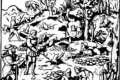
Pliny detailed the immense scale of Roman mining operations, noting that mines initially opened by Hannibal in Spain remained active centuries later, with individual tunnels yielding hundreds of pounds of silver daily through exhausting, round-the-clock labor. He also documented contemporary methods used by Romans to test the purity of silver plate:
"There are two kinds of silver. On placing a piece of it upon an iron fire-shovel at a white heat, if the metal remains perfectly white, it is of the best quality: if again it turns of a reddish colour, it is inferior; but if it becomes black, it is worthless. Fraud, however, has devised means of stultifying this test even; for by keeping the shovel immersed in men’s urine, the piece of silver absorbs it as it burns, and so displays a fictitious whiteness. There is also a kind of test with reference to polished silver: when the human breath comes in contact with it, it should immediately be covered with steam, the cloudiness disappearing at once."
Pliny frequently lamented the spiraling luxury of his contemporaries, contrasting the austere frugality of early Roman generals—who possessed meager silver allowances or ate exclusively from earthenware—with the staggering displays of plate by later patricians, who decorated banquet couches with silver and even shod the mules of Empress Poppaea in gold. He recounted how specific master silversmiths, such as Mentor, Acragas, Boëthus, and Mys, achieved immortal renown for their embossed and chased vases, cups, and bowls, though many of their finest masterpieces were ultimately lost to catastrophic fires in the temples of Ephesus and the Roman Capitol.
Celtic and Medieval Silver
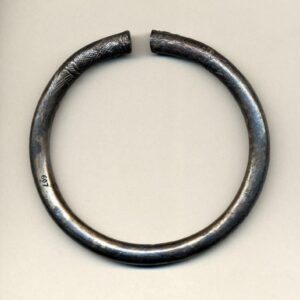
Among ancient Celtic tribes, silver—frequently paired with bronze—was integral to personal ornamentation. Elaborately decorated brooches, rigid torcs, and crescent-shaped lunulae stood as the most prevalent forms of jewelry. Prior to Roman conquest, the Celts did not mint standardized coins; instead, they utilized "ring money." These standardized rings, cast in silver, copper, bronze, or gold, were intended strictly as a medium of currency rather than items to be worn on the body.
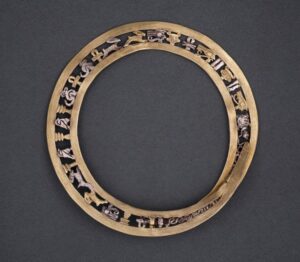
With the eventual collapse of Roman imperial supply lines, gold rapidly became an extreme rarity across Europe, propelling silver to the forefront of jewelry production. Germanic jewelry from this era focused primarily on functional items such as fibulae, disc brooches, penannular brooches, and heavy belt buckles. These pieces were predominantly fashioned from silver, occasionally gilded or inlaid with precious stones, with red garnets emerging as a dominant decorative preference.
From approximately 800 CE onward, persistent Viking incursions along the northwest European coast diverted vast quantities of silver into Scandinavia. This influx stimulated a flourishing tradition among regional silversmiths, cemented further by the discovery of rich Swedish silver deposits around the turn of the first millennium. The dark-and-light contrast characteristic of Roman niello was enthusiastically adopted by Germanic tribes, who used it to accentuate intricate, abstract engraving patterns.
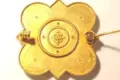
A prime surviving exemplar of this metallurgical tradition is the Fuller Brooch, an Anglo-Saxon circular brooch dating to the ninth century. Fashioned from hammered silver sheet-metal and heavily inlaid with niello, the brooch features an openwork outer zone surrounding a central roundel. The central field depicts personifications of the Five Senses, with a prominent three-quarter-length figure representing Sight. Surrounding panels display human figures personifying Taste, Smell, Touch, and Hearing, all set against a rich nielloed background.
As European society evolved and trade routes to the East gradually reopened, gold reclaimed its historical dominance in elite, high-end jewelry. Simultaneously, however, expanding international trade fostered the rise of an affluent middle class. Individuals outside the traditional ruling classes sought out personal adornment, creating a booming market for more affordable silver jewelry. The repertoire of silversmiths expanded beyond functional fastenings into purely decorative and symbolic rings, bangles, and pendants. By the close of the Middle Ages, the commercial trade in silver items necessitated formal regulatory systems, leading directly to the establishment of systematic silver assaying and hallmarking protocols.
Renaissance, Baroque, and Georgian Developments
The Renaissance era brought profound structural shifts across Europe. Following the fall of the Byzantine Empire in 1453, refugee scholars flooded into Europe, reviving classical knowledge. Concurrently, the Age of Discovery opened vast new horizons. Following Christopher Columbus’s landfall in the Americas, Spanish, Portuguese, French, Dutch, and English explorers raced to claim territories across the globe. Conquistadors such as Francisco Pizarro and Hernán Cortés dismantled the Inca and Aztec empires, respectively, unlocking staggering mineral wealth. The discovery of massive silver deposits—particularly in modern-day Mexico starting in 1546—flooded European markets with unprecedented quantities of the white metal. While basic silver-working techniques remained largely consistent with medieval methods, the sheer volume of newly accessible silver ensured that the metal remained a cornerstone of European currency and an affordable, highly versatile medium for decorative arts.
During the subsequent Baroque period spanning the seventeenth century, European involvement in the New World deepened. The Netherlands emerged as a dominant maritime and artistic powerhouse, frequently clashing with rival navies over heavy cargoes of American silver returning across the Atlantic. While silversmithing techniques remained steady, the period introduced novel applications for the metal. Portable timepieces emerged as mechanical novelties frequently housed in silver cases. More significantly, silversmiths began utilizing silver settings for diamonds. Intensified maritime trade with India allowed European merchants to bypass Arabic middlemen, importing large quantities of diamonds directly. Silver settings, with their bright white reflective quality, provided an ideal complement to the colorless stones.
This diamond-setting trend exploded during the Georgian era, buoyed by the continuous arrival of South American silver and the discovery of massive diamond deposits in Brazil starting in 1727. While fine jewelry continued to utilize gold foundations—often featuring silver-topped fronts to showcase diamonds—all-silver items remained common. The characteristic cut-down collet settings of Georgian jewelry were almost universally crafted from silver to harmonize with the cool brilliance of the stones.
Furthermore, the technological advent of die striking in 1777 revolutionized jewelry manufacturing. This mechanical process involved stamping and cutting precious metal components using heavy steel dies, drop hammers, and mechanical presses, allowing artisans to rapidly assemble complex jewelry lines by hand. Because this mass-production technique significantly reduced labor costs, manufacturers naturally gravitated toward more affordable metals. Consequently, immense quantities of die-struck silver jewelry saturated European commercial markets.
Victorian Silver and the Industrial Era
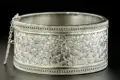
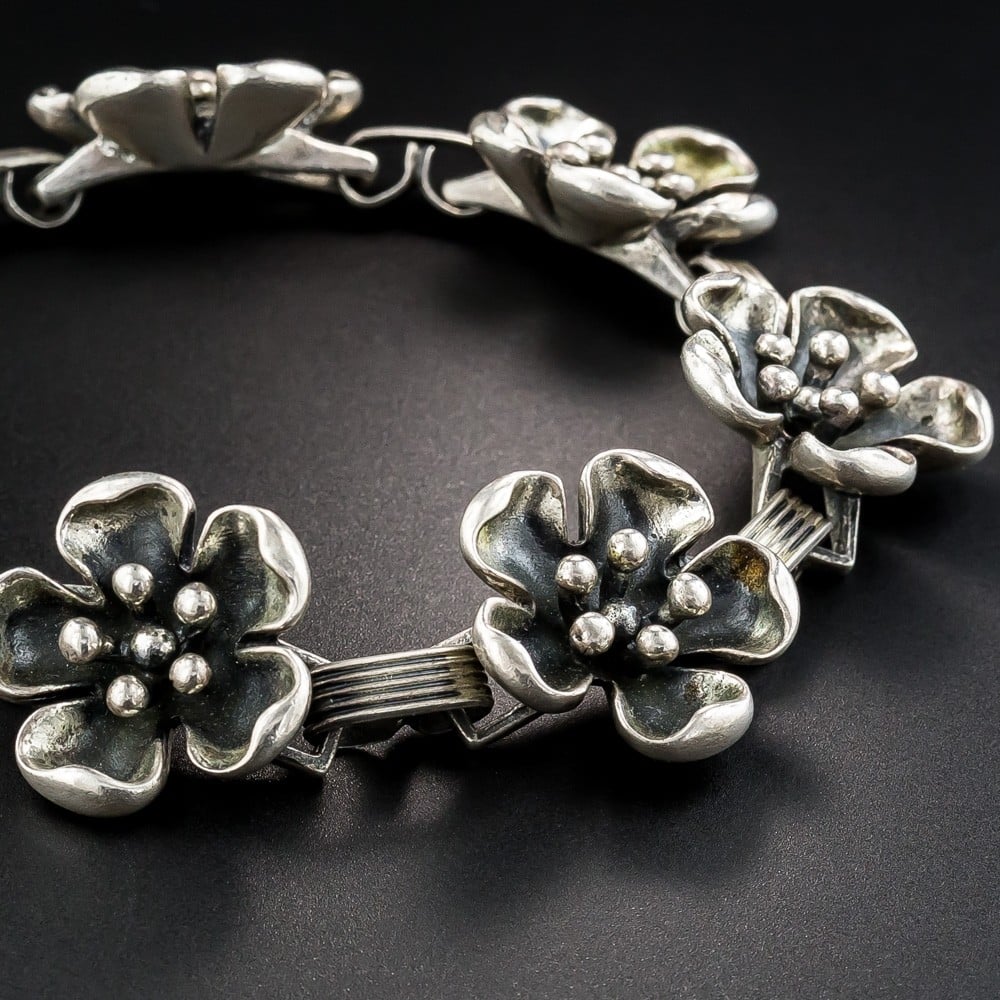
The momentum of the Industrial Revolution fundamentally transformed Victorian jewelry manufacturing, with silver serving as a primary medium for widespread mechanical stamping and die striking. As industrial techniques matured, regional cultural trends further boosted silver’s popularity. Following Queen Victoria and Prince Albert’s acquisition of Balmoral Castle in Scotland in 1848, Scottish agate jewelry surged into international fashion, predominantly executed in silver in keeping with Northern European traditions.
Toward the close of the Victorian era, the Arts and Crafts movement emerged as a direct ideological reaction against the mass industrialization of decorative arts. This sub-period prioritized artistic design and hand-craftsmanship over the raw intrinsic value of precious metals and gemstones. Arts and Crafts artisans deliberately favored silver over gold, frequently employing bezel-set cabochon stones rather than highly faceted gems.
Through every epoch of human civilization—from Bronze Age Mesopotamian currency rings and Roman banqueting plate to Anglo-Saxon niello brooches and industrial-era Victorian silver—silver has consistently demonstrated unmatched versatility, economic resilience, and artistic adaptability, securing its permanent place as one of the most vital metals in human history.