






Our editors curate highly rated brands that are first assessed by our rigorous ratings system. Buying through our links may earn us a commission—supporting the work we do. Learn more.
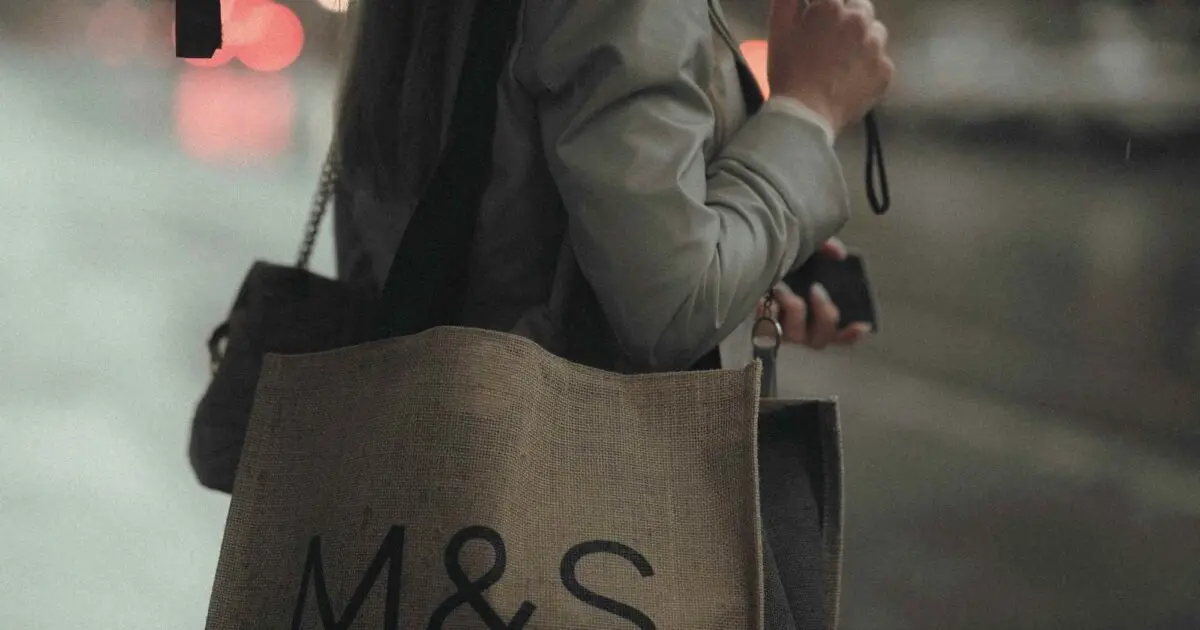
As Marks & Spencer makes its high-profile debut at London Fashion Week with a fast-paced "see now, buy now" runway format, observers and conscious consumers are asking a critical question: how sustainable are Marks & Spencer’s practices in the modern era? Based on Good On You’s comprehensive brand rating published in May 2026, the heritage British retailer receives a middling "It’s a Start" score. While the company is making some measurable efforts to take responsibility for its corporate actions, it continues to produce vast volumes of clothing and falls short of ensuring living wages are paid to its garment workers.
This analysis is based on the Marks & Spencer rating published in May 2026 and may not reflect subsequent claims or policy adjustments made by the brand since that time.
Marks & Spencer is known for quality, but what about sustainability?
Founded in 1884, the heritage brand Marks & Spencer has long been embedded in the fabric of British daily life. It functions as a reliable high street retailer for food, fashion, and homeware, as well as a massive regional employer whose financial results are routinely analyzed as an indicator of broader economic health. In recent decades, the business has successfully expanded its footprint overseas.
The company has historically been associated with high-calibre goods. Its iconic marketing tagline—“This is not just food, this is M&S food”—has even been adopted into the British cultural lexicon to signify superior quality. However, that reputation invites difficult questions in 2026, a time when Marks & Spencer is equally recognized for mass-producing clothing. Consumers and analysts alike are left wondering how a company can manufacture garments on such a massive scale to a supposedly high standard while selling them at accessible price points. Operating sprawling retail stores packed with dense racks of apparel raises pressing inquiries regarding material sourcing, manufacturing supply chains, and the ultimate destination of unsold or discarded inventory.
To address these concerns, sustainability watchdogs examine disclosed corporate information alongside publicly available third-party sources. When evaluated against Good On You’s leading sustainability methodology, Marks & Spencer achieves an overall score of "It’s a Start." This middling rating acknowledges the retailer’s active steps to reduce certain operational impacts while emphasizing that these measures do not go far enough for a major mass producer. Because this score has remained unchanged in recent reviews, analysts note that the company has either failed to take effective action to address its sustainability gaps or has chosen not to disclose such improvements publicly.
Environmental impact
When evaluating its environmental footprint, Marks & Spencer once again earns an "It’s a Start" rating.
On the positive side, the brand incorporates lower-impact materials into its collections. It reports that it remains on track to completely phase out virgin polyester in favor of recycled polyester across its clothing lines by 2026. While this transition represents a step forward, environmental experts note that polyester remains a fossil-fuel-derived synthetic fiber that sheds microplastics into water systems with every wash. Given that polyester stands as the brand’s second most-used material, critics argue that Marks & Spencer should focus on reducing its overall reliance on the fabric rather than merely swapping virgin synthetic fibers for recycled alternatives.
Concurrently, the retailer is working to curb greenhouse gas emissions across its manufacturing processes and has established science-based targets to lower emissions within both its direct operations and its extended supply chain.
Despite these initiatives, the dark side of mass production remains evident. Clothing manufactured by the brand has been identified on at least two separate occasions within textile waste dumps in the Global South. Although Marks & Spencer maintains that it does not intentionally export excess clothing for disposal abroad, the sheer volume of apparel produced inevitably contributes to severe post-consumer waste streams. The company has attempted to mitigate this through producer responsibility initiatives, including a take-back scheme in partnership with charity Oxfam, an in-house repair service, and a one-year guarantee on children’s clothing. Nevertheless, analysts emphasize that producing excessive volumes of goods fundamentally conflicts with long-term ecological sustainability.
The pressure on the brand’s environmental model intensified in 2026 with the rollout of "Love That Drop," a restructured fashion business model designed to accelerate production cycles. Under this program, monthly, trend-led capsule collections move from the initial design phase to the final product in as little as two weeks. This strategy mirrors the high-turnover cycle pioneered by fast-fashion businesses, which inherently encourages overconsumption and places immense pressure on factory suppliers. Furthermore, Marks & Spencer’s catwalk debut at London Fashion Week in September 2026 highlighted this shift toward accelerated consumption. The brand utilized a "see now, buy now" model, making runway products immediately available for purchase, contrasting sharply with traditional fashion industry calendars that typically require a six-month turnaround from the runway to retail shelves.
Labour rights
In the category of labor rights, Marks & Spencer receives another "It’s a Start" rating from analysts.
The brand demonstrates transparency and accountability in several key areas. More than half of its final production stage facilities are certified by the Sedex Members Ethical Trade Audit (SMETA) Best Practice Guidance. Additionally, the company discloses its tier-one fashion suppliers publicly in collaboration with the Open Supply Hub.
Marks & Spencer has also implemented targeted initiatives to support vulnerable women and girls within its supply chain. During the peak of the COVID-19 pandemic, the company established adequate workplace policies to safeguard workers from infection—a success it attributed to maintaining long-term relationships with trusted suppliers, widely considered an industry gold standard for factory partnerships.
While these measures set a commendable example for other high street retailers, a significant deficiency remains: the absence of a verified living wage for workers throughout the entire supply chain. At present, there is no evidence that garment workers are consistently paid a living wage, nor has the brand adopted a recognized living wage benchmark. Labor advocates maintain that fair compensation is a non-negotiable pillar of true supply chain justice.
Animal welfare
Animal welfare practices at Marks & Spencer are similarly graded with an "It’s a Start" score.
The retailer maintains a formal animal welfare policy aligned with the Five Domains of Animal Welfare. It sources its wool exclusively from non-mulesed sheep and ensures that all leather is procured from finishing tanneries certified by the Leather Working Group (WG). Moreover, the brand has established a target to source all of its wool from preferred sustainable standards by 2030, including certifications from the Responsible Wool Standard, Responsible Mohair Standard, Responsible Alpaca Standard, Recycled Claim Standard, and Global Recycled Standard.
Despite these standards, the company continues to utilize significant quantities of animal-derived materials, including leather, shearling, wool, down, and alpaca, all of which carry inherent risks of animal suffering and environmental degradation. Ethical fashion analysts suggest that Marks & Spencer should leverage its considerable purchasing power to accelerate the development and testing of emerging non-animal, non-plastic alternative materials.
Overall rating: "It’s a Start"
Marks & Spencer has clearly invested considerable effort into refining its operational practices over the years, distinguishing itself from many industry peers through robust transparency and disclosure. By publishing its tier-one supplier lists, scaling the use of recycled polyester, and openly tracking progress toward specific ecological goals, the brand has earned its middling "It’s a Start" rating from Good On You analysts. However, these positive strides are overshadowed by concerning strategic shifts toward fast-fashion methodologies, such as accelerated monthly clothing drops and immediate runway retail cycles.
To progress toward higher tiers of sustainability, Marks & Spencer must address the root cause of textile waste by actively decreasing its production volume and moving away from the traditional take-make-waste economic model. Deepening existing supply chain transparency by tracing raw material producers further down the chain would also strengthen its ethical standing. While improvements in animal material sourcing are welcome, reducing overall reliance on animal-derived products—such as winter cashmere collections—would further align the brand with modern ethical standards. Above all, committing to a guaranteed living wage for every worker involved in its manufacturing network is essential for a company of this scale.
Alternatives to Marks & Spencer
For shoppers who appreciate the variety and accessibility of high street retail but wish to support brands with superior environmental and ethical credentials, several alternatives operate within the "Good" and "Great" categories.
Toad&Co is a US-based brand crafting versatile menswear and womenswear designed for outdoor trails or everyday wear, predominantly available in sizes XS to 2XL.
Harvest & Mill produces organic cotton basics that are grown, milled, and sewn exclusively in the US, utilizing un-dyed and unbleached fabrics to conserve water and energy while supporting agricultural biodiversity.
Colorful Standard, a Danish apparel label, focuses on timeless, long-lasting organic essentials for men and women, consciously rejecting seasonal trends to combat overconsumption.
Sheep Inc specializes in responsibly sourced merino wool knitwear, adhering to strict principles of environmental harmony and animal welfare.
SeamsFriendly offers customizable clothing for women, men, and children across a wide spectrum of sizes and heights, tailoring garments to individual measurements to eliminate waste.
Printfresh, a US-based, majority woman-owned brand founded by textile designer Amy Voloshin, creates vibrant sleepwear and apparel inspired by nature in sizes ranging from 2XS to 6XL.
Oobi is an Australian children’s fashion and lifestyle brand utilizing breathable, low-impact, non-toxic dyes, avoiding animal products entirely, and opting for sea freight to minimize transport emissions.
Disruptor London provides PETA-approved vegan personal care products centered around ingredient transparency, waterless formulas, and plastic-free packaging.
Editor’s note: Feature image via Unsplash, all other images via brands mentioned. Good On You publishes comprehensive ratings evaluating the impact of fashion and beauty brands on people, the planet, and animals. Readers can explore thousands of brand evaluations through the Good On You directory.