






This month, the fashion industry finds itself grappling with a complex web of economic, social, and structural hurdles. From the rocky public market debut of ultra-fast-fashion giant SHEIN and the quiet financial beneficiaries of charity shop exports, to the systemic roadblocks plaguing sustainable brands and the sudden contraction of size-inclusive ranges, the landscape of modern retail is shifting beneath our feet. Industry watchers are being forced to re-examine what accountability, inclusivity, and true sustainability actually look like in a market that continues to reward volume over circularity.
SHEIN Shares Slide on Fast-Fashion Retailer’s Stock Market Debut
The ongoing saga of SHEIN’s attempts to go public took a fresh turn this month as the ultra-fast-fashion retailer officially made its debut on the Hong Kong stock exchange. Rather than the triumphant market entry the company likely hoped for, the launch was marred by an immediate downturn. In the minutes following its market opening, SHEIN’s stock slid as much as 10 percent, dragging down the company’s overall valuation and signaling a cautious—if not skeptical—reception from investors.
This bumpy landing represents just the latest in a series of strenuous challenges the retailer has faced in its prolonged quest to float on global stock exchanges. Prior to its Hong Kong debut, SHEIN’s concerted efforts to list on both the New York and London exchanges were repeatedly blocked or stalled. Regulators, lawmakers, and public watchdogs raised persistent, hard-hitting questions regarding the company’s opaque supply chain practices and allegations of labor exploitation. While the Hong Kong listing finally materialized, the initial market slide underscores the growing scrutiny investors face when backing business models deeply reliant on ultra-low-cost, high-volume fast fashion.
While Volunteers Keep Charity Shops Alive, a Billionaire Prince is Profiting
Beneath the glossy veneer of retail trends lies a much darker, convoluted global supply chain, particularly when it comes to the afterlife of donated clothing. A sweeping investigation published by Tansy Hoskins in The Telegraph has shed light on a deeply unsettling reality within the secondhand economy: the profits generated from exporting unsellable clothing donated to charity shops are ultimately flowing to an unexpected and elite beneficiary, the Crown Prince of Liechtenstein.
Charity shops rely heavily on the goodwill, unpaid labor, and tireless dedication of local volunteers to sort through mountains of donated garments every single week. However, a significant portion of these donations cannot be sold locally due to damage, oversupply, or shifting trends. As Hoskins’s long-read investigation reveals, these garments are bundled and exported on an industrial scale through strange, labyrinthine corporate structures. Instead of directly funding the charitable causes that everyday volunteers believe they are supporting, the financial gains from this secondary textile trade are winding up in the pockets of European royalty, exposing a glaring disconnect between public goodwill and private corporate profit.
Why Fashion’s Economics Work Against Sustainable Brands
For brands attempting to build an ethical business model from the ground up, the current economic climate is proving increasingly hostile. Following the recent bankruptcy filing of MUD Jeans, Business of Fashion’s Shayeza Walid penned an insightful analysis examining the severe structural challenges that more sustainable labels face in a market fundamentally tilted in favor of traditional linear models.
Chief among these hurdles is the financial burden of circularity. Sustainable brands are often expected to shoulder the immense costs associated with end-of-life care for clothing, recycling infrastructure, and truly eco-friendly material sourcing, all while competing against multi-billion-dollar fast-fashion corporations that externalize their environmental and social costs. As Walid points out in her assessment, asking individual, values-driven businesses to single-handedly construct a more sustainable fashion system will only take the industry so far. The underlying economics of the existing global framework continue to actively reward companies for making and selling more, leaving smaller, conscientious brands fighting an uphill battle against an entrenched economic tide.
Where Did all the XXL Clothes Go? Fashion Brands are Scrapping Plus Sizes in the GLP-1 Era
The hard-won progress of the body positivity movement and the push for inclusive sizing appear to be facing a sudden and unexpected retreat. According to a comprehensive interactive report published by The Guardian, fashion brands across the United States are quietly reducing the size inclusivity of their ranges, with a noticeable contraction in the availability of XXL and plus-size clothing.
This regression is being heavily driven by the massive, widespread adoption of new weight-loss drugs, commonly known as GLP-1 receptor agonists. As consumer demographics shift in response to these pharmaceutical treatments, major retailers are shrinking their size offerings, often blaming a drop in demand. However, industry experts and consumer advocates strongly dispute this narrative. They argue that the lack of demand is a manufactured excuse and that finding well-fitting clothes for a diverse range of body types remains a massive, unaddressed pain point for everyday shoppers. Consequently, many consumers are now forced to scour secondhand marketplaces simply to find clothes that adequately fit their bodies.
Global Fashion Brands’ Purchasing Practices Are Shifting Financial Pressure of Decarbonisation Onto Suppliers
As public pressure mounts for the fashion industry to clean up its carbon footprint, corporations are eager to broadcast their net-zero targets and decarbonization milestones. However, a troubling new assessment by the Business and Human Rights Centre reveals that the financial reality behind these green pledges is far less glamorous for those at the bottom of the supply chain.
The Centre has been actively tracking the real-world impacts of fashion brands’ climate initiatives and discovered a widespread trend: the massive financial cost of transitioning to greener production methods is being systematically shifted onto suppliers. Rather than absorbing the costs of factory upgrades, renewable energy integration, or lower-emission materials, wealthy global brands continue to enforce purchasing practices that squeeze supplier margins. Furthermore, labor leaders have raised urgent concerns that even when decarbonization movements are underway in manufacturing hubs, they do not necessarily translate into improved working conditions, fair wages, or enhanced safety for garment workers.
“Good” and “Great” News
Every month, the editorial team publishes news and product highlights from highly rated brands that have been rigorously assessed using a comprehensive ratings system. Utilizing these recommended codes and links may earn a commission, which directly supports the independent journalism and research conducted by the organization.
Svala Creates New Material For Vegan Tote Bag
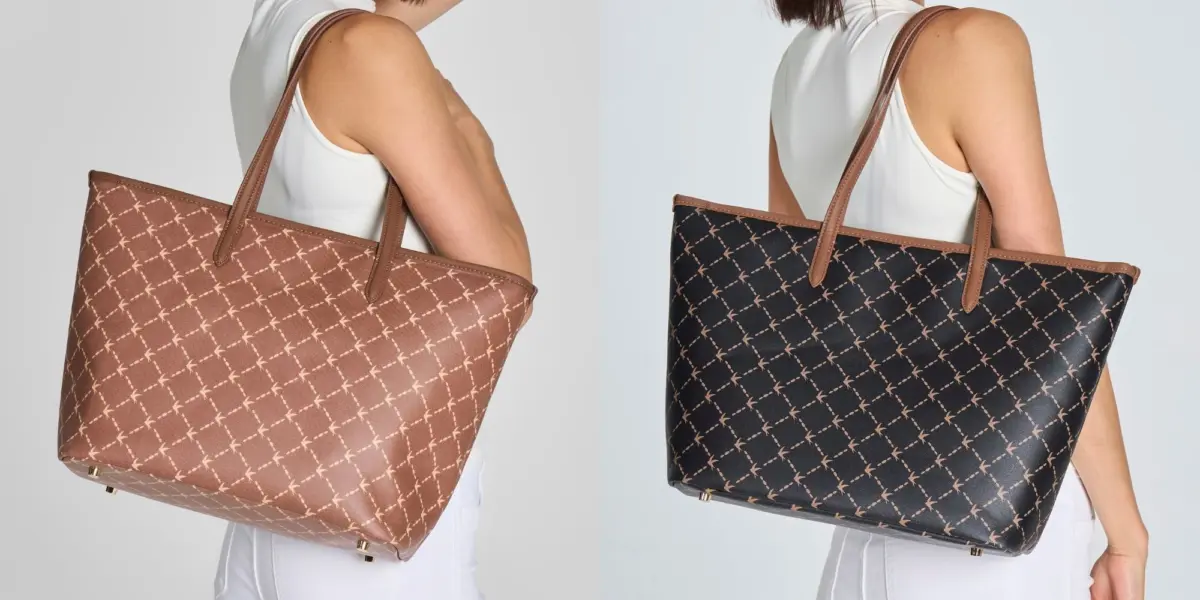
Amid the broader industry challenges, values-driven brands continue to innovate in material science. Following the disruption caused by the unavailability of several long-relied-on, next-generation sustainable materials such as MIRUM and Pinatex, the “Good”-rated brand Svala took proactive steps to maintain its ethical standards. The brand partnered closely with an innovative supplier to develop a brand-new vegan tote bag, christened the Vita.
The new bag utilizes a specialized printed coated canvas crafted from GOTS-certified organic cotton, finished with a durable, PVC-free TPU coating. This eco-conscious material is brought to life in partnership with a specialist coated-canvas manufacturing facility located in China, which is actively working toward achieving official B Corporation certification by 2027.
Good On You maintains the world’s most comprehensive independent ratings system assessing fashion and beauty brands based on their ongoing impact on people, the planet, and animals. Shoppers looking to make more informed purchasing decisions can explore the public directory to search through thousands of independently rated brands.