


In the world of modern cinema, where computer-generated imagery often dominates the visual landscape, the tangible art of production design remains a vital anchor for storytelling. Few understand this delicate balance between the physical and the digital better than veteran production designer Christopher Glass. Fresh off the wildly imaginative sets of director Boots Riley’s upcoming film I Love Boosters, Glass has spent his career shaping the physical environments that ground surreal cinematic universes in a visceral, tactile reality.
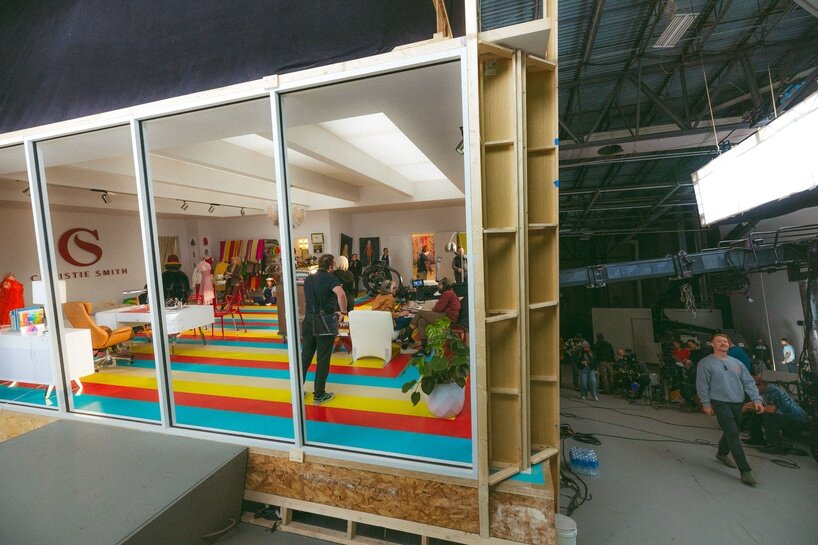
I Love Boosters, which stars Keke Palmer, Demi Moore, and Eiza González, serves as a masterclass in absurdist set design rooted in sharp social satire. In the film, Moore portrays Christie Smith, a salacious and eccentric fashion designer whose corporate headquarters are situated in a fictionalized version of San Francisco’s famously troubled Millennium Tower—a luxury skyscraper that has notoriously sunk and tilted into the ground over time. Rather than relying entirely on digital trickery, Glass and his team brought this architectural nightmare to life by constructing physical sets at a daring 15-degree angle.
The resulting office environment lampoons the real-world structural deficit with elaborate physical comedy. Complete with scattered design sketches, sprawling racks of high-end clothing, and meticulously placed colorful accoutrements, the egregiously slanted workspace forces characters to slip, slide, and desperately struggle just to shut a door. For Glass, building these kinds of challenging environments is all part of a day’s work in a career that has spanned high-concept blockbusters, avant-garde music videos, and groundbreaking commercials.
Designing Inside the Boots Riley Universe
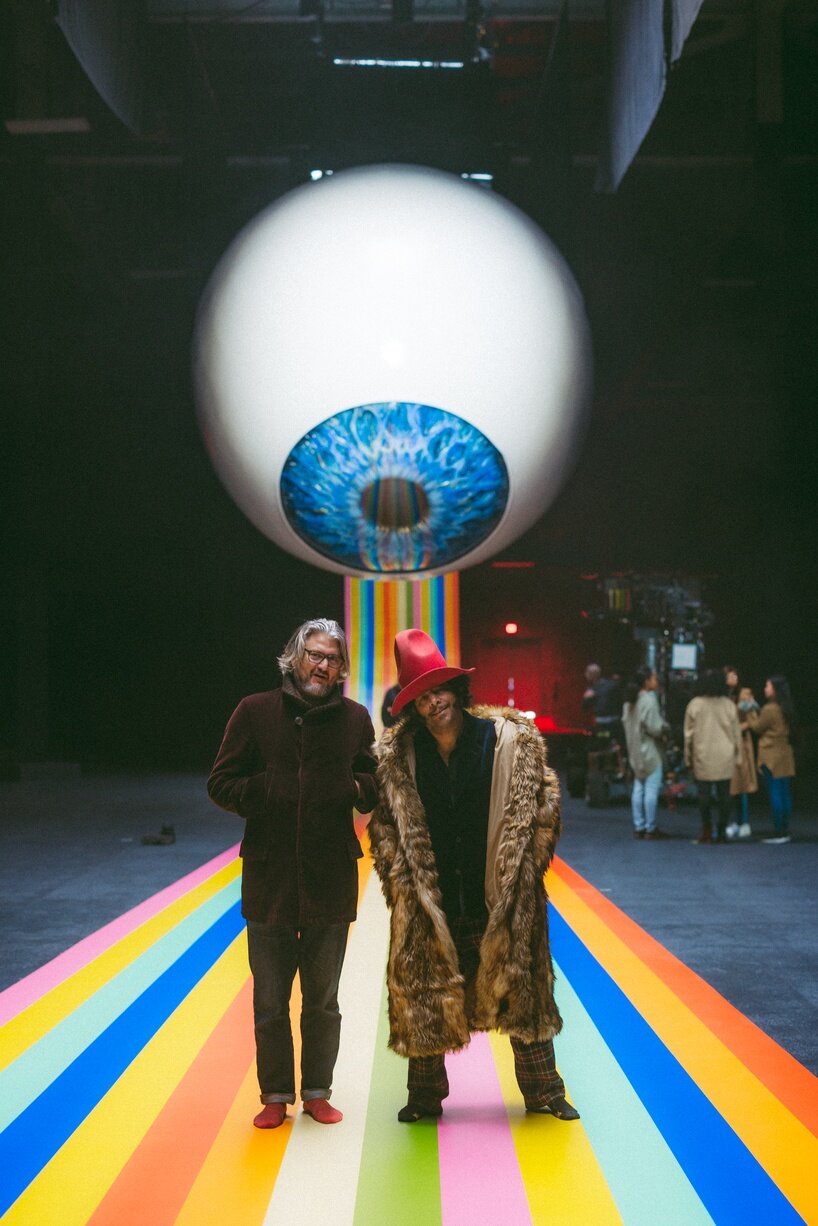
Collaborating with Boots Riley is an exercise in navigating a singular creative landscape. Known for his imaginative storytelling that frequently incorporates miniatures, puppets, stop-motion animation, and fantastic costumes, Riley pushes production designers to venture far beyond conventional aesthetic boundaries.
Reflecting on the unique challenges of working with the director, Glass notes that Riley’s visions introduce elements that most people would truly never think of on their own. Yet, despite the presence of surreal occurrences—ranging from skinless characters to a menacing, sentient ball of junk—Glass emphasizes that Riley’s stories retain a profound emotional core. Beneath the bizarre exterior lies a relatable kernel of human experience that grounds the narrative.
That menacing ball of junk, which stalks Palmer’s character throughout the film, was brought to life through traditional miniature magic rather than digital shortcuts. Glass and his team constructed tiny, meticulously detailed versions of San Francisco’s iconic sloping streets, allowing an ominous, rolling sphere composed of scrapped clothing and eviction notices to terrorize the film’s protagonist in camera.
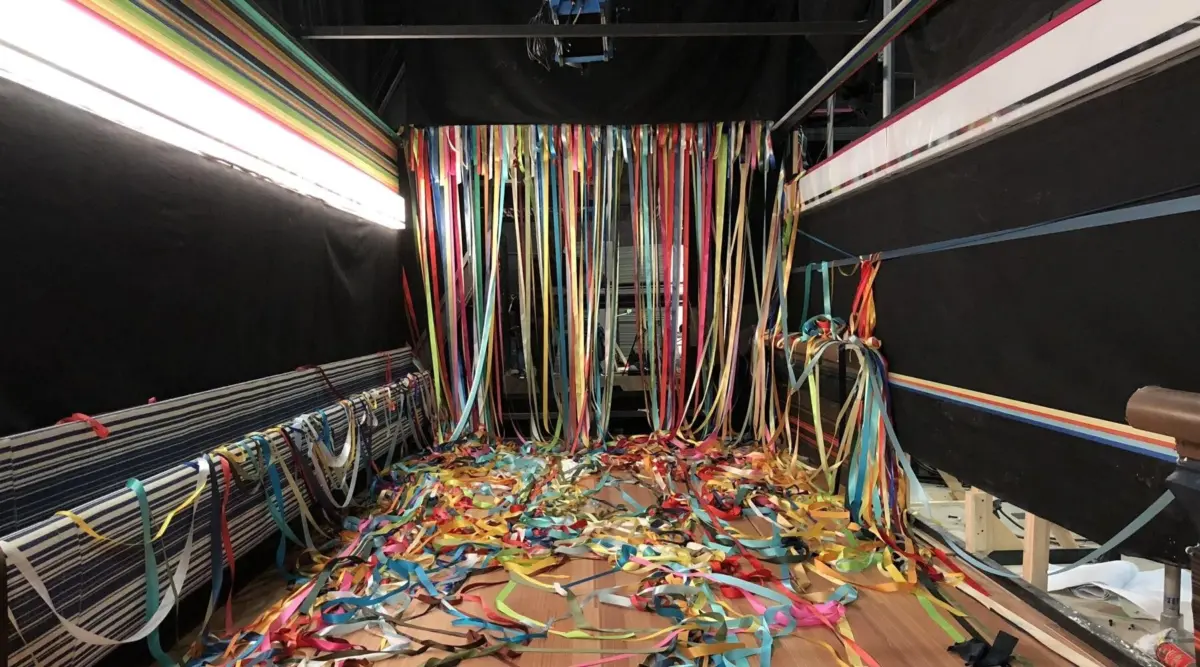
Another major visual highlight of the film involved a sequence where Keke Palmer’s character, Corvette, wears a dress featuring a plaid print that literally explodes off the textile. Eschewing computer-generated visual effects for the moment, Glass relied on a practical technique he had perfected over years of experimentation. Drawing on his extensive prior experience working with ribbons, he and his team utilized pre-cut ribbons of extended lengths to create a physical explosion of fabric right on set, capturing the dynamic energy organically.
From Blockbusters to Experimental Commercials
Glass’s creative footprint extends far beyond feature films into the realm of high-end commercial directing, where brands occasionally offer a playground for risk-taking visual ideas. One of his most celebrated commercial collaborations came in 2018 when he teamed up with director Spike Jonze for Apple’s HomePod commercial, Welcome Home, starring FKA Twigs.
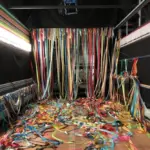
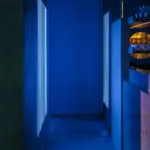
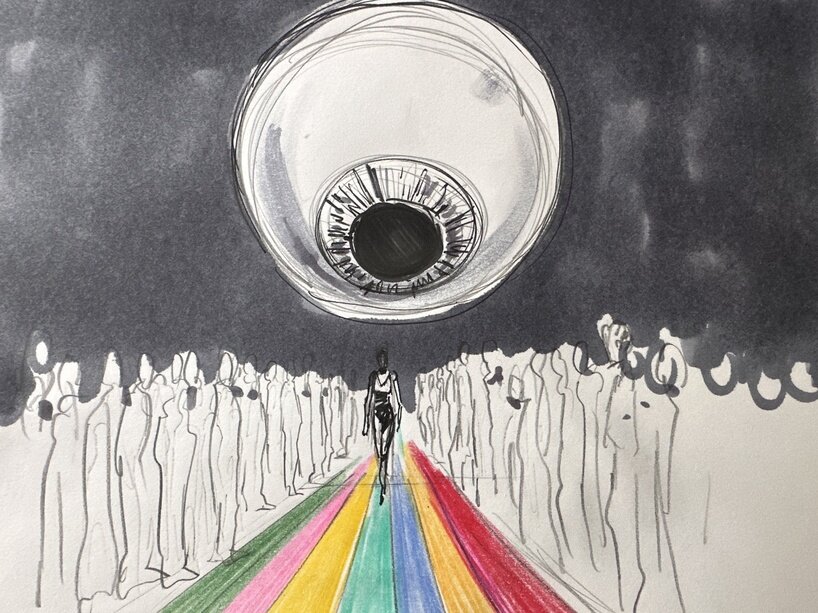
In the visually arresting advertisement, FKA Twigs portrays a weary commuter returning to her humdrum apartment after a long day at work. Upon asking Siri to play music, her living space begins to dramatically expand, morphing into a kaleidoscopic flurry of vibrant rainbow stripes and shifting walls. Creating this illusion required an intricate choreography of moving physical set pieces that would spin open, navigate hallways lined with tightly bound ribbons, and accommodate the dancer alongside a body double.
Reflecting on the immense technical pressure of the shoot, Glass admits that during the construction process, he genuinely feared the project would mark the end of his career if the complex mechanics failed to function properly. Fortunately, the ambitious gamble paid off, earning a prestigious Grand Prix at the Cannes Lions festival.
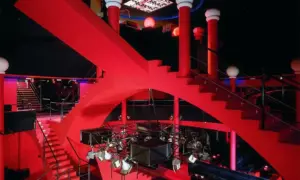
Glass points out that commercials have historically provided a unique space for experimental design because brands often prioritize "branding creative"—expressing a broader emotional aspiration rather than merely highlighting a product’s functional features. This philosophy has allowed Glass to build similarly inventive environments for a diverse array of global brands, including an expanding house for Leroy Merlin, a towering world for an Experian financial adviser, and a stylized noir universe for Jim Beam’s Willem Dafoe campaign.
When to Go Real and When to Go Digital
While Glass excels at crafting tactile, physical environments, his filmography also includes massive franchise blockbusters that require a seamless integration of live-action elements with advanced digital effects. His work on major superhero properties like Marvel’s Ms. Marvel and DC’s Batgirl highlights his adaptability across different scales of production.
Earlier in his career, in 2015, Glass worked on Disney’s live-action adaptation of The Jungle Book, a film that followed in the pioneering footsteps of James Cameron’s Avatar by merging computer-generated scenery with live performances. Because the production centered around a young human actor playing Mowgli—who served as the sole live-action performer in the entire film—every single physical object the actor interacted with had to be built by hand.
From carefully engineered leaves and the snake skin Mowgli pulls up from the forest floor to logs he climbs and branches he pushes aside, Glass’s department constructed physical props in varying scales to match the specific action required by the scene. Depending on the framing and movement, pathways were built narrower or wider to ensure the correct interaction and shadows within the digital environment.
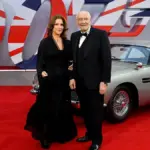
Ultimately, whether he is designing a tilting skyscraper in San Francisco, an expanding apartment in a music video, or a dense jungle floor for a fantasy epic, Christopher Glass remains deeply invested in the physical craft of filmmaking. Despite holding the title of production designer, he is rarely found sitting back once the blueprints are approved. Whether he is dusting a battlefield with dark ash and arranging props for a war-action film like 12 Strong or getting his hands dirty with paint and set dressing, Glass admits he is simply a passionate fan of the medium who refuses to feel separated from the creative process.