






Toronto’s Financial District is defined by a striking dual personality. During the traditional workweek, its towering skyscrapers and concrete canyons become a frantic epicenter of commerce, flooded with fast-paced professionals moving purposefully in sharp business-casual attire. Yet, as Friday evening rolls around and gives way to the weekend, the neighborhood exhales, slowing its pulse to a much more relaxed, contemplative rhythm. Navigating this sharp transition requires a venue capable of matching both the high-energy drive of corporate life and the tranquil sanctuary desired by weekend diners. Enter Shinji, a sophisticated new Japanese steakhouse situated at 333 Bay Street, which successfully bridges these contrasting worlds by marrying a lively, highly social atmosphere with an immersive, indigo-drenched sanctuary.
Brought to life by Harlo Entertainment—the hospitality group renowned for local favorites such as Linny’s and Sunny’s Chinese—Shinji represents a meticulous exercise in cultural translation and authentic hospitality. The restaurant brings together a curated collection of high-quality imports, including custom-crafted tableware and staff uniforms sourced directly from Japan, establishing an environment where deep care is woven into every operational detail. From the overarching architectural vision down to the shared plates on the menu, Shinji offers an atmosphere designed to foster genuine connection and comfort within the bustling core of downtown Toronto.
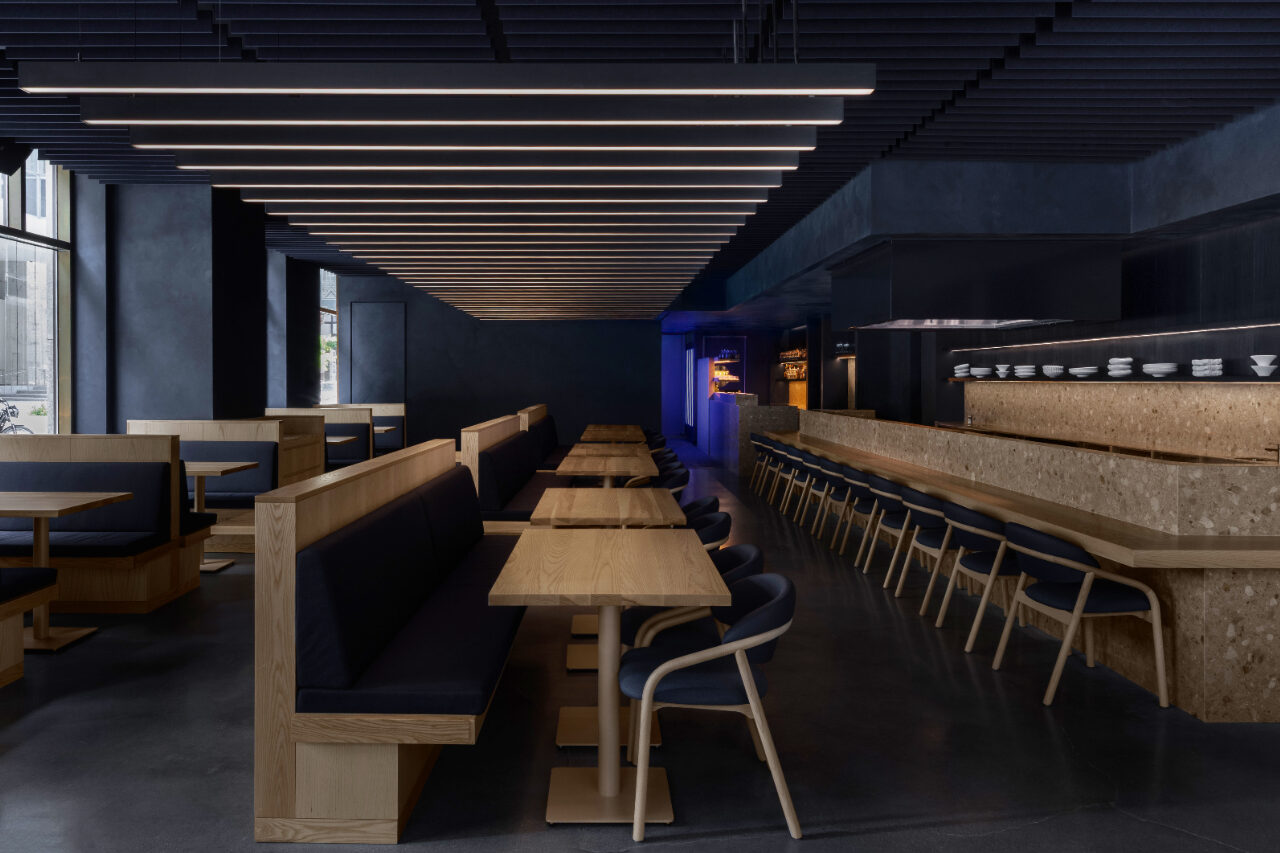
The striking physical manifestation of this vision was masterminded by Odami, an acclaimed Toronto-based architecture and design firm. Stepping inside, visitors are immediately met with an interior that is awash in a rich, saturated palette of color and texture. Yet, despite the dominant presence of deep blues and the mesmerizing linear lighting pendants that stretch gracefully across the ceiling, the interiors never feel overwhelming. Instead, Odami grounded the space in authentic materials and traditional Japanese design touches, ensuring the environment remains balanced and restrained.
The conceptual anchor for the entire interior design project draws unexpected inspiration from an unlikely source: Japan’s historic and enduring denim industry. Rather than executing a literal, heavy-handed translation of the material, Odami utilized denim as a conceptual lens. As both a luxury fashion staple and a rugged workwear basic, denim inherently straddles the line between high-brow aesthetics and humble utility, developing a rich, personalized patina that only grows more distinguished with age and wear. Keeping this philosophy at the forefront, the design team approached Shinji with an unwavering emphasis on craftsmanship, tactile longevity, and the rich, indigo hues that define the fabric.

This journey of discovery begins the moment guests arrive at the entrance. Visitors make their way into the establishment via a slight architectural ramp, neatly bordered by blue-stained wood panels and specialized acoustic paneling. This thoughtful threshold offers a gradual transition from the busy urban sidewalk of Bay Street, granting guests their initial, enticing glimpse of the central dining room where a team of skilled culinary professionals work in full view behind the counter.
Moving further into the main dining room, the immersive design narrative deepens. The walls are dramatically drenched in a dark blue limewash that absorbs the ambient light, while the ceilings are fitted with matching blue acoustic baffles to maintain an intimate acoustic quality. Upholstery in the very same deep indigo shade covers the comfortable banquettes and locally sourced ash wood seating. Pale stone surfaces and warm, directional lighting act as a deliberate counterpoint to the enveloping blues, creating a dining space that feels profoundly tactile, grounded, and subtly elegant.

Behind the swinging doors and along the open kitchen counters, executive chef and partner Jia Zou leads a culinary program that matches the uncompromising ambition of the physical design. To achieve authenticity, Zou and his kitchen team traveled extensively through Japan, visiting numerous culinary regions, neighborhood izakayas, and high-end establishments to study local techniques and secure seasonal ingredients. During their travels, they met directly with regional producers and agricultural experts in places like Himeji and Kobe to explore the nuances of world-class Kobe beef and other top-tier imports.
The dedication to sourcing and technique is evident across the menu, which balances traditional preparation with contemporary flair. Diners can experience exceptional cuts such as the A5 striploin, alongside carefully crafted accompaniments like the refreshing matcha soba salad and the restaurant’s signature Shinji Surf and Turf. Reflecting on the inspiration behind the menu, Zou notes that the journey through Japan left an impression that extended far beyond the food itself. According to the chef, what truly resonated with the team was the profound level of care infused into every single meal, establishing great ingredients, sound technique, and genuine hospitality as the uncompromising benchmark for Shinji.

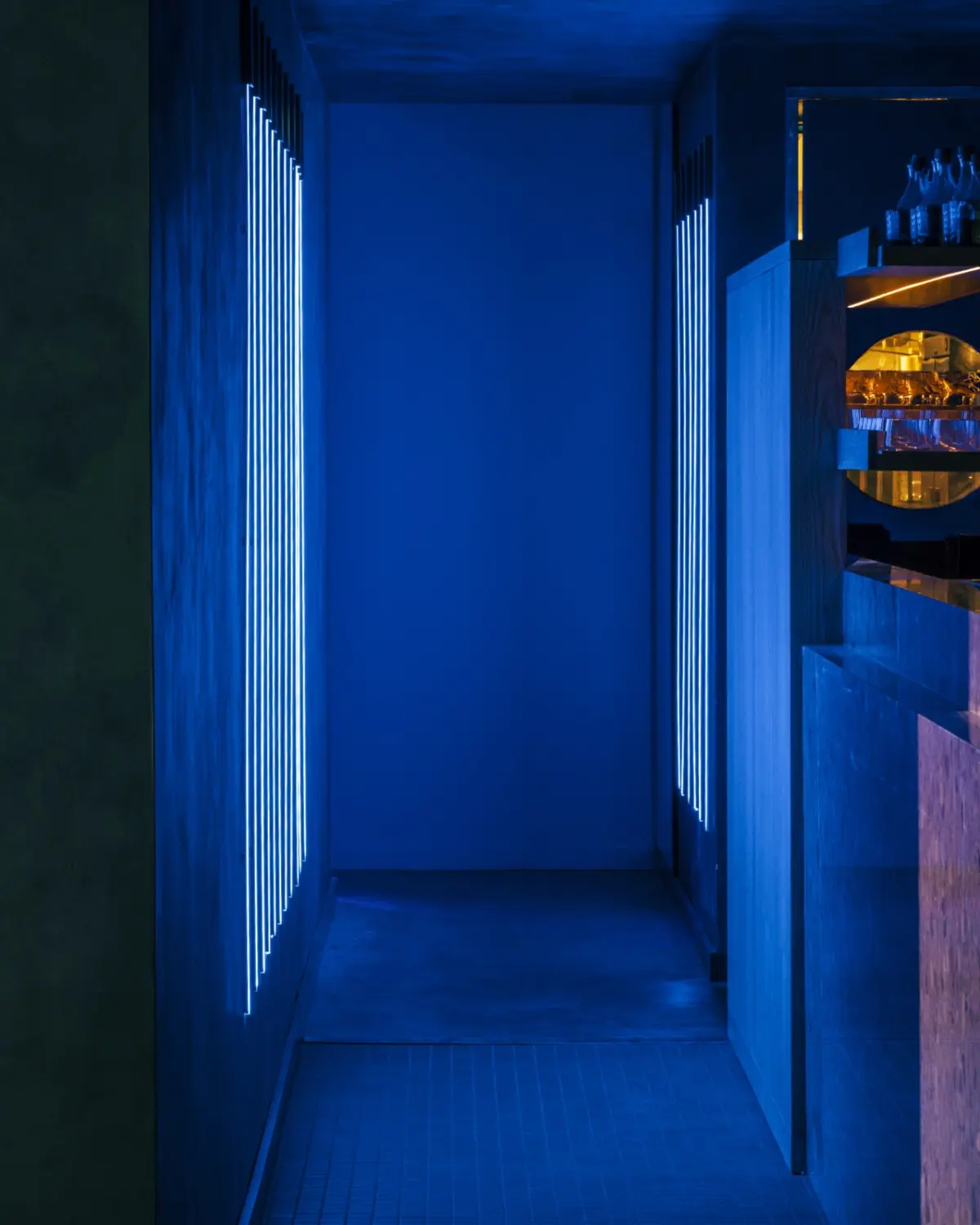
That exact commitment to meticulous detail effortlessly carries over into the physical experience of moving through the restaurant, culminating in one of the most unexpected and talked-about design moments on the premises: the journey to the restroom. Designed as a sequence of gradual discovery, the hallway leading away from the dining room features inky walls that subtly brighten into a more vivid, electric shade of blue. This chromatic progression ultimately terminates in a magenta-tinted bathroom space, an aesthetic choice directly inspired by the saturated, neon-drenched light of traditional Japanese karaoke bars and urban nightlife. True to the ethos of the entire project, this vibrant shift in atmosphere is executed not as a cheap theatrical spectacle, but as a deeply considered, respectful nod to the vibrant culture that inspired Shinji’s creation from the ground up.