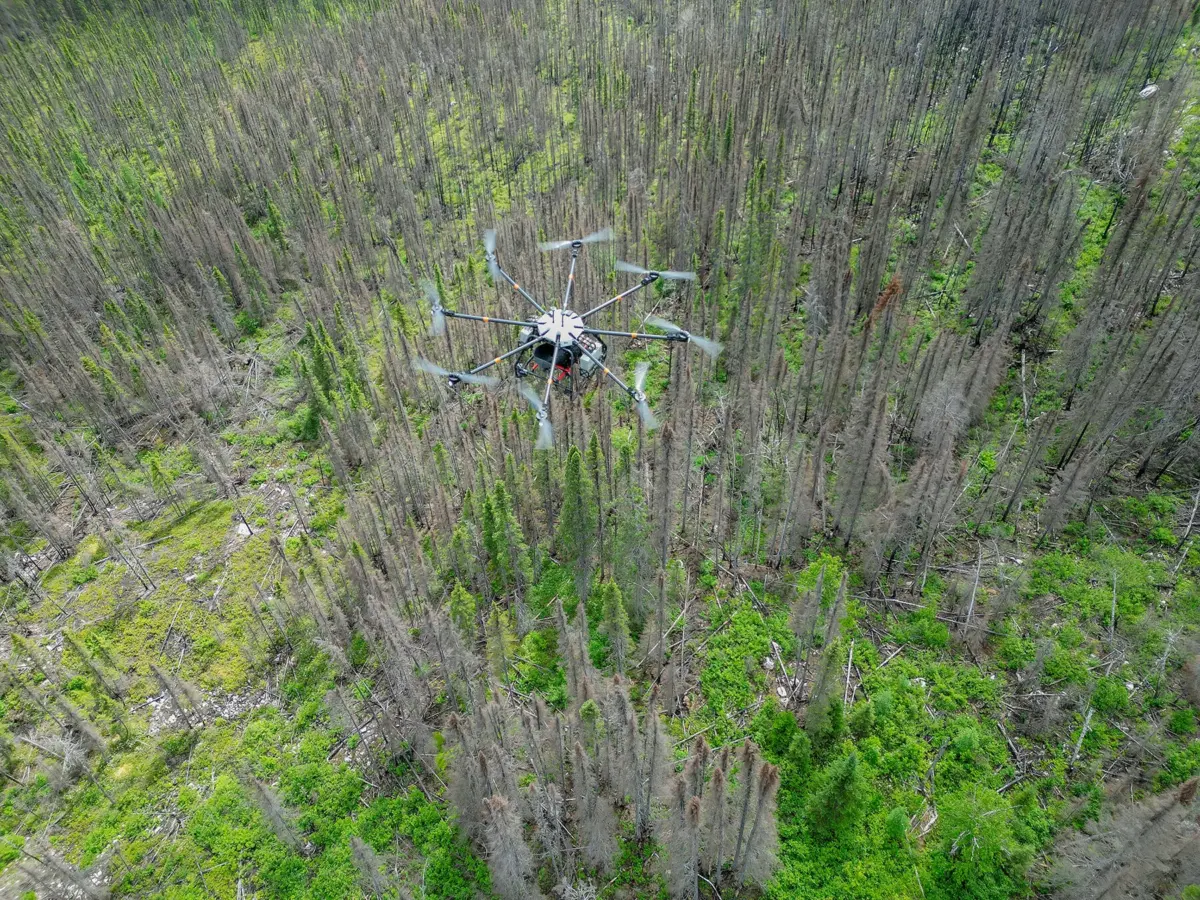
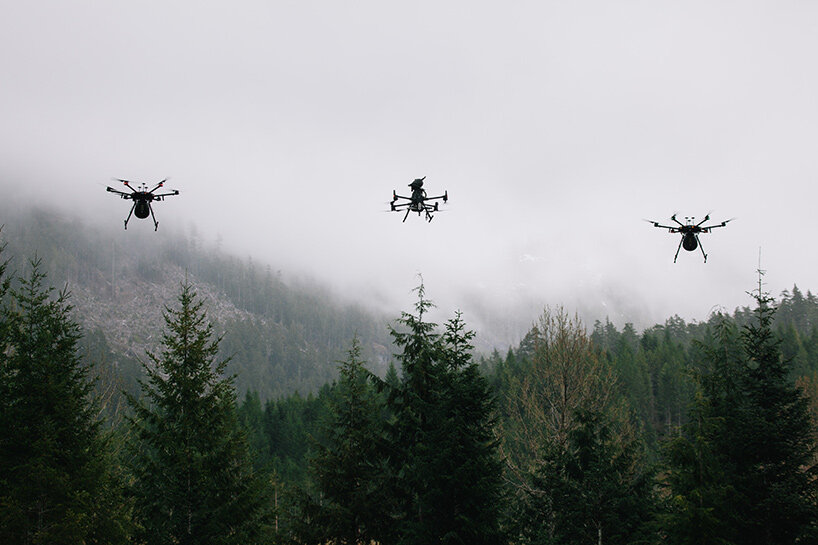
Across the blackened, skeletal forests of northern Quebec, advanced aerial technology is offering a new lease on life for landscapes devastated by extreme wildfire. High above the charred remains of ancient trees, specialized drones trace calculated flight paths, launching small, seed-filled capsules directly into the ash and earth below. Each of these descending projectiles carries the genetic blueprint of a new tree, carefully packed with engineered ingredients intended to give vulnerable seedlings a fighting chance in severely damaged soil.
The ambitious aerial reforestation initiative is spearheaded by Flash Forest, a Canadian green-tech company utilizing drone technology to restore ecosystems ravaged by fire, particularly in remote regions that remain virtually inaccessible on foot or via heavy ground machinery. This large-scale intervention follows closely on the heels of Quebec’s catastrophic 2023 wildfire season, an unprecedented ecological crisis that saw approximately 4.5 million hectares of forest burn across the province.
In the wake of that disaster, Flash Forest has significantly scaled up its operations, expanding its footprint across various vulnerable regions in Canada. According to the company’s latest impact report, its crews and automated systems successfully planted 686,147 trees across five distinct sites over the course of 2025, covering a total area of 429 hectares of burned forest. By deploying drones, the organization is able to seed massive tracts of land rapidly while entirely bypassing the need to deploy heavy tractors, trucks, or foot crews that could further compact or erode a delicate, recovering forest floor.
Tiny Engineered Pods Give Seeds a Place to Grow
At the core of Flash Forest’s technological innovation is a carefully crafted, biodegradable seed pod designed to support a young tree through the most precarious phase of its life cycle. Each capsule is engineered to house much more than just a seed; it contains a precise blend of vital nutrients, moisture-retaining additives, and mycorrhizal fungi. These microscopic fungi play a crucial symbiotic role, helping developing root networks efficiently absorb scarce water and nutrients from harsh, nutrient-depleted post-fire soils.
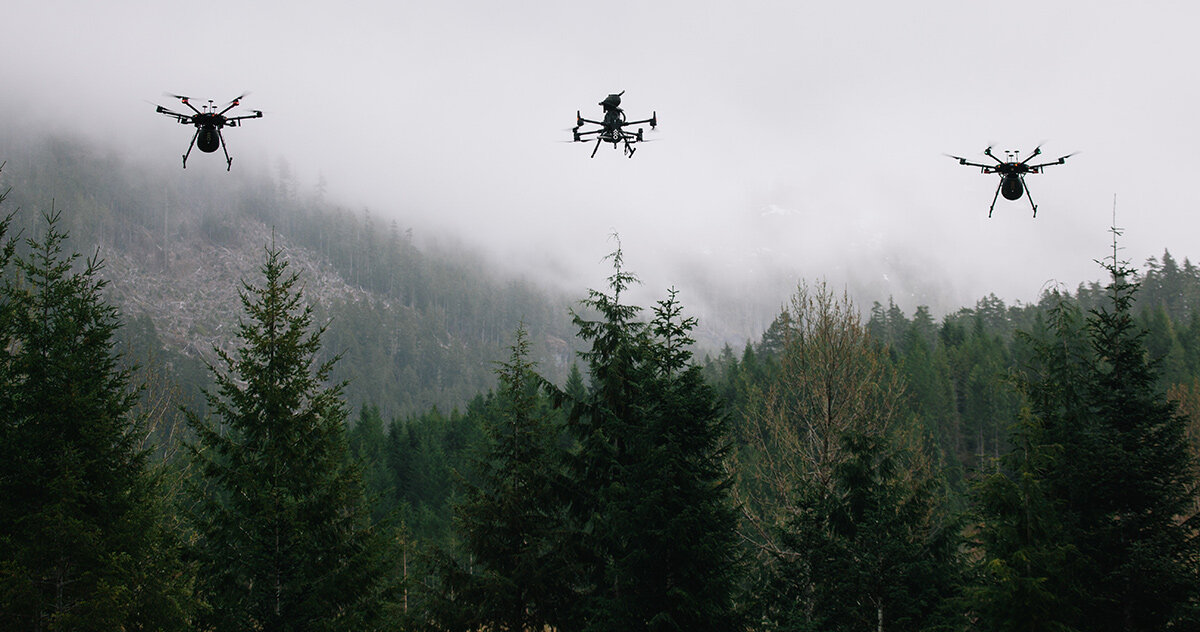
Customized heavy-duty drones propel these pods directly into the ground with enough force to breach the top layer of ash and earth. This direct-sowing method allows the seeds to germinate naturally on-site without spending the first few years of their lives growing in a traditional tree nursery.
The capsules are manufactured to strict, uniform dimensions, ensuring they can pass smoothly through the automated feeding and launching mechanisms mounted beneath the drones. The composition of each pod is tailored specifically to the physiological demands of the targeted tree species, with shell materials selected for their ability to trap ambient moisture and shield the seed during early root formation.
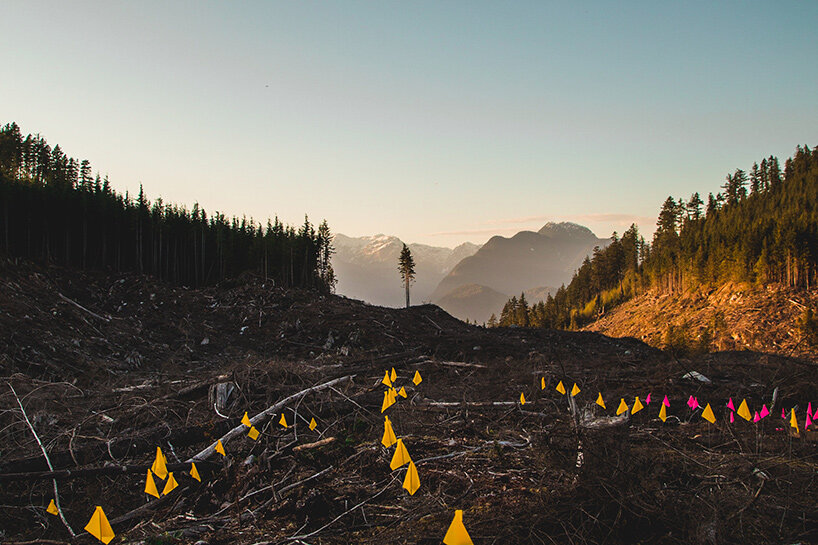
By sowing seeds directly into the scorched landscape, the company also successfully avoids the severe transplant shock that frequently stunts or kills nursery-grown saplings when they are moved into the wild. Nevertheless, the company acknowledges that technology is only part of the equation; even with an engineered starting point, successful germination remains heavily dependent on the localized weather, soil conditions, and micro-climates of each specific planting site.
Collecting Millions of Seeds in Northern Quebec
Behind the high-tech veneer of automated drone deployment lies an intensely physical, traditional effort to gather viable seeds directly from the native forests. In northern Quebec, Flash Forest has partnered closely with the Oujé-Bougoumou Cree First Nation to restore vast swaths of forest severely impacted by the 2023 blazes, which wiped out critical wildlife habitats and heavily disrupted traditional hunting grounds and cultural practices.
When the region faced an acute shortage of native seeds in the aftermath of the fires, the collaborative team launched rigorous winter expeditions. Battling extreme conditions with temperatures plummeting as low as -30 degrees Celsius, workers traveled by snowmobile and climbed through frigid, damaged stands to hand-collect healthy jack pine cones directly from surviving or partially scorched trees.
This demanding winter operation successfully yielded approximately 8.5 million jack pine seeds. Remarkably, these wild-harvested seeds were processed and integrated into custom planting pods within just five months of collection.
For Benny Blacksmith of the Oujé-Bougoumou Cree First Nation, the aerial reforestation process represents a vital pathway toward ecological healing while avoiding any additional heavy machinery disturbance to the vulnerable land. Reflecting on the aftermath of the fires, Blacksmith recalls how even small mammals and birds completely vanished from the scorched zones, creating a devastating cascading effect that starved larger predator and prey species alike. Through the partnership, the local community ultimately hopes to see the return of native canopy species, including white birch and black spruce, to the healing landscape.
The Longer Process of Rebuilding a Forest
The work carried out by Flash Forest does not end once the drones complete their final flight passes over a designated sector. The company maintains an ongoing commitment to scientific monitoring, conducting thorough initial surveys to assess existing post-fire vegetation before returning repeatedly over subsequent seasons to track seedling establishment and growth rates.
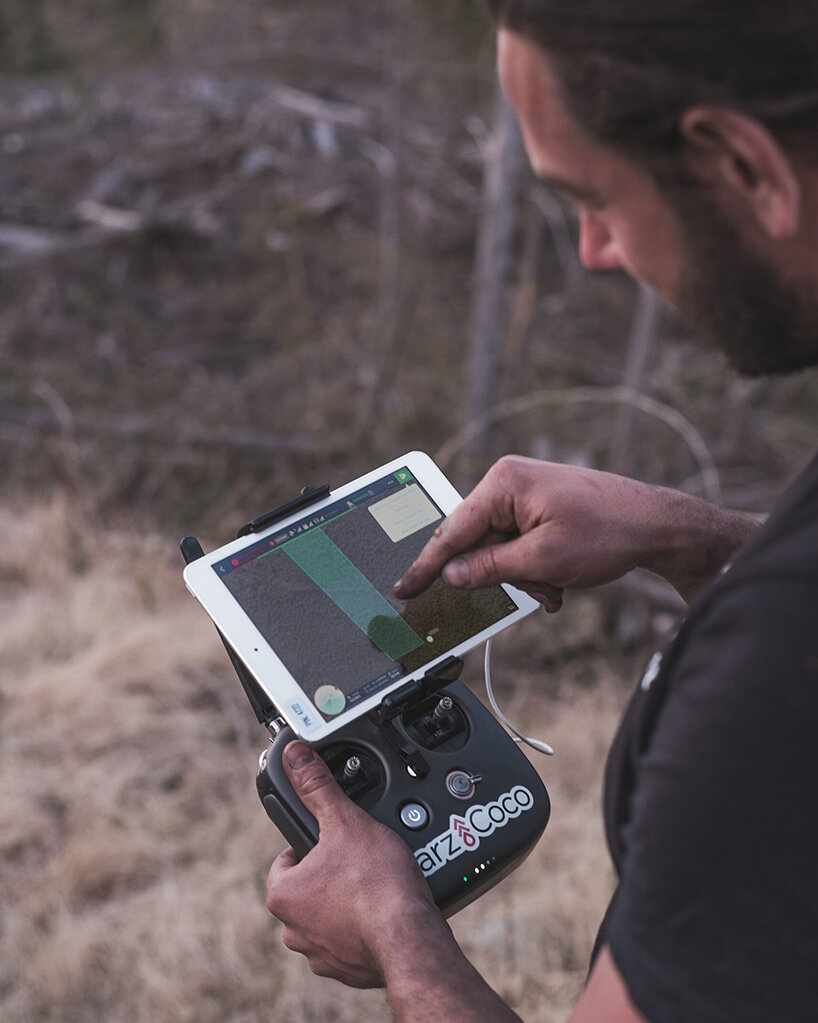
To measure the true efficacy of their innovations, researchers maintain experimental test plots where they directly compare the survival and growth performance of engineered seed pods against untreated control seeds, as well as adjacent zones left entirely to unassisted natural regeneration. This empirical tracking is especially critical as regional climates shift; some planting sites in Quebec have already suffered delayed germination cycles due to unseasonably warm temperatures and reduced seasonal rainfall, prompting the company to schedule comprehensive follow-up monitoring phases.
Wildfires have historically played an essential, natural role in the lifecycle of boreal ecosystems. For instance, jack pine cones rely on intense environmental heat to melt their resinous seals and open, naturally shedding seeds onto exposed mineral soil. However, the increasing frequency, scale, and intensity of modern mega-fires—driven by broader climate shifts—frequently overwhelm these natural recovery mechanisms, leaving vast areas barren and struggling to bounce back on their own.
Flash Forest’s aerial technology steps into these ecological bottlenecks, offering a rapid intervention tool capable of introducing millions of native seeds into landscapes where natural recovery has stalled. While drones can disperse the pods in a matter of seconds, the ultimate measure of success—whether these resilient little capsules can anchor themselves, evade environmental hazards, and mature into a thriving forest—will only become entirely clear through years of dedicated observation and environmental stewardship.