




On the rugged and scenic Washington state coast, an innovative outdoor hospitality experience invites travelers to immerse themselves in a unique blend of Japanese aesthetic traditions and Pacific Northwest wilderness. Located in Long Beach, Washington, the newly established Snow Peak Campfield occupies a 25-acre site on a former RV campground that has been carefully transformed into a restored wetland. On a misty, drizzly morning, the atmosphere is defined by the rich, earthy scent of moisture clinging to old-growth Sitka spruce and western red cedar, setting a tranquil stage for a hospitality concept that has crossed the Pacific after years of success in Japan.
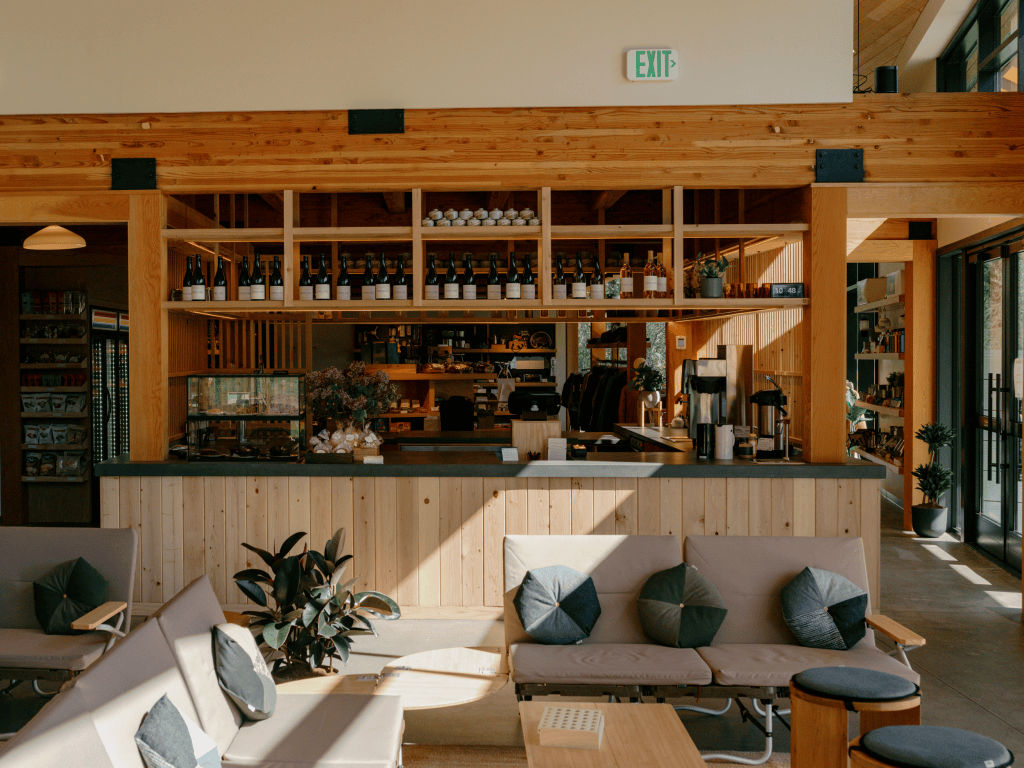
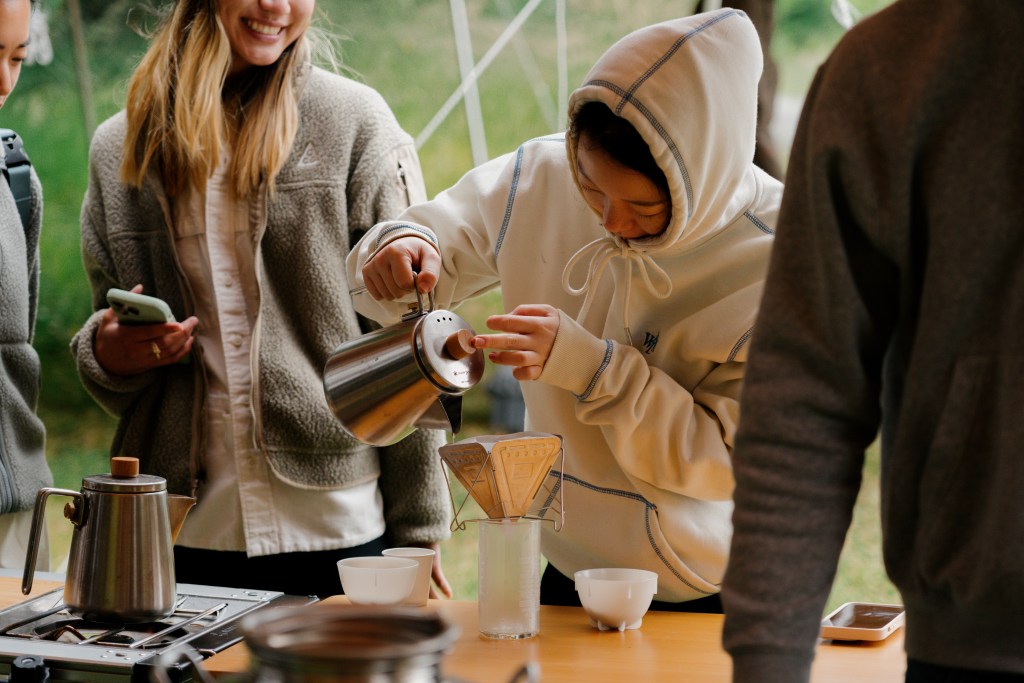
For visitors arriving at the property, the immediate impression is one of communal vibrancy and youthful energy. Children sprint across the grounds, quickly forming instant cliques and devising impromptu games around the central hub, which houses a camp store, coffee shop, and community living room. Serving as the natural icebreakers of the 25-acre site, these energetic youngsters enliven an environment that offers a distinct alternative to traditional American camping. Accommodation options range from sleek Jyubako cabins to dedicated tent lots. Campers can choose to bring their own equipment or rent a full suite of Snow Peak gear, including high-end tents, sleeping pads, sleeping bags, and precision camp cooking apparatuses.
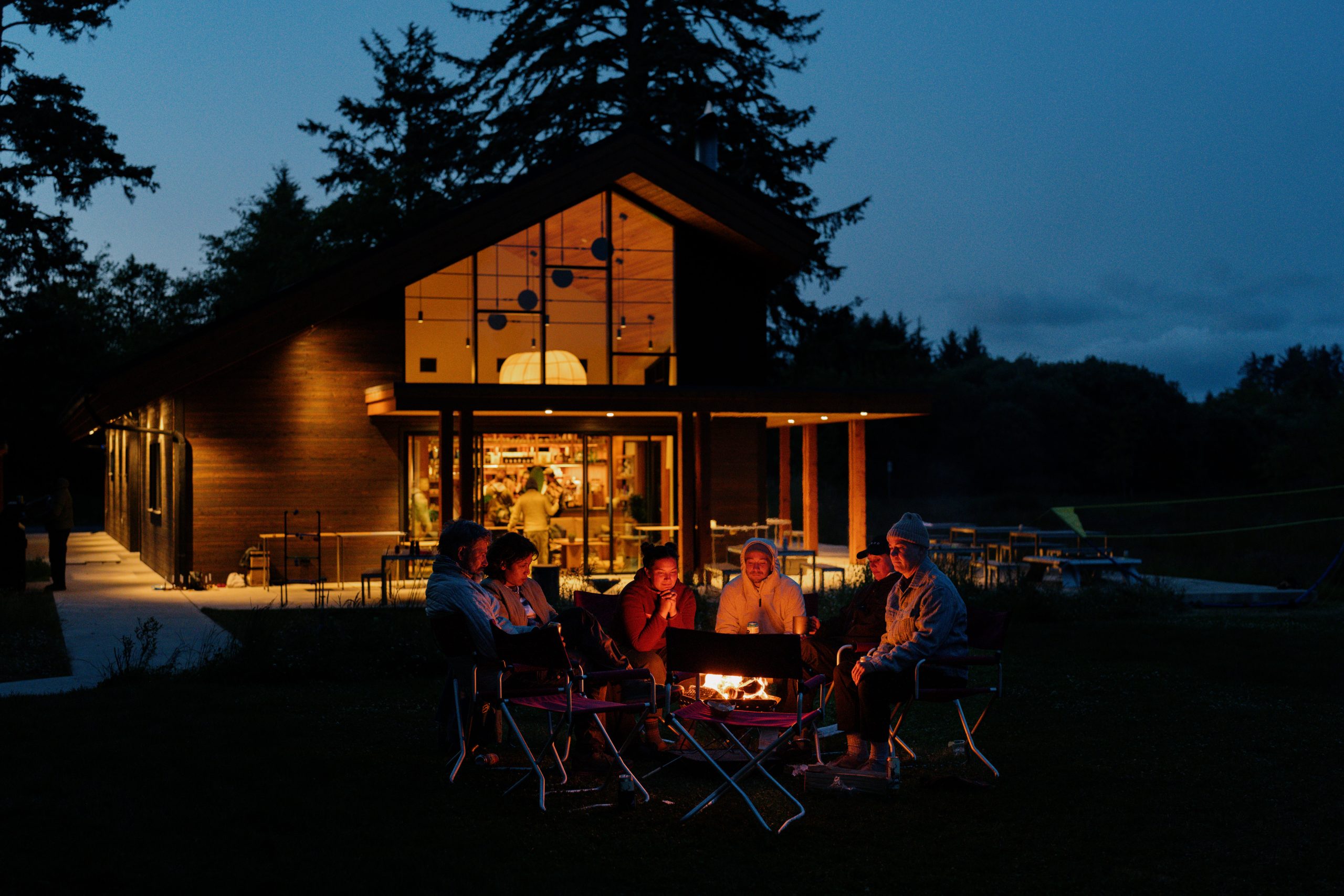
While Snow Peak operates more than a dozen similar campfields across Japan, the Long Beach location marks the brand’s first venture of its kind in the United States. According to Josh Clouser, New Ventures Project Manager, the overarching design vision was to weave together Western outdoor traditions and Eastern philosophies, underpinned by a restrained, almost Scandinavian minimalism. Achieving this cross-cultural ethos began with a fundamental logistical choice: separating campers completely from their vehicles.
The arrival experience is intentionally choreographed to shift visitors out of a transit mindset. Guests park their vehicles, load their luggage, coolers, and gear onto rugged carts, and enter the campfield through a designated gateway. For the team behind the project, this transition is viewed as a deliberate psychological threshold.
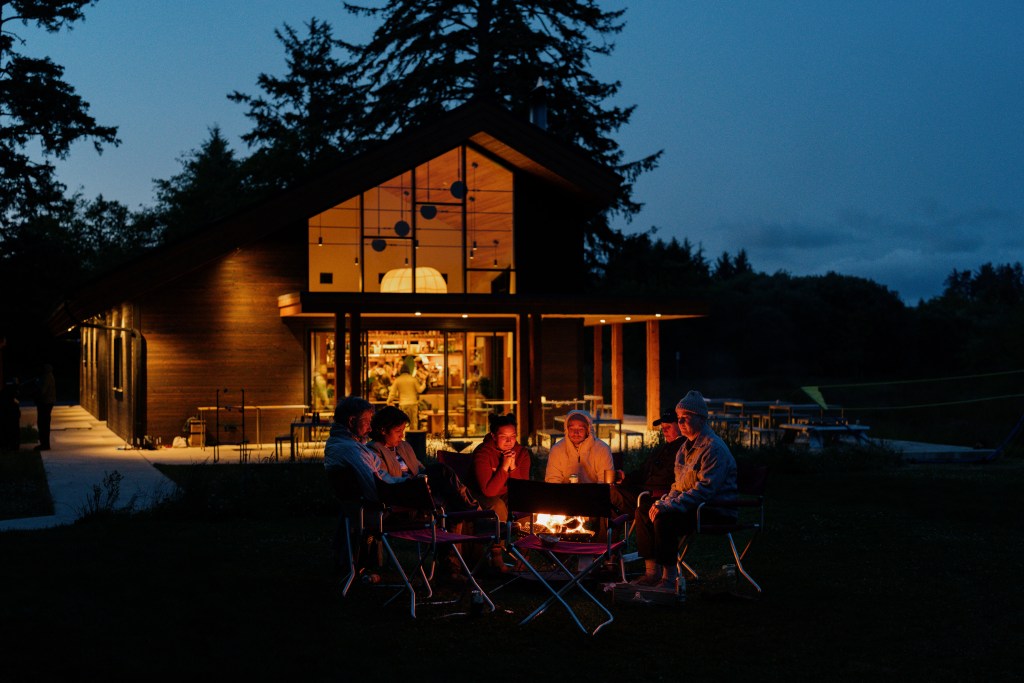
"To us, it’s very much a kind of Alice-in-Wonderland tunnel experience," Clouser explains, describing a design strategy aimed at physically and mentally divorcing guests from their automobiles so they can step immediately into an alternate, slower-paced world.
This spatial arrangement serves as a subtle nod to the spatial traditions found in Japan, particularly the approach to visiting a Shinto temple. Ubiquitous throughout Japanese cities, even the smallest Shinto shrines in the bustling scrum of Tokyo are designed to create an immediate physical and sensory separation from their urban surroundings.
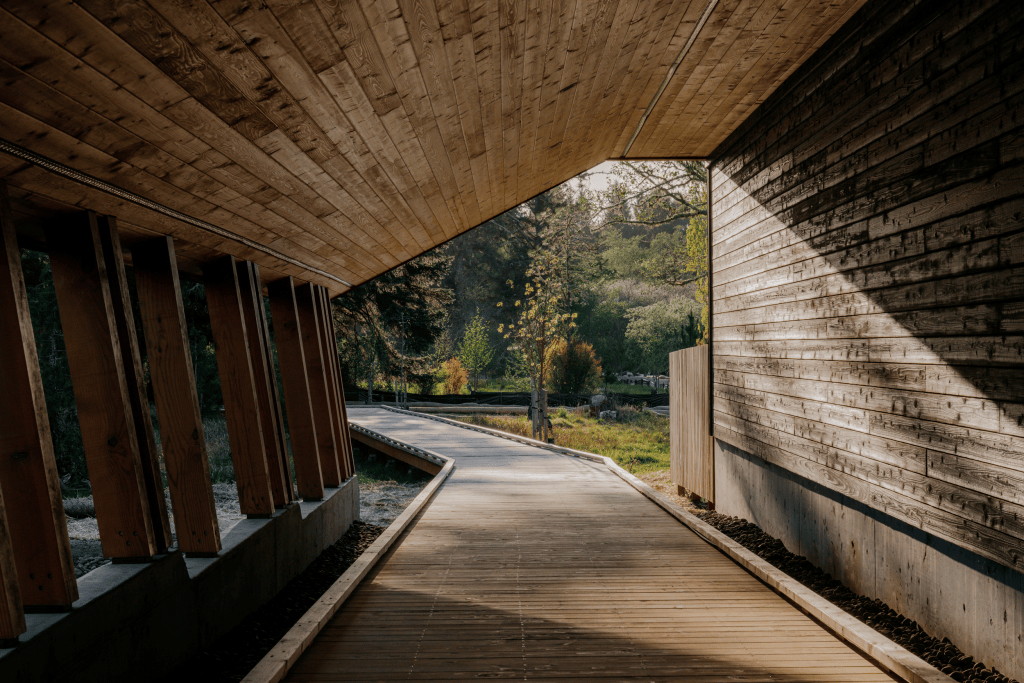
At the Long Beach campfield, this transition is gently facilitated by a sloped pathway leading away from the entrance gate. By the time visitors reach the interior of the campground, the pavement has vanished entirely, replaced by sweeping expanses of green foliage and native timber. Clouser notes that this car-free layout provides a profound sense of liberation, particularly for children. Parents quickly realize that the traditional hazards of traffic are absent, allowing youngsters to roam freely and safely. During stays, it is common to observe adult strangers striking up conversations and forming fast friendships, often introduced to one another by their children.
The social dynamic is further reinforced by the layout of the campsites themselves. Cooking is envisioned as an inherently outdoor, communal activity, with individual sites arranged so that fire pits and grilling stations face one another. This spatial orientation encourages spontaneous interaction, making it nearly impossible not to catch the aroma of a neighbor’s meal or exchange a friendly wave. Observers note that campers frequently utilize local Pacific Northwest produce and fresh regional seafood to construct elaborate, multi-phase meals, often trading culinary creations across neighboring camp boundaries.
To balance rugged immersion with modern comfort, the facility thoughtfully addresses the typical pain points of sleeping outdoors. A central Wash House features private, unisex bathrooms and showers alongside dedicated sinks for dishwashing, removing the friction from basic camp chores.
Architecturally, the campfield is designed to be experienced as a work of functional art. Visitors can observe canted rooflines, curved concrete walls, overlapping stacked joinery instead of straight-butt joints, and patterned timber framing that allows natural light to slice through structures in deliberate ways. This aesthetic execution reflects the mastery of Kengo Kuma & Associates, the renowned architectural firm previously commissioned by Snow Peak for its Japanese locations, brought to life through the craftsmanship of local builders.
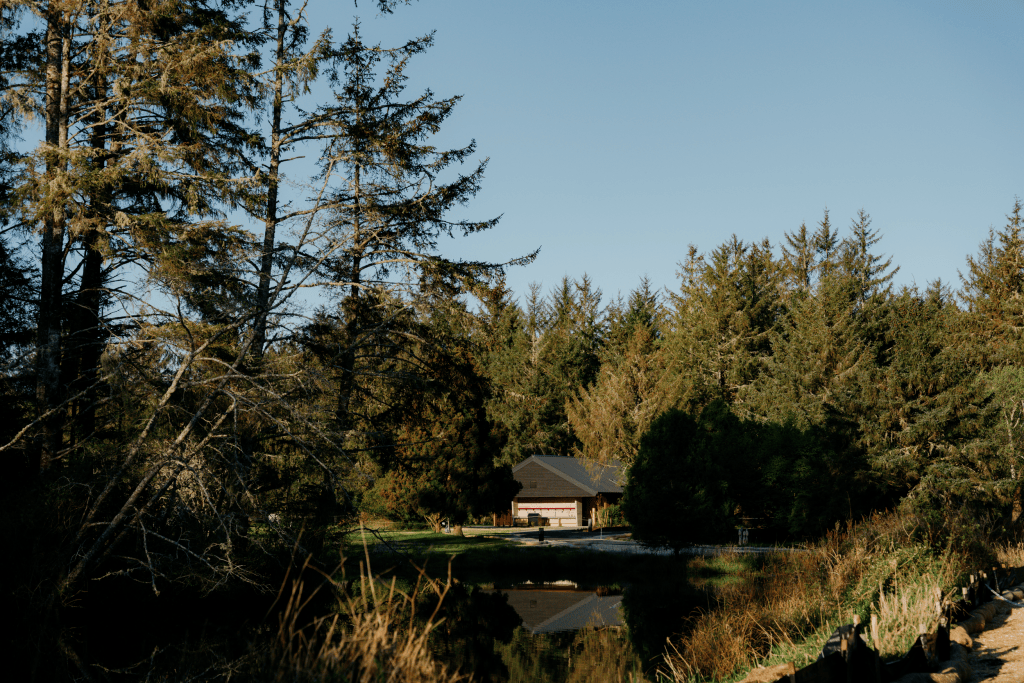
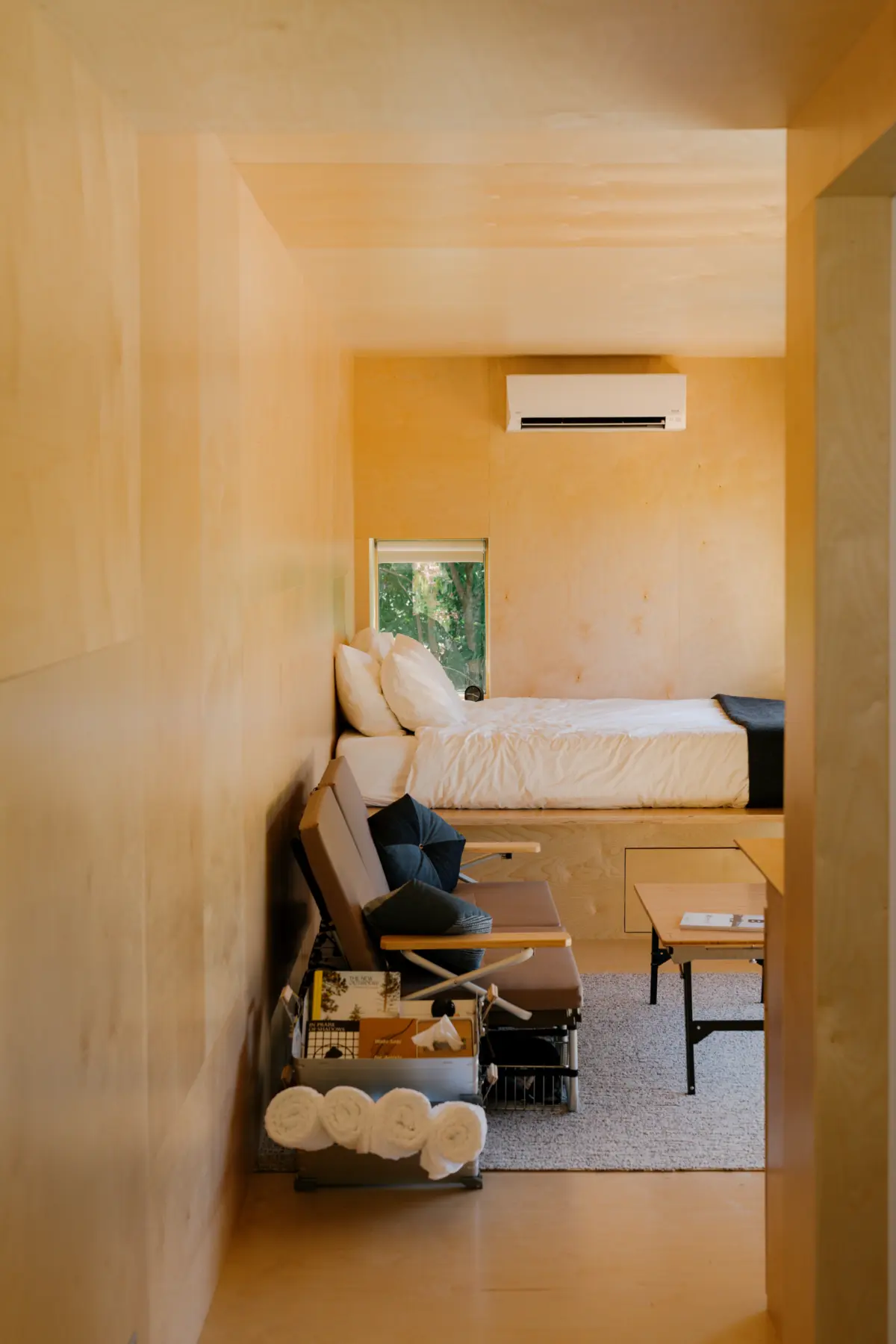
This refined design philosophy is vividly apparent in the Jyubako Suites, a Japanese term translating roughly to "living box." Comparable in size to a compact RV, these minimalist wooden cabins are tailored for couples or small families seeking an intimate retreat. While staying in a cabin places guests slightly further from direct contact with the elements, the architecture actively encourages engagement with the outdoors. Built with bright, lightly polished pine walls and low windows, the cabins foster a sense of privacy while subtly prompting occupants to step outside. Inside the central living space, a low dining table invites guests to sit on the floor in the traditional Japanese style. At this height, a seated person’s eyes align precisely with the lower frame of a glass door opening onto an attached porch, creating a visual pull toward the surrounding landscape.
The Jyubako units come equipped with essential conveniences, including a mini-fridge, a stovetop, a selection of tableware, cutlery, basic cooking utensils, and an en-suite bathroom and shower. These cabins have proven particularly popular among families with toddlers, providing a comfortable bridge for parents managing young children without sacrificing the aesthetic experience of the site.
Regardless of their chosen lodging, many visitors are drawn to the property to experience the Ofuro Spa. While the facility is named after an ofuro—the traditional Japanese home soaking tub—and shares conceptual DNA with an onsen, which typically utilizes natural hot springs in a resort setting, the Campfield Ofuro functions more closely to a luxurious Sento, or Japanese public bathhouse, complete with multiple water temperatures, a steam component, and a cold plunge.
The spa experience begins in a transition room featuring a striking black wood wall equipped with functional clothing pegs and shelving for outerwear, alongside cleansing showers designed to be used before entering the communal bathing areas. Stepping past this architectural partition reveals an expansive outdoor soaking tub oriented toward a mossy, light-green forest of quaking aspen. The towering beam structure arching over the spa floor was engineered specifically to echo the sweeping canopy of the surrounding trees. Immersed in the steaming water on a characteristically cool, foggy Pacific Northwest afternoon, visitors can easily imagine themselves transported far beyond the Washington coast to the spiritual home of Snow Peak in Japan.