


In Charlotte, North Carolina—one of the Southeast’s fastest-growing urban centers—a once-ordinary commercial space has begun an entirely new chapter. Conceived as a celebration of wine culture, culinary history, and atmospheric design, Napa Bistro and Wine Bar Stonecrest has officially opened its doors, bringing a sophisticated yet approachable dining destination to the local community. Designed by the creative studio FictionWorks, the restaurant draws its primary conceptual inspiration from a legendary milestone in gastronomic history: the 1976 Paris Wine Tasting, an event that forever shifted the global perception of Californian wines. By weaving together the distinct visual cues of a classic French bistro and the rustic, grounded charm of a Napa Valley farmhouse, the design team has created an immersive environment that honors the spirit of transformation, challenge, and discovery.
The overarching vision for the 6,500-square-foot establishment was carefully calibrated to balance everyday accessibility with a tangible sense of occasion. According to FictionWorks co-founders Andrea De Camps and Olivia King, the objective was to craft a space that feels entirely welcoming for a casual weeknight dinner while simultaneously offering the elevated ambiance diners seek when celebrating a milestone accompanied by an exceptional bottle of wine. Achieving this balance required a meticulous architectural and interior layout, executed in collaboration with architecture firm In Situ Studio, to divide a sprawling footprint into a cohesive sequence of intimate, character-driven rooms.

Working within the constraints of an existing structure presented a significant hurdle for the project team. Transforming a former taco restaurant into a warm, wine-focused hospitality destination required strategic deployment of resources, smart budgeting, and a well-defined hierarchy of design elements. Completed in under nine months, the intensive renovation successfully dismantled a flat, open layout, replacing it with a layered architectural journey. To manage the financial and temporal parameters effectively, the design team prioritized high-impact investments where they would matter most to the guest experience, while adopting a more pragmatic approach to secondary finishes.
As the FictionWorks team notes, the budget was deliberately funneled into signature architectural details capable of making an immediate visual impact—such as the custom stained-glass installations, bespoke lighting fixtures, and intricate millwork. Conversely, more practical solutions were applied to secondary elements, including the tabletops, mosaic flooring, thrifted artwork, and everyday accessories. This strategic allocation ensured that the interior maintained a luxurious, collected feel without overextending resources or compromising the project’s tight timeline.

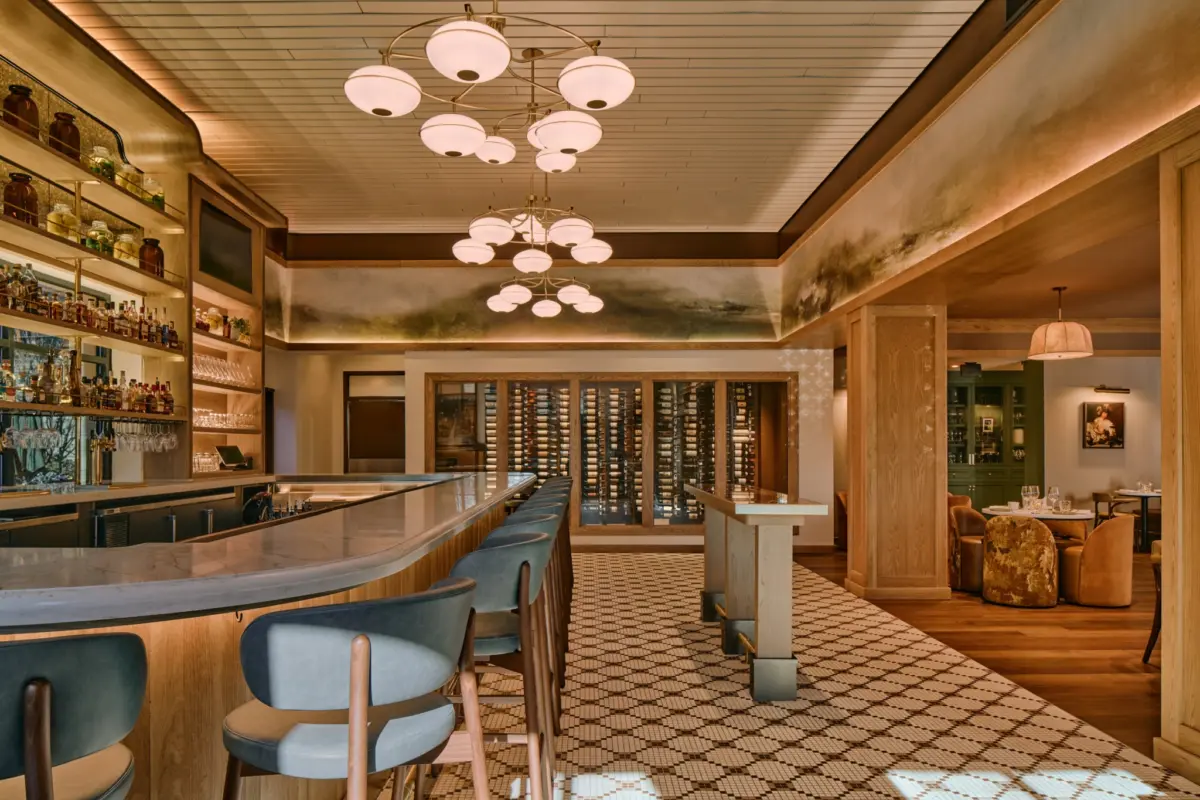
Stepping inside, visitors encounter a carefully curated color palette that pays homage to three distinct design influences: the verdant, rolling vineyards of Northern California, the warm and earthy tones characteristic of 1970s interiors, and the refined, timeless character of a Parisian neighborhood bistro. Deep, saturated greens and rich wood tones serve as the primary foundational elements, complemented by subtle accents of amber and bronze. These metallic and earthen hues evoke the deep, complex richness of aged wine, establishing a moody and sophisticated atmosphere that avoids feeling dated or overly formal. Grounding the entire spatial composition is a classic black-and-white mosaic tile pattern sourced from Daltile’s Keystone collection, which provides a crisp geometric contrast to the softer, more organic materials found throughout the rooms.
Spatial comfort and acoustic control were also paramount in the design of the expansive 6,500-square-foot interior. Architecture firm In Situ Studio helped organize the restaurant into a series of connected spaces, each possessing its own unique identity and mood. To temper the natural din of a bustling dining room, a curved, vaulted ceiling featuring an advanced acoustic system by Baswa Acoustics was installed. This technical integration successfully softens ambient sound while contributing a graceful spatial rhythm overhead. Below this vaulted canopy, thoughtfully scaled dining rooms feature intimate seating arrangements outfitted with worn leather upholstery, inviting guests to settle comfortably into their surroundings and linger over their meals.

Every design decision—spanning the architectural interventions, material selections, custom artwork, and overall guest journey—was deliberately chosen to reinforce a deeper appreciation for food, wine, and history. Among the most striking artistic elements is a custom stained-glass installation crafted from hand-blown glass rondels. This feature directly references 1970s glasswork traditions while cleverly taking the visual form of a wine bottle punt, the indented bottom of a wine bottle. This installation is paired with custom lighting, including delicate linen pendant fixtures and sculptural chandeliers, which are strategically arranged to soften natural light and generate intimate, moody vignettes as evening falls.
The restaurant’s commitment to storytelling extends to its art program, which bridges the gap between California’s wine country and North Carolina’s local creative scene. A curated collection of distinctive photographs and digital artwork by California-based artist Julia Crane is thoughtfully intertwined with pieces created by artists from Charlotte. This integration connects the physical interior directly back to the surrounding community, ensuring the space tells a rich story that extends far beyond what is printed on the menu.

At the heart of the establishment, the bar area showcases a marble-topped counter paired with blue upholstered stools, framed by glass-front wine cabinets that display the restaurant’s extensive collection. This central hub flows naturally into the surrounding dining areas, maintaining visual continuity through consistent materials and warm illumination.
Ultimately, Napa Bistro and Wine Bar Stonecrest stands as a physical manifestation of the historical event that inspired it. Modeled after the 1976 tasting that famously challenged established European wine hierarchies, the restaurant builds its entire identity around the courage to defy expectations. For the team at FictionWorks, this philosophy guided every phase of the creative process. By embracing a narrative of transformation rather than mere historical replication, the designers have successfully brought a piece of wine country heritage to the heart of North Carolina, creating a lasting space designed to challenge, inspire, and welcome guests for years to come.