



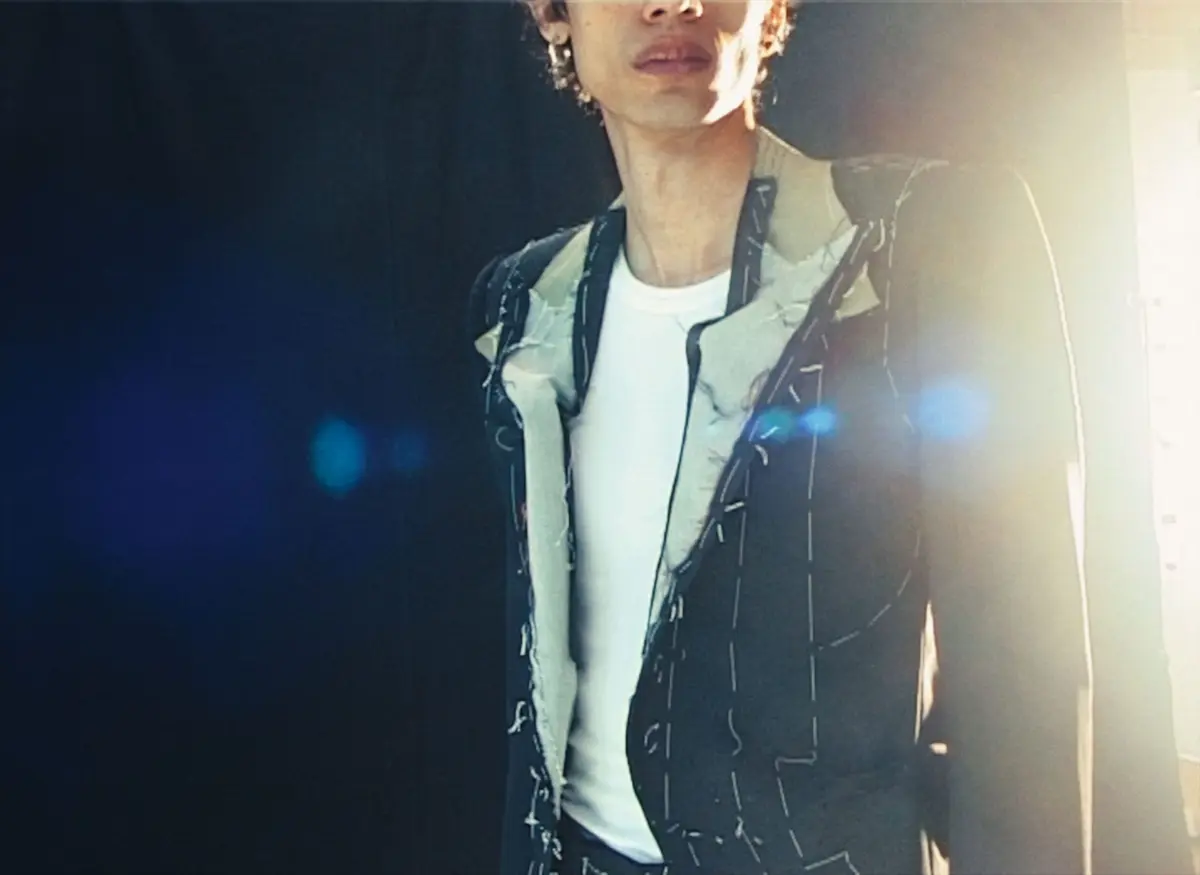
When Seán McGirr decided to bring the House of McQueen back to London Fashion Week for the first time in a quarter of a century, his homecoming was more than just a triumphant geographical return. It served as a profound re-anchoring to the deep roots of British tailoring, seamlessly reconnecting the avant-garde brand with the storied heritage of Savile Row. At the heart of this historical reunion was Huntsman, the legendary tailoring house founded in 1849 at 11 Savile Row, which famously crafted bespoke suits for Alexander McQueen’s own personal wardrobe. For Sunday night’s highly anticipated runway show, Huntsman produced three striking looks that bridged past legacies with a bold, contemporary vision.
These three bespoke creations represent the third major collaboration between these two powerhouse London institutions, following notable co-productions in 2002 and 2012. However, the genesis of this latest partnership stretches back roughly 18 months, long before the lights went up on the runway. The process began when McGirr arranged an intentional research visit to Huntsman’s iconic headquarters at 11 Savile Row. Today, the address is just as famous globally for its critical role in the Kingsman film franchise as it is for its landmark status in the annals of traditional tailoring lore.
During that visit, McGirr immersed himself in the historical archives, carefully examining the specific orders that Alexander McQueen had commissioned for himself during his lifetime. The creative director was so deeply impressed by the craftsmanship, the historical weight of the archives, and the mastery housed within the building that he immediately hatched a plan to reunite the modern McQueen brand with its spiritual tailoring home.

Reflecting on the collaboration, McGirr noted that the idea had occupied his thoughts for a considerable duration. He pointed out the rich history of both Lee McQueen and Sarah Burton working alongside Huntsman in the past, making this current chapter a natural continuation of an ongoing dialogue. Describing the process, he emphasized that it was a genuine pleasure working with the team this season, noting that the historic tailors taught them a great deal along the way.
According to Campbell Carey, a Savile Row veteran who has served as Huntsman’s head cutter and creative director for the past 11 years, the feeling of mutual admiration was entirely reciprocal. Because both Lee McQueen’s personal interactions and the brand’s previous collaborative efforts occurred before Carey’s tenure at the firm, he approached the project by diving deeply into their shared corporate and artistic history. Researching the specific garments McQueen had commissioned for himself had a visceral impact on the master tailor. Carey recalled that uncovering those historical orders literally made the hairs on the back of his neck stand up.
The dynamic of the partnership also highlighted a fascinating intersection between traditional Savile Row client services and modern conceptual design. Typically, a bespoke Savile Row tailor operates under a well-established protocol: while they naturally honor a client’s exact physical measurements and ensure an impeccable fit, they also subtly guide the client toward a classic style that their experts intuit will deliver maximum personal satisfaction and timeless elegance.
McGirr, however, arrived at the storied house with a radically different approach, bringing a much more prescriptive and uncompromising brief to the table. The designer had been studying the work of Tommy Nutter—widely celebrated in tailoring history as the first true rebel of Savile Row. McGirr was deeply fascinated by the way Nutter aggressively disrupted the conservative conventions of England’s established tailoring establishment during his heyday. Nutter was known for his decadently curved sleeves, emphatic and powerful shoulder rolls, and sharply altered proportions that challenged traditional silhouettes.

McGirr’s core creative objective for the collaboration was to successfully blend those signature Tommy Nutter codes with the distinctive codes established by Lee McQueen. For McGirr, the one-button jacket stands out as an enduring and essential McQueen signature. In translating this vision to the sketches he handed over to Huntsman, he pushed the pocket placements unusually high, exaggerated the traditional shoulder roll, elongated the sleeves, and even experimented with mixed fabrics. For one specific look, he deliberately utilized different fabrics between the jacket and the trouser, ensuring that the resulting suits felt less like a uniform ensemble and more like expressions of individual character. Explaining his rationale, he noted that this deliberate mismatch made the tailoring feel significantly more personal.
Carey observed that the design sketches delivered by McGirr to the Huntsman workshop were remarkably precise from the very beginning. He noted that one could instantly perceive a clear and unwavering mission behind the artwork. Among the pieces brought to life was a shortened evening-tail jacket featuring inset satin facings, while the remaining two looks served to further develop the sharply exaggerated tailoring language that McGirr intended to use to channel the rebellious spirit of Nutter.
Translating those specific designs into physical garments required Huntsman to step outside its own deeply embedded traditions and centuries-old technical conventions. Carey pointed out that the sleeve heads required for the collection were vastly removed from the standard practices of the house. To achieve the heavily exaggerated silhouette that echoed Nutter while speaking the design language of McQueen, the sleeves had to be turbocharged with substantial amounts of wadding and extra fullness.
By a remarkable stroke of fortune, however, Huntsman’s 35-strong workshop happened to house an artisan uniquely qualified to execute the demanding brief: coat maker Conrad Turner. Turner holds a legendary status on Savile Row, having originally trained under Tommy Nutter himself. Carey described Turner as a true legend of the street, possessing the exact lineage and technical pedigree required to bridge the gap between Nutter’s historical disruption and McGirr’s modern vision.

Operating under intense pressure, Turner and the Huntsman team delivered the finished garments in just three weeks. When the collection debuted on the runway, the resulting pieces stood out as some of the sharpest, most meticulously executed looks of the entire show, marking a triumphant and deeply resonant reunion between two giants of British style.