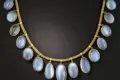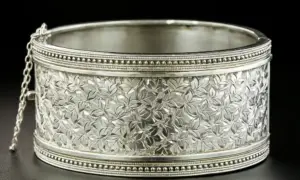






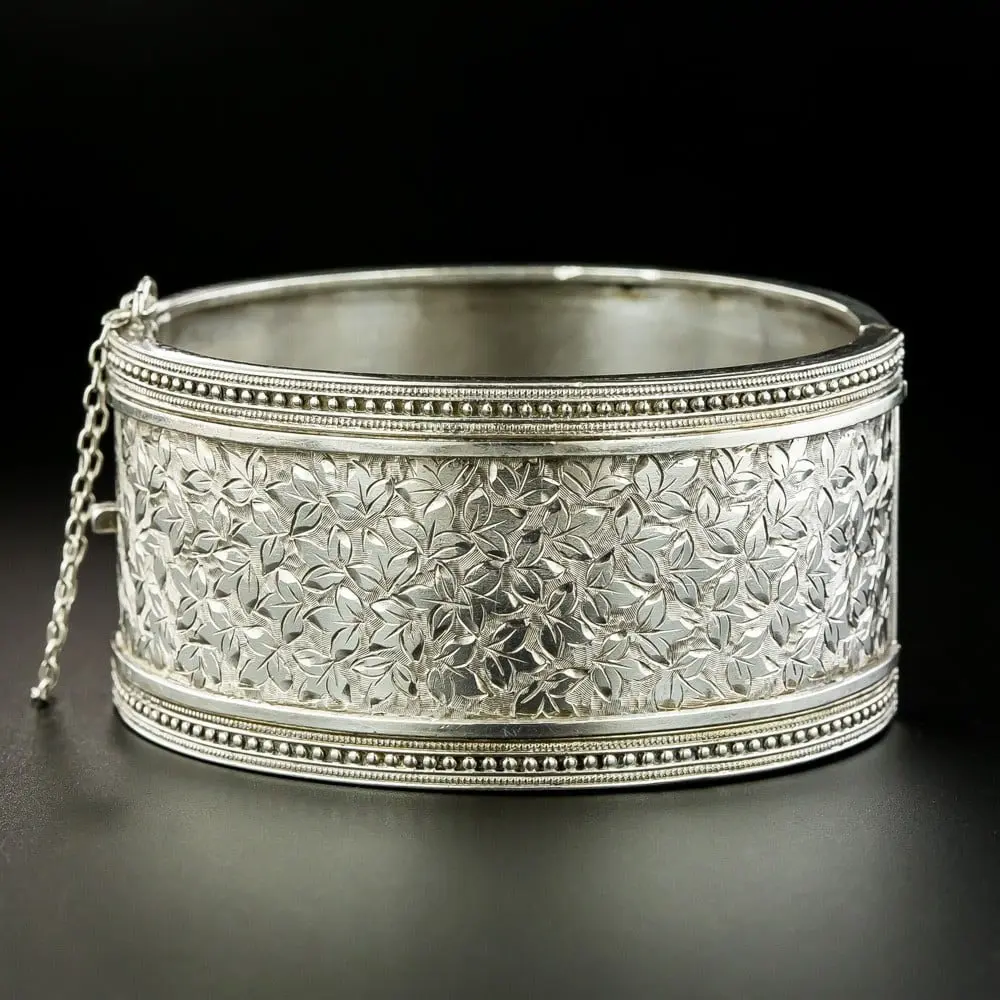
Silver—a lustrous white metallic element represented by the chemical symbol Ag on the Periodic Table—has quietly underpinned human civilization, technological innovation, and artistic expression for millennia. Harder than gold yet softer than copper, silver occupies a unique place in the spectrum of precious metals. It is second only to gold in its malleability and ductility, and it stands peerless as an exceptional conductor of heat and electricity. Classified as a noble metal due to its remarkable resistance to oxidation, silver has historically served as a cornerstone for the creation of fine jewelry, decorative arts, and foundational economies.
While modern markets often price silver far below gold or platinum, making it easy to dismiss as a secondary asset, historians and metallurgists understand that such an assumption is fundamentally flawed. At various points in human history, silver was valued more highly than gold. Furthermore, when examining the aggregate quantities used across global jewelry production, the volume of silver outweighs all other precious metals by a massive factor. This versatile white metal has also driven far more technological advances in mining and metallurgy than its precious metallic cousins. Entire geopolitical economies have depended on its steady availability, and access to rich silver deposits has repeatedly shifted the balance of power, redirected wars, and shaped the course of human history.
Bronze Age Origins and Early Civilizations
The historical narrative of silver begins in earnest near the end of the fourth millennium BCE, when innovative artisans in modern-day Turkey discovered they could extract silver from lead through a pyrometallurgical process known as cupellation. Although surviving artifacts from this nascent period are exceptionally rare, those that endure offer profound insights into the sophisticated capabilities of Bronze Age silversmiths.
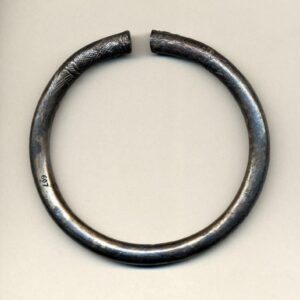
As written history dawned in Mesopotamia, silver was widely utilized as a form of currency. Rather than appearing as standardized minted coins, it circulated purely by weight or in the form of rings. A Mesopotamian silversmith’s workshop would have closely resembled that of a goldsmith, and indeed, the two trades were frequently practiced by the same artisans. Although silver is slightly less ductile than gold and requires more frequent annealing during manufacturing, it can be seamlessly cast, hammered into gossamer-thin sheets, engraved, embossed, worked in repoussé, and decorated with delicate filigree and granulation. Archaeological excavations have recovered vessels, statuettes, and jewelry items crafted from high-purity silver, yielding objects of remarkable softness and refinement.
In ancient Egypt, the cultural appreciation for silver was deeply intertwined with a fascination for the rare and exotic. Because gold could be readily procured closer to home from the mountains of the Eastern Desert and Nubia, pure silver had to be imported along arduous trade routes, mirroring the high value placed on Afghan lapis lazuli. Consequently, silver was initially seen as extremely exclusive and worth more than gold, rendering it fit only for the highest echelons of society.
By approximately 1600 BCE, however, the global supply of silver had grown considerably, causing its market value to drop to about half that of gold. By this era, it functioned as an abstract currency of relatively constant value. The popularity of silver in Egyptian burial customs shifted with the tides of fashion; while King Tutankhamun’s tomb contained hardly any silver artifacts, later pharaohs like Sheshonq II were entombed with an all-silver sarcophagus.
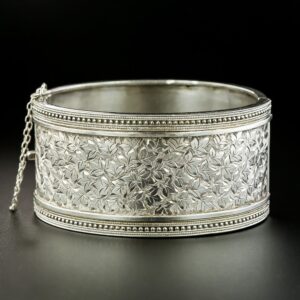
Meanwhile, the Minoans and, to an even greater extent, the Mycenaeans operated as prolific maritime traders who frequently handled silver. Archaeological sites across the Greek mainland, Crete, and Cyprus have yielded substantial quantities of early Greek silver jewelry. Furthermore, the Phoenicians played a transformative role in Mediterranean civilization through their far-reaching colonization and commercial networks. By initiating the large-scale exploitation of Spanish silver deposits and distributing the metal throughout the classical world, the Phoenicians rescued silver from its strictly exotic status, elevating its availability to unprecedented heights.
Classical Antiquity: Greece, Rome, and the Writings of Pliny
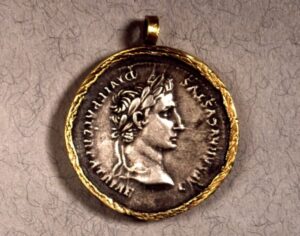
For both classical Greek and Roman societies, a reliable supply of silver was an absolute necessity, as their monetary systems relied heavily on properly minted silver coins. While gold appears more frequently among surviving jewelry from this era—partly due to the continuous cycle of remelting and recycling—archaeological finds demonstrate that silver was routinely fashioned into finger rings, anklets, and armlets.
The Romans developed a particular fondness for niello, a surface decoration technique closely related to enameling but executed with silver sulfate rather than glass. Niello yielded a much tougher finish with a metallic luster rather than a vitreous one. As Roman legions pushed northward, niello techniques spread across the European continent, leaving distinct traces in Anglo-Saxon finds in Britain and throughout Eastern Europe.
The Roman author and naturalist Pliny the Elder provided an invaluable, if famously skeptical, window into contemporary attitudes toward the metal in his monumental work, Naturalis Historia. In Chapter 31, Pliny describes silver ore as "the next (after gold) folly of mankind," noting that it is found deep within shafts rather than on the surface and must be melted in combination with lead or galena. He highlights the legendary productivity of the Spanish mines originally opened by Hannibal, noting that a single mine called Bάbelo supplied Hannibal with three hundred pounds of silver daily while requiring continuous round-the-clock water removal by teams of laborers.
Pliny also documented the strict testing methods used by Romans in Chapter 44, which included heating silver on an iron fire-shovel to observe color changes, as well as the escalating excesses of Roman luxury in silver plate detailed in Chapters 49 and 53. He lamented the transformation of Roman tastes from the stark frugality of earlier military heroes—such as generals who possessed only a few modest drinking cups won in battle—to the staggering opulence of later commanders and emperors who outfitted entire military service trains and household furnishings in heavy chased silver. He famously recounted how general Pompeius Paulinus carried twelve thousand pounds of silver plate into campaigns against savage border tribes, and how the Empress Poppaa ordered her favorite mules to be shod in gold.
Celtic and Medieval Transformations
To the Celtic tribes of Europe, silver and bronze were the primary metals of adornment. Highly decorated brooches, heavy torcs, and crescent-shaped lunulae stood out as the most common jewelry forms. Before the advent of Roman conquests, the Celts relied on "ring money"—standardized rings of silver, copper, bronze, or gold used strictly as a currency medium rather than for personal wear.
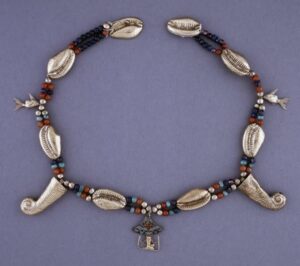
With the collapse of Roman supply lines and trade networks, gold rapidly became a rarity in Western Europe, thrusting silver into the premier position for jewelry production. Germanic jewelry from this era favored functional items such as fibulae, disc brooches, penannular brooches, and belt buckles, usually fashioned from silver and occasionally gilded or inlaid with precious garnets.
From approximately 800 CE onward, Viking expansion along the northwestern coasts of Europe funneled vast quantities of silver into Scandinavia, where silversmithing flourished and silver jewelry became a deep-rooted cultural tradition. The discovery of rich Swedish silver deposits around the turn of the first millennium further cemented this regional preference. The Roman penchant for niello was readily adopted by Germanic tribes, who utilized the stark black-and-white contrast to accentuate intricate engraving patterns.
A prime surviving example of this aesthetic is the Fuller Brooch, a circular Anglo-Saxon silver-and-niello brooch dating to the ninth century. Housed in the British Museum, the artifact features an intricate openwork design incorporating personifications of the Five Senses and various geometric animal and human motifs symbolizing creation.
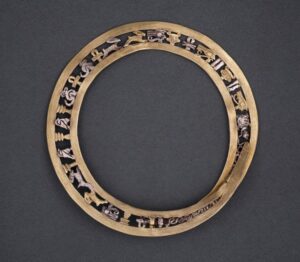
As medieval society evolved and eastern trade routes reopened, gold regained its traditional status as the preferred metal for elite finery. Nevertheless, expanding commerce fostered a growing middle class eager for personal adornment. Those with more modest budgets turned to silver jewelry, broadening the market and driving innovation toward decorative and symbolic pieces such as finger rings, bangles, and pendants. By the late Middle Ages, the proliferation of silver trade necessitated strict regulatory systems of silver assaying and hallmarking.
Renaissance, Baroque, and Georgian Eras
The Renaissance witnessed a profound cultural and economic revival across Europe, fueled by post-plague demographic recovery, expanding northern trade networks, and an influx of intellectual refugees following the fall of Constantinople in 1453. However, the most transformative geopolitical event for metallurgy was the European exploration of the Americas.
Following Christopher Columbus’s voyages, Spanish and Portuguese explorers carved out vast colonial empires in the New World, leading to the brutal subjugation of the Inca and Aztec civilizations. Following the discovery of monumental silver deposits in regions such as modern-day Mexico in 1546, silver flowed into Europe in unprecedented quantities. While a substantial portion of this treasure was shipped directly to Asia to purchase luxury goods, the European continent retained enough metal to sustain its monetary systems and keep silver accessible as a relatively affordable medium for jewelry and household plate.
During the Baroque period, spanning the seventeenth century, South American silver continued to flood European markets. Nations like England, France, and the Netherlands established dominant naval and commercial presences. Alongside traditional silversmithing, this era introduced novel applications for the white metal, including the production of silver-cased timepieces. Crucially, the Baroque period marked the beginning of setting diamonds in silver. Because diamonds were increasingly imported directly from newly established trading posts in India rather than through Arabic middlemen, European jewelers utilized the cool, reflective white surface of silver to complement the absence of color in these stones.
This diamond-setting trend reached its zenith during the Georgian era, buoyed by the discovery of prolific new diamond deposits in Brazil in 1727 and a booming South American silver trade. Fine jewelry from this period frequently combined gold backings with silver-topped front sides, while fully silver-mounted pieces and cut-down collet settings became standard industry practices.
Furthermore, the technological advent of die striking in 1777 revolutionized manufacturing. By utilizing presses, drop hammers, and metal dies to stamp and cut out identical components for manual assembly, workshops could produce mass quantities of jewelry at a fraction of the cost of handmade pieces. Because less expensive metals were ideal for this process, massive quantities of die-struck silver jewelry rapidly saturated European commercial markets.
The Victorian Era and Industrial Modernity
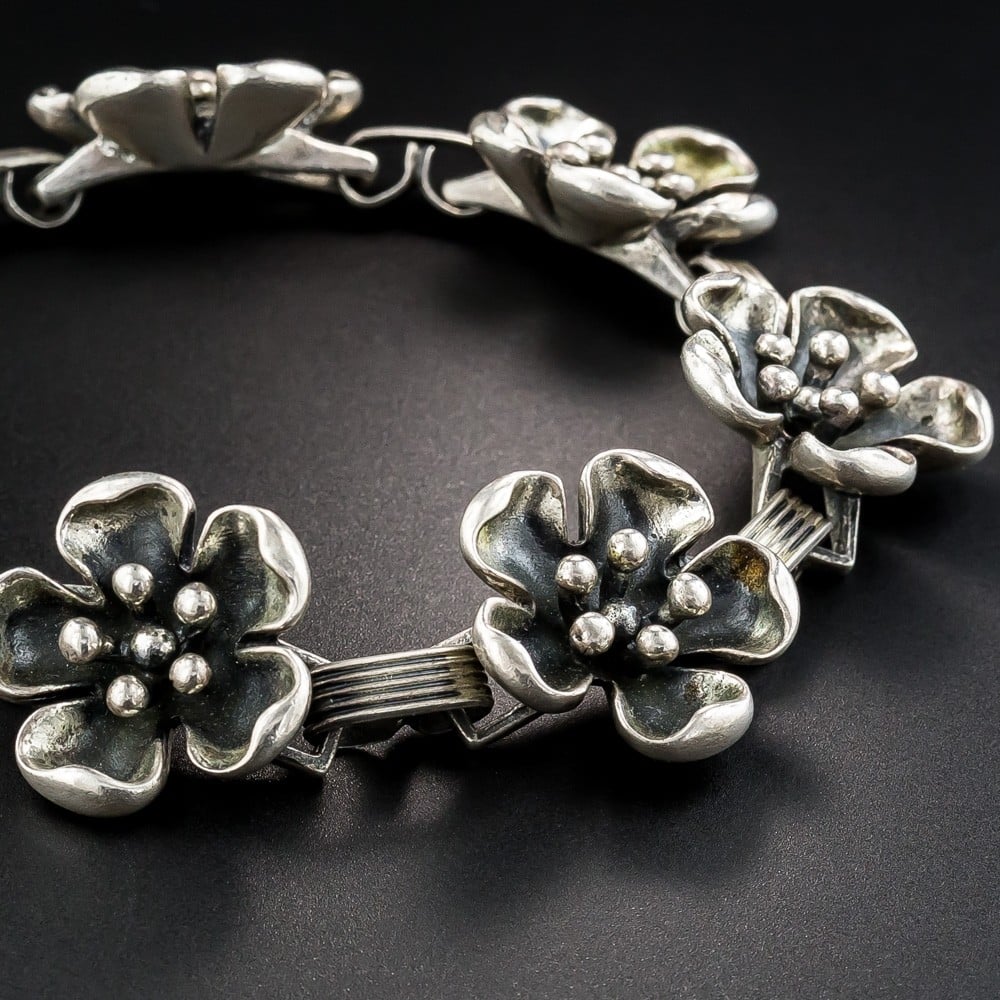
The Industrial Revolution of the nineteenth century profoundly impacted every facet of manufacturing, and the jewelry sector was no exception. Stamping and die-striking techniques, which had originated in the late Georgian period, were perfected throughout the Victorian era, allowing for the widespread commercial production of silver accessories.
Regional tastes also influenced silver consumption. Following Queen Victoria and Prince Albert’s acquisition of Balmoral Castle in Scotland in 1848, Scottish agate jewelry surged in popularity across Britain, predominantly executed in silver in keeping with long-standing Northern European traditions.
Toward the close of the Victorian period, the Arts and Crafts movement emerged as a deliberate philosophical reaction against industrial mass production. Artisans of this sub-period prioritized artistic design and craftsmanship over the intrinsic market value of precious metals and gemstones. Consequently, Arts and Crafts jewelry celebrated hand-wrought silver over gold, frequently favoring bezel-set cabochon stones over faceted gems. Through every technological shift, economic upheaval, and artistic movement, silver has retained its foundational role in human culture, continually reinventing its utility while preserving its ancient heritage.