





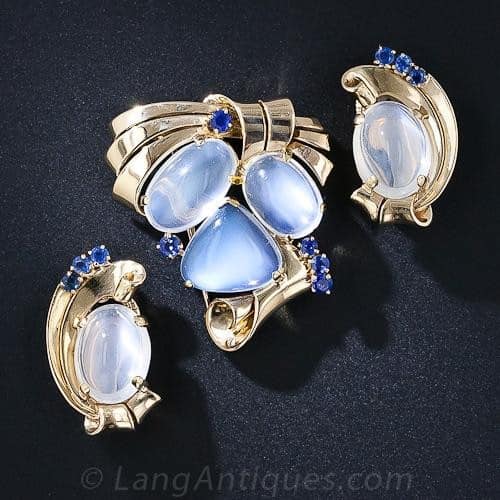
At its core, adularescence is an optical phenomenon specifically associated with certain varieties of feldspar, most notably orthoclase. When these specific feldspar minerals are masterfully cut and polished into smooth, rounded cabochons rather than faceted stones, they reveal a distinctive transformation. As the stone is turned, rotated, or moved under a light source, it exhibits a floating, billowy bluish or white light that appears to emanate from deep within the interior of the crystal. This ethereal glow gives the impression of moonlight trapped beneath the surface of the stone, moving fluidly across the curved dome as the angle of observation shifts.
In the precise terminology of mineralogists and gemological science, this unique play of light is frequently referred to as schiller. While the term schiller can broadly describe various types of metallic or iridescent reflections in minerals—such as those seen in sunstone or aventurine quartz—its manifestation in moonstone is prized for its soft, diffused, and mystical quality. This characteristic glow is caused by the internal micro-structure of the feldspar. Specifically, moonstone is composed of alternating microscopic layers of two different feldspar species, usually orthoclase and albite. When light enters the stone, it scatters between these thin, alternating layers through a physical process known as light scattering or interference. The smaller light waves are scattered more efficiently by these delicate layers, creating the characteristic blue or white sheen that appears to billow across the stone.
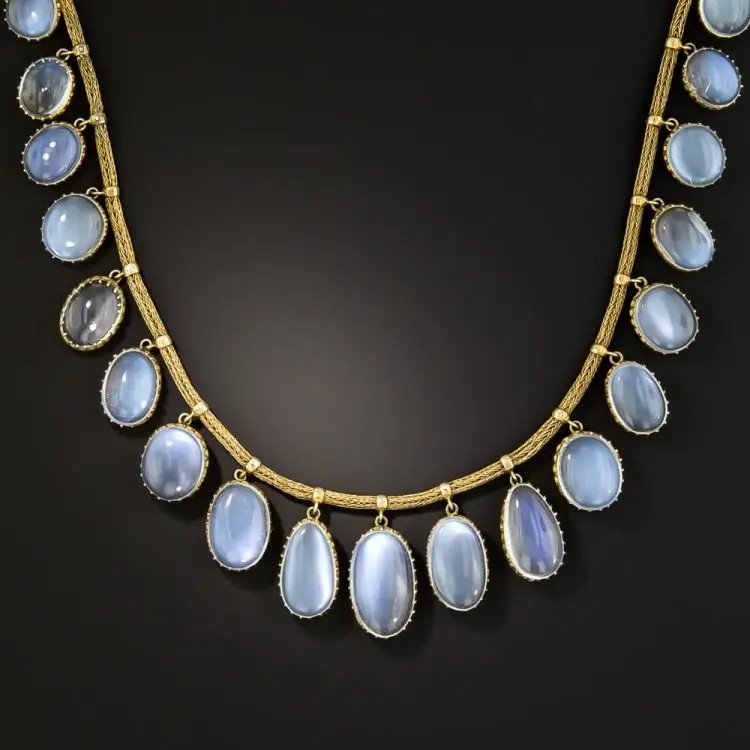
The aesthetic appeal of adularescence has long made moonstone a favored material in high jewelry design, particularly during periods that celebrated romanticism, naturalism, and artisanal craftsmanship. Historic creations, such as Victorian-era fringe necklaces featuring graduated clusters of moonstones, showcase how master jewelers historically utilized the stone’s optical properties to maximum effect. In a typical Victorian moonstone fringe necklace, multiple cabochon-cut moonstones are suspended delicately along a precious metal chain, creating a fringe-like drop effect. As the wearer moves, each individual moonstone catches the light from a different angle, producing a shimmering cascade of floating blue and white light that mimics the gentle, rolling waves of moonlight.
Gemologists emphasize that the quality and intensity of adularescence can vary significantly from one specimen to another, heavily influencing the value, desirability, and aesthetic impact of the jewelry piece in which it is set. Factors such as the transparency of the host mineral, the thickness of the internal alternating layers, and the precise dome height of the cabochon cut all play crucial roles in how effectively the schiller effect is displayed. Stones with a deep, vivid blue adularescence—often referred to in the trade as having a "blue sheen"—are historically considered among the most desirable and command significant attention among antique jewelry collectors and connoisseurs who study the enduring legacy of nineteenth-century craftsmanship.