



For 50 years, the global luxury market has served as an experimental laboratory for the future. Long before broader cultural shifts catch up, high-end design, pioneering engineering, haute horlogerie, and elite hospitality have shown the world what comes next. From the supersonic roar of transatlantic travel to the quiet revolution of unstructured tailoring, the upper echelons of design and commerce have continually rewritten the rules of modern life.

Looking back across five decades reveals a tapestry of 74 distinct objects, people, places, and experiences that defined an era and fundamentally altered human culture.

The Foundations of Modern Elegance: 1965 to 1982
The modern luxury landscape began taking its shape in the mid-1960s, driven by a post-war industrial shift away from bespoke coachbuilding toward mass efficiency. Rolls-Royce broke nearly six decades of tradition in 1965 with the introduction of the Silver Shadow. Designed by John Blatchley, the vehicle abandoned the classic rolling chassis for monocoque construction, integrating body and chassis into a single structure. Powered by a 6.2-liter V-8 engine, the Silver Shadow offered a shorter wheelbase than its predecessor, the Silver Cloud, yet delivered superior cabin space, improved suspension, and enhanced sound dampening. Its cultural endurance was cemented when it graced the inaugural cover of Robb Report in 1976.

The following decade brought sweeping shifts in personal style and global mobility. In menswear, Giorgio Armani quietly dismantled a century of sartorial convention by stripping out the shoulder pads and heavy canvas linings of traditional jackets. His softly constructed garments, paired with voluminous trousers, redefined elegance through ease. The style achieved cinematic immortality in 1980 when Armani draped actor Richard Gere in American Gigolo.

Concurrently, the aviation world achieved what once felt destined for science fiction. In 1976, the Concorde entered commercial passenger service, cruising at Mach 2.04—roughly 1,354 miles per hour—and cutting travel time between London and Washington, D.C., in half. Operating at 60,000 feet, passengers were treated to a view of the Earth’s curvature. Despite its astronomical ticket prices and economic headwinds prompted by the 1970s oil crisis, the supersonic airliner offered a level of prestige that no other aircraft could match, remaining a symbol of human ambition until its final flight in October 2003.

The year 1976 also bore witness to the Judgment of Paris, a blind tasting organized by British wine merchant Steven Spurrier at the InterContinental Paris. French critics expected benchmark bottles from Bordeaux and Burgundy to easily defeat California entries. Instead, the 1973 Chateau Montelena Chardonnay and the 1973 Stag’s Leap Wine Cellars Cabernet Sauvignon took top honors in their respective categories. Documented by Time correspondent George M. Taber, the upset shattered the European monopoly on fine wine and firmly put Napa Valley on the global map.

Amidst these shifts, the luxury watch industry faced an existential crisis brought on by inexpensive, hyper-accurate Japanese quartz timepieces. Patek Philippe’s counter-offensive arrived in 1976 with the Nautilus Ref. 3700/1A, designed by Gérald Genta. Serially produced in all-steel and carrying a bold price tag of $3,100, the watch capitalized on a growing cultural preference for casual luxury. Time proved the Swiss watchmaker right, transforming an initially slow-selling gamble into one of the most coveted secondary-market assets in horological history.

The decade’s unbridled hedonism found its epicenter in April 1977, when Steve Rubell and Ian Schrager opened Studio 54 at 254 West 54th Street in New York. Controlling access through a notoriously brutal door policy, the founders turned the disco-era nightclub into a theatrical sanctuary of celebrity, sexual freedom, and excess where access itself was the ultimate luxury.

The Excess and Innovation of the 1980s
As the calendar turned to the 1980s, the definition of luxury expanded into hospitality, contemporary art, and personal technology. Bill Kimpton opened San Francisco’s Bedford Hotel in 1981, while Ian Schrager and Steve Rubell followed with Morgans in New York in 1984. These properties disrupted an industry that had long equated luxury with square footage, proving that compact rooms could command a premium when paired with sharp design, personal service, and buzzy public social spaces.

In the art world, 1982 marked the international breakout of Jean-Michel Basquiat. At just 21 years old, he became the youngest artist invited to exhibit at Documenta in Kassel, Germany. His rapid ascent coincided with a cultural convergence of downtown New York creativity and global commercial appetite, paving the way for his legendary collaboration with Andy Warhol.

Technology also entered the luxury sphere as a status symbol. When Motorola released the DynaTAC 8000X in 1984—affectionately dubbed "the Brick"—it retailed for $3,995, weighed nearly two pounds, and offered just 30 minutes of talk time after a 10-hour charge. Its bulky, conspicuous presence signaled that an executive’s time was exceptionally valuable, an image immortalized by Michael Douglas as Gordon Gekko in the 1987 film Wall Street.

Design boundaries were similarly challenged when Alessi launched the Tea & Coffee Piazza project, inviting eleven star architects, including Michael Graves, Aldo Rossi, and Robert Venturi, to design miniature architecture in sterling silver. In the automotive sector, the Pininfarina-styled Ferrari Testarossa debuted in 1984, captivating collectors and television audiences alike on Miami Vice with its 380-hp flat-12 engine and distinctive side strakes.

The mid-1980s also birthed two titans of material desire. Following a serendipitous conversation on a flight from Paris to London between actress Jane Birkin and Hermès executive chairman Jean-Louis Dumas, the iconic Birkin bag was born, solving a young mother’s practical storage needs while creating one of fashion’s most elusive status symbols. In retail architecture, Ralph Lauren transformed a Gilded Age Manhattan residence into the Rhinelander Mansion in 1986, establishing a benchmark for complete brand immersion that inspired generations of flagships.

On the water, the Cigarette Top Gun powerboat defined high-performance luxury during the Miami Vice era, while Executive Aviation pioneered fractional aircraft ownership with NetJets in 1986, transforming the accessibility of private aviation. The hospitality sector underwent another seismic shift in 1988 when former journalist Adrian Zecha opened Amanpuri in Phuket, Thailand. Emphasizing remote exclusivity, understated design, and an exceptional staff-to-guest ratio, Zecha created a modern sanctuary that spawned a devoted global following of "Amanjunkies" and heavily influenced ultra-private resort design worldwide.

Redefining Boundaries in the 1990s
The 1990s ushered in a new scale of architectural and engineering achievement. In yachting, the 1990 delivery of the 344-foot Lady Moura, built by Blohm+Voss for Saudi businessman Nasser Al-Rashid, revolutionized superyacht design. Featuring a fold-down hydraulic swim platform, a dedicated owner’s deck, a cinema, and a nightclub, the vessel helped recast the superyacht as an expansive family home rather than a simple holiday vessel.

The contemporary art world experienced a dramatic shift when Damien Hirst exhibited The Physical Impossibility of Death in the Mind of Someone Living in 1991, suspending a tiger shark in a tank of formaldehyde at London’s Saatchi Gallery. Automotive engineering reached a pinnacle in 1992 with the launch of Gordon Murray’s 627-hp McLaren F1, which paired a central three-seat driving position with a naturally aspirated V-12 to achieve a then-record road car speed of 240 mph.

In the hospitality sector, the early 1990s saw the Hotel du Cap-Eden-Roc transform its saltwater pool into an infinity edge that appeared to dissolve directly into the Mediterranean, establishing an architectural trend that became ubiquitous across five-star resorts globally. Meanwhile, in the beverage world, the 1997 vintage of Screaming Eagle earned a historic 100-point score from critic Robert Parker, setting off a frenzied market for Napa Valley "cult cabs" and reshaping fine wine economics.

Las Vegas underwent a similar high-end transformation in 1998 with the opening of Steve Wynn’s $1.6 billion Bellagio. Inspired by Lake Como and featuring an internal fine art gallery, the 3,000-room resort proved that the Strip could successfully court luxury travelers with unprecedented opulence.

Private aviation saw a parallel leap in 1998 with the introduction of Boeing’s first Business Jet (BBJ). By mating a 737-700 airframe with strengthened wings and auxiliary fuel tanks, Boeing offered billionaires and heads of state a flying residence boasting nearly three times the cabin space of traditional corporate jets. Horology experienced a parallel renaissance with the 1999 launch of independent watchmaker F.P. Journe’s namesake brand, alongside the establishment of Cartier’s Collection Privée, honoring historical design shapes with supreme mechanical movements.

The New Millennium and Modern Luxury
As the 2000s unfolded, consumer habits shifted toward experiential luxury, authentic craftsmanship, and hyper-customization. Anthony Bourdain’s literary and television success, beginning with his 2000 memoir Kitchen Confidential, transformed how global travelers approached food and culture, championing street-level authenticity alongside high-end culinary excellence.

Culinary arts simultaneously embraced modernism through the movement known as molecular gastronomy. Spearheaded by Ferran Adrià at El Bulli in Spain, Heston Blumenthal at the Fat Duck, and Grant Achatz at Alinea, chefs utilized scientific principles to challenge diners’ perceptions of taste and texture.

In fashion and accessories, Hedi Slimane’s razor-thin silhouettes at Dior Homme reshaped menswear, while Loro Piana introduced the Summer Walk loafer in 2005, laying the quiet groundwork for modern understated luxury. The automotive world witnessed an unprecedented engineering feat in 2005 with the arrival of the Bugatti Veyron 16.4, whose 8.0-liter quad-turbocharged W16 engine delivered 987 horsepower and a top speed of 253 mph.

Private aviation continued its rapid evolution with the 2006 introduction of the Eclipse 500, the world’s first very light jet, designed to make private air travel more accessible. That same year, the sailing yacht Maltese Falcon debuted with its revolutionary automated DynaRig system, proving that high-tech efficiency could harmonize with classic maritime aesthetics.

The ensuing decades saw the luxury market continually adapt to cultural movements. The 2017 high-profile collaboration between Supreme and Louis Vuitton cemented the permanent infiltration of streetwear into elite fashion houses. In the automotive sector, Lamborghini disrupted performance paradigms with the introduction of the Urus, effectively inventing the sport-utility supercar category and sparking a wave of high-performance utility vehicles across the ultra-luxury market.

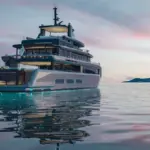
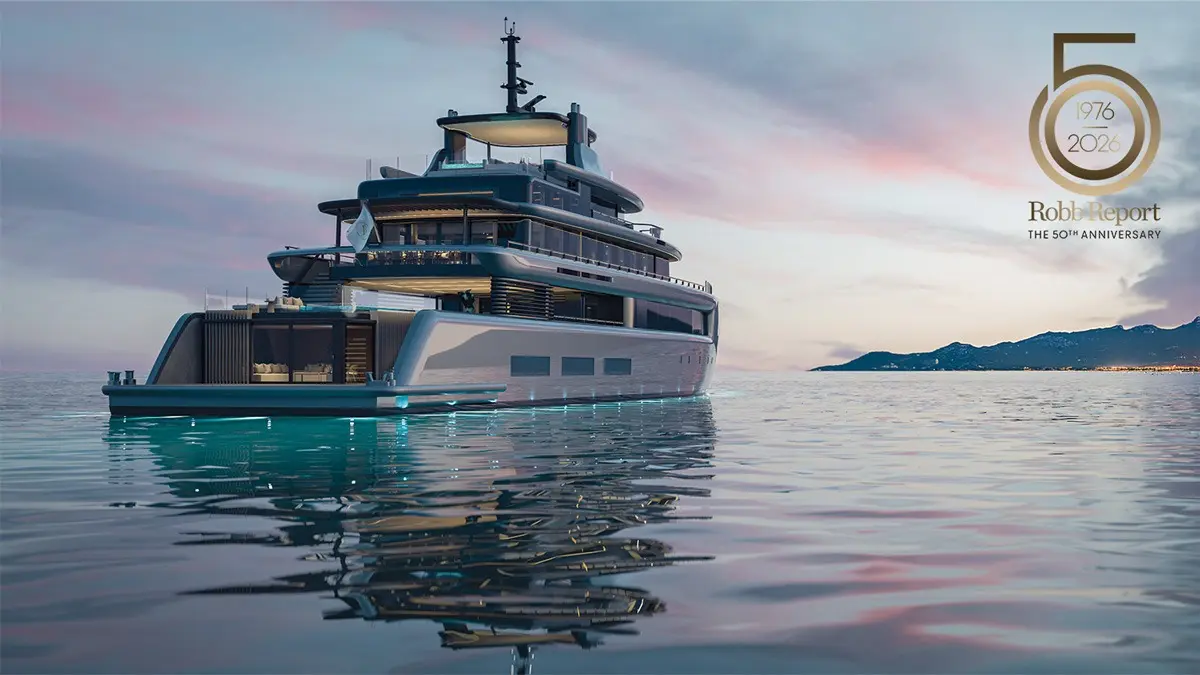
Most recently, the intersection of heritage craftsmanship and modern digital culture has yielded unprecedented records, from the staggering multi-million-dollar valuations of rare timepieces like the Patek Philippe x Tiffany & Co. Nautilus to the enduring global popularity of Van Cleef & Arpels’ Alhambra motif. As contemporary yacht builders like Benetti begin reimagining marine architecture around open-concept urban lofts with the B.Loft 65M, the landscape of luxury continues to evolve, driven by a relentless pursuit of innovation, privacy, and uncompromising design.