





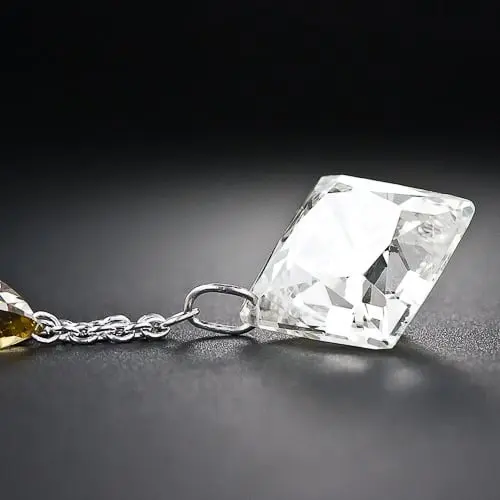
In the specialized realm of gemology and mineralogy, the way a gemstone reflects light from its surface serves as one of the primary diagnostic characteristics used by experts to identify and evaluate stones. Among the various classifications of surface brilliance—ranging from metallic and vitreous to pearly and greasy—few hold the prestigious and intense distinction of adamantine luster. This term, deeply rooted in both the optical physics of minerals and ancient linguistic history, defines a level of exceptional brilliance characteristic of diamonds and other high-refractive-index gems.
At its core, adamantine is the specific term used by gemologists and mineralogists to describe the exceptionally bright, diamond-like luster exhibited by gems that possess a Refractive Index ranging strictly between 1.9 and 2.5. The Refractive Index itself measures how severely a ray of light is bent, or refracted, when entering a dense medium like a gemstone. When a mineral falls within this specific high numerical range, light does not merely bounce off the surface; rather, it interacts with the internal crystal structure in a way that produces a sharp, intensely brilliant reflection accompanied by significant fire and scintillation.
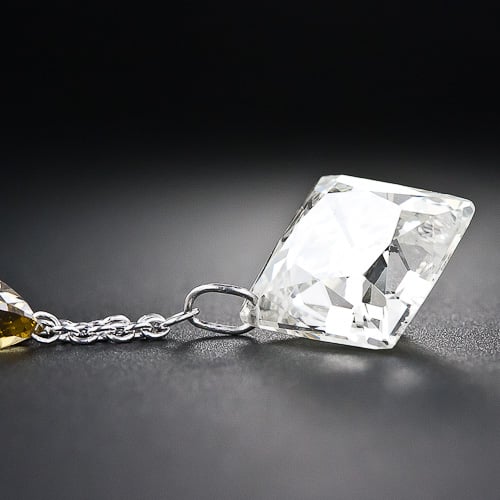
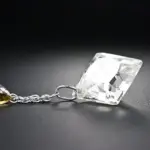
The quintessential example of this phenomenon is the diamond, a mineral renowned universally for both its unmatched optical properties and its physical durability. However, the connection between the term adamantine and the diamond goes far beyond mere modern gemological categorization. The linguistic origins of the word offer a fascinating window into how ancient cultures perceived these extraordinary natural materials long before the advent of modern optical instruments or numerical refractive indices.
The root word for adamantine is "adamant," which derives directly from the ancient Greek word adamastos, translating literally to "untameable" or "unconquerable." For centuries throughout human history, the term adamant was employed broadly in reference to any substance composed of a particularly hard material, whether it was a diamond itself or another exceptionally resilient mineral that resisted scratching, breaking, or alteration. Over time, as scientific disciplines advanced and terminology became more specialized, the linguistic descendant "adamantine" transitioned from a purely descriptive metaphor for physical toughness into a precise technical designation within mineralogy and gemology, capturing both the extreme hardness and the peerless optical brilliance associated with the stone.
While the adamantine category represents the pinnacle of surface luster for transparent and translucent gemstones, the spectrum of brilliance does not end there. Just below this elite classification lies another important descriptive tier known as subadamantine luster. Gemstones exhibiting a subadamantine luster possess a reflective quality that is slightly less intense than that of a diamond, yet still noticeably brighter and more brilliant than a standard vitreous, or glass-like, luster.
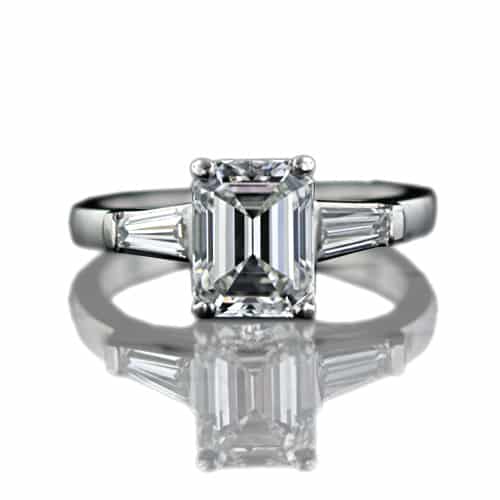
A prime example of a mineral that displays a subadamantine luster is zircon. Zircon is widely recognized in the gemological community for being highly dispersive, meaning it has the remarkable ability to split white light into its component spectral colors, creating a dazzling array of colored flashes. Despite this high dispersion and considerable brilliance, the refractive index of zircon places it just shy of the threshold required for true adamantine status, earning it the classification of subadamantine. This subtle distinction highlights the rigorous precision required by gemologists when evaluating the optical characteristics of minerals, where small differences in refractive measurements can shift a stone from one categorical descriptor to another.
The study of luster, alongside measurements of hardness, cleavage, and refractive index, remains a cornerstone of gemological identification. By understanding terms like adamantine and subadamantine, scientists, jewelers, and historians alike can better appreciate the complex interplay of physics and aesthetics that gives precious stones their enduring allure. Whether examining the untameable hardness that inspired the ancient Greeks or measuring the precise optical refraction that defines modern gemology, the concept of adamantine luster continues to serve as a vital benchmark for evaluating the most brilliant materials found in the natural world.