




In recent years, the “open call” has become an almost unavoidable mechanism within the field of contemporary jewelry. Exhibitions, international competitions, prestigious residencies, and bustling festival weeks increasingly rely on the format as a seemingly democratic way to discover new artists, diversify programming, and create vital public visibility. Yet, a growing undercurrent of critical voices has begun to emerge from within the community. Behind the glossy rhetoric of openness often lies a taxing administrative structure in which creators carry an escalating share of the financial risk, administrative labor, and emotional investment.
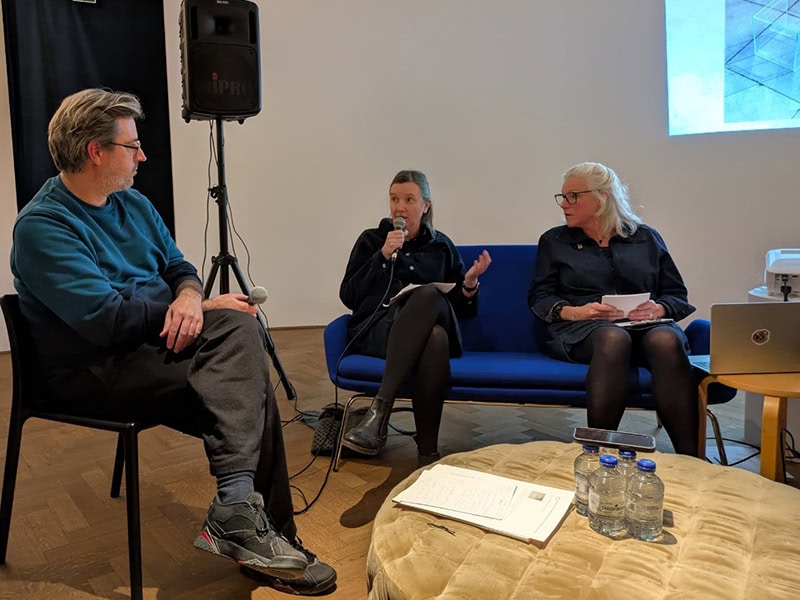
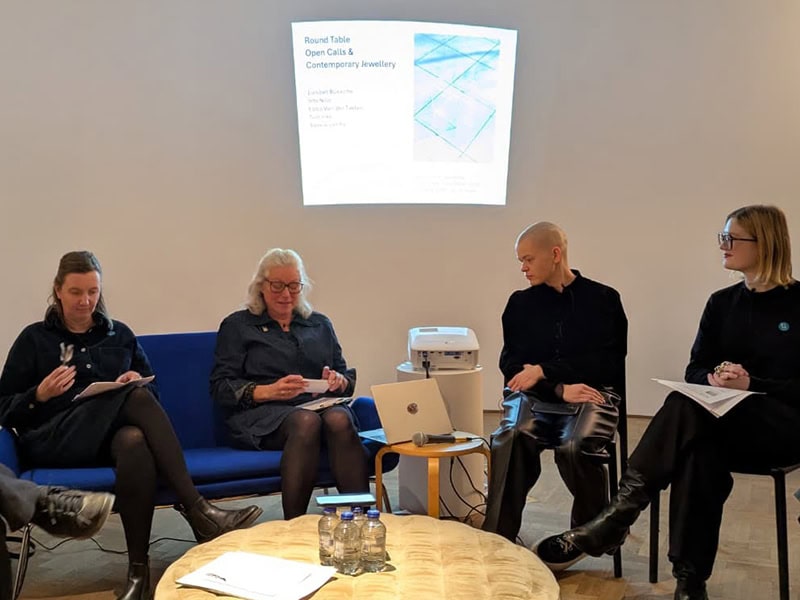
This critical examination of the contemporary landscape stems from a roundtable discussion titled Open Calls and Contemporary Jewelry, held on November 22, 2025, at the DIVA museum in Antwerp during the city’s Obsessed! festival. Moderated by art historian Saskia van Es, the panel brought together a diverse group of voices from across the sector: artists Into Niilo and Liesbet Bussche, freelance curator Ebba Van der Taelen, and Tom Iriks, curator at DIVA. Over the course of the panel, one reality quickly became apparent: organizers and applicants frequently view, experience, and understand the open-call format in radically different ways.
Rejection as Part of Professional Life
The discussion commenced with a visual presentation by moderator Saskia van Es, who shared slides of the artwork Open Calls by Ana Escobar Saavedra. The installation draws conceptual inspiration from Rachel Mason’s foundational essay Artist as Applicant, which describes a shifting cultural ecosystem in which the primary labor of the contemporary artist slowly migrates away from the physical making of work and toward the endless administrative treadmill of submitting applications.

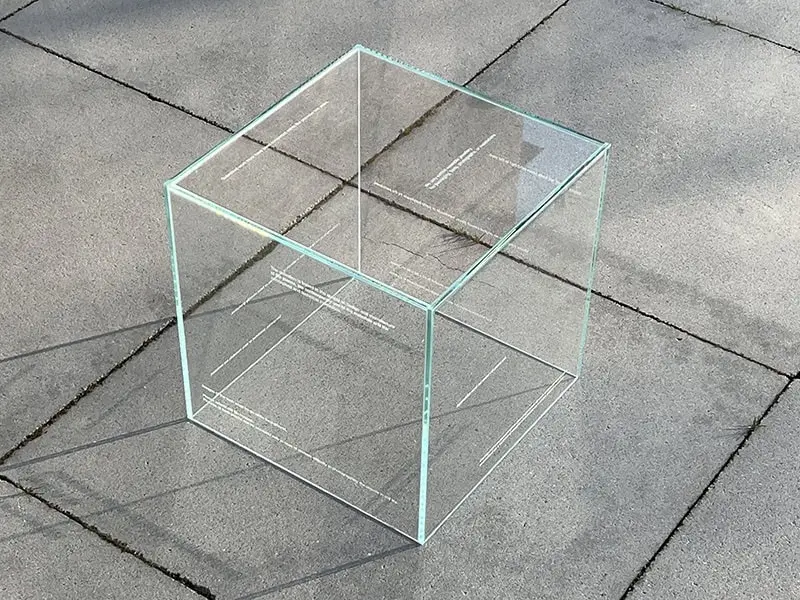
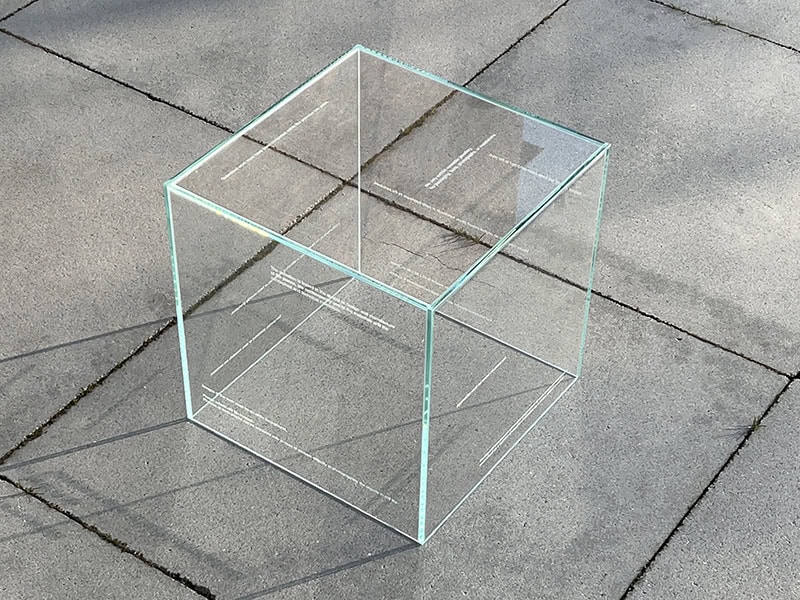
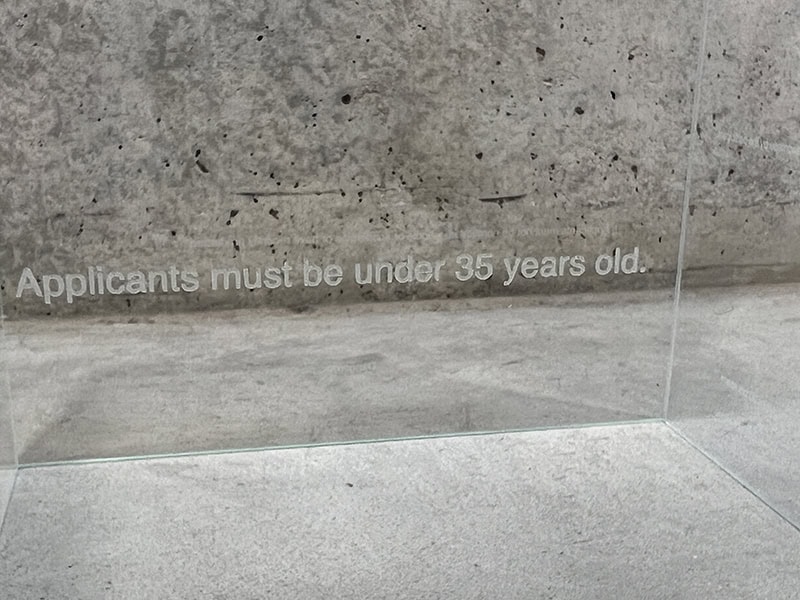
Escobar’s installation features a glass cube intricately engraved with phrases lifted directly from real-world open calls. Viewers read restricting mandates such as “Work must fit in 30 x 30 x 30 centimetres,” “We only exhibit wearable jewelry,” and the ubiquitous exclusionary age cap: “Applicants must be under 35.” The physical sculpture functions as a brilliant and biting metaphor for the open-call system itself, capturing words that feel tightly trapped inside a glass container with barely enough room to breathe.
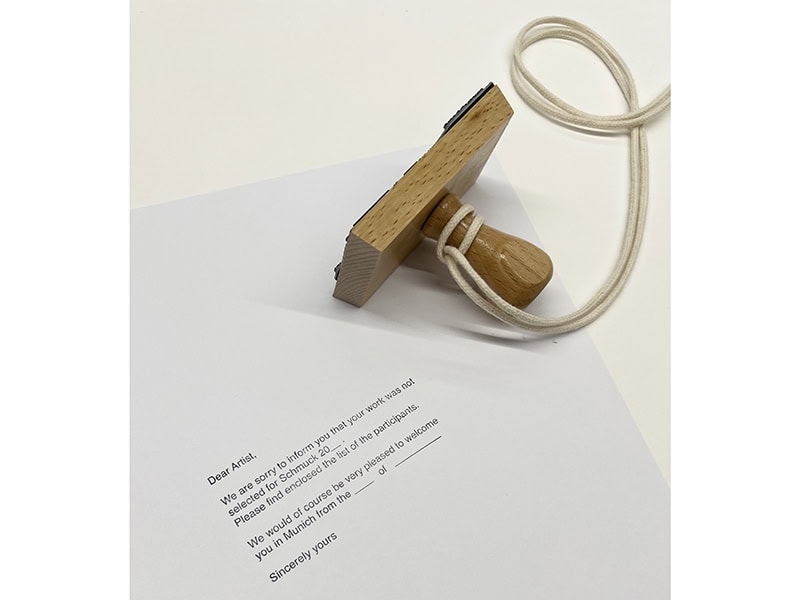
The second component of Escobar’s installation, titled Maybe Next March, replicates the standard, standardized rejection email that has been sent out for years by the organizers of the renowned Schmuck exhibition in Munich: “Dear Artist, we are sorry to inform you that your work was not selected for Schmuck,” followed invariably by a polite, paradoxical invitation to travel to Munich anyway. Through this reproduction, rejection is laid bare as a routine administrative act—an automated form of institutional politeness that manufactures immediate proximity while producing profound professional distance.
A bitter, knowing laugh moved through the audience during this phase of the conversation. Most contemporary artists have learned to internalize and accept rejection as an inevitable part of modern professional life. However, the arbitrariness of certain selection criteria becomes painfully obvious when examining age limits. Artists who do not follow a traditional, linear career path—such as those who begin their artistic practice later in life, transition from completely different careers, or gain access to higher education and vital resources at an older age—find themselves systematically excluded before they have even had a fair chance to establish a foothold in the field.
While age caps are frequently defended by institutions as a necessary form of support for “emerging artists,” this defense relies on the faulty assumption that emerging automatically equates to young. In practice, what is framed as benevolent institutional support can easily morph into an invisible barrier of exclusion.
The Open-Call Fan Club and Practical Realities
Open calls reveal a tremendous amount about how contemporary jewelry understands, structures, and sustains itself. Throughout the roundtable dialogue, the term “open call” seemed to encompass an overwhelming array of definitions simultaneously: it was framed as a democratic opportunity, a practical selection tool, a curatorial method, an alternative business model, and a digital networking platform.
From the unique perspective of a museum curator and public mediator at DIVA, the open call often functions as a pragmatic instrument. Scouting individual artists takes an immense amount of time, whereas a well-publicized open call brings unfamiliar, international work directly to an institution’s attention. At the same time, organizers often find themselves hoping to rescue the format from its worst systemic manifestations. As noted during the event, a nuanced view remains essential: the problem does not necessarily lie in the mere existence of open calls, but rather in how they have evolved to function as a lazy, default solution for structural shortages of institutional time, financial resources, and imaginative curation.
For panelist Ebba Van der Taelen, founder of Unpolished—a dedicated platform for emerging Belgian jewelry artists—the open call played a very specific initial role. Because the platform was expressly created to carve out space for unfamiliar and underrepresented voices, launching an open call felt like a natural starting point. For an exhibition focused on identity and transformation, artists were invited to submit their work, ensuring that the resulting selection functioned not only as a physical presentation, but equally as the platform’s inaugural curatorial statement.
Yet, even within independent platforms, the romanticized idea of absolute openness quickly encountered stubborn practical limits. The call in question was launched immediately before the summer holiday season, precisely when art academies and cultural institutions were shuttered. Consequently, promotion had to rely heavily on Instagram advertisements and organic online circulation. Long before a jury panel convened to make a final selection, digital visibility had already shaped the outcome. Artists first had to happen across the call, meet strict criteria, and possess the luxury of time and resources required to prepare a professional portfolio during the summer months. Despite best intentions, platforms seeking open accessibility remain inextricably bound to the algorithms and calendars that govern modern digital visibility.
Open Call Season and the Artist’s Burden
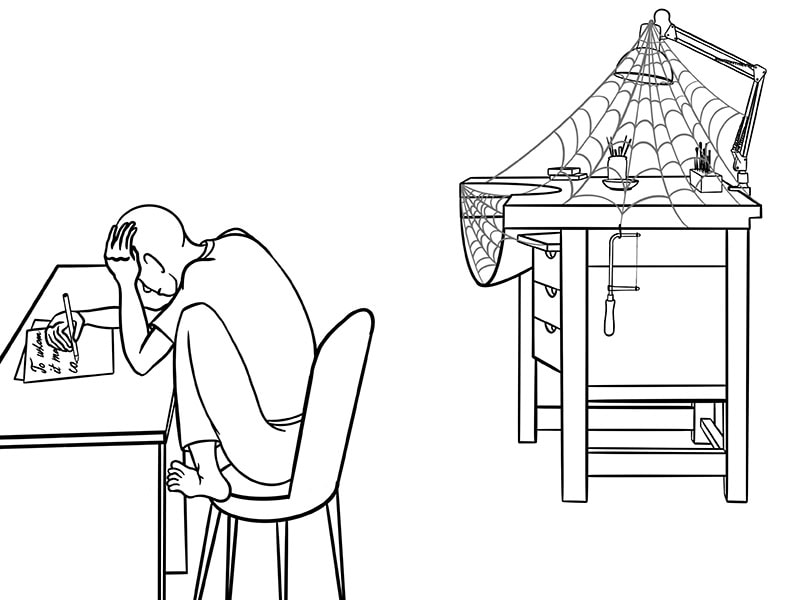
Standing in direct contrast to the institutional perspective is the lived reality of the applicant. Artist Into Niilo described the application cycle as a grueling marathon concentrated heavily around the months of October and November—jokingly dubbed “open call season.” Niilo also memorably compared the process to a game of chance, evoking the poignant image of artists tossing sealed bottles into a vast ocean in the faint hope that someone on an distant shore might reply. Yet, this metaphor of gambling underscores a very real, precarious professional landscape.
Artists frequently shoulder the burden of application fees, international transport costs, and mandatory insurance policies. Furthermore, many must independently cover expensive travel and accommodation costs if they happen to be selected, simply because their physical presence is demanded at the opening. All of this financial expenditure comes on top of the heavy, completely unpaid labor involved in preparing portfolios, writing artist statements, taking professional object photographs, and filling out exhaustive application forms.
As a result, a massive portion of the structural risk shifts entirely away from the organizing institution and onto the individual artist. For institutions and festivals, the open call offers an efficient method of gathering large pools of international submissions with minimal operational means. For artists, however, participation transforms into a high-stakes investment with absolutely no guarantee of visibility, sales, or financial remuneration.
Curatorial Poverty and Narrative Theft
Panelist Liesbet Bussche voiced deep hesitation regarding her continued participation in open calls, directing her criticism not only at the mechanics of the format itself, but also at what open calls have increasingly come to replace. Bussche expressed a strong longing for thoughtfully curated exhibitions built around rigorous themes, substantive critical criteria, and long-term, meaningful engagement between organizers and artists.
According to Bussche, open calls far too frequently result in disjointed “one-piece shows”—exhibitions that arbitrarily accept only a single work per artist. In such cramped environments, artworks can rarely be presented as their creators intended, leaving virtually no room for contextual narrative, let alone deep conceptual exploration. Contemporary jewelry is thus reduced to an isolated object expected to single-handedly represent an entire artistic practice while aggressively competing for fleeting attention among dozens of adjacent submissions.
In these contexts, jewelry risks becoming entirely detached from the intimate stories, material investigations, and conceptual ideas that generated it. During the discussion, this phenomenon was aptly described as a form of narrative theft. Jewelry is fundamentally concerned with personal and social stories, yet the typical open-call exhibition often presents the object completely stripped of its narrative context. Consequently, the open call risks deteriorating into a mere distribution mechanism for isolated luxury objects rather than functioning as a genuine curatorial proposition, producing little more than an accumulation of items rather than a cohesive intellectual argument.
Bussche further emphasized that art schools and academies have a responsibility to better equip students to critically evaluate open calls. Because these formats so frequently detach creative ideas from their wider context, they risk treating the artwork less as a sustained part of a broader studio practice and more as a singular, flattened image circulating within a hyper-competitive economy of visibility.
Transparency, Responsibility, and the Way Forward
One of the most illuminating moments of the Antwerp roundtable arrived when the participants conducted a comparative close-reading of two distinct calls issued by respected organizations: a themed group exhibition organized by the WearHouse in Amsterdam, and the Italian Montebello Award. The exercise made it crystal clear that these formats represented two entirely different operational models, with one functioning as a curated group exhibition and the other operating primarily as a competitive prize.
This distinction is crucial because the catch-all term open call is currently applied indiscriminately to wildly different institutional systems. Hiding beneath the exact same semantic label are group exhibitions, competitive awards, residency programs, international festivals, and digital networking platforms, each carrying its own set of distinct expectations, power relations, and underlying economic models.
Throughout the evening, the conversation continually gravitated back to the fundamental question of institutional responsibility. What does “openness” actually mean when selection criteria remain vague, when organizers provide little to no background context, or when artists themselves are left to bear all costs associated with production, transport, and participation? True openness without operational clarity does not foster genuine accessibility; it merely breeds confusion and frustration.

In response to these systemic flaws, the participants advocated for a vital philosophical shift away from “openness as a marketing tool” and toward “openness as an ethical responsibility.” This approach calls for a renewed professional practice in which transparency, contextual framing, fair financial compensation, and shared care are brought back to the center of cultural organizing.
If contemporary jewelry continues to champion its intimate relationship to the human body, tactile experience, personal storytelling, and the social life of objects, the field must inevitably confront the question of which infrastructures genuinely sustain those core values.
The critical reflections gathered during the roundtable discussion ultimately culminated in a set of practical recommendations and a checklist for both organizers and applicants, translating the concerns raised into concrete inquiries surrounding transparency, fair compensation, rigorous selection procedures, and curatorial accountability. Serving as a tool rather than a rigid framework, the initiative aims to support more sustainable and equitable practices across the sector.
Ana Escobar’s engraved glass cube stands as a lasting, potent symbol: a transparent structural enclosure that simultaneously confines what it holds. As the contemporary jewelry community looks to the future, the central challenge is no longer merely how to make the glass container look more attractive, but rather ensuring that artists still have enough air to breathe within it.