




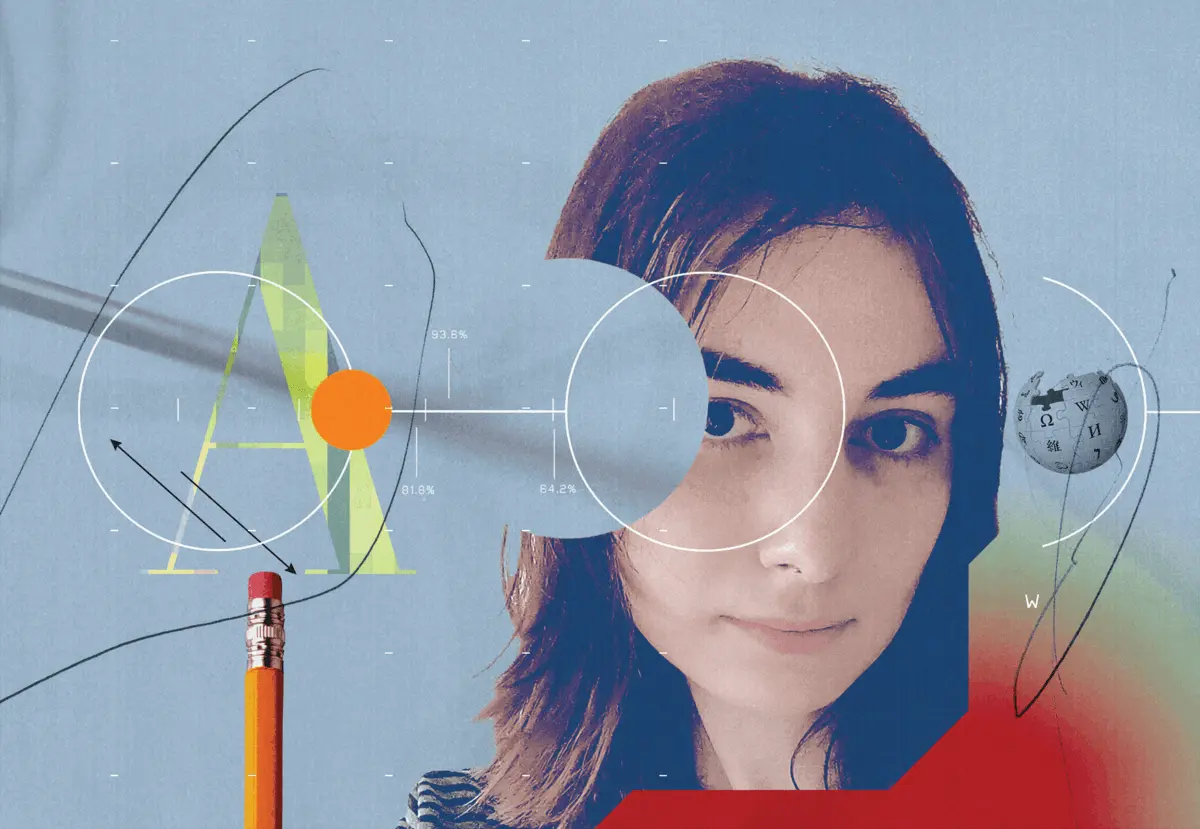
As artificial intelligence systems flood the internet with machine-generated text, volunteers behind the world’s largest online encyclopedia are fighting to preserve human authorship. Among them is Ellia Lebleu, a founding member of WikiProject AI Cleanup, a dedicated volunteer initiative launched in late 2023 to identify, isolate, and remove AI-generated material that violates Wikipedia’s established guidelines.
When the project first began, catching machine-written articles was relatively straightforward. Content generated by early large language models was frequently betrayed by conspicuous clichés, rigid stylistic formulas, and bizarre structural anomalies. Today, however, the challenge has evolved significantly. As AI models grow more sophisticated, project volunteers are developing advanced detection tools and engaging in deep debates about the role of automation in the world’s most widely used reference site.
The Genesis of WikiProject AI Cleanup
The realization that Wikipedia faced a systemic threat from artificial intelligence crystallized around December 2023. Lebleu recalls chatting with fellow editors on Wikipedia’s Discord server after noticing a strange new wave of articles exhibiting identical, unusual characteristics.
These texts routinely relied on repetitive, melodramatic phrases such as "stands as a testament" or "rich cultural heritage." They frequently included bizarrely formal conclusion sections or standalone subheadings asking "Why is this important?"—structures that were characteristic of early ChatGPT outputs but completely foreign to standard Wikipedia encyclopedic style. At the time, these anomalies were glaringly obvious and easy to spot. Recognizing the looming influx of unvetted machine text, Lebleu decided to formalize the effort by establishing an official Wikipedia project, giving the community a centralized platform to coordinate cleanup operations.
At the time, Lebleu was pursuing a Ph.D. in artificial intelligence at the Inria Center of the University of Rennes, part of France’s national research institute for digital science and technology, bringing a unique technical perspective to the volunteer effort.
Spotting AI-Generated Writing in a More Sophisticated Era
As the technology matured, so did the deception. By 2025, the telltale signs of AI writing became far subtler and more deeply embedded in the structure of the text. Rather than relying on simple, easily searchable phrases, modern AI generation leaves structural footprints.
Volunteers note that generative models display a distinct preference for rhetorical patterns like the "rule of three," negative parallelisms, and rhythmic cadences that, while grammatically correct, accumulate to form an unmistakable machine-like signature. Editors also look far beyond the text itself, analyzing editing behaviors and metadata. When an editor publishes multiple comprehensive articles, each spanning thousands of words, within a span of just five minutes, it immediately triggers suspicion.
The problem, furthermore, extends well beyond the narrative prose into the critical apparatus of the encyclopedia: citations. Fabricated or misleading citations have emerged as a major operational headache. While early models frequently hallucinated completely nonexistent sources from scratch, improvements in retrieval-augmented generation have made total fabrications rarer. Instead, modern AI is more likely to find a real, legitimate source but completely misinterpret its contents. Citations that technically exist but fail to support the specific claims attached to them have become an everyday occurrence for Wikipedia patrollers.
Enforcing Prohibitions and Measuring the Tide
In response to the mounting pressure, the English Wikipedia community officially prohibited editors from using large language models to generate articles. Yet, determining how much AI-generated content continues to slip through the cracks remains a complex metric puzzle.
To gauge the scale of the remaining problem, Lebleu collaborated with Pangram, an AI-detection company. Testing the detection software against historical Wikipedia content published long before the advent of ChatGPT yielded zero false positives, providing a very conservative lower bound for its accuracy.
The data reveals a shifting landscape. In late 2025, the tool flagged approximately 20 percent of new articles and drafts as potentially AI-generated. By early 2026, that figure declined to between 15 and 16 percent. However, researchers cannot yet definitively attribute the drop to the newly enacted Wikipedia policies. The decrease could equally be the result of underlying AI models growing more sophisticated in evading detection, or a lag in detection software updates. Furthermore, because the vast majority of AI-generated content is submitted by inexperienced newcomers, the community has amplified its outreach, embedding warnings about the rule into welcome messages, editing help pages, and advisory notes.
Combating Automation With Automation
To manage the immense volume of incoming text, the human editing community is increasingly turning to automated solutions. Another Wikipedia developer independently created an AI source verifier designed to cross-reference page citations against claims to ensure factual alignment. While reliance on an AI model to police another AI model provides no absolute guarantee of error-free results, it serves as a pragmatic first filter capable of catching obvious discrepancies at scale.
Concurrently, the Wikimedia Foundation is developing a native tool known as Paste Check, engineered to flag text pasted directly from specific AI chatbots.
External guardrails are also evolving. Developers of commercial models are introducing proactive restrictions; for instance, some interactions with Anthropic’s Claude now prompt refusals with messages noting that generating a Wikipedia article would violate encyclopedia policies. If all major AI developers implemented strict prompt refusals, it would dramatically reduce casual misuse. However, experts note it would not solve the problem entirely, as open-weight models can still be locally modified or fine-tuned to bypass commercial restrictions, leaving a loophole for determined actors.
Preserving Identity in "The Last Good Place on the Internet"
When the English Wikipedia first passed its anti-AI writing guideline, the motivation was intensely practical: the community was drowning in low-quality automated content, lacked sophisticated detection tools, and needed an emergency brake. Over time, however, the restriction has taken on a profound philosophical dimension.
Wikipedia is frequently described by its supporters and the public as "the last good place on the internet." Operating as a space intentionally free from generic AI content has become central to the platform’s cultural identity. Much of the encyclopedia’s current public communication centers on its status as a fundamentally human-written repository of human knowledge.
Even major technology companies developing artificial intelligence recognize the uniqueness of this corpus, acknowledging its immense value as a purely human-written dataset for training future systems. Maintaining that status makes Wikipedia a precious resource unlike any other on the web.
Yet, this raises difficult internal questions for the future. If artificial intelligence eventually evolves to the point where it can author truly reliable, comprehensive encyclopedia entries, will readers and contributors demand partial integration to make articles more exhaustive? The community faces the delicate task of balancing its foundational identity as a human-authored archive against the temptation of AI assistance.
Facing the Challenge of "Google Zero"
Compounding these internal philosophical debates is an external existential shift: the rise of "Google Zero," a prospective future in which search engine users receive comprehensive AI-generated answers directly on search results pages, reducing traditional web traffic to zero.
If search behavior migrates entirely to conversational AI interfaces, visibility for foundational platforms like Wikipedia could plummet, obscuring the fact that the encyclopedia is a living, editable project sustained by human volunteers. While Wikipedia content is frequently cited within Google’s AI Overviews, users often see only a synthesized answer without realizing they are reading a crowd-sourced document.
To counter this looming visibility crisis, the Wikimedia Foundation is exploring new attribution frameworks. Future integrations could provide AI users with richer contextual metadata about cited articles—detailing when a page was last edited, its comprehensiveness, whether editors have flagged ongoing disputes, and direct calls to action for reader participation. Readers might even be empowered to contribute dynamically through AI interfaces, requesting edits or supplying newly discovered sources directly from conversational prompts.
Rather than facing extinction, Wikipedia appears to be hurtling toward a complex symbiotic relationship with artificial intelligence. The technology that once represented an existential pollution to be scrubbed away is gradually becoming an internal tool for moderation, and eventually, the operational environment in which the encyclopedia must survive.