





After enduring several consecutive years of operating in the red and facing increasingly challenging macroeconomic conditions across the global luxury sector, historic Swiss watchmaker Zenith is aggressively shifting its strategic focus toward the ultra-high-end watchmaking segment. This sweeping corporate repositioning, however, comes at a heavy human cost, with the brand eliminating approximately 200 jobs across its operations.
The significant structural changes were first reported by the prominent Swiss financial newspaper Le Temps. According to the report, Zenith Chief Executive Officer Benoit de Clerck formally broke the sobering news to the company’s workforce during a meeting. During the address, Mr. de Clerck pointed to a convergence of compounding financial pressures that have severely squeezed traditional mid-market watchmakers, explicitly citing the persistently strong Swiss Franc, the looming impact of United States trade tariffs, and noticeably subdued consumer demand across key international markets, particularly in the Middle East and Asia.
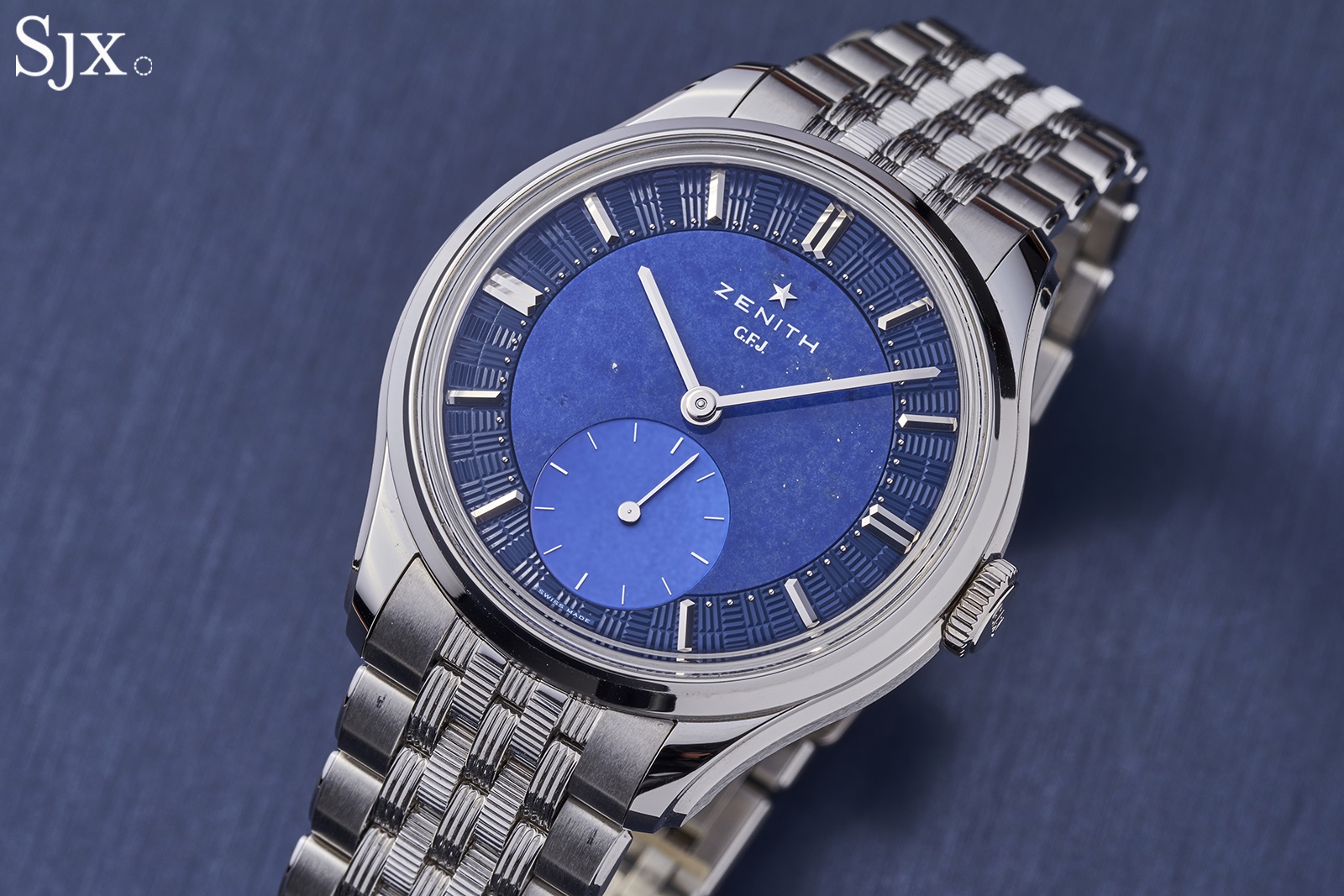
This decisive pivot upmarket by Zenith has not entirely come out of nowhere; rather, it was strongly foreshadowed by the exceptional reception of the GFJ line launched last year, which demonstrated the brand’s technical prowess and viability in higher pricing tiers. Furthermore, the strategic realignment arrives in the wake of a broader leadership reshuffle under Jean Arnault. Having successfully engineered Louis Vuitton’s remarkable ascent into the upper echelons of fine watchmaking, Mr. Arnault has taken charge of LVMH’s wider portfolio of watch brands, which includes Zenith alongside TAG Heuer and Hublot. Under this overarching luxury goods conglomerate strategy, the middle tier of the watch market is increasingly viewed as an unsustainable battleground.

The mid-market space, which Zenith is now actively fleeing, has proven to be particularly brutal for traditional manufacturers. It is simultaneously expensive to compete in and intensely overcrowded with rivals fighting for market share. Zenith is far from alone in making this strategic retreat from the middle segments of the industry. Illustrating the scale of the broader market correction, Mr. de Clerck explicitly referenced the recent closure of Montblanc’s historic manufacturing facility in Le Locle, noting that rival brands are similarly executing upward pivots to escape the punishing margins and high operational costs of the middle tier.
Historically, Zenith’s greatest institutional strengths have been its mature, highly capable manufacturing base and its wide distribution network. However, these robust assets have increasingly proven to be oversized relative to the brand’s actual production volume in the current economic climate. Unable to fully feed this industrial infrastructure or keep it continuously productive under depressed market conditions, the company has found itself forced to downsize drastically. As a result, Zenith will be cutting roughly one hundred jobs—representing approximately half of its entire local workforce—at its historic manufacture in Le Locle, alongside another hundred positions distributed across its retail and corporate distribution network.
The downsizing marks a sharp pivot from strategies laid out just a short time ago. Back in 2024, LVMH proudly announced ambitious plans to scale up Zenith’s Le Locle manufacture to serve as an internal powerhouse capable of supplying high-quality mechanical movements to other brands within the broader luxury group. In truth, this integration was already well underway; Hublot had been successfully utilizing Zenith movements within its own timepieces for a decade. At the time, LVMH envisioned developing an expansive catalog of Zenith-made, proprietary "in-house" movements that sister brands could freely select from to bolster their own collections.
Complicating this internal supply matrix further, LVMH took a minority stake in La Joux-Perret just last year, a movement manufacturer arguably better positioned logistically and operationally to meet the diverse and fluctuating needs of the luxury group. Despite speculation and industry rumors that this investment might signal a broader decoupling or eventual divestment of Zenith from the conglomerate, LVMH was quick to shut down those narratives. Reassuring stakeholders, Mr. de Clerck confirmed to Le Temps that the movement-supply side of Zenith’s business operations will continue as planned, ensuring that the company heads into the new year with a healthy and full order book for its mechanical calibers.
The profound workforce reduction has inevitably drawn the attention of organized labor. Representatives from Unia, the largest Swiss trade union, are scheduled to sit down with Zenith management and affected employees to discuss the restructuring process and explore potential mitigation measures for the laid-off workers, as reported by the union’s specialized publication L’Événement.