






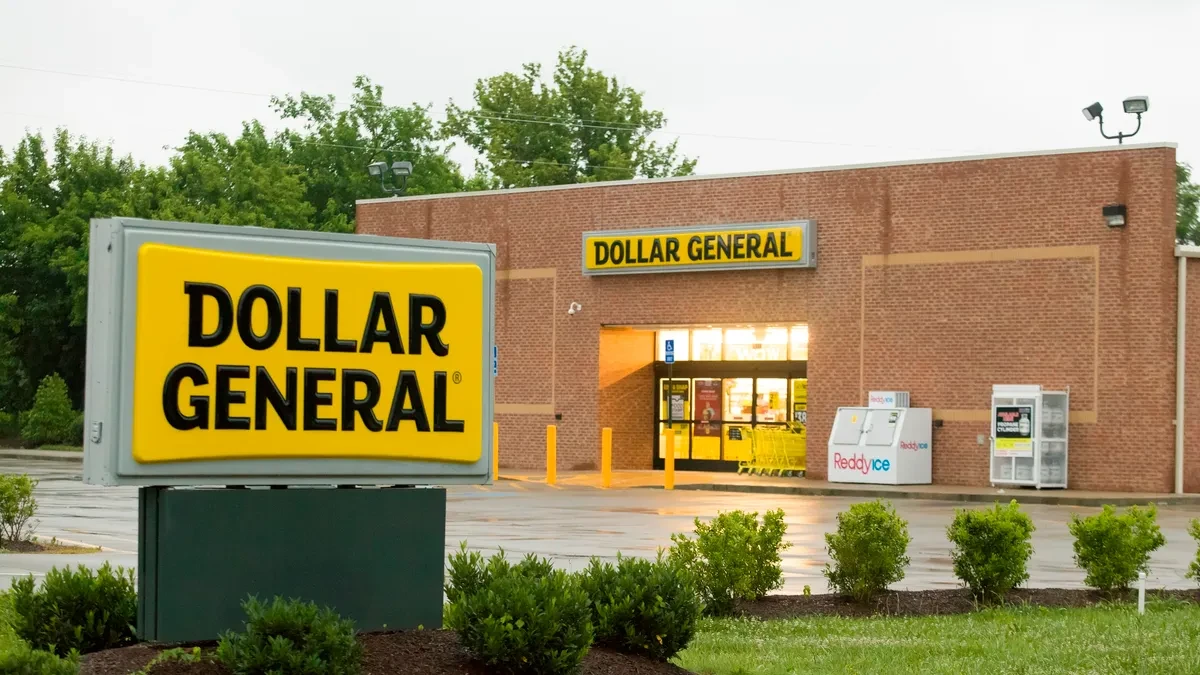
The Federal Trade Commission, alongside a coalition of 20 U.S. states, has filed a formal lawsuit against discount retail giant Dollar General, alleging that the company routinely engages in deceptive pricing practices that trick consumers into paying higher prices at the checkout counter than what was advertised on store shelves, digital channels, and promotional circulars.
The enforcement action brings intense scrutiny to one of the country’s most ubiquitous retail chains, which has built its massive footprint by catering to budget-conscious shoppers, particularly in rural and underserved American communities. According to federal officials, the company’s failure to align its register prices with its advertised prices has inflicted widespread financial damage on households that can least afford unexpected costs during challenging economic times.
"Dollar General has betrayed the trust of millions of American consumers and imposed significant financial harm on communities and consumers who are already struggling to make their paychecks last," said Christopher Mufarrige, director of the FTC’s Bureau of Consumer Protection, in a statement released on Monday.
Representatives for Dollar General did not immediately respond to requests for comment regarding the sweeping allegations made in the federal and state complaints.
The comprehensive complaint filed by the FTC incorporates partially redacted internal company communications, internal emails, detailed accounts of consumer grievances, and the findings of an extensive undercover investigation conducted by federal regulators. The legal filing portrays a systemic issue within the retailer’s operations, where advertised bargains routinely evaporate the moment items are scanned at the register.
Federal investigators found that the discrepancies were not isolated incidents but rather part of a widespread pattern. Between January 2023 and the end of March of the current year, Dollar General amassed more than 29,000 complaints specifically concerning price-honoring issues from disgruntled shoppers nationwide.
To test the validity of these consumer complaints, FTC investigators launched a series of undercover purchases between January and April at various Dollar General retail locations across Ohio, Pennsylvania, Missouri, and Maryland. The results of the undercover operation were stark: every single purchasing trip resulted in the discount retailer charging a higher price at the register than the price that had been clearly displayed on the shelves or in promotional materials.
As a specific example highlighted in the FTC’s complaint, an undercover shopping trip on January 16 at a Dollar General store in Ohio revealed that 13 out of 58 items acquired—nearly a quarter of the total basket—rang up at the register with a higher price than what was stated on the corresponding product label or shelf tag.
Regulators noted that the physical environment and point-of-sale technology at Dollar General stores often obscure these discrepancies from the consumer’s view in real time. The company’s fast-moving register screens and rapid checkout processes make it exceptionally difficult for shoppers to catch pricing inconsistencies the moment they occur, leaving many consumers unaware that they have been overcharged until they review their receipts long after leaving the store.

Despite being repeatedly confronted with evidence of these pricing inconsistencies through tens of thousands of customer complaints, as well as failed pricing inspections conducted by various local and state weights and measures authorities, the FTC asserts that Dollar General has failed to implement effective operational policies and practices to adequately address and resolve the problem.
Consequently, the FTC and the participating state attorneys general allege that the retailer’s ongoing pricing practices constitute violations of the Federal Trade Commission Act, the Gramm-Leach-Bliley Act, and various state-level consumer protection statutes.
"Dollar General has for years engaged in deceptive conduct that harms the very consumers it claims to serve," the FTC’s complaint states. "Although Dollar General promises convenience, low prices, and value, the company has routinely charged customers more at the register than the price displayed on shelves, price tags, and advertisements."
The legal action comes at a time when Dollar General has experienced notable financial growth, driven in large part by shifting consumer demographics. In its most recent financial reports, the company announced that its second-quarter net sales jumped 5.2% year over year to reach $11.3 billion. This growth has been bolstered not only by its core demographic of rural shoppers but also by an influx of higher-income consumers seeking value amid broader economic pressures.
During an earnings call with analysts in August, Dollar General CEO Todd Vasos emphasized the strategic importance of the company’s expansive footprint, noting that the retailer’s deep penetration into smaller towns remains a foundational pillar of its business model and a distinct competitive advantage in the modern retail landscape.

"Our mature store base is a unique competitive advantage that enables us to serve customers in smaller, rural communities across the country," Vasos told analysts during the conference call.
As the lawsuit moves forward through the federal court system, the outcome could force significant operational changes across Dollar General’s thousands of storefronts nationwide, mandating stricter compliance with basic retail pricing accuracy and potentially yielding substantial financial penalties for the discount chain.