




Sales across the global luxury sector are continuing to slow significantly as persistent economic pressures increasingly cut off less wealthy, more aspirational customers who have historically served as a critical pillar of support for high-end brands. This cooling trend, which has become more pronounced throughout the year, is widely expected to persist in the near term across the majority of high-end names, according to recent analysis from financial institutions and investment research firms.
While a few marquee names continue to defy broader market trends, the overarching economic landscape for high-end retail has shifted dramatically. According to a client note issued by HSBC Global Investment Research, overall third-quarter organic sales in the luxury sector are now anticipated to grow by less than 3% year on year. This represents a sharp deceleration when compared to the 7% growth recorded during the previous quarter. Looking at the full-year picture, HSBC estimates that the broader sector will manage a modest 5% growth rate. However, that figure is heavily skewed by a select few outperformers; when excluding major players like Cartier owner Richemont and Swatch, the sector’s growth slows down to an even more sluggish 3.3%.
Richemont remains a notable outlier in this environment, with third-quarter organic sales expected to post a resilient 13% increase compared to the same period last year. Yet, this stellar performance stands in stark contrast to the wider market, where weaker consumer sentiment and macroeconomic headwinds are taking a heavy toll.
“Overall, while we became more cautious on the luxury sector at the beginning of September, we now expect Q3 to be even weaker than initially anticipated,” wrote HSBC analysts led by Anne-Laure Bismuth in their research note.
The analysts point to several distinct drivers behind this ongoing slowdown, starting with tough comparative figures against the strong performance seen in the first half of the year. Beyond these difficult statistical comparisons, the market is also grappling with persistently weak tourism numbers across Europe and an unmistakably downbeat shift in overall consumer sentiment.
The broader macroeconomic environment has severely dented the psychological foundation of retail spending. “The feel-good factor of the consumer isn’t at its best, affecting the luxury sector,” the HSBC analysts noted, emphasizing how closely high-end purchasing habits are tied to wider consumer confidence and economic optimism.
This current downturn, however, is not merely an isolated quarterly blip. According to research compiled by Christopher O’Malley, a portfolio manager, and Louise Singlehurst, a research analyst at Janus Henderson, the luxury market has been caught in a slow but steady slump for the last three years, following an unprecedented post-pandemic boom.
The roots of the current correction stretch back to the immediate aftermath of the COVID-19 pandemic. At that time, consumers emerged from lockdowns flush with cash, bolstered by government stimulus packages and surging valuations across various asset classes. Driven by a pent-up desire for social engagement and experiential spending, consumers turned to retail therapy on a massive scale.
“The result was a surge in consumption coupled with strong pricing power that drove rapid sales growth and significant outperformance among European luxury stocks through 2023,” O’Malley and Singlehurst observed in their findings. They added that this exceptional growth was further supported by a willingness among consumers to trade up, eagerly opting for higher-priced and more premium goods across multiple categories.
Naturally, such an extraordinary outpouring of consumer demand could not last indefinitely. As the post-pandemic euphoria faded, macroeconomic realities caught up with the global economy, led stubbornly by persistent inflation. To protect their profit margins against rising operational costs, luxury brands aggressively raised prices. While ultra-high-net-worth individuals absorbed these increases with relative ease, the strategy severely blindsided aspirational luxury consumers. These shoppers typically spend less per person, but their sheer volume has historically buoyed the sector and accounted for a substantial portion of overall revenue.
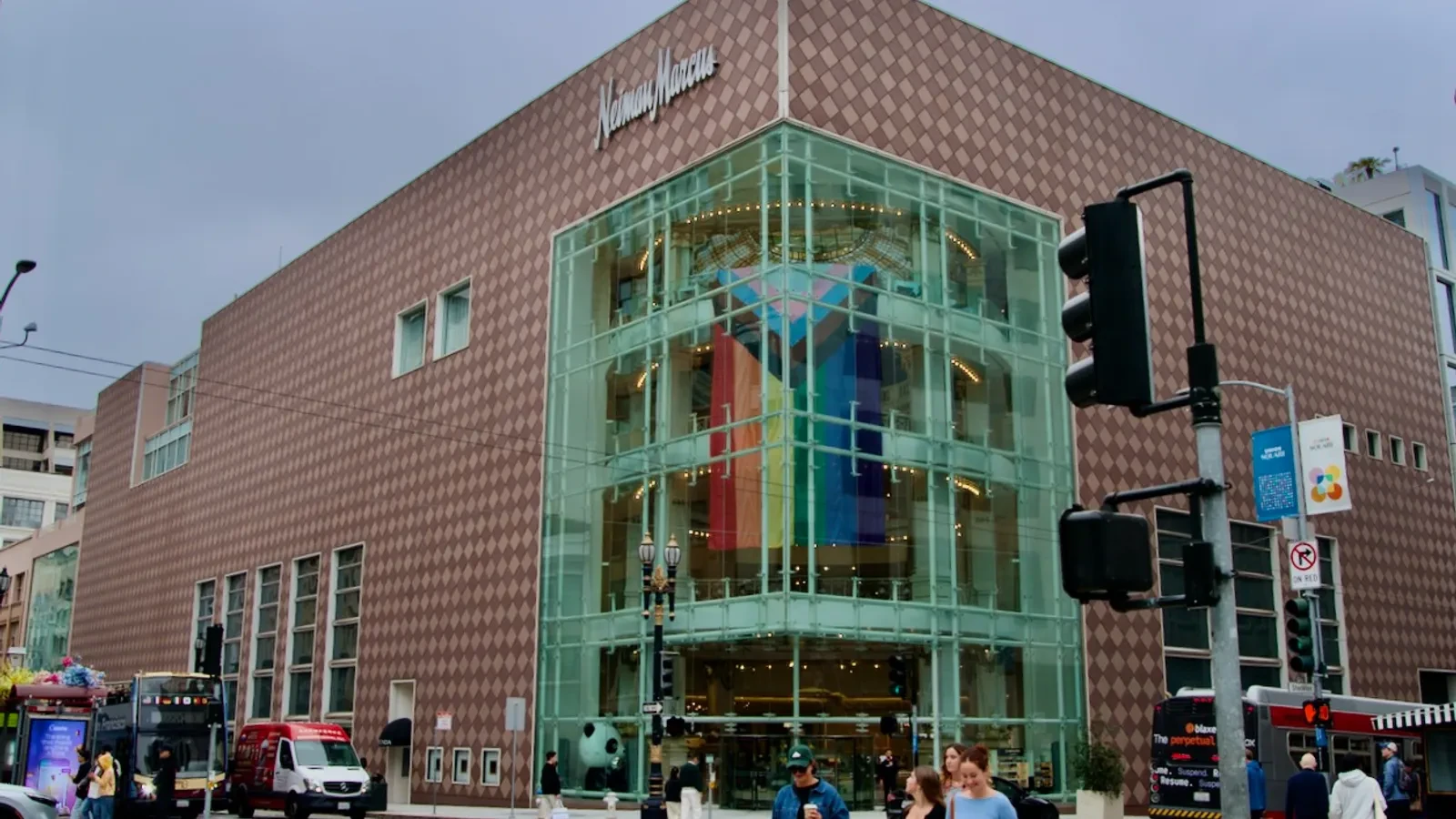
The ripple effects of this prolonged downtrend have extended far beyond individual fashion houses and jewelry makers, dealing heavy blows to the high-end department stores that rely on these brands to drive traffic and sales. The strain on retail infrastructure became starkly evident earlier this year when Saks Global—the parent company operating upscale department store giants Saks Fifth Avenue, Neiman Marcus, and Bergdorf Goodman—was forced to file for Chapter 11 bankruptcy protection. Although the company successfully emerged from bankruptcy proceedings six months later, significant questions continue to swirl within the financial community regarding its long-term viability and operational success in a shifting retail climate.
For a brief period, industry observers hoped that this year might offer clear signs of a turnaround, setting the stage for a steady market recovery. However, Janus Henderson analysts note that these optimistic projections have been systematically undermined by a volatile convergence of geopolitical and economic forces.
“Optimism for a gradual recovery in 2026 has since been challenged by the U.S.-Iran conflict, with higher energy prices and geopolitical uncertainty dampening travel and consumer confidence, while demand from China has remained sluggish,” the analysts stated. With international travel corridors facing disruption, energy costs placing an additional squeeze on household budgets, and the vital Chinese market failing to stage the robust rebound many had anticipated, the luxury sector finds itself navigating a deeply complex and uncertain global terrain.