





Prime Minister Rob Jetten has called upon European nations to present a united front and significantly escalate economic sanctions against Russia, arguing that heightened pressure is the only reliable way to force Vladimir Putin to negotiate an end to the ongoing war in Ukraine.
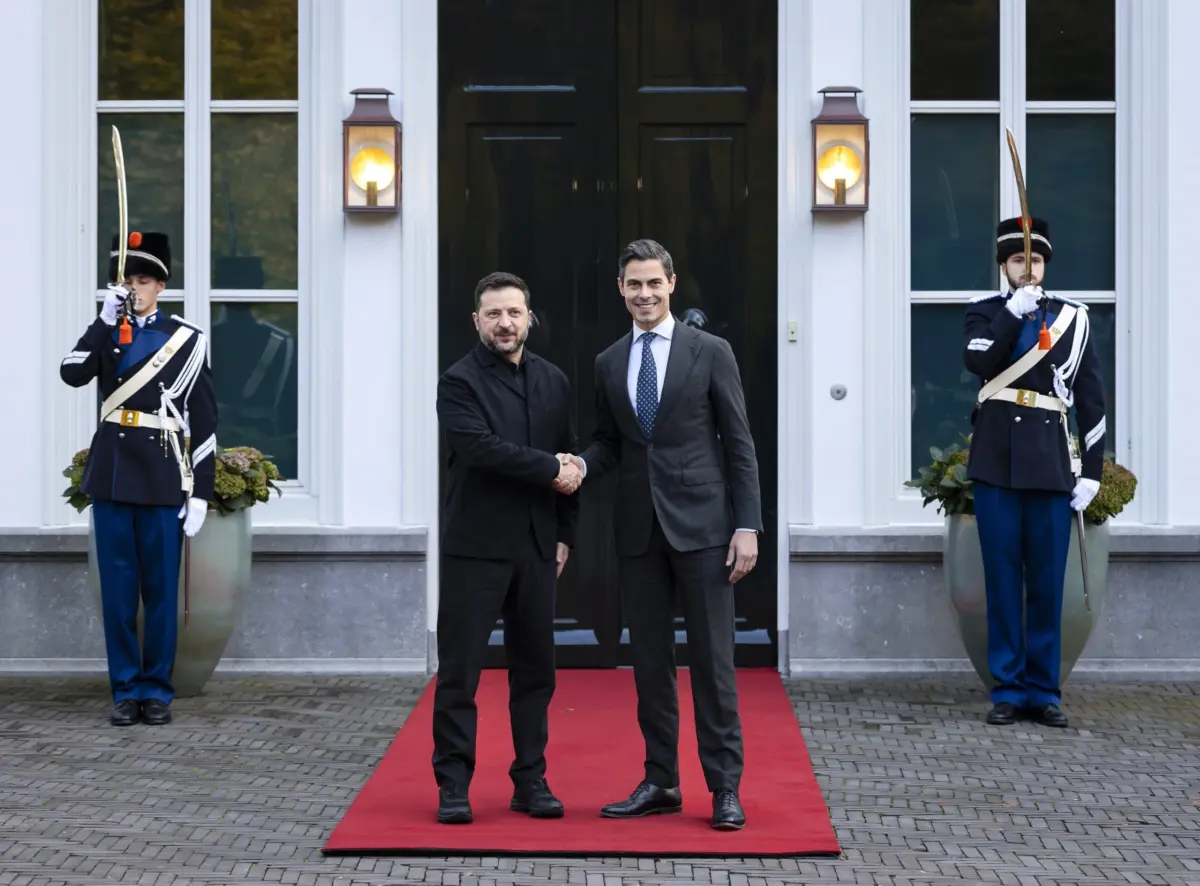
Speaking to reporters during a joint press appearance with Ukrainian President Volodymyr Zelenskyy in The Hague, Jetten emphasized that severe economic measures remain essential to persuade the Russian leadership to yield ground and pursue a meaningful diplomatic resolution. His remarks arrive at a critical juncture in international diplomacy, following statements by Polish President Donald Tusk indicating that the United States, Ukraine, and Russia have provisionally agreed to hold ceasefire discussions in Abu Dhabi on November 4.
While European leaders will not directly participate in those specific upcoming talks, Tusk noted that Finnish President Alexander Stubb and Norwegian Prime Minister Jonas Gahr Støre recently held a direct telephone conversation with Putin, following prior consultations with Zelenskyy and American officials.
During the press conference in The Hague, President Zelenskyy underscored the vital importance of European solidarity in the face of ongoing geopolitical pressure. He noted that maintaining a cohesive stance is imperative because Russia continues to focus its strategic efforts on exploiting divisions among Western allies.
“Russia is losing,” Zelenskyy told reporters, outlining the current diplomatic landscape. “The American side is asking to find a balance and a compromise. If they need a compromise, we say: Russia is not winning. But what is very clear is they are not ending the war. That is the problem. That’s why we need to work step by step and move Russia to end this war.”
No Russian gas
A central focus of the discussions in The Hague was the question of European energy independence and the future of Russian gas supplies. Prime Minister Jetten firmly ruled out any possibility of restarting imports of Russian gas to Europe, dismissing a proposal reportedly raised by Donald Trump’s peace envoys, Jared Kushner and Steve Witkoff, during their weekend talks with Zelenskyy.
Jetten reiterated that the international community must maintain a hardline approach to compel the Kremlin to take negotiations seriously. The path forward, according to the Dutch leader, requires increasing rather than relaxing punitive measures against the Russian regime.
“It is clear that we need to push Putin to take the negotiations seriously,” Jetten stated. “The way forward for Europeans, but also for Americans and others, is to put more sanctions on the Russian regime, not less. So buying Russian energy is a very stupid idea. I can assure you that there is no European leader who is willing to buy Russian gas in the next few years.”
Reaffirming the Dutch government’s commitment to economic coercion as a tool for peace, Jetten added that European resolve remains unshaken. “What we want is for Russia to stop this war, and as long as they don’t we will hit them hard in their pockets with sanctions,” he said.
Aid packages
Complementing its diplomatic and economic pressure on Moscow, the Dutch government announced a substantial new financial commitment to support Ukraine. On Wednesday, officials in The Hague confirmed that the Netherlands will spend an additional €1.2 billion on non-military aid over the next three years, alongside €500 million dedicated to military support, specifically targeting air defense systems and drone technology.
The extensive non-military aid package was detailed by Foreign Trade Minister Sjoerd Sjoerdsma during a diplomatic visit to Kyiv. According to the Dutch ministry, the funding is designed to address the most urgent needs of the Ukrainian population as infrastructure continues to face sustained attacks. The resources will be channeled into critical sectors including energy restoration, drinking water supplies, general humanitarian assistance, healthcare, medical provisions, and extensive operations to clear hazardous landmines from affected regions.
Prime Minister Jetten pointed to these ongoing assistance programs as proof of the international community’s unwavering solidarity with Kyiv. He argued that Moscow’s strategy relies heavily on attempting to erode the morale of the Ukrainian public while undermining the nation’s society and economy.
“Russia is hoping to break Ukraine’s morale, its society and its economy,” Jetten said. “But they will not succeed. Firstly because of the great courage and resilience of the Ukrainians themselves, but also because we as allies realise that we must not let up on giving our support.”