






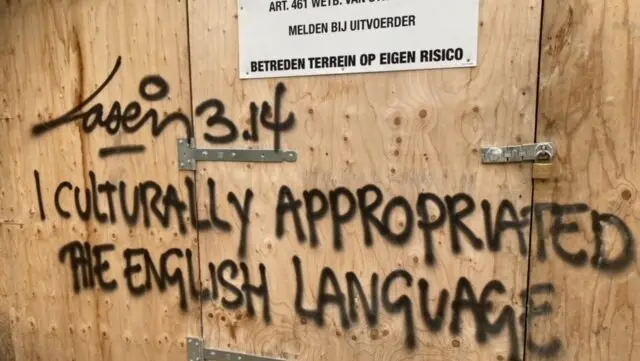
Moving to a new country is a challenge that tests adaptability, patience, and linguistic endurance. For expatriates, international students, and foreign professionals arriving in the Netherlands via plane, train, or ferry, the journey of integration often begins before unpacking the first suitcase. It starts with the rapid and involuntary absorption of a unique set of Dutch words and expressions that seem to bypass the formal language-learning process entirely. Within weeks of touching down in the flatlands, newcomers find themselves dropping these terms into English conversations with native-like frequency.
Linguistic acculturation in the Netherlands operates on a distinct rhythm. While standard language acquisition usually involves textbooks, grammar exercises, and vocabulary lists, settling into Dutch society involves a more visceral linguistic adoption. Certain words simply prove too useful, too culturally specific, or too deeply embedded in daily life to ignore. From navigating public transport delays to celebrating the end of the work week, expats quickly discover that mastering these terms is a rite of passage.
At the very top of this linguistic hierarchy is the word "lekker." Virtually every newcomer learns this term almost immediately, often within hours of arrival. "Lekker" is the ultimate linguistic Swiss Army knife, serving as a catch-all descriptor for almost anything positive. It can describe a food item, such as a "lekker broodje" sandwich, comment favorably on the weather as "lekker weer," or be applied to physical intimacy as "lekkere sex." Its versatility makes it indispensable, as it neatly encapsulates a feeling of comfort, enjoyment, and satisfaction that English struggles to replicate with a single syllable.
Equally pervasive in the social fabric of the Netherlands is the concept of the "borrel." For reasons that remain delightfully opaque to outsiders, the Dutch rarely just "go for drinks." Instead, they always have a "borrel." This institutionalized gathering can range from a casual post-work drink at a local brown café to formal networking events. For those working in an office environment, the Friday afternoon social gathering takes on an even more specific moniker: the "vrijmibo," a portmanteau of the Dutch words for Friday afternoon drinks. Missing a "vrijmibo" can sometimes feel like missing out on the beating heart of office culture, making the term essential currency for anyone navigating the corporate world in Amsterdam, Rotterdam, or beyond.
Administrative life in the Netherlands introduces newcomers to another specialized vocabulary, heavily dominated by taxation and municipal bureaucracy. The word "btw" is a prime example. While international arrivals might initially mistake it for the common English text-abbreviation meaning "by the way," they quickly learn to pronounce it in the traditional Dutch way as "bay-tay-vay." In the Netherlands, it refers strictly to sales tax. Closely associated with "btw" is "belasting," the broader term for tax in general. Given the notoriously complex and substantial tax structures in the country, it is hardly surprising that newcomers become intimately familiar with the word "belasting" very early in their tenure.
Bureaucracy does not stop at taxation; it extends directly to local governance. For reasons likely rooted in the sheer volume of interactions required with municipal authorities—ranging from registration to housing permits—internationals almost universally refer to the local municipal headquarters as the "gemeente." They rarely, if ever, use English equivalents like council or city hall. The "gemeente" becomes a central focal point of integration, and the word follows suit.
Other domestic necessities seamlessly integrate into daily conversation as well. Pharmacies are rarely referred to as such; instead, the word "apotheek" quietly slips into regular usage, overshadowing respectable foreign-language equivalents. Similarly, the real estate agents who help newcomers secure housing—often for notoriously high fees—are universally known as "makelaars."
Communication habits also undergo a subtle shift. After a few weeks in the country, the concept of phoning someone undergoes a linguistic transformation. People stop calling each other and start to "bel." A resident might casually announce, "I’ll bel you tonight." However, newcomers quickly learn a crucial cultural nuance regarding this verb: when a Dutch person says "we bellen"—meaning "we will call"—it can range from a genuine promise to ring sometime in the future to a polite brush-off meaning they will never contact you again.
On a broader societal level, the Dutch language offers uniquely efficient compound words that easily cross linguistic barriers. One standout example is "horeca," a terrifically handy term derived from the initial syllables of hotel, restaurant, and cafe. Used to describe the entire hospitality and catering industry, it is a piece of professional and social shorthand that the rest of the world could easily and advantageously adopt.
Planning and time management also take on a distinct local flavor. The moment an expat settles in, the familiar English concept of a "diary" is frequently abandoned in favor of an "agenda." There is simply no escaping it. Residents make appointments in their agenda and consult their agenda to determine if they can manage a meeting three weeks from now at 2:30 PM.
Leisure habits too are redefined by the local lexicon. Once a foreign national is fully settled in the Netherlands, the traditional concept of a skiing holiday often vanishes, replaced entirely by going "on wintersport." This remains true even if the traveler spends significantly more time enjoying the après-ski festivities at the base of the mountain than actually navigating the ski slopes.
Infrastructure and technology, of course, have their own specialized terms that become all too familiar. If a train fails to arrive, a tram runs disastrously late, the home internet connection drops out without warning, or a retail payment terminal rejects a smartphone at the grocery store checkout, the culprit is almost invariably a "storing." For frequent users of the Dutch public transport network, "storing" quickly transitions from a vocabulary word into a lived reality.
Underpinning all of these linguistic adaptations is a word that defies easy translation yet remains absolutely central to understanding Dutch culture: "gezellig." Signifying a unique blend of cozy, fun, warm, and inviting, "gezellig" represents the emotional core of social life in the Netherlands. It is a concept so profound and culturally vital that it regularly forms the basis of comprehensive integration guides and lessons for newcomers trying to decode the nuances of their new home.