





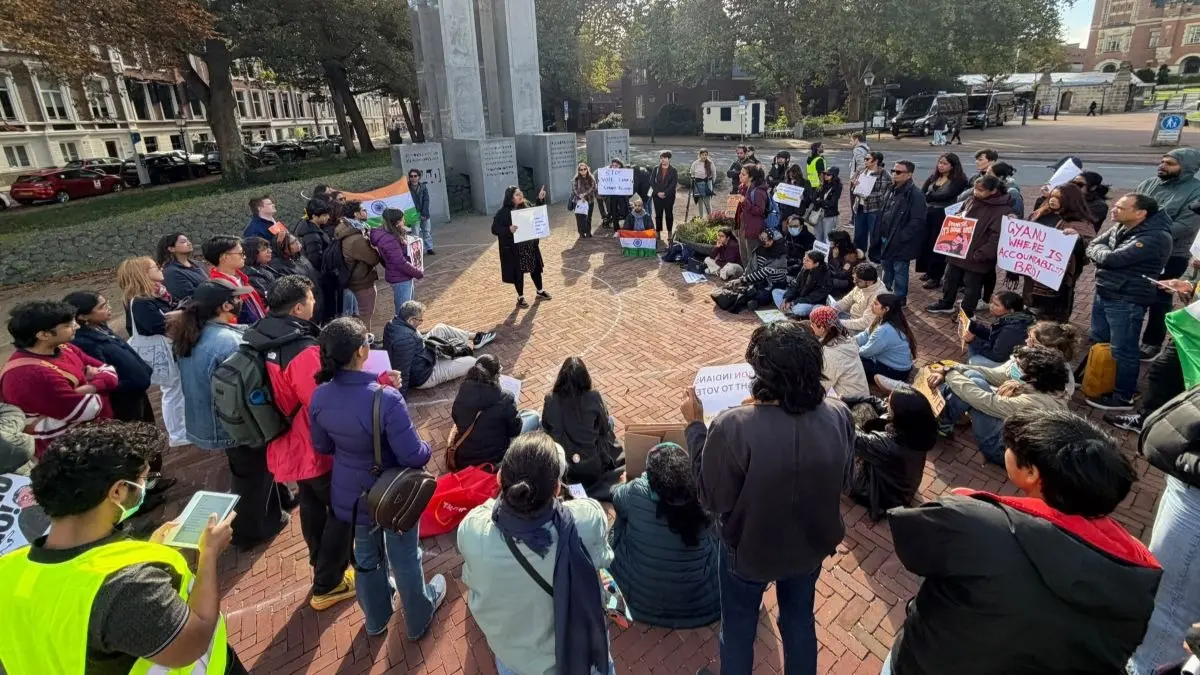
THE HAGUE — Members of the Indian diaspora community in the Netherlands have taken to the streets to demand political solidarity and increased international media attention regarding the sweeping "Cockroach" protests currently unfolding across India. Demonstrators and civil rights advocates argue that these grassroots demonstrations are facing a harsh and increasingly brutal crackdown by state forces, raising critical questions about the erosion of democratic institutions and electoral safeguards in the world’s most populous democracy.
The unrest first erupted during the summer months, initially galvanized by widespread allegations of corruption and systemic failures within the Indian education system. However, the movement quickly expanded its scope, pivoting to focus heavily on controversial changes to the national voting system. Young Indians and civil society groups argue that they are being systematically denied their fundamental democratic rights—a development that protesters say disproportionately impacts marginalized minority communities and women across the country.
Indians currently represent a prominent and vital component of the Netherlands’ thriving international community. According to official data from the Dutch national statistics office, CBS, there are approximately 54,500 Indian nationals residing in the country, accounting for roughly 3.2 percent of all foreign nationals living within Dutch borders.
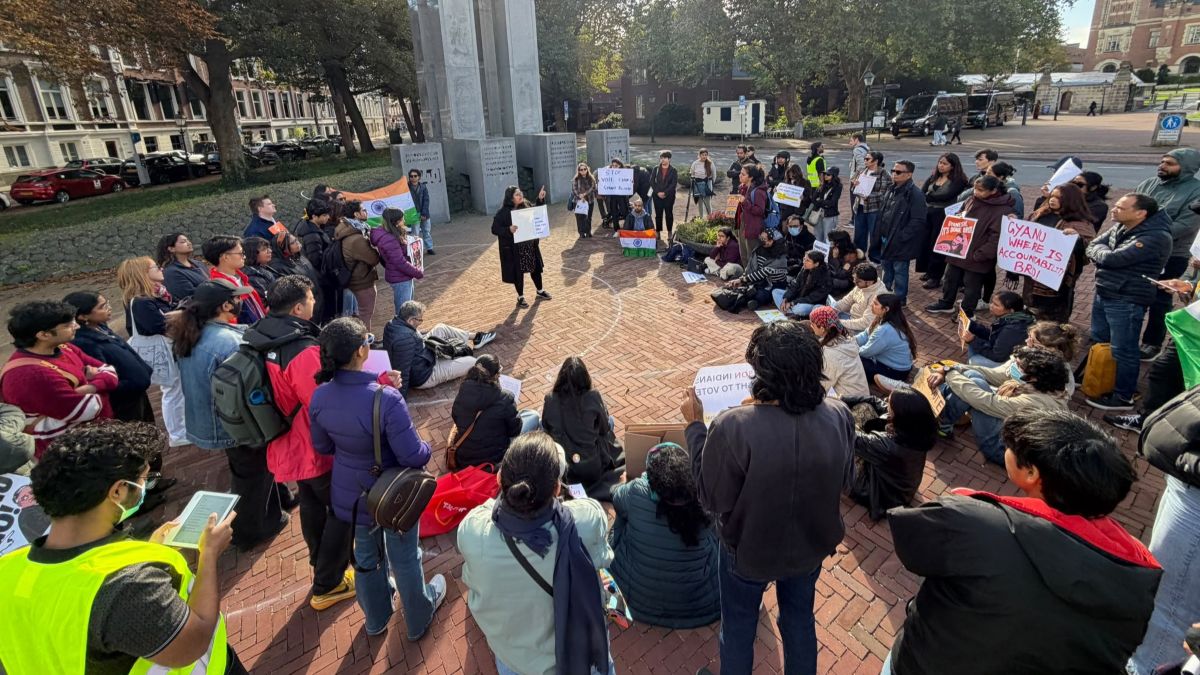
In response to the escalating crisis in South Asia, the Progressive Indians Europe group, based in Amsterdam, recently organized a gathering in The Hague. The demonstration aimed to call international attention to the alleged human rights abuses and democratic backsliding that members claim Prime Minister Narendra Modi’s government is inflicting upon its citizenry.
A spokesperson for the advocacy group told Dutch News that the organization is formally asking the Dutch government to publicly and unequivocally stand up for the democratic principles and human rights commitments that it routinely recognizes and defends within its own foreign policy framework.
"These developments directly affect people in the Netherlands," the spokesperson said. "Our families, friends and communities remain deeply connected to India. What happens there has real consequences for the people we care about, while the precedent set by the erosion of electoral safeguards matters to democracies everywhere."
The suppression of the Cockroach movement, the group argues, has involved the arrest of thousands of demonstrators, the detention of journalists, and widespread reports of heavy-handed police brutality. Consequently, they emphasize that people in the Netherlands have a moral obligation to examine the reporting, listen closely to affected communities, and recognize the fundamental importance of independent investigations, government transparency, and institutional accountability.
At the same time, the group stressed that it was not asking the public to accept every unverified allegation without proper scrutiny. Instead, they hope the campaign will encourage the Dutch public, local media outlets, and policymakers to engage seriously with these complex developments and acknowledge that defending democracy remains a shared international responsibility.
When approached for comment, a spokesperson for the Dutch Ministry of Foreign Affairs told Dutch News that the government is closely monitoring the situation. "The Netherlands follows the developments in India," the spokesperson said. "As human rights and democracy are an important part of the Strategic Partnership between India and the Netherlands, the Netherlands and India discuss these topics regularly in diplomatic contacts and will continue to do so."
Disenfranchised Abroad
For many members of the Indian diaspora living in Europe, the political crisis back home is no longer a distant news story; it is a direct interference in their civic lives. Surabhi, an Indian national living in Amsterdam, explained that she takes her right to vote extremely seriously, participating regularly in both national elections in India and local municipal elections in the Netherlands.
"I am an Indian national and have always travelled back to India to vote," she said. "Most recently, I voted in the national elections in 2024 and the municipality elections in Mumbai in January 2026."
However, Surabhi’s name, alongside millions of others, has recently been struck off the voter registry. This removal occurred during a sweeping revision of electoral rolls conducted by the Election Commission of India, which maintains that the administrative process is necessary to improve the overall integrity of the voting system by removing dead, duplicate, and ineligible voters.
Another protester, Anubhav, shared a similar experience, detailing the technical hurdles he faced when trying to verify his status. He explained that he can only access the official voting list on the Election Commission of India website by routing his connection through a virtual private network (VPN). Upon checking the registry, he discovered his name had also been removed. He promptly submitted an administrative complaint, only to find that his case was closed by election officials the very next day.
Reflecting on his political footprint, Anubhav noted his active digital presence. "I am a popular anti-BJP guy on social media among my acquaintances," he said. "Is this just a coincidence? I don’t know."
The Genesis of the Cockroach Movement
The political phenomenon known as the Cockroach Janta Party—whose satirical name plays directly on that of Prime Minister Modi’s ruling Bharatiya Janata Party (BJP)—first emerged in May as an online satire account. The digital campaign was launched as an immediate public backlash against a controversial remark by India’s Chief Justice, Surya Kant, who had publicly described certain political activists and unemployed young people as "cockroaches" and "parasites of society." Justice Kant later clarified that his remarks had been significantly misquoted and misrepresented by critics.
The satire quickly morphed into a tangible physical movement. By July, mounting street protests over leaked exam papers and systemic educational corruption forced India’s education minister to tender his resignation. During these early demonstrations, human rights organization Amnesty International documented extensive police violence, finding that law enforcement officers used pellet-firing shotguns, electric shock batons, tear gas, and standard batons against demonstrators. Authorities in Delhi countered these reports by stating that more than 400 individuals, including law enforcement personnel, sustained injuries during the clashes.
A much larger wave of protests erupted on October 2, serving as a direct reaction to the nationwide revision of voter rolls. According to investigative reports, approximately 14 percent of the original names listed on the rolls—representing more than 133 million citizens—have been quietly removed since the administrative process began last year. Protesters argue that eligible voters, particularly those critical of the ruling party, have been systematically and wrongly struck off in favor of political allies of the BJP.
In response to the public outcry, the Indian electoral commission has maintained that voters who were removed in error can register again through established channels, insisting that all administrative actions taken by the agency were fully lawful.
The situation escalated sharply over the weekend of October 10 and 11, when more than 2,000 protesters, including several high-profile opposition members of parliament, were detained by police in Delhi. By October 13, Human Rights Watch issued a stark condemnation, reporting that police had physically beaten protesters, dragged them through the streets, subjected them to arbitrary detentions, and suspended mobile internet services in affected areas to disrupt communication.
While local police forces defended their actions by asserting that protesters were frequently uncooperative and that the use of force was occasionally necessary to maintain public order, international bodies have urged restraint. The United Nations human rights office has formally called upon Indian authorities to fully respect and protect the fundamental right to peaceful assembly.
Deepening Dutch-Indian Ties
The protests and subsequent diplomatic friction occur against the backdrop of robust and expanding bilateral relations between the Netherlands and India. According to data from the CBS statistics bureau, Indian nationals constitute one of the largest demographics of highly skilled migrants originating from outside the European Union. A significant proportion of these migrants are employed within the Netherlands’ competitive information technology sector, while more than 300 Indian corporate entities now maintain an operational presence in the country.
Economically, the Netherlands serves as India’s third-largest export destination worldwide, its largest export market within Europe, and the fourth-largest overall foreign investor in India. Data published by the Indian embassy indicates that bilateral merchandise trade reached $27.8 billion during the 2024-2025 financial year.
In May of this year, Prime Minister Modi visited the Netherlands. During a high-level roundtable meeting with prominent Dutch business leaders, Modi enthusiastically spoke of ushering in a "new golden era in India–Europe relations," coming on the heels of the conclusion of free trade negotiations between India and the European bloc. He described the trade agreement as a compact "between the world’s two largest democratic and responsible powers" that would establish a strong foundation for shared future prosperity.
However, the diplomatic path has not been entirely frictionless. Prior to Modi’s arrival in the country, Dutch Prime Minister Rob Jetten openly acknowledged to reporters that there were mounting concerns within the Netherlands and across other EU member states regarding political developments within India.
"It is not only about press freedom, but also about the rights of minorities, who are under severe pressure," Jetten stated, according to the Dutch newspaper de Volkskrant, adding that these sensitive concerns were "regularly raised" directly with Indian diplomatic counterparts.
At the time, India’s Ministry of External Affairs swiftly dismissed the Dutch prime minister’s public remarks, characterizing them as a demonstration of a "lack of understanding" regarding domestic Indian affairs.