





When thinking about the Holocaust and the vast, devastating human toll of the Second World War, few singular symbols resonate as profoundly across the globe as the diary of a young German-Jewish teenager named Anne Frank. Her words, written while hiding from the occupying Nazi regime in a secret annex along an Amsterdam canal, have been assigned to millions of students, translated into dozens of languages, and read by generations. Today, the physical hiding place where she and her family spent over two years is visited by a million tourists every year, with queues regularly snaking along the picturesque canal blocks of the Dutch capital.
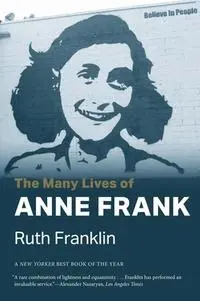
Yet, for all the global familiarity surrounding her story, a new and innovative book seeks to peel back the layers of myth, editing, and commercialization that have built up around the text over the past eight decades. Published in 2025, The Many Lives of Anne Frank by prize-winning literary critic and biographer Ruth Franklin offers a fascinating, thought-provoking, and deeply researched exploration not just of the young teenager herself, but of her famous diary and its monumental, sprawling legacy.
Franklin, a former editor at The New Republic whose previous biography, Shirley Jackson: A Rather Haunted Life, won multiple awards, brings a fresh and analytical eye to one of the most famous works to emerge from the twentieth century. Her latest work, which was a finalist for the 2025 Los Angeles Times Book Prizes, takes readers on a sweeping journey that begins in the early years of the Frank family and extends far beyond the tragic death of its author, tracking how a personal notebook morphed into an international cultural and political phenomenon.
The first half of Franklin’s biography functions as a classic, meticulously detailed narrative. Readers follow the Frank family from their origins in Germany, through their initial exile in the Netherlands as the political climate in Europe darkened, and finally into their banishment above a commercial warehouse on the Prinsengracht. Franklin brings this harrowing chapter of history to life with an astonishing attention to minute details—such as the rain falling on the evening the Franks walked across the Dutch capital to their hiding place—while seamlessly weaving in the wider historical context, including the relentless, terrifying round-up of Jewish families by the occupying Nazi forces.
Crucially, the biography does not end, as most traditional biographies do, with the subject’s death. Anne Frank died somewhere in March or April of 1945 at the Bergen-Belsen concentration camp in Germany, tragically, perhaps just weeks or even days before the camp was liberated by the advancing British army. Her physical life was brutally cut short at the age of fifteen, but her legacy was only just beginning to take root.
Her enduring voice lives on primarily through her diary, which was published shortly after the war following careful edits made by her father, Otto Frank, the sole survivor of the family who hid in the annex. However, the path to publication was far more complex than a simple recovery of a lost manuscript. Anne herself had actively edited and revised her own writing during her time in hiding. Inspired by a 1944 radio broadcast appeal by a Dutch government minister urging citizens to preserve diaries and letters documenting daily life under the German occupation, the teenager had harbored serious literary aspirations and deeply desired to get her thoughts and feelings into print.
The second half of Franklin’s book shifts its focus to trace this extraordinary legacy, examining how the diary came into being, how it evolved into a worldwide publishing phenomenon, and how it catapulted Anne Frank to an epic level of modern celebrity. Franklin delves deeply into the intricate details of the book’s publication journey, raising profound and challenging questions about what it truly means for a historical document to be considered "authentic."
Following the war, Otto Frank sent a translated and edited version of his daughter’s writings to relatives living in Switzerland. Impressed and moved by the text, these relatives strongly encouraged him to pursue publication. A composite manuscript was eventually created, drawing from Anne’s two distinct versions of her diary alongside additions and adjustments made by her father. When this composite was submitted to a professional publisher, suggestions for certain cuts were made out of concern that more conservative postwar readers might be offended by the teenager’s candid thoughts on adolescence, human nature, and sexuality.
Decades later, scholarship evolved. A longer, more critical edition of the diary was published in 1986, which subsequently formed the basis for the comprehensive English-language version released in 1989. Franklin highlights various subtle yet significant alterations made during these early translation and publication efforts. For instance, the very first German-language edition of the diary edited out a passage where Anne took a sharp, critical dig at the German nation and its people. In the annex, Anne had written that "only civilized languages are permitted, therefore no German," a line that was subsequently altered in the early German translation to state that "all civilised languages may be spoken."
This linguistic choice inside the annex was itself an act of quiet defiance. The occupants made a deliberate, daily effort to speak to one another in Dutch rather than in their native German as a form of resistance against the occupying regime that was attempting to destroy their culture and lives.
Throughout the book, Franklin structures her chapters around different descriptors representing the various versions and perceptions of Anne that have emerged over time. The final chapter, aptly titled "Pawn," addresses the complex and sometimes troubling nature of her lasting legacy. Otto Frank had originally intended for his daughter’s diary to serve as a universal tool to "promote peace and tolerance," as Franklin notes in the text. Yet, despite his best efforts, Otto ultimately could not control the runaway celebrity and commercialization that surrounded his daughter’s name and image.
The cultural afterlife of the diary quickly expanded far beyond the printed page. The adaptation of the work into a theatrical play in the United States was complicated by differing artistic visions and interpretations of the material. Over the subsequent decades, the iconic image and name of Anne Frank have been invoked across the political spectrum, utilized by activists protesting South African apartheid and, in more recent times, by those commenting on contemporary conflicts, such as Israel’s military campaign in Gaza. Through these varied and sometimes contradictory uses, Franklin’s chronicle leaves the reader with lingering, deeply complex questions about how modern society contextualizes, interprets, and sometimes weaponizes the private writings of a young girl.
Deeply researched, exceptionally well-written, and consistently stimulating, The Many Lives of Anne Frank offers both scholars and general readers a compelling reason to reexamine a text they thought they knew. Copies of the biography are available through the American Book Center.