





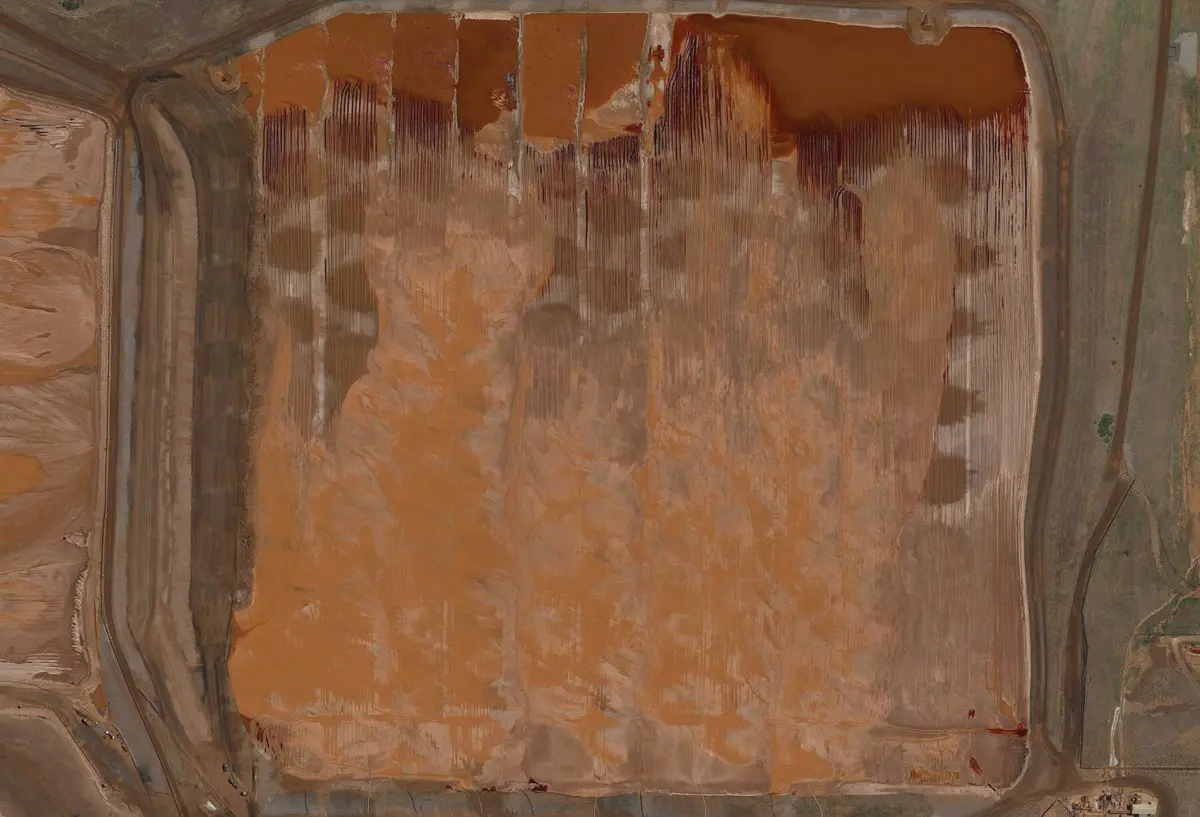
Across the rural and industrial peripheries of global aluminum refineries, vast crimson deserts stretch for miles, forming alien red landscapes so expansive they are easily spotted in satellite imagery. This rust-colored earth is not a natural geological formation, but rather bauxite residue—more commonly known as red mud. It is the highly alkaline, toxic byproduct left behind when valuable alumina is chemically extracted from bauxite ore to feed the world’s endless appetite for lightweight metal. Every single year, more than 150 million metric tons of this heavy sludge are generated worldwide, continuously feeding mountains of industrial stockpiles that are already estimated to exceed four billion tons.
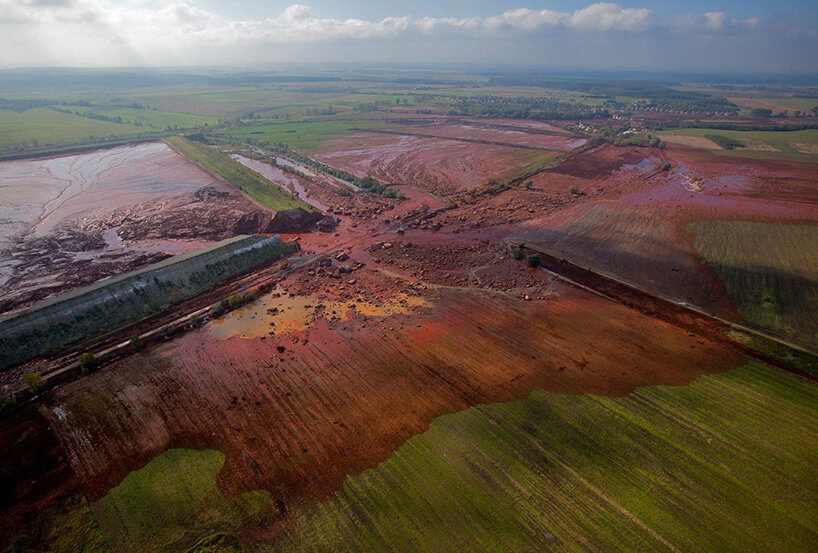
Despite decades of academic and industrial research into potential secondary uses for the material, the vast majority of this red earth remains locked away in massive, heavily monitored storage facilities and containment dams. These reservoirs loom as constant environmental hazards, a vulnerability dramatically underscored by disasters like the catastrophic 2010 breach of a Hungarian red mud reservoir, which sent a devastating toxic wave surging across nearby villages and natural ecosystems.
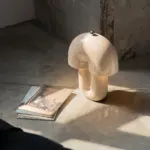
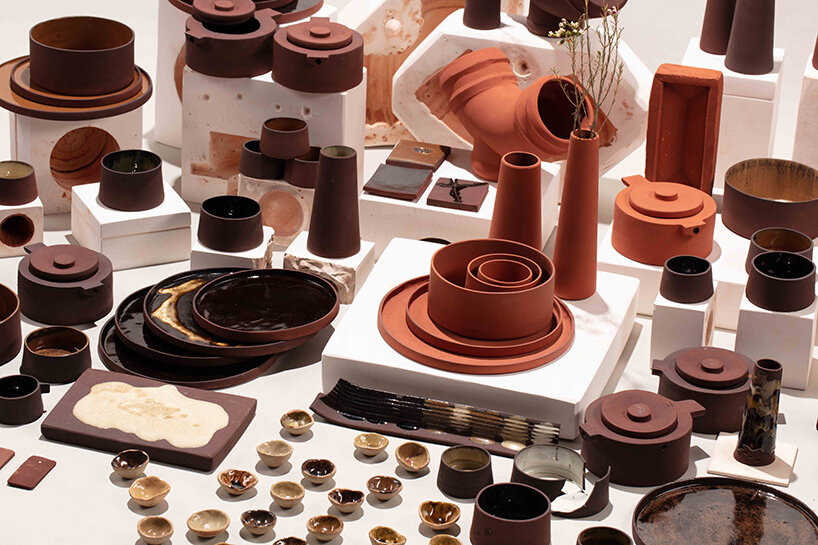
Enter Studio ThusThat, an Amsterdam-based design practice dedicated to material exploration and industrial alchemy. The studio has spent years investigating what might become of this immense global stockpile. Through an ongoing initiative titled the Red Mud project, the designers have successfully transformed the hazardous industrial residue into finely formed ceramic tableware, sculptural vessels, and experimental building materials. The finished objects offer an astonishing glimpse of what this overlooked waste stream could potentially become, bearing a striking visual resemblance to traditional terracotta. With their deep, earthy color profiles and surprisingly slender, elegant forms, the pieces look entirely divorced from the toxic industrial landscapes where their raw ingredients originated.
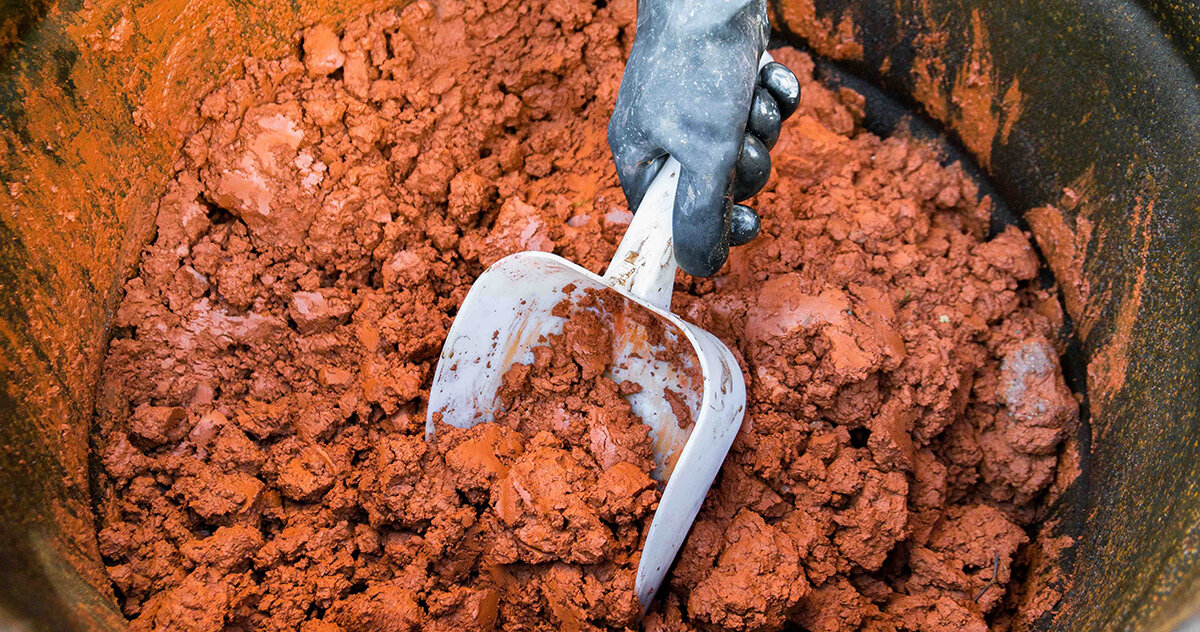
Studio ThusThat Turns Industrial Waste Into Ceramics
The material investigation first took root in 2019 at London’s prestigious Royal College of Art, later expanding through a close collaborative partnership with advanced materials scientists at KU Leuven in Belgium. The designers at Studio ThusThat began by closely analyzing the mineral composition of the bauxite residue. They quickly recognized that its exceptionally high iron oxide content—the very component responsible for its vibrant, rust-red coloration—offered unique opportunities for ceramic production.
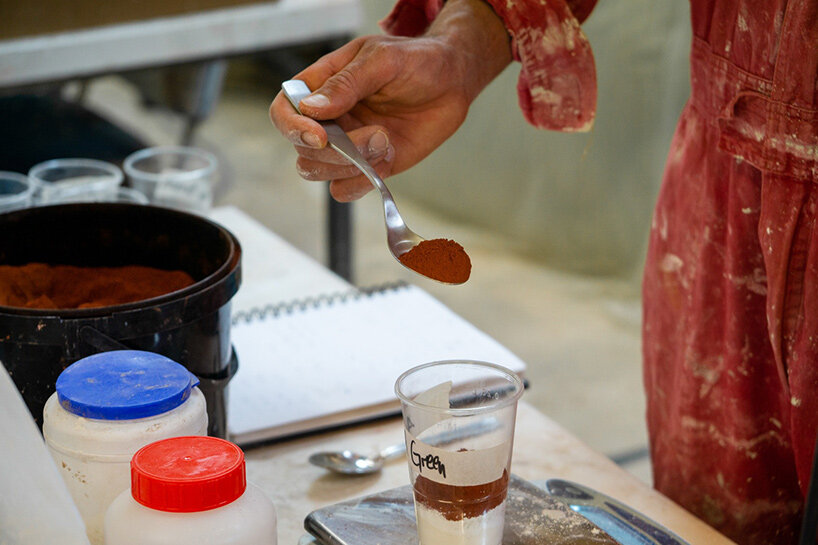
Working alongside researchers, the design team developed specialized chemical recipes and processing methods that render the stubborn residue compatible with traditional manufacturing techniques, including slip casting. By carefully treating the red mud and adjusting its chemical balance, they successfully integrated the waste product into both the structural bodies of the ceramics and their liquid glazes, yielding a rich spectrum of warm reddish and amber tones.
However, the apparent simplicity and understated elegance of the resulting vessels conceal a remarkably complex and rigorous manufacturing reality. Raw red mud is intensely alkaline, highly caustic, and frequently harbors trace heavy metals or hazardous chemical residues. Before it can ever be safely handled, processed, or incorporated into consumer products, it must undergo extensive neutralization and stabilization treatments. Furthermore, the chemical and physical properties of bauxite residue are notoriously inconsistent; its precise makeup fluctuates wildly depending on the geographic origin of the mined bauxite and the specific refining methods employed by different aluminum plants. Consequently, every new batch of material demands rigorous laboratory testing and custom recipe adjustments.
For Studio ThusThat, this meticulous ceramic collection serves a vital communicative purpose. By translating an unfamiliar, alarming industrial liability into tactile, everyday objects, the studio invites the public and the manufacturing sector to fundamentally reconsider a substance that has long been written off as useless waste.
From the Tabletop to the Coastline
Building upon the success of their tabletop experiments, the studio’s research has recently expanded into the realm of architecture and urban design through a collaborative venture with London-based architecture practice Tonkin Liu. Together, the two studios explored how red mud could be scaled up from delicate vessels into modular ceramic tiles, opening up imaginative new applications ranging from roofing components to large-scale coastal regeneration infrastructure.
The proposed architectural units feature carefully engineered, shaped surfaces designed to capture rainwater or provide nurturing pockets for local plant life, deliberately carving out a symbiotic role for the industrial material in ecosystems shared with non-human species. Thanks to their interlocking modular geometry, these individual components can be seamlessly combined into expansive structural assemblies capable of covering building facades or reinforcing shorelines.
Along vulnerable waterfronts and marine infrastructures, these tiles could theoretically support marine vegetation and foster small habitats for coastal wildlife, though the designers emphasize that their long-term environmental performance and structural durability still require extensive real-world testing. These architectural proposals remain firmly in the experimental stage, requiring formal manufacturing partnerships, industrial-scale processing facilities, and significant capital investment before they can realistically cross the threshold into mainstream commercial construction. Nevertheless, these bold design concepts point toward an entirely different destination for a material that currently monopolizes vast tracts of valuable industrial land around the globe.
Can Architecture Absorb the Waste of Extraction?
Despite the immense creative promise demonstrated by Studio ThusThat and its collaborators, red mud continues to present formidable, systemic obstacles to widespread commercial reuse. Processing costs remain prohibitively high, and many of the world’s largest aluminum refineries are geographically isolated, situated thousands of miles away from the urban centers and manufacturing hubs that might otherwise consume their waste. Transporting millions of tons of heavy, water-laden sludge across vast distances quickly neutralizes both the economic viability and the environmental benefits of upcycling the material.
Strict regulatory frameworks and bureaucratic hurdles add yet another layer of complexity. According to data cited by Studio ThusThat during the inception of their research, a staggering three percent or less of global red mud was being repurposed in any meaningful way, even though established technical methods for incorporating bauxite residue into bricks, cement, and other construction products have existed for years.
The ultimate ambition shared by the design team is to see these processed mineral waste streams adopted at an architectural scale, where the sheer volume of materials consumed could make a measurable dent in the global stockpiles. Yet, this pursuit highlights a profound modern contradiction. Aluminum is widely heralded as a miracle metal essential for the global green transition, serving as a foundational material for wind turbines, solar panel frames, and electric vehicle infrastructure. Yet, the relentless production of this clean-energy backbone continues to leave behind an unprecedented trail of toxic red residue.
Studio ThusThat’s delicate ceramics and experimental tiles represent a modest, imaginative response to this compounding industrial accumulation. Whether this stubborn byproduct can ever find a permanent, structural home in our built environment will ultimately depend not on the ingenuity of the design studio, but on the willingness of heavy industry to bridge the gap and adopt circular processes at scale.