





The embers of a new Nordic trend are quietly glowing, ready to capture the global imagination once again. Long before the Swedish ethos of lagom—the concept of optimal balance—swept across the world, wellness storytellers and cultural commentators were already unpacking the distinct mindset that underpins Scandinavian and Nordic daily life. Years of exploring these philosophies culminated in international bestsellers, including the widely translated book Lagom, which reached readers in over 15 foreign editions and proved that the world has an insatiable appetite for the Nordic approach to living well.
From traditional Swedish massages to the deeply rooted ritual of Finnish saunas, the Nordic region has long been synonymous with holistic wellbeing. Each country in the region has contributed its own signature philosophy to the global lexicon. Denmark gifted the world hygge, capturing the essence of intentional presence and coziness. Norway introduced friluftsliv, the practice of open-air living and immersion in nature. Finland gave us sisu, a profound sense of inner grit and resilience. Meanwhile, Iceland birthed a modern iteration of "Viking wellness," popularized by alternating hot thermal baths with bracing cold dips.
Despite the distinct local dialects and cultural nuances, all Nordic cultures share these foundational values under different names. What makes lifestyle trends from this corner of the globe particularly appealing on a global scale is not merely the individual practices themselves, but the rock-solid foundations upon which they are built. These societies prioritize sustainability-focused mindsets, a deliberate return to simplicity designed to curb undue stress, and government-sanctioned free access to nature—such as Allemansrätten in Sweden—which actively fosters a deep, symbiotic relationship with the outdoors.
Furthermore, because these are fiercely egalitarian countries, accessibility remains a core pillar of their societal design. The overarching communal goal across the Nordic region is a steadfast focus on long-term, holistic wellbeing that can be sustained by every individual, ranging from professional athletes in their athletic prime to elders navigating their later years.
The Evolution of Nordic Walking
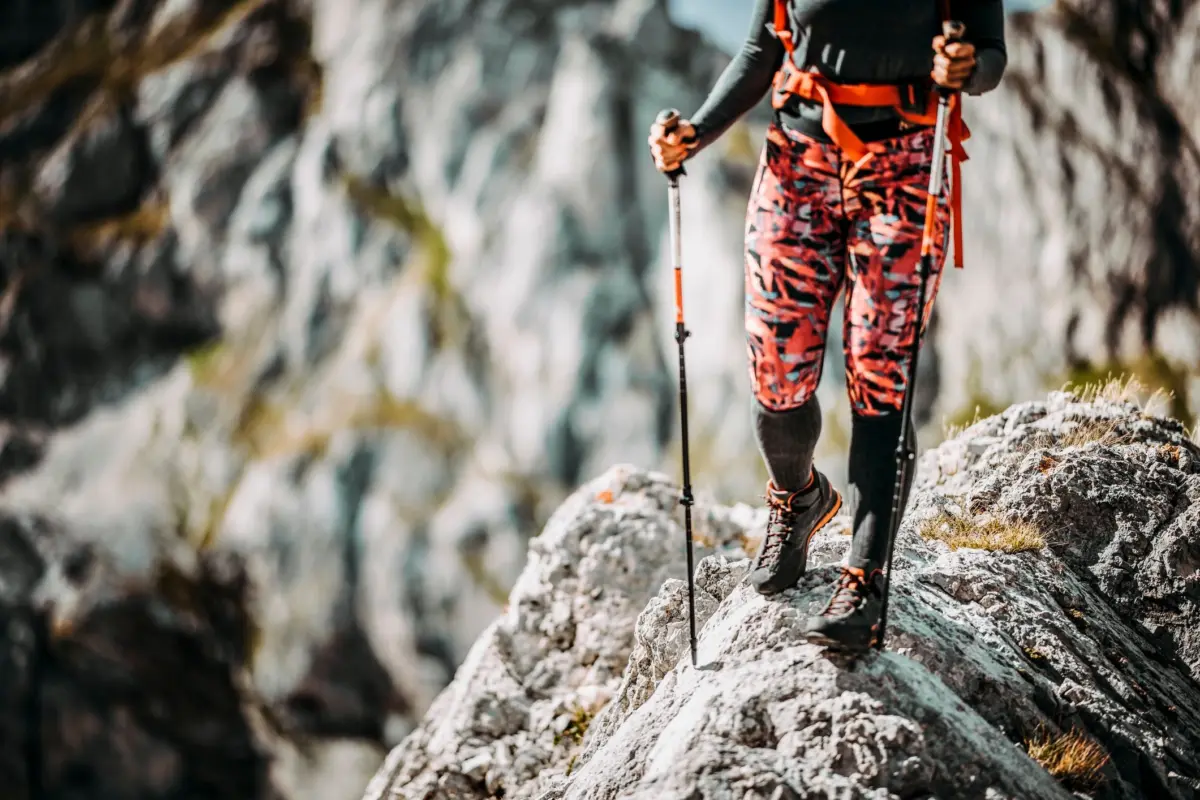
The latest Nordic wellness trend to cross international borders, however, has remarkably practical and athletic origins. For decades, sports enthusiasts and casual observers alike have wondered how professional cross-country skiers maintain their peak conditioning when the snow melts and winter gives way to warmer months. The answer is Nordic walking—a specialized activity that must not be confused with casual hiking or trekking with standard walking poles.
According to its international governing body, the International Nordic Walking Federation (INWA), which was officially founded in 2000, the practice is now utilized in more than 40 countries worldwide. People practice it not only for health and physical fitness, but also for recreation, social connection, and even competitive sport.

The roots of the discipline stretch back much further than its formal organization. As early as the 1930s, competitive cross-country skiers utilized specialized poles paired with running shoes to maintain their endurance during summer training regimes. However, the pivotal moment came in 1966 when physical education teacher Leena Jääskeläinen brought the concept to the general public. Her initiative marked the first documented use of ski poles outside of strict competitive athletic training, planting the seeds for a mass fitness movement.
Aki Karihtala, president of the INWA, recalls adopting the activity during its modern resurgence. "I started Nordic walking in 1998 because it is a fun, social, and efficient form of physical activity," Karihtala shares. "It takes people back to nature." At the time, Karihtala was heading the sports division at Exel, a prominent Finnish sporting goods company that holds the distinction of being the world’s largest manufacturer of cross-country ski poles.
It was Karihtala himself, working alongside his development team at Exel, who coined the official term "Nordic walking." Since its inception, the term and the practice have been widely adopted across the globe. "Regardless of age, religion, and culture, because there are no boundaries," Karihtala notes, emphasizing the inherent accessibility that defines the sport.
In 1997, Exel engineered the very first specialized Nordic Walker poles specifically designed for the burgeoning activity. The response was immediate and overwhelming. Just a year later, more than 500,000 Finns—out of a total national population of roughly five million at the time—had tried Nordic walking. Experts attribute its rapid adoption and enduring effectiveness to the fact that it engages the entire upper and lower body simultaneously, while significantly reducing pressure on the knees through ergonomically designed poles. To ensure safe and effective execution, the federation eventually developed the progressive INWA 10 Step Method to teach everyday practitioners the simple technique.
Returning to the Roots of Slow Living
Among the modern converts to Nordic walking is Finnish trend and branding expert Katja Presnal. Having spent over two decades meticulously studying and analyzing consumer trends for an audience of more than 100,000 monthly readers and millions annually, Presnal finds a certain irony in the fact that Nordic wellness has emerged as the globe’s hottest lifestyle movement.
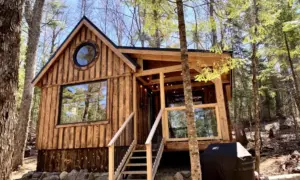
Having grown up immersed in the natural beauty of the Turku archipelago, surrounded by sheltered bays and lush forests, Presnal spent years traveling the globe before deciding to pivot. After two decades of "preaching trends," she chose to "walk the walk" by acquiring a century-old former dairy tucked away deep in the Finnish countryside. There, surrounded by undisturbed nature, serene lakes, and peaceful walking trails, she embraced a slower, more intentional way of life.

"It was about making everyday life a wellness regimen and creating my own 365-day retreat," Presnal explains, noting that these were precisely the kinds of slow-living wellness experiences her family used to seek out in places like Tuscany during their travels. "So I have, in essence, returned to my Nordic wellness roots, which in hindsight was the richness of my childhood."
For newcomers like Presnal, the appeal of Nordic walking lies largely in its low-threshold accessibility, both from a physical and a financial standpoint. Unlike many high-intensity fitness trends that require expensive club memberships or specialized facilities, Nordic walking requires little more than a pair of poles and an open path. Beyond the physical conditioning, Presnal highlights the profound sense of human connectivity the practice fosters.
"People are now discovering Nordic lifestyles," Presnal observes, reflecting on how native practices are perceived by those who grew up practicing them instinctively. "You don’t recognize your Nordic way of living as something special that could become a global trend or could be taught and shared with somebody because it’s just a part of who you are."
As interest in sustainable, low-impact, and nature-connected movement continues to surge internationally, this quintessential Finnish ritual is poised to step firmly into the global spotlight, offering a timeless blueprint for holistic wellbeing that anyone can pick up and carry forward.