






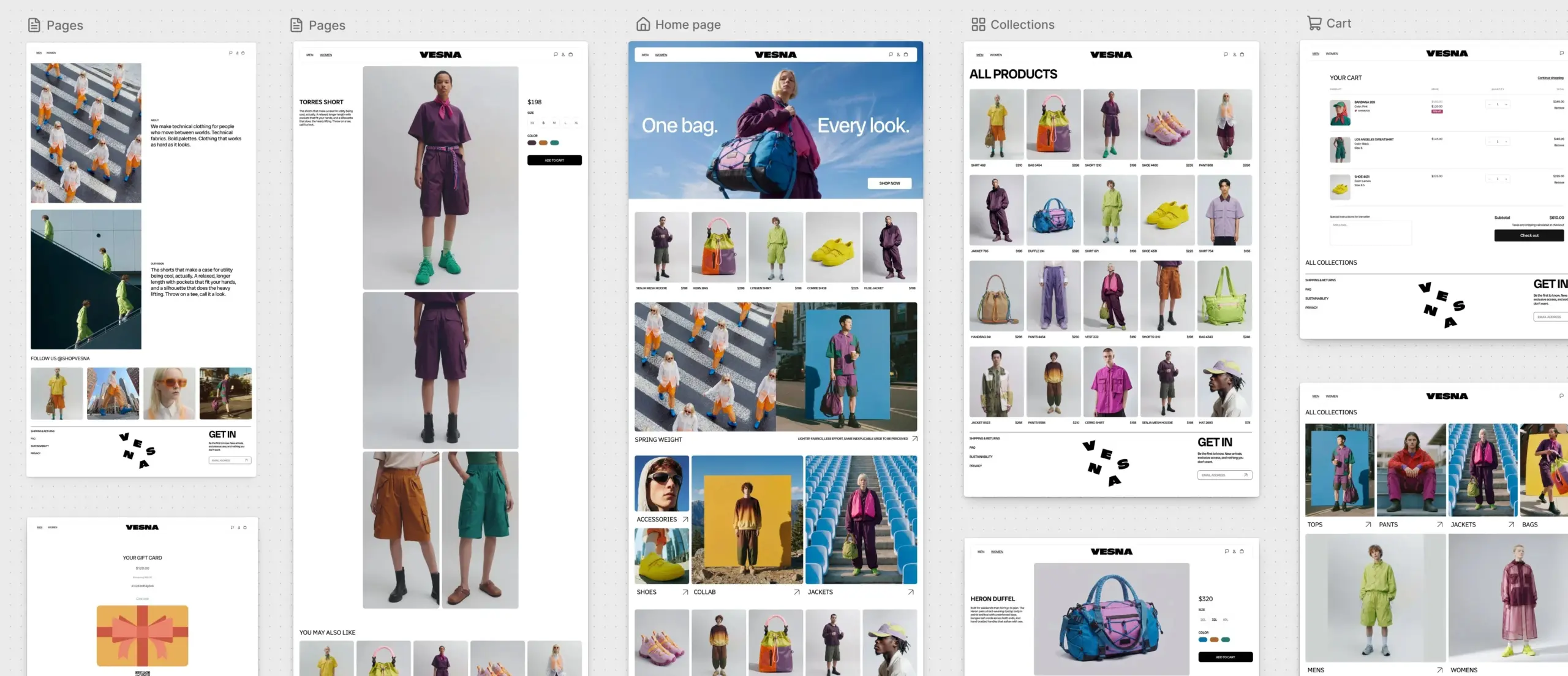
E-commerce giant Shopify has introduced a major new site-building tool called Canvas, which allows merchants to set up and design their online stores simply by chatting with an artificial intelligence agent. Unveiled on Thursday, the new feature represents a significant step forward in the company’s efforts to democratize web design, lowering the technical barriers traditionally associated with launching and scaling an online business.
While Shopify has long provided a capable, no-code site-building experience, that functionality has historically relied on selecting a pre-existing theme and customizing it by rearranging modular sections and blocks. Merchants seeking deeper, more personalized customizations often found themselves hitting a wall, requiring them to dive into complex code or hire a professional web developer to bring their vision to life.
Canvas aims to change that dynamic entirely by shifting the primary interface of store creation to a conversational model. Merchants no longer need to manually hunt through sub-menus or figure out layout block hierarchies. Instead, they can simply chat with Shopify’s AI assistant, Sidekick, to describe what they want, and watch as the site transforms in real time.
As the AI executes requested changes, Canvas displays the results instantly. This live-rendering environment allows merchants to observe how the overall store comes together cohesively or zoom in to focus meticulously on specific layout details. Crucially, Shopify emphasizes that this interface is not merely showing a static preview of a webpage. Instead, it is rendering the actual underlying code behind the store as it is being built.
This technical distinction means that merchants can immediately test the full interactivity and dynamic animations of their pages. They can also seamlessly view how their storefront will appear across a wide variety of different screen sizes, ensuring a responsive design from the very first prompt. To assist in the process, Sidekick is equipped with the ability to take screenshots of the workspace, allowing the AI to perceive the exact visual state of the site as the merchant sees it, ensuring synchronization throughout the continuous updates.
The launch of Canvas arrives amid a much broader, industry-wide shift toward an internet future where building a functional, custom website no longer requires writing code line-by-line. Shopify’s new tool joins a rapidly growing wave of AI-powered site-building solutions introduced across the tech landscape by companies like Wix, Squarespace, Webflow, and Framer, alongside a burgeoning ecosystem of vibe-coding platforms such as Lovable and Replit.
Even with the introduction of conversational AI generation, flexibility remains a core tenet of the platform. Merchants retain the freedom to manually click on individual elements to make direct adjustments if they prefer hands-on editing. However, the core value proposition of Canvas leans heavily into the frictionless nature of conversational instruction, enabling users to simply state their desires to Sidekick and let the AI handle the execution.
Sidekick itself is not an entirely unfamiliar presence within the Shopify ecosystem. The AI assistant has previously been utilized by merchants to help write code, build supplementary applications, customize existing themes, and execute various other administrative and technical edits. However, prior to the introduction of Canvas, Sidekick’s capabilities had not yet been unified into a comprehensive, standalone site-building product. Canvas provides a dedicated space where users can view their entire store at once, panning and zooming dynamically while executing updates directly to the underlying site files.
To make this seamless workflow possible under the hood, Shopify had to engineer deep integrations for its AI. The company gave Sidekick direct access to work with the core theme files while simultaneously simplifying the underlying theme architecture. By streamlining the structure, logic, and design parameters of the themes, Shopify made it significantly easier for Sidekick to comprehend, navigate, and modify the store environment accurately.
Because Canvas is launching as a brand-new product in its early stages of development, there are naturally areas where the system will need to expand and mature over time. Several features are absent from the initial launch lineup, including third-party theme support, app blocks and extensions, international market configurations, multi-language translations, staged rollouts, and ongoing theme updates. Additionally, the current iteration of Canvas is restricted to desktop environments. However, Shopify representatives indicated that the company intends to build out support for these missing features and platforms progressively as the product evolves.
Looking toward the future, as the platform grows more robust and feature-complete, Canvas has the potential to make online entrepreneurship substantially more accessible. By removing the technical friction of web development, the tool could open doors for aspiring merchants who currently lack the financial resources to hire professional developers and designers, or simply do not have the free time required to learn how to code from scratch.