What does a house look like when it is designed from the perspective of a cat? What shape does a seawall take when the client is an oyster, a garden when it is planted for a bee’s vision rather than ours, or a bridge whose only users are deer and mountain lions? In the emerging discourse of posthuman utopias, designers and thinkers are asking what the world looks like when we finally stop designing strictly on the planet, and instead learn to design with it.
As governments and environmental leaders prepare for COP31—the thirty-first annual review of progress on limiting climate change—the conversation around architecture, urban planning, and industrial design is undergoing a profound philosophical shift. Rather than viewing the natural world as a passive resource or a collection of raw materials, a growing collective of studios, artists, and researchers are practicing mutualism. This approach treats bacteria and algae as creative collaborators, deploys acoustic sensors that turn forests into living soundscapes, and constructs buildings designed to decay gracefully back into deep time rather than stand as monuments of eternal, inorganic permanence.
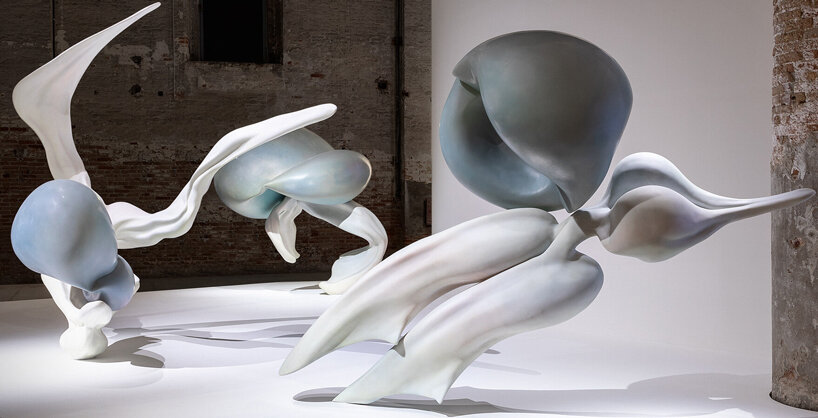
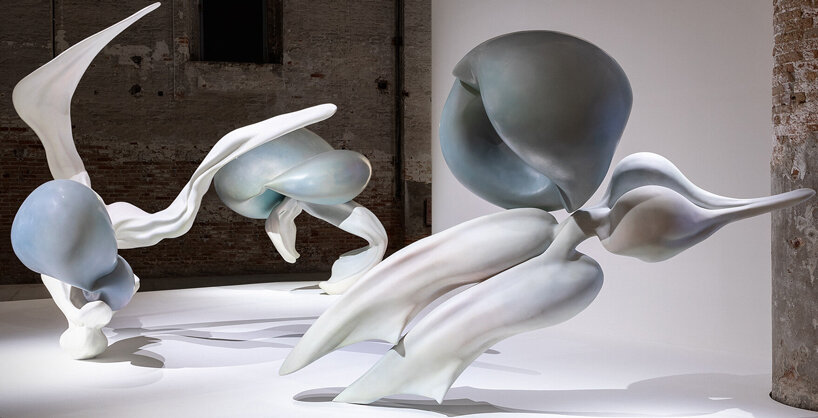
This pivot toward a more-than-human perspective brings to mind the haunting, speculative installations presented years ago at the Venice Biennale. Standing in the historic Arsenale alongside French artist Marguerite Humeau, visitors found themselves confronted by three otherworldly beings she had named after ocean currents: El Niño, Kuroshio, and La Niña. Fabricated from seaweed, bone, and ocean plastic, these sculptural entities possessed synthetic skin complete with pores and freckles, designed deliberately to evoke empathy for forms that defied strict classification.
"I thought that maybe because of climate change and mass extinctions, animals are also getting conscious of their own death, and maybe they’re developing their own rituals, mythologies, and spirituality," Humeau reflected at the time. Her visionary approach highlights a growing recognition that humanity’s historical isolation as the sole client of design is drawing to a close.
For centuries, human civilization has built entirely to its own physical and psychological measure. From the ancient foot and cubit derived directly from the human body, to Vitruvius basing the ideal proportions of a classical temple on man, the blueprint of design has historically been homocentric. Even in the mid-twentieth century, modernist pioneers like Le Corbusier continued this tradition, scaling his Modulor architectural system around a standard six-foot-tall man.
However, a critical evolution occurred in the late 1940s and 1950s: the human body was transformed into an industrial dataset. Among the most influential of these statistical archetypes was Josephine, who arrived alongside Joe and a young boy named Joe Jr. Sketched for Henry Dreyfuss by industrial designer Alvin Tilley, these three figures became the baseline proportions from which generations of industrial designers worked. They are the invisible architects of modern life, the direct reason why standard doorways and everyday consumer products possess their current dimensions. It was a remarkably efficient system that successfully served its purpose, but it operated with a fatal flaw—it recognized exactly one client.
The expansion of that solitary client list has been underway for decades, accelerating from a theoretical trickle into a powerful disciplinary current. Landscape architect and planner Ian McHarg famously championed this expanded worldview in his 1969 landmark publication, Design with Nature, which taught generations of environmental planners how to read the complex layers of a landscape before ever putting pen to paper.
McHarg’s work was part of a broader cultural and intellectual awakening during a turbulent era. It followed Rachel Carson’s groundbreaking 1962 book, Silent Spring, which tracked the devastating cascading effects of DDT up the global food chain and galvanized the modern environmental movement. That foundational era also birthed the iconic Earthrise photograph, Stewart Brand’s first Whole Earth Catalog in 1968, Buckminster Fuller’s Operating Manual for Spaceship Earth, and Victor Papanek’s scathing critique in Design for the Real World (1971), where he observed that "there are professions more harmful than industrial design, but only a few of them."
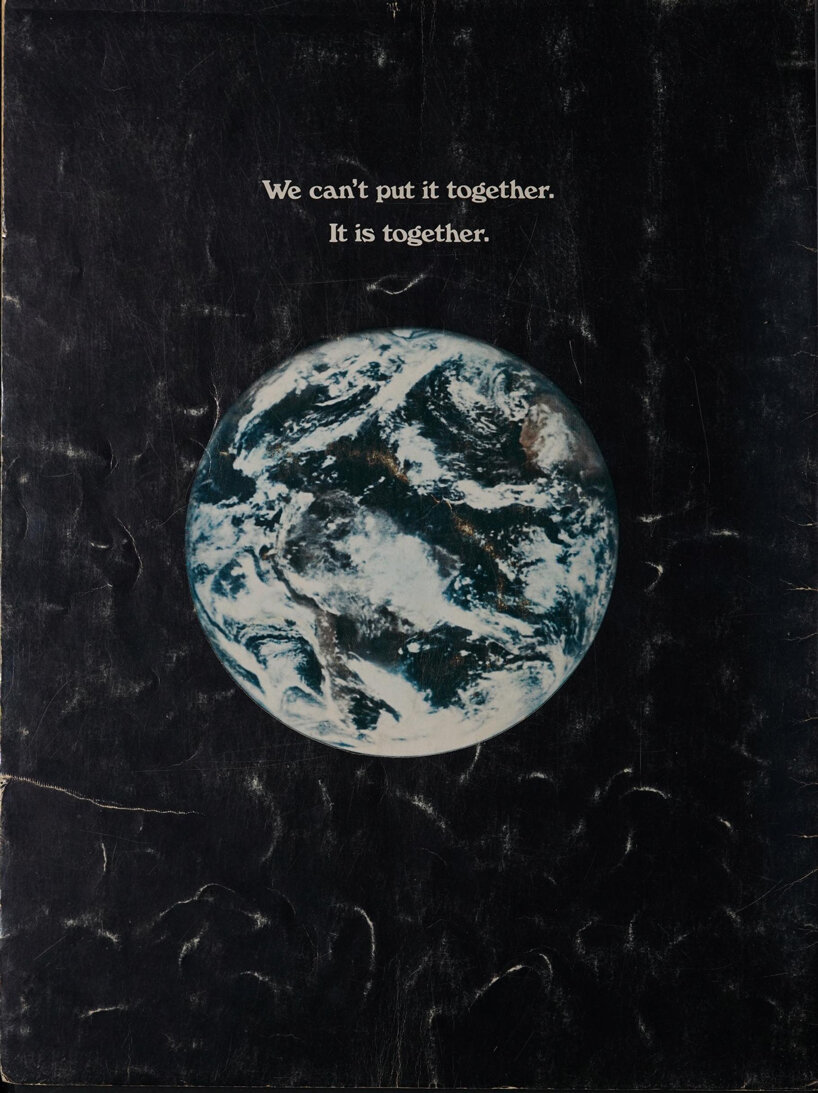
The momentum crested in 1972 with the release of The Limits to Growth, which utilized computational modeling to illustrate the catastrophic outcomes of unmitigated industrial expansion. That same year witnessed the historic first United Nations environment conference, law professor Christopher Stone’s provocative legal question of whether trees should possess legal standing, and James Lovelock’s foundational scientific papers articulating the Gaia hypothesis.
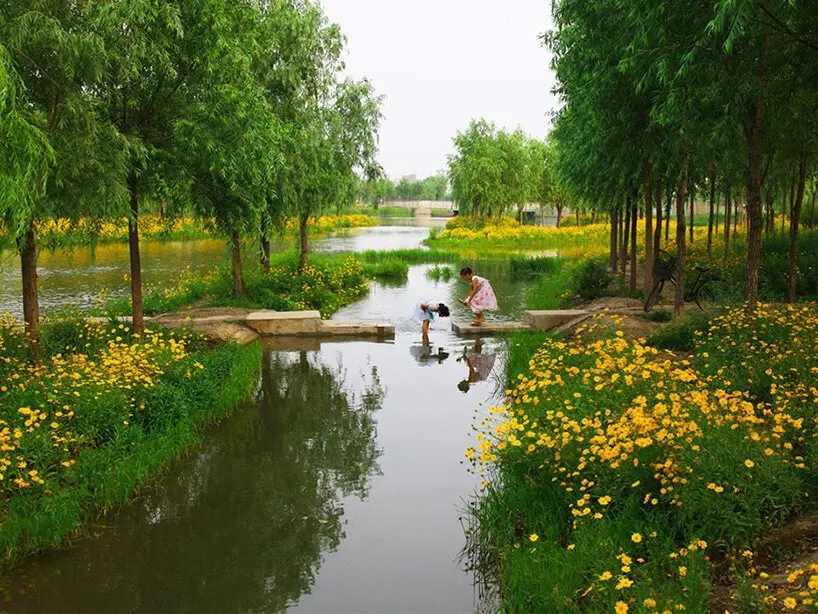
Over the ensuing decades, these philosophical arguments gradually transformed into tangible law and public policy. In 2008, Ecuador made history by writing the legal rights of nature directly into its national constitution. Nearly a decade later, in 2017, New Zealand granted legal personhood to the Whanganui River, recognizing its distinct living ecosystem as an autonomous entity before the law. Meanwhile, urban designer Kongjian Yu spent three decades persistently arguing that modern cities should be engineered to drink and absorb rainwater rather than forcefully flush it away, living to see his pioneering "sponge cities" concept integrated into official Chinese national policy before his passing.
Within the framework of posthuman utopias, contemporary creators are asking a fundamental question: What does a world look like when we remove the human ego from the absolute center of the creative process, making deliberate room for the needs, desires, and even the fears of every species we share the planet with? This does not mean an outright exclusion of humanity—a utopia that actively omits humankind ceases to be a utopia at all. Instead, it proposes a radical expansion of the architectural and ecological frame.
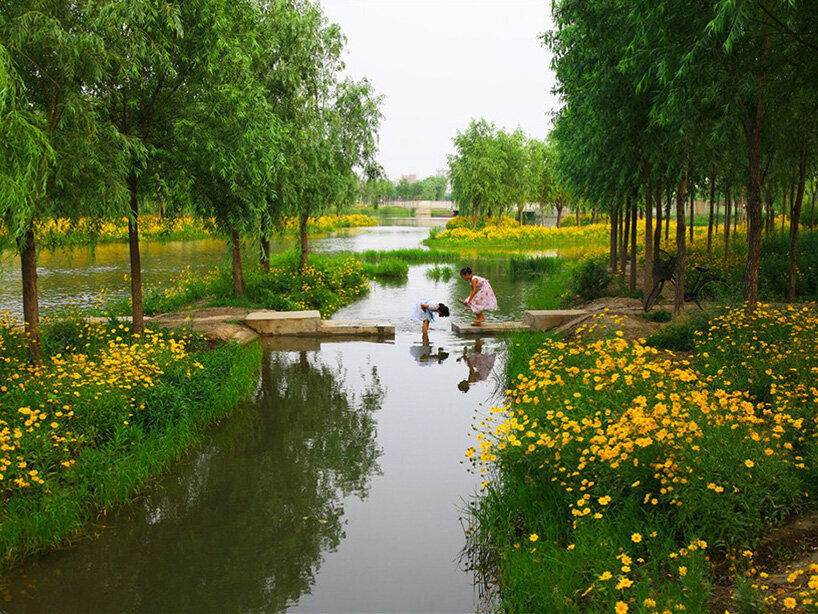
The ongoing shift is visible across numerous experimental practices. Studios are increasingly partnering with non-human organisms, utilizing bacteria and living algae as active collaborators rather than inert construction materials. Environmental engineers are installing advanced acoustic sensors that transform dense forests into continuous audio feeds, allowing researchers to listen directly to ecosystem health. Architects are reimagining shelter through the lens of deep time, constructing buildings programmed to weather and decay gracefully back into the earth rather than striving for an unsustainable, energy-intensive permanence. Concurrently, cutting-edge technologies are being actively redirected toward healing environmental damage caused by older, extractive industrial practices, yielding new forms of infrastructure built both for and alongside animals, plants, and marine ecosystems.
Reflecting on her Biennale installations, Humeau noted that the third and final imaginary being—an enigmatic creation representing neither ecological collapse nor heavy burdens—carried a sense of profound optimism. Describing it as "almost like a wave coming out and showing the way," she noted that while humanity’s ultimate trajectory remains unsettled and is no longer being dictated by us alone, it is moving purposefully forward. As contemporary designers embrace this more-than-human ethos, the path ahead is being charted not just by human hands, but by the living planet itself.