




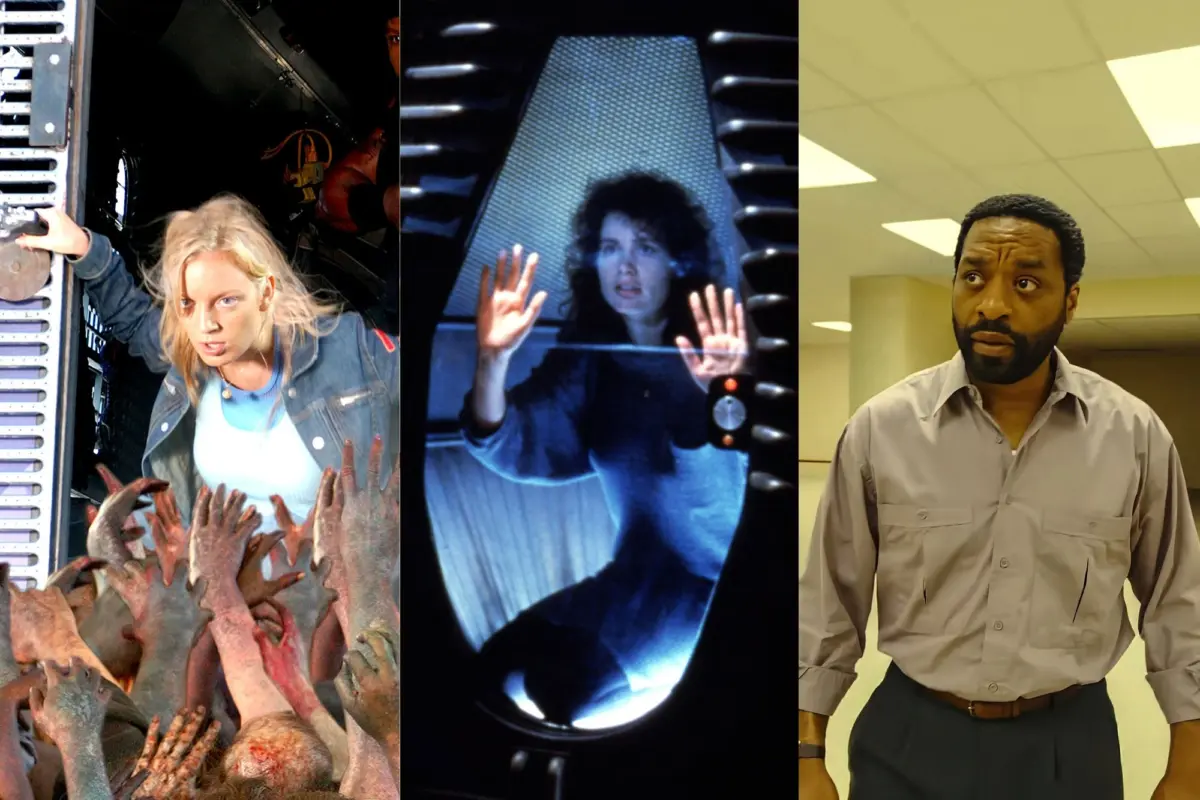
Halloween occupies a singular space in the cultural calendar, demanding a distinct kind of cinematic experience. The ideal seasonal viewing requires a finely calibrated formula: it must deliver genuine chills in the moment, offer a necessary release valve of dark humor, provide a narrative resolution that satisfies rather than depresses, and linger long enough to prompt a second glance into shadowed corners once the television is switched off.
During an October fueled by seasonal indulgence, viewers rarely want their entertainment to feel like a grueling chore. High-concept, austere period pieces such as Robert Eggers’s Nosferatu can easily verge on homework, while unrelenting, nihilistic exercises in misery—exemplified by David Gordon Green’s concluding installments in his Halloween trilogy, Halloween Kills and Halloween Ends—often leave audiences feeling worse about humanity than when they pressed play.
There are eleven other months in the year to endure pure cinematic sadism, torture-heavy teen spectacles, or narratives designed around the gratuitous suffering of children and pets. The best holiday-appropriate horror offers a richer equilibrium—a balance of lingering goosebumps and atmospheric catharsis that defines October viewing.
For those planning an autumnal marathon, here is an essential guide to the finest horror titles currently available to stream across major platforms, each fulfilling the season’s unique atmospheric demands.
Alien (1979)
Available on: Netflix, Fubo
When Ridley Scott brought together the ragtag blue-collar crew of the commercial towing vessel Nostromo, few could have predicted he was inaugurating one of cinema’s most enduring sci-fi horror legacies. Awakened early from stasis sleep to intercept a distress signal from a desolate moon, the crew stumbles upon a derelict alien craft harboring an evolutionary nightmare. Coming only two years after the grand cinematic optimism of Star Wars, Scott’s claustrophobic masterpiece offered a stark, grime-covered contrast that fundamentally rewired audience expectations.
Over the decades, the franchise has ventured down wildly varied paths—ranging from the ambitious philosophical misfires of Prometheus to expansive television undertakings like Alien: Earth. Yet the 1979 foundation remains untouchable. Anchored by Sigourney Weaver’s indelible performance as warrant officer Ellen Ripley and elevated by the haunting, biomechanical surrealism of Swiss artist H.R. Giger’s creature design, Alien remains a peerless triumph of industrial tension, pacing, and sheer dread.
Backrooms (2026)
Available on: HBO Max
The transition of digital internet folklore to prestige cinema finds a fascinating case study in director Kane Parsons. Parsons was just 16 years old when his analog-horror Backrooms shorts went viral on YouTube, demonstrating a remarkable grasp of spatial anxiety and liminal-space terror. With backing from A24, his feature debut demonstrates that his minimalist, claustrophobic universe can sustain long-form cinematic storytelling without sacrificing its core uncanny power.
Arriving in dialogue with fellow internet-born horror projects such as Curry Barker’s Obsession (available on Peacock), Backrooms chooses a distinct creative path. While Obsession leans heavily into broad comedy, gore, and its divisive "Cat Person" figure, Parsons doubles down on psychological oppression, examining the heavy baggage of trauma and toxic masculinity within an infinite, fluorescent-lit labyrinth. Whether the cinematic iconography of Parsons’ yellow-walled maze or the eccentric sartorial choices of Obsession’s costuming will define future Halloween costumes remains to be seen, but Backrooms stakes an impressive claim as an innovative modern horror milestone.
Dawn of the Dead (2004)
Available on: Starz, Philo

Long before social media campaigns popularized the #SnyderCut, Zack Snyder made his directorial splash with a vibrant, breathless reimagining of George A. Romero’s 1978 consumerist satire. Scripted by James Gunn, the 2004 reboot swapped the shuffling ghouls of classic cinema for hyper-aggressive, Olympic-sprinter-style infected, capitalizing on the kinetic precedent established two years prior by Danny Boyle’s 28 Days Later.
Snyder’s film operates with a sharp sense of pacing, dry humor, and genuine stakes that his later cinematic outings—such as Netflix’s entertaining but comparatively toothless Army of the Dead—rarely matched. Featuring a grounded ensemble that includes Sarah Polley, a commanding Ving Rhames, and Ty Burrell as an abrasive opportunist, the production isolates its survivors inside a suburban Wisconsin shopping mall. Equal parts action-thriller and survival clinic, Snyder’s reimagining remains a perennial touchstone for what to do—and critically, what not to do—in the event of a societal collapse.
The Descent (2005)
Available on: AMC+, Roku, Kanopy
Following his breakout 2002 werewolf thriller Dog Soldiers, British filmmaker Neil Marshall turned his attention underground with The Descent, crafting an extraordinary study in escalating terror. The premise follows an all-female expedition into an uncharted Appalachian cave system, where interpersonal grief and buried resentments collide with a clan of blind, subterranean humanoids bred for the dark.
Marshall’s production is notable for delivering a dual layer of horror: the immediate, agonizing reality of subterranean entrapment and the predatory threat lurking within the rock face. Crucially, the narrative suggests that human deceit and broken bonds can prove just as lethal as flesh-eating cave dwellers. Viewers should note the historic divergence between the film’s two releases; while European audiences received a bleak, psychological gut-punch of a conclusion, the version widely seen in North American releases opted for a more traditional, adrenaline-fueled finale that offers a glimmer of survival.
The Fly (1986)
Available on: Hulu, Peacock, Philo
Body horror reached its emotional and aesthetic apex in David Cronenberg’s tragic 1986 reimagining of the classic sci-fi premise. Starring Jeff Goldblum as the eccentric, brilliant scientist Seth Brundle and Geena Davis as investigative journalist Veronica Quaife, the film benefits enormously from the authentic chemistry between its leads, who were a real-life couple during production.
When a moment of alcohol-fueled professional and romantic jealousy leads Brundle to test his molecular teleportation pods on himself, an unnoticed housefly inside the chamber irrevocably splices their genetic material. What follows is not an instantaneous transformation, but a slow, agonizing disease of the body and mind. Cronenberg frames Brundle’s physical deterioration and descent into insectoid mania with stomach-churning practical effects, crafting an allegory of mortality and decay that permanently alters how viewers perceive their bathroom medicine cabinets.
Halloween (1978)
Available on: Fubo, Philo, AMC+
While decades of sequels, reboots, and alternate timelines have populated the cinematic landscape—stretching from Paul Rudd’s appearance in Halloween: The Curse of Michael Myers to Josh Hartnett’s debut in Halloween H20 and Rob Zombie’s violent 2007 reimagining—John Carpenter’s independent original remains the undisputed blueprint. Carpenter’s brilliance lies in absolute economy and suspense.
Michael Myers, designated simply as "The Shape," requires no elaborate backstory, supernatural cult mechanics, or excessive bloodletting to terrify. Driving slowly through tranquil Haddonfield neighborhoods in a stolen station wagon or standing motionless amid the falling autumn leaves, he embodies an inexplicable, motiveless evil. Armed with Carpenter’s minimalist synthesizer score and Dean Cundey’s innovative Panaglide cinematography, the 1978 original remains an untouchable masterclass in cinematic dread that subsequent franchise installments have continuously struggled to match.

The Howling (1981)
Available on: Kanopy, Tubi
Directed by Joe Dante several years before his mainstream breakthrough with the family-friendly Gremlins, The Howling represents one of the sharpest, darkest entries in the werewolf canon. Co-written by John Sayles, the film uses its lycanthropic premise to satirize late-1970s encounter-group therapy culture, marital disillusionment, and the predatory nature of television news journalism.
Werewolf cinema has historically walked a fine line between horrific transformation and unintentional camp, a hurdle modern directors continue to navigate. Yet Dante, collaborating with legendary special-makeup artist Rob Bottin, pushed practical effects to groundbreaking limits. While the elaborate full-body shifts captured headlines, the film’s most chilling moments remain remarkably restrained, emphasizing shadow, sound, and isolated, unnatural movements to remind audiences of the primal monster lurking beneath civil society.
Joy Ride (2001)
Available on: Amazon Prime
Operating entirely without ghosts, monsters, or supernatural elements, John Dahl’s Joy Ride proves that grounded psychological tension can rival any creature feature. Arriving in theaters shortly after the late Paul Walker debuted in the Fast & Furious franchise, this tightly wound highway thriller pairs Walker with Steve Zahn as two brothers embarking on a cross-country drive who make the fateful error of playing a CB radio prank on a solitary trucker named Rusty Nail.
Voiced with chilling, gravel-toned menace by Ted Levine, Rusty Nail is never fully revealed to the audience, transforming an ordinary semi-truck into an unstoppable, stalking phantom across desolate Western highways. Dahl, who honed his craft on neo-noir titles in the 1990s, infuses the cat-and-mouse dynamic with sharp humor, mounting paranoia, and relentless momentum, playing directly on the universal unease of watching the same set of headlights linger in the rearview mirror mile after lonely mile.
The Ring (2002)
Available on: Netflix, Peacock, Kanopy
At the turn of the millennium, director Gore Verbinski introduced Western audiences to the conventions of Japanese psychological horror with his stylish, meticulously framed adaptation of Hideo Nakata’s Ringu. Centered on an urban legend concerning a cursed VHS tape that sentences anyone who views it to death within seven days, the film helped establish the waterlogged, long-haired female specter as an international horror archetype.
Verbinski’s production anchors its supernatural conceits within a compelling journalistic procedural, following Naomi Watts as an investigative reporter racing against the clock to uncover the tragic origins of the malevolent spirit Samara. Punctuated by a grim, rain-swept Pacific Northwest color palette and unsettling, surreal imagery, the film’s climactic sequence remains a defining shock in modern horror cinema.
Sinister (2012)
Available on: Hulu, Peacock, Kanopy
Directed by Scott Derrickson, Sinister revitalized modern haunted-house mechanics through the lens of true-crime obsession. Ethan Hawke stars as Ellison Oswalt, an ambitious, morally compromised author desperate to recreate the success of his past bestsellers. In pursuit of material, Oswalt secretly moves his unsuspecting family into a home where a horrific mass murder occurred, betting that a lucrative book deal will ultimately smooth over the ethical deception.

The discovery of a box of Super 8 home movies in the attic sends the narrative down an increasingly dark path, unveiling a succession of ritualistic family murders tied to an ancient pagan entity named Bughuul. Derrickson pairs atmospheric dread with jarring, industrial sound design, demonstrating that Oswalt’s personal vanity and professional hubris are just as responsible for the family’s doom as the supernatural forces orchestrating it.
Us (2019)
Available on: HBO Max
Following the seismic cultural and critical success of his debut feature Get Out, Jordan Peele returned with Us, an ambitious, sprawling nightmare that revealed cinematic influences leaning far more toward Stanley Kubrick’s psychological scale than traditional slasher mechanics. The film centers on the Wilson family, whose summer vacation to Santa Cruz is violently interrupted by the arrival of the "Tethered"—a family of silent, scissor-wielding doppelgängers dressed in red jumpsuits.
Featuring a tour-de-force dual performance by Lupita Nyong’o, the narrative balances visceral home-invasion terror with sweeping allegorical inquiries into social inequality, the costs of American privilege, and the suppressed labor that sustains comfortable lifestyles. Anchored by a bravura climactic showdown set to a haunting orchestral arrangement of Luniz’s "I Got 5 On It," Us remains an inventive, visually arresting modern horror classic.
Wes Craven’s New Nightmare (1994)
Available on: AMC+, Philo
By the mid-1990s, the Nightmare on Elm Street franchise had largely devolved into self-parody, transforming Freddy Krueger from an avatar of primal nightmare into a wisecracking pop-culture fixture. Recognizing that the character had lost his edge, original creator Wes Craven staged a bold, self-reflexive intervention. Pre-dating the self-aware mechanics of his own Scream by two years, New Nightmare deconstructs the horror franchise from the inside out.
Adopting an approach inspired by Hollywood satires like Robert Altman’s The Player, the film features Heather Langenkamp, Robert Englund, and Craven playing fictionalized versions of themselves as they grapple with the dark legacy of their cinematic creations. When the malevolent entity behind the films begins crossing over into reality, Craven crafts a mature, cerebral meditation on the power of myth, storytelling, and the psychological weight of cinematic monsters that remains remarkably sophisticated.
You’re Next (2013)
Available on: Amazon Prime, Roku, Kanopy
Before taking the reins of massive studio blockbusters like Godzilla vs. Kong, director Adam Wingard revitalized the home-invasion subgenre with You’re Next. Set during an upscale wedding anniversary gathering at a secluded country estate, the film initially plays like a biting social satire dissecting the petty hypocrisies and generational resentments of an ultra-wealthy family before devolving into chaos when cross-bow-wielding assailants in animal masks lay siege to the house.
Rather than succumbing to familiar victim archetypes, the script upends expectations through Erin (Sharni Vinson), a guest whose childhood spent on an Australian survivalist compound turns her into a ruthlessly capable combatant. Blending inventive, dark-humored practical violence with the infectious rhythms of the Dwight Twilley Band’s "Looking for the Magic," Wingard crafts a fast-paced, immensely satisfying crowd-pleaser that skewers classic survival tropes with wit and style.