






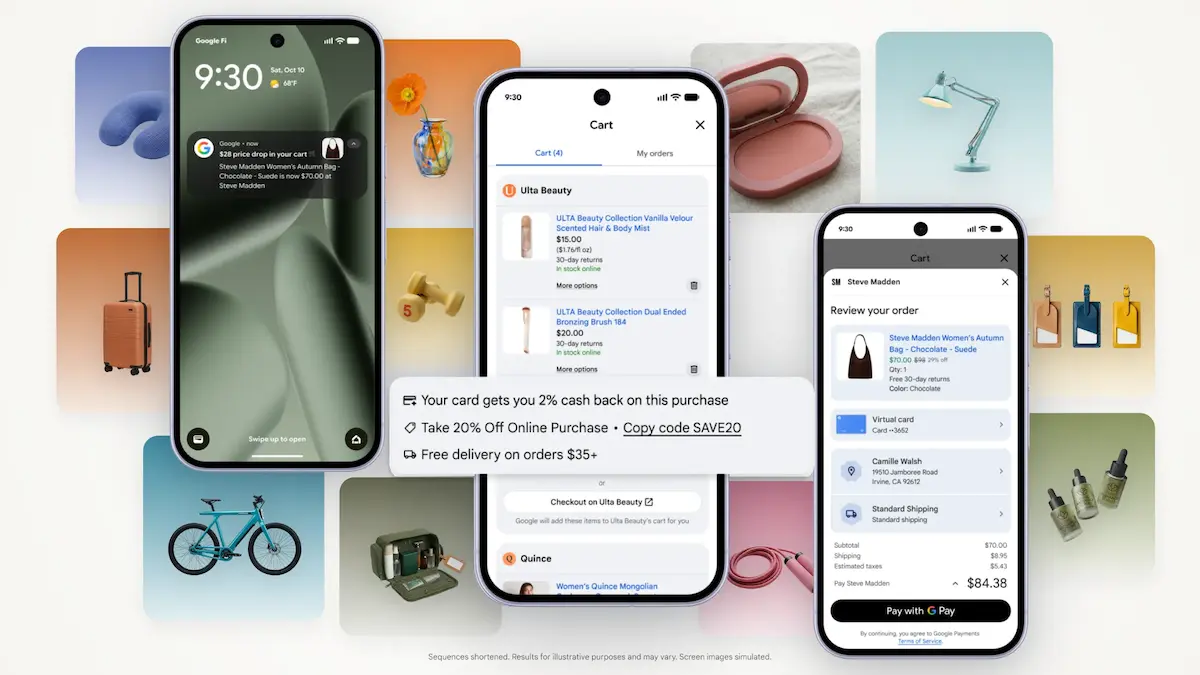
Google on Thursday announced the official U.S. launch of "Universal Cart," a comprehensive shopping tool designed to let users collect, monitor, and manage products they discover across Google Search and the Gemini app. The technology, which was first previewed to the public by the tech giant at the Google I/O developer conference in May, represents a significant step forward in the company’s broader efforts to redefine how consumers navigate the digital retail landscape.
The core concept behind Universal Cart is to alleviate the friction and fragmentation typically associated with online shopping. Modern consumers frequently browse multiple websites, compare prices across various platforms, and lose track of prospective purchases over days or even weeks. Universal Cart aims to solve this by providing a centralized hub where shoppers can save items they find appealing during their search journeys and easily return to them later without having to hunt down the exact products or restart their research from scratch. Because the tool is capable of aggregating items from a wide variety of different retailers into a single interface, it effectively functions as a persistent, cross-platform shopping basket that follows the user across Google’s ecosystem.
Beyond simply storing items for future review, Google has engineered the tool to actively assist shoppers in tracking vital product information, such as real-time price fluctuations and stock availability. According to the company, Universal Cart can automatically dispatch notifications to users when a previously saved product drops in price or when an item that was previously sold out makes its return to store shelves. This proactive alert system is intended to ensure that consumers never miss out on a favorable deal or a hard-to-find item simply because they failed to manually check a retailer’s website.
The utility of Universal Cart extends even further into the final stages of the purchasing process by offering tailored, intelligent assistance designed to optimize how and where users spend their money. Google stated that the tool is capable of factoring in specific credit card perks and rewards when helping users determine the most advantageous payment method for a particular transaction. Furthermore, the system can automatically surface relevant promotional codes and discounts associated with the saved items, potentially saving shoppers both time and money as they move closer to making a final purchasing decision.
The underlying infrastructure that facilitates the checkout process within this ecosystem is tied directly to Google’s Universal Commerce Protocol, or UCP. Introduced by the company earlier this year, UCP serves as an open standard created specifically to foster seamless collaboration between advanced artificial intelligence agents and independent retailers. By establishing a unified protocol, UCP aims to streamline various phases of the broader shopping journey, ensuring that AI-driven tools can interact smoothly with merchant back-ends, including the final checkout phase.
The introduction of Universal Cart arrives as Google continues to deepen its financial and technological commitments to artificial intelligence-powered commerce. The new feature joins a growing suite of innovative shopping tools within the company’s portfolio, complementing conversational product discovery capabilities found within Search’s AI Mode. It also aligns closely with other experimental and rollout-phase technologies, such as Google’s "Let Google Call" feature, which employs an autonomous AI agent to contact local, physical retail stores on behalf of the user to verify whether a specific product is physically in stock before the customer makes a trip.
At the same time, Google is far from alone in its pursuit of transforming e-commerce through advanced artificial intelligence. The race to capture the next evolution of digital retail has intensified significantly across the technology sector, with major industry rivals aggressively developing their own agentic commerce platforms. Companies such as Amazon, OpenAI, and various other competitors have introduced or previewed similar AI-powered shopping systems over recent months, highlighting a widespread push among tech giants to make sophisticated chatbots and digital assistants genuinely useful for practical, transactional tasks far beyond merely answering informational questions.
As these competing agentic ecosystems continue to mature and roll out to the public, tools like Google’s Universal Cart signal a fundamental shift in how consumers interact with the internet for commercial purposes, moving the digital economy closer to a unified, intelligent, and highly automated shopping experience.