






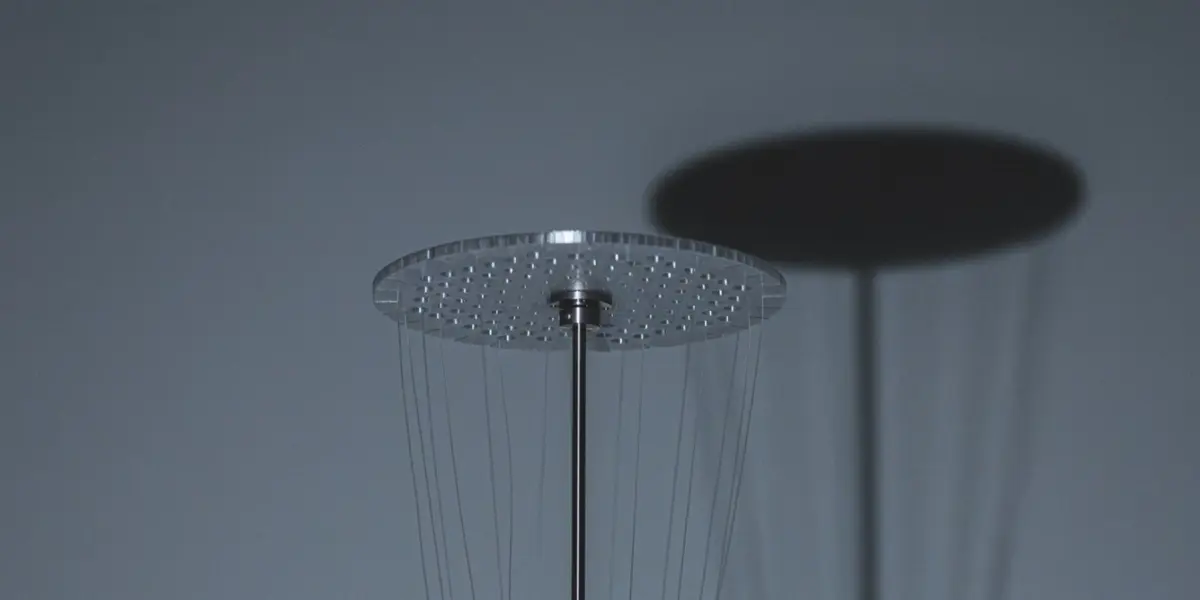
In the contemporary landscape where art, engineering, and spatial design increasingly intersect, creators are constantly seeking novel ways to question our perception of the built environment. Bridging centuries-old cultural traditions with cutting-edge computational mechanics, Japanese artist, engineer, and researcher Yotaro Sakamoto has unveiled a mesmerizing new spatial intervention. Titled Schattenrequisit: Column, the project is an intricate kinetic installation constructed entirely from fine threads. By exploring the complex relationship between architectural permanence, transient human presence, and the shifting geometry of shadow projections, the artwork transforms a typically static structural archetype into a living, responsive entity.
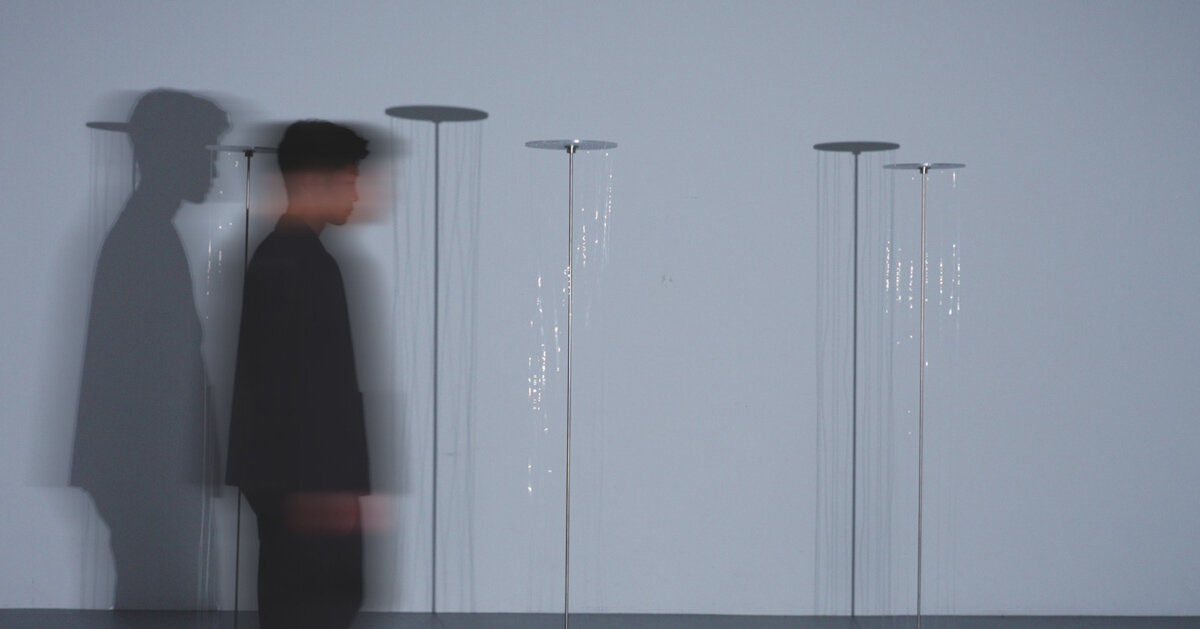
The installation draws its primary conceptual and aesthetic inspiration from the time-honored properties of sudare—traditional Japanese slatted blinds or screens designed to filter light and wind while maintaining a subtle permeability between interior spaces and the external world. Just as a sudare screen plays with opacity and shadow to create a delicate dialogue between light and interior atmosphere, Sakamoto’s Schattenrequisit: Column treats physical material and immaterial shadows as unified, equally vital components of a single sculptural composition. Through this sophisticated interplay, the work prompts viewers to reconsider how inanimate architectural elements might actively participate in spatial experiences rather than merely serving as passive backdrops for human activity.
Animating Static Architectural Forms Through Human Movement
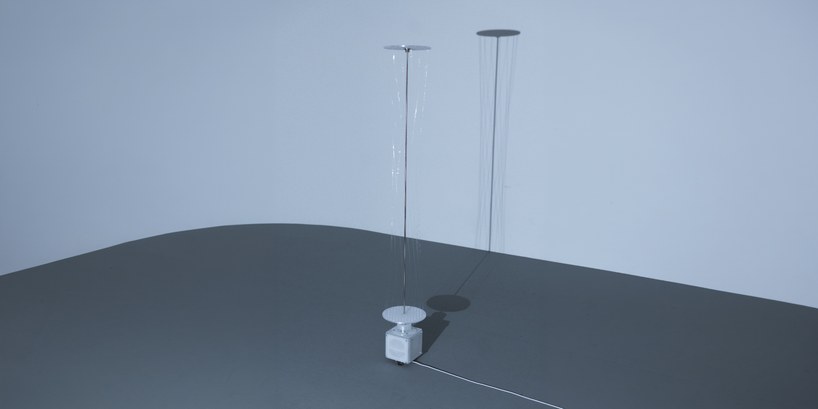
At the heart of the installation is a striking architectural column formed by a dense arrangement of closely spaced, fine threads. While columns have historically served as the definitive structural load-bearing symbols of permanence and stability in classical and modern architecture alike, Sakamoto subverts this expectation by rendering the column hyper-responsive to its immediate surroundings. This transformation is achieved through the integration of advanced millimeter-wave sensors discreetly embedded within the environment. These sensors are engineered to detect the subtle proximity and movement of visitors as they navigate the exhibition space.
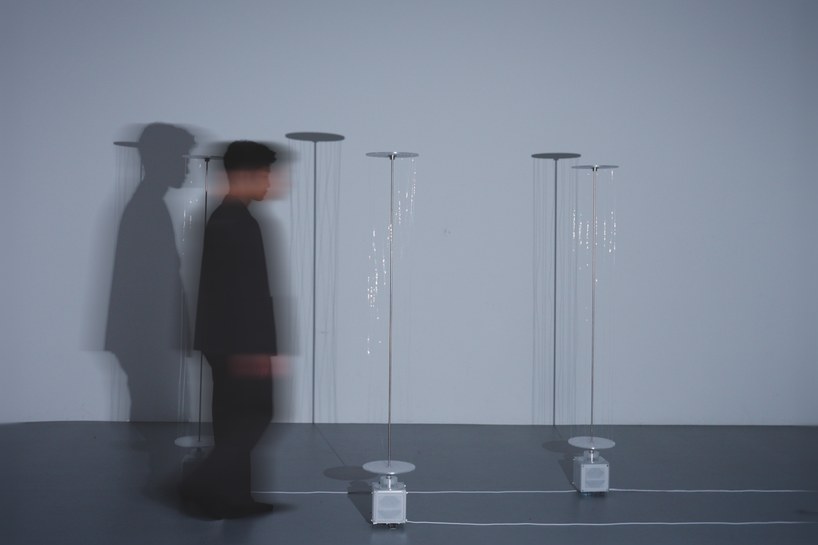
Upon registering human presence, the sensors transmit real-time data to a custom stepper motor system, which has been meticulously developed through a rigorous process of computational design and physical prototyping. In response to the dynamic flow of visitors, the motor slowly rotates and shifts the intricate thread assembly. This mechanical actuation alters the precise overlap of the linear strands, continuously and fluidly transforming the shadow silhouettes cast across the surrounding walls and floors.
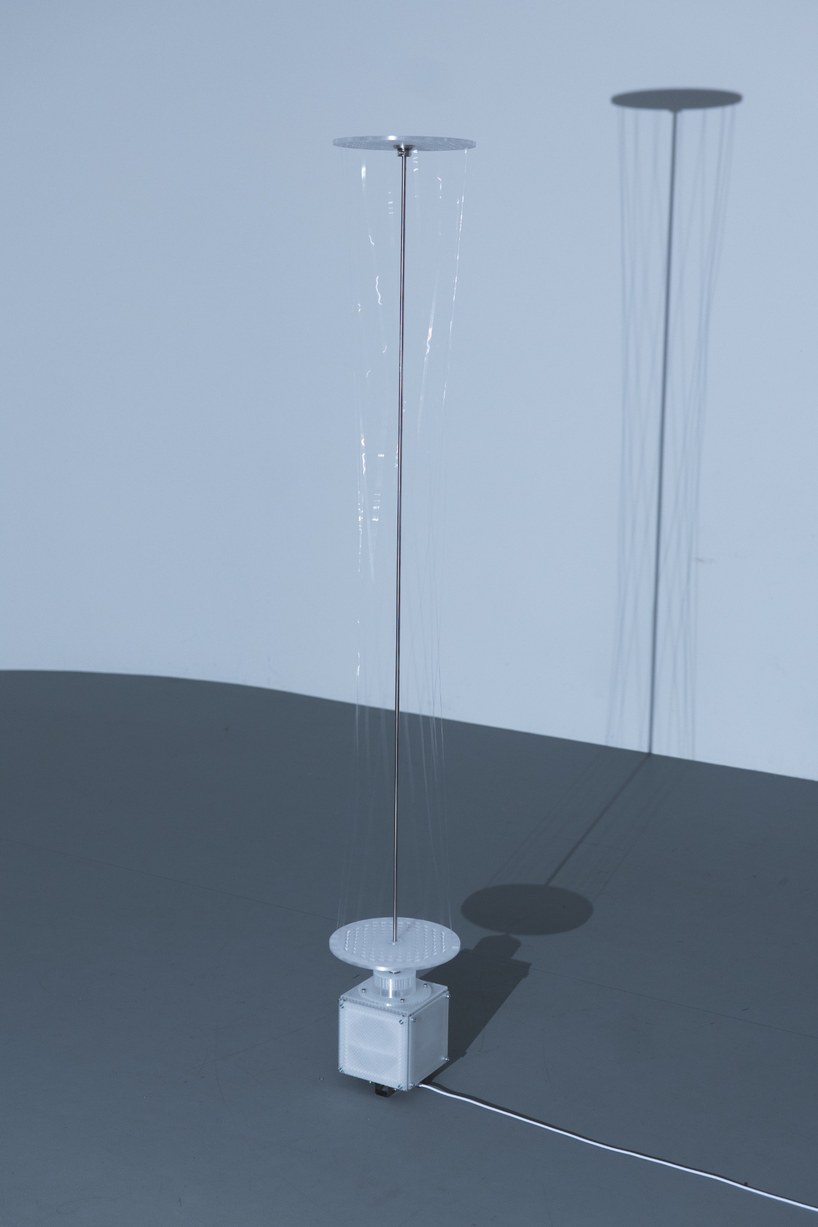
By breathing motion into a form traditionally defined by its unyielding rigidity, Sakamoto’s installation creates a profound metaphor for the relationship between fixed urban infrastructure and transient human circulation. Just as a city’s permanent streetscapes and buildings are continuously animated by the daily rhythms, paths, and movements of its inhabitants, the kinetic column shifts its internal geometry in direct response to the people who approach it. The artwork effectively blurs the boundary between the observer and the observed, transforming human movement into a tangible, shifting architectural canvas that redefines the spatial experience from moment to moment.