





Silver has long captured the imagination of humanity, serving as a pillar of civilization, a driver of global trade, and an essential medium for artistic expression. As a white metallic element, silver is harder than gold, softer than copper, and second only to gold in its exceptional malleability and ductility. Designated on the Periodic Table by the chemical symbol Ag, silver is celebrated as an outstanding conductor of heat and electricity. Furthermore, its remarkable resistance to oxidation places it firmly in the category of noble metals. Historically, silver has played a pivotal role in the production of fine jewelry and objets d’art, typically alloyed with other metals to provide the structural integrity required to maintain intricate shapes and fine details.
While modern markets often price silver far below precious counterparts like gold or platinum, relegating it to a secondary status in the minds of some observers, such assumptions overlook its profound historical significance. At various points throughout history, silver was valued more highly than gold. When examining the absolute quantities used in jewelry and decorative objects, silver’s usage historically outweighs all other precious metals by a wide margin. Moreover, this versatile white metal has catalyzed far more technological advancements in mining and metallurgy than its metallic cousins. Entire economies have risen and fallen on its availability, and access to rich silver deposits has frequently shifted the balance of power in wars, thereby shaping the course of human history.
Bronze Age Beginnings
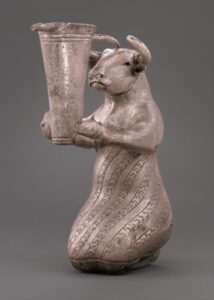
The story of silver traces back to the end of the fourth millennium BC, when innovative inhabitants of modern-day Turkey discovered that silver could be extracted from lead through the metallurgical process of cupellation. Although surviving artifacts from this era are rare, those that remain provide remarkable insight into the advanced capabilities of Bronze Age silversmiths.
At the dawn of written history, silver served as a foundational currency in Mesopotamia. Rather than circulating as standardized coins, silver was exchanged purely by weight or shaped into functional rings. The workshop of the Mesopotamian silversmith closely mirrored—and was often identical to—that of the goldsmith. Although silver possesses slightly less ductility than gold and requires more frequent annealing during fabrication, it can be cast, hammered into ultra-thin sheets, engraved, embossed, worked in repoussé, and adorned with delicate filigree and granulation. Archaeological discoveries of ancient vessels, statuettes, and jewelry indicate that artisans frequently utilized high-purity silver, yielding objects of notable softness.
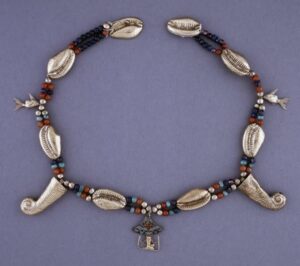
In ancient Egypt, the population held a deep appreciation for the rare, the exotic, and the distant. Great logistical efforts were undertaken to secure Afghan lapis lazuli, which the Egyptians regarded as immensely valuable. Along these same ancient trade routes, silver flowed into the Nile Valley. Because gold could be sourced relatively close to home from the mountains of the Eastern Desert and Nubia—and perhaps supplemented by natural electrum—pure silver had to be imported from afar. Consequently, silver was initially valued more highly than gold, reserved exclusively for the upper echelons of society.
By approximately 1600 BC, the value of silver in Egypt had subsided to about half that of gold, reflecting a significant expansion in supply. By this period, it functioned as an abstract currency of relatively constant value. The popularity of silver also ebbed and flowed with the changing tides of fashion; for instance, the legendary tomb of King Tutankhamun contained very few silver objects, whereas later pharaohs, such as Sheshonq II, were entombed with magnificent all-silver sarcophagi.
Meanwhile, the Minoans and, to an even greater extent, the Mycenaeans engaged heavily in Mediterranean trade, frequently handling silver. Archaeological sites across the Greek mainland, Crete, and Cyprus have yielded substantial collections of early Greek silver jewelry. It was the Phoenicians, however, who truly transformed the Mediterranean silver trade through their extensive colonization and maritime networks. By initiating the large-scale exploitation of Spanish silver deposits, the Phoenicians distributed the metal throughout the classical world, pulling silver out of its exclusive, exotic status and elevating its availability to unprecedented levels.
Classical Antiquity and Roman Luxury
To both Greek and Roman societies, a steady supply of silver was essential, as their monetary systems—anchored by properly minted silver coinage—depended entirely upon it. While gold frequently dominates the surviving archaeological record of classical jewelry, partly due to the high rates at which silver items were remelted and recycled, surviving pieces demonstrate that silver was utilized for finger rings, anklets, armlets, and hair ornaments.
The Romans developed a particular fondness for niello, a surface decoration technique closely resembling enameling but executed using silver sulfate rather than glass. Niello yielded a much tougher surface with a metallic luster rather than a vitreous finish. As Roman influence expanded across Northern Europe, the technique spread to the continent, leaving a lasting mark on Anglo-Saxon and Eastern European metalwork.
Roman historian Pliny the Elder, writing in his expansive Naturalis Historia, offered a characteristically skeptical yet vivid account of Roman society’s obsession with silver. Pliny documented the deep subterranean shafts required to unearth silver ore, often found alongside lead or galena, and detailed the vast scale of mining operations. He noted that Spanish mines, originally opened by Hannibal, remained active centuries later, yielding immense quantities of silver daily while requiring grueling labor from subterranean workers operating by torchlight.
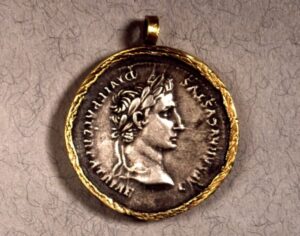
Pliny also recorded various ancient methods for testing silver quality, including thermal evaluations on iron fire-shovels and vapor tests involving human breath. Furthermore, he lamented the staggering evolution of Roman luxury, contrasting the modest silver reserves of early republican heroes like Scipio Africanus with the extravagant displays of later elites. By Pliny’s era, wealthy Romans adorned banqueting couches, domestic utensils, and even military equipment and carriage plating with chased silver, reflecting a culture intoxicated by opulence following the conquests of Asia and Greece.
Celtic and Medieval Traditions
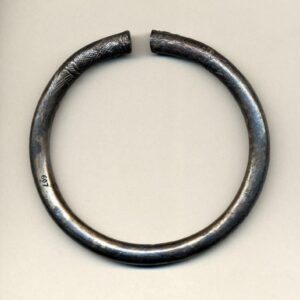
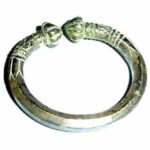
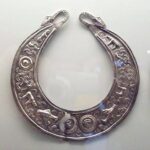
Among Celtic tribes, silver and bronze served as the primary metals for personal adornment. Elaborate brooches, torcs, and crescent-shaped lunulae were widely worn. Prior to Roman integration, the Celts relied on "ring money"—standardized rings of silver, copper, bronze, or gold—as a circulating currency rather than minted coins.
Following the collapse of Roman supply lines, gold grew exceedingly rare across Europe, propelling silver to the forefront of jewelry production. Germanic jewelry from the early medieval period focused heavily on functional items such as fibulae, disc brooches, penannular brooches, and belt buckles, predominantly crafted from silver and frequently gilded or inlaid with almandine garnets.
From around 800 AD onward, Viking expeditions along the northwestern coasts of Europe funneled vast quantities of silver into Scandinavia, where silversmithing blossomed into a rich cultural tradition. The discovery of major Swedish silver deposits around the turn of the first millennium further cemented silver as the metal of choice for Scandinavian adornment. Meanwhile, the Roman tradition of niello was enthusiastically adopted by Germanic tribes, who used the striking black-and-white contrast to accentuate intricate engraving patterns.
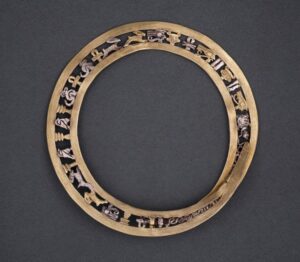
A prime example of this Anglo-Saxon artistry is the Fuller Brooch, housed in the British Museum. Dating to the ninth century, this circular hammered silver brooch is extensively inlaid with niello and features an openwork outer zone surrounding a central roundel. The intricate design depicts personifications of the Five Senses alongside alternating geometric animal and human motifs symbolizing Creation.
As medieval society evolved and Eastern trade routes reopened, gold regained its traditional status as the preferred medium for elite jewelry. However, this same commercial expansion fostered a burgeoning middle class, enabling individuals outside the ruling aristocracy to afford personal adornment. For those with more modest means, silver jewelry provided an accessible and versatile alternative. By the end of the Middle Ages, the trade in silver jewelry and plate became subject to formal assaying and hallmarking regulations.
Renaissance, Baroque, and Georgian Developments
The Renaissance brought renewed economic vitality to Europe, fueled by population recovery following the plague, expanding northern trade centers, and the influx of classical knowledge following the fall of Constantinople. The subsequent Age of Discovery dramatically altered the global economy. Following Spanish and Portuguese conquests in the Americas, vast new sources of silver—particularly from rich mines in modern-day Mexico and South America—flooded European markets from the mid-sixteenth century onward. While silversmithing techniques remained largely unchanged from the medieval period, the sheer abundance of silver ensured its continued affordability for currency and jewelry.
During the Baroque period spanning the seventeenth century, South American silver continued to pour into Europe. A notable technological and aesthetic shift occurred during this era with the advent of portable timepieces, many of which were cased in silver. Furthermore, the intensified direct trade with India following the establishment of European coastal settlements brought a steady stream of diamonds to Europe. Jewelers quickly discovered that silver settings beautifully complemented the colorless brilliance of these stones, establishing a practice that would define subsequent eras.
The Georgian era witnessed booming silver production driven by ongoing discoveries in South America and, beginning in 1727, newly uncovered diamond and precious metal deposits in Brazil. While fine jewelry continued to utilize gold foundations with silver-topped fronts to secure diamonds, items crafted entirely from silver remained common. The characteristic cut-down collet settings of Georgian jewelry were almost universally fabricated from silver to enhance the perceived whiteness of the mounted gems.
The late eighteenth century also marked the introduction of die striking in 1777, a manufacturing technique involving the mechanical stamping and cutting of metal components using presses and drop hammers. These mass-producible components could be quickly assembled by hand, heralding the first era of accessible, commercially manufactured jewelry and making silver adornments more widely available than ever before.
The Industrial Age and Victorian Silver
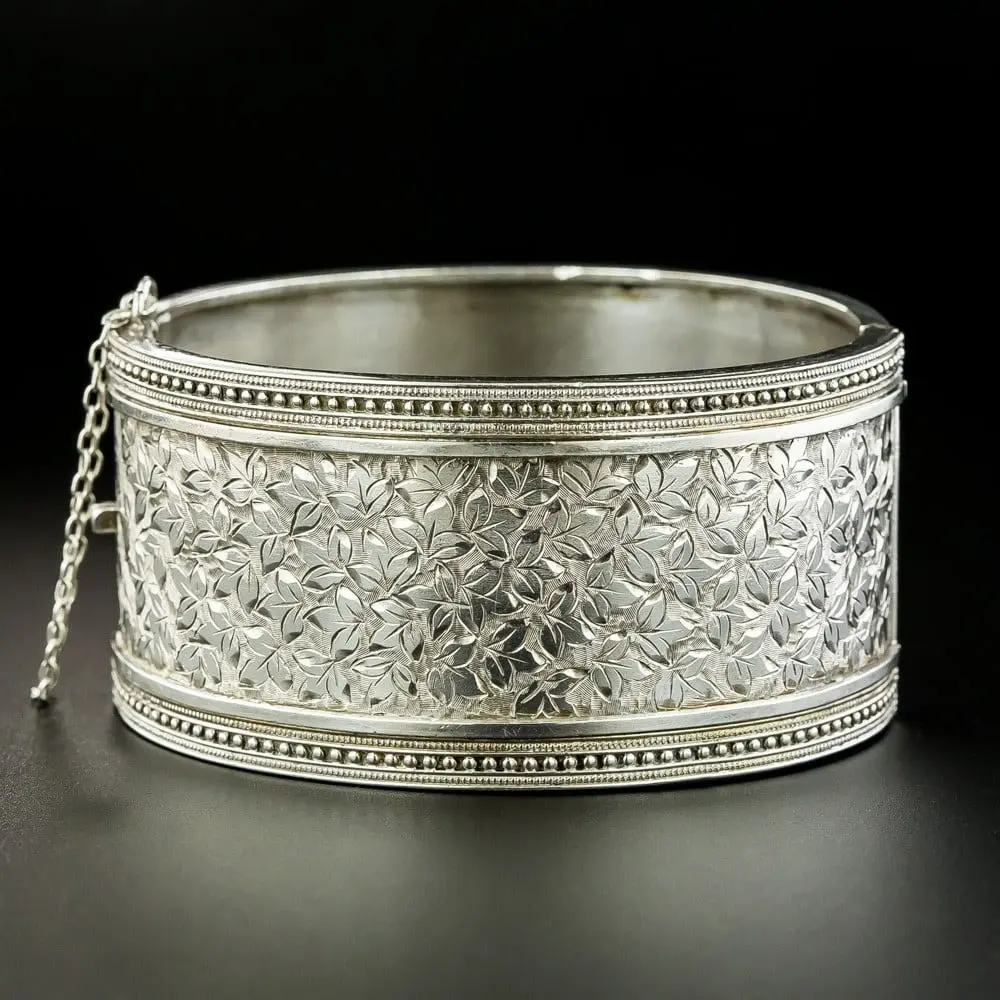
The Industrial Revolution profoundly transformed jewelry manufacturing throughout the Victorian era. Stamping and die-striking techniques, pioneered in the late Georgian period, were perfected to accommodate surging consumer demand, with silver serving as a primary medium for mass-produced items. Following Queen Victoria and Prince Albert’s acquisition of Balmoral Castle in 1848, Scottish agate jewelry surged in popularity, predominantly executed in silver in accordance with Northern European craft traditions.
Toward the end of the Victorian period, the Arts and Crafts movement emerged as a direct aesthetic reaction against industrial mechanization. Emphasizing handcraftsmanship and artistic design over the intrinsic value of raw materials, Arts and Crafts artisans favored silver over gold and preferred bezel-set cabochon stones over faceted gems. This philosophy honored the ancient legacy of silver, celebrating its tactile qualities and rich historical associations as the metal continued to inspire generations of designers, smiths, and collectors.