





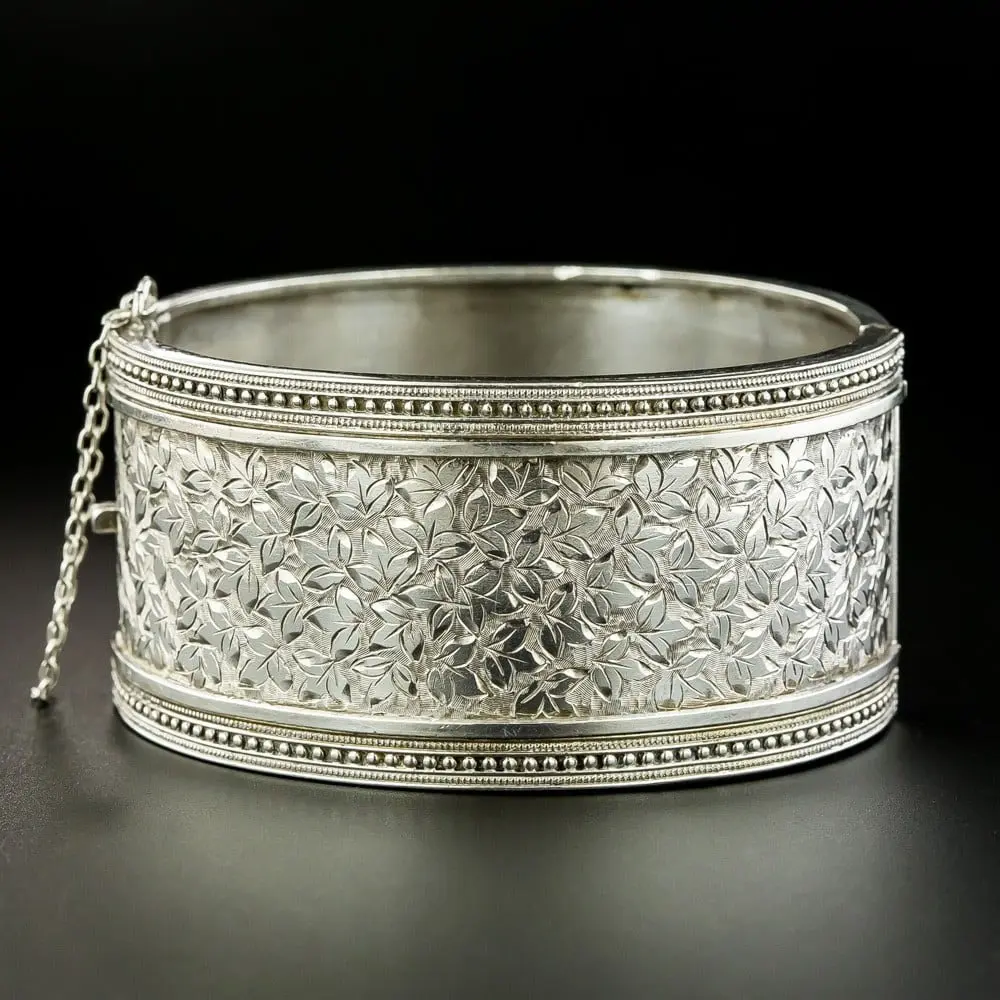
Silver—a lustrous white metallic element designated by the chemical symbol Ag on the Periodic Table—has long held a foundational place in human civilization. While harder than gold yet softer than copper, silver ranks second only to gold in its exceptional malleability and ductility. It is also an extraordinary conductor of heat and electricity. Classified as a noble metal due to its remarkable resistance to oxidation, silver has historically served as a cornerstone for the production of fine jewelry, intricate coinage, and prestigious objets d’art. Because pure silver is inherently soft, artisans throughout the ages have routinely alloyed it with other metals to provide the structural integrity required to maintain intricate shapes and fine decorative details.
Silver Significance
In the modern economic landscape, silver is often viewed as relatively inexpensive when compared to peer precious metals like gold or platinum. However, dismissing the metal based on contemporary market valuations would be a profound historical error. At various turning points across antiquity and subsequent eras, silver was prized far more highly than gold. When one examines the sheer volume of silver utilized in jewelry and decorative artifacts throughout human history, its utilization vastly outweighs all other precious metals by a substantial margin.
Furthermore, the pursuit and processing of this versatile white metal catalyzed far more technological advancements in the fields of mining and metallurgy than any of its precious metallic counterparts. Entire global economies have historically risen and fallen on the availability of silver, while access to rich silver deposits has frequently dictated the outcomes of wars and irrevocably altered the course of human history. Without question, silver remains one of the most vital and influential metals ever harnessed by mankind.
Bronze Age Silver
Mesopotamia
The expansive historical narrative of silver begins near the close of the 4th millennium BC, when innovative inhabitants of modern-day Turkey discovered a revolutionary metallurgical technique: extracting silver from lead ores through a process known as cupellation. Although surviving physical artifacts from this dawn of metallurgy are exceedingly rare, those that endure offer extraordinary insights into the remarkable technical capabilities of Bronze Age silversmiths.
At the very dawn of recorded history, silver functioned as a primary medium of exchange in Mesopotamia. Rather than circulating in the standardized form of minted coins, silver was traded strictly by weight or shaped into portable rings. The ancient Mesopotamian silversmith’s workshop would have closely mirrored that of the goldsmith, and in many instances, both metals were worked within the exact same atelier.
Although silver is slightly less ductile than gold and demands more frequent annealing cycles during the manufacturing process, it can be seamlessly cast, hammered into translucent micro-sheets, engraved, embossed, worked in high relief via repoussé, and intricately decorated with delicate filigree and granular detail. Archaeological excavations have successfully recovered ancient vessels, votive statuettes, and sophisticated jewelry crafted from high-purity silver, yielding remarkably soft and delicate objects.
Egypt
Ancient Egyptian civilization maintained a deep cultural obsession with the rare, the exotic, and the distant. If a luxury material originated from a faraway land, it was coveted above all else. Artisans and traders went to extraordinary lengths to secure Afghan lapis lazuli, which was arguably regarded as the most valuable gemstone of the era. Along these same ancient trade networks, silver made its way into the Nile Valley.
Much like lapis lazuli, silver was treated as an elite commodity of supreme exclusivity. While native gold could be easily sourced closer to home from the rugged mountains of the Eastern Desert and Nubia—with some natural electrum likely originating from the same regions—pure silver had to be entirely imported. This geographical limitation rendered silver more valuable than gold during early periods, reserving its use exclusively for the highest strata of society.
By approximately 1600 BC, however, the relative value of silver had shifted, dropping to roughly half that of gold as global supplies expanded significantly. By this stage, silver was routinely utilized as an abstract currency boasting a stable, standardized value. The broader cultural popularity of silver frequently fluctuated in response to shifting royal fashions. For instance, the legendary tomb of King Tutankhamun contained almost remarkably few silver artifacts, whereas later rulers like Pharaoh Sheshonq II were entombed within an opulent, all-silver sarcophagus.
Minoa, Mycenae & Phoenicia
The maritime Minoans, and subsequently the expansive Mycenaeans, operated primarily as prolific traders who regularly handled vast quantities of silver. Consequently, archaeological excavations across the Greek mainland, the island of Crete, and Cyprus have yielded substantial collections of early Greek silver jewelry.
Yet, it was the Phoenicians who played a uniquely transformative role in the commercial development of Mediterranean civilizations through their aggressive maritime colonization and far-reaching trade networks. The Phoenicians were the masterminds behind the large-scale exploitation of the rich silver deposits located in Spain, distributing the metal throughout the classical world. Their commercial incentives fundamentally pulled silver out of its previous status as an exclusive, ultra-rare exotic, elevating its availability to unprecedented levels.
Classical Silver
To both ancient Greek and Roman societies, a reliable supply of silver was an absolute economic necessity, as their monetary systems—comprising properly minted silver coinage—depended entirely upon it. While surviving archaeological evidence suggests that silver was not utilized in personal jewelry quite as extensively as gold, this disparity is largely attributed to centuries of remelting and recycling. The surviving artifacts clearly demonstrate that silver was fashioned into every conceivable type of personal adornment, including finger rings, heavy anklets, and robust armlets.
The Romans harbored a particular aesthetic fondness for niello, a striking surface decoration technique closely resembling enameling, executed using silver sulfate rather than vitreous glass. Niello proved significantly more durable than enamel and possessed a distinct metallic luster rather than a glassy sheen. Following the Roman military occupation of Northern Europe, the use of niello spread rapidly across the continent, as evidenced by numerous Anglo-Saxon archaeological finds in Britain and across Eastern Europe.
The Roman perspective on silver is brilliantly captured through the skeptical and observant eyes of Pliny the Elder in his monumental work, Naturalis Historia. Pliny meticulously documents the Roman obsession with silver ore extraction, the historic mines originally opened by Hannibal in Spain that yielded hundreds of pounds of silver daily, and the escalating moral panic surrounding extravagant silver plate. He details the evolving fashions of Roman banqueting culture, where elite citizens constantly updated their display silver—transitioning from the favored styles of Furnian and Clodian plate to heavily embossed and chiseled designs—while moralists lamented the staggering displays of wealth, such as Emperor Nero’s wife Poppaea shoeing her favorite mules in solid gold.
Celtic Silver
For the ancient Celtic tribes, silver—frequently paired alongside bronze—was heavily utilized in the creation of personal adornments. Highly decorated brooches, rigid ceremonial torcs, and crescent-shaped lunulae stood out as the most widespread categories of Celtic jewelry. Prior to the disruptive pressures of the Roman conquest, Celtic societies did not rely on coinage. Instead, they utilized a system of "ring money." These standardized rings were forged from silver, copper, bronze, or gold; rather than being worn on the body, they served strictly as a designated currency for trade and wealth storage.
Medieval Silver
Following the collapse of the Western Roman Empire and the subsequent disruption of established trade supply lines, gold quickly became an extreme rarity across Europe. Consequently, silver surged to become the preeminent metal utilized for personal jewelry and metalwork. Germanic jewelry from this era consisted primarily of functional hardware, such as intricate fibulae, decorative disc brooches, penannular brooches, and heavy belt buckles, predominantly forged from silver and occasionally gilded or inlaid with precious gemstones, with almandine garnets remaining the favored choice by a wide margin.
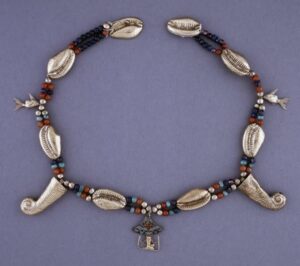
Beginning around 800 AD, aggressive Viking expeditions along the northwestern coasts of Europe resulted in massive quantities of silver being transported back to Scandinavia. There, indigenous silversmiths thrived, establishing a rich cultural tradition of silver jewelry production. This movement was further reinforced around the turn of the first millennium by the discovery of substantial Swedish silver deposits, which permanently cemented the cultural practice of wearing silver across the region.
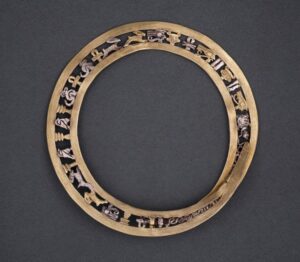
The popularity of niello, inherited directly from Roman traditions, continued to flourish among Germanic tribes. The stark visual contrast of the black-and-white color scheme was expertly deployed to highlight the intricate, interwoven animal motifs characteristic of Germanic engraving styles. A premier example of this sophisticated craftsmanship is the 9th-century Anglo-Saxon Fuller Brooch, housed in the British Museum. This circular, hammered sheet-metal brooch is extensively inlaid with niello and features detailed personifications of the Five Senses surrounding central geometric motifs, representing aspects of Creation against a striking dark ground.
As European society evolved and trade routes to the Levant and the East were gradually re-established, gold reclaimed its historic position as the preferred metal for elite, high-status jewelry. Nevertheless, this same commercial revival fueled the rise of an emerging middle class whose members began adorning themselves in fashions previously restricted exclusively to wealthy monarchs and rulers. For those operating on a more modest budget, silver jewelry emerged as the ideal, accessible alternative.
The functional versatility of jewelry expanded during this era, shifting away from purely utilitarian fasteners toward decorative and deeply symbolic pieces. Finger rings, bangles, and ornate pendants re-entered common usage, executed primarily in silver. By the close of the Middle Ages, the commercial trade in silver jewelry and domestic silverware became strictly regulated by institutional systems of assaying and official hallmarking.
Renaissance Silver
The historical Renaissance conventionally spans the 16th century from 1500 to 1600, though its artistic and cultural roots originated in Northern Italy as early as the late 13th century. Throughout the final centuries of the Middle Ages, trade with the Levant intensified significantly. As the European population slowly recovered from the devastating demographic collapse of the plague, urban centers expanded dramatically, particularly within the northern coastal zones of the Low Countries, where a prosperous middle class rapidly took root.
Following the fall of the Byzantine Empire in 1453, numerous intellectuals and artisans fled west into Europe, carrying with them classical knowledge that had been largely obscured throughout the medieval period. Italy quickly emerged as the epicenter of these cultural developments, fueled by immense financial wealth generated through trade with Asia and Europe, alongside the formidable political power of the Church.
The subsequent Age of Discovery, sparked by Christopher Columbus’s landmark voyages to the Americas, ignited fierce competition among Spanish, Portuguese, French, and English explorers eager to claim new territories. Spain quickly surged to the forefront of global exploration, driven by conquistadors such as Francisco Pizarro in his subjugation of the Inca Empire and Hernán Cortés in his conquest of the Aztecs.
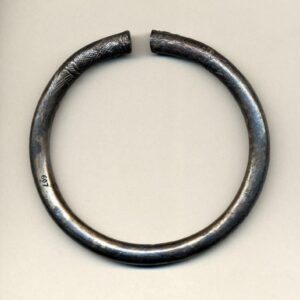
Massive silver mines in the New World—most notably following the discovery of monumental deposits in modern-day Mexico beginning in 1546—began funneling vast quantities of silver across global trade routes. A significant portion of this American silver was shipped directly across the Pacific to China in exchange for luxury Asian goods. While traditional silver-working techniques remained largely unchanged from the medieval period, the sheer abundance of newly mined silver entering Europe ensured that the metal remained readily available for coinage and served as an affordable precious medium for jewelry production.
Baroque Silver
During the Baroque period, spanning roughly from 1600 to 1700, the steady influx of South American silver into European ports accelerated. English, French, and Dutch maritime powers actively established permanent colonial outposts across the New World. The Netherlands, having successfully secured independence from Spain, emerged as a dominant global economic force, with its merchants and naval fleets controlling Atlantic commerce. This supremacy frequently resulted in naval skirmishes with Spanish and English fleets, often fought over lucrative cargoes of silver bullion being transported home from American mines.
While fundamental silversmithing techniques remained consistent with previous centuries, several notable technological and aesthetic shifts occurred. Portable timepieces emerged as complete technical novelties and were frequently housed in elaborate silver cases. Another major innovation of the period was the widespread adoption of silver as a setting for diamonds. The bright, reflective white metal perfectly complemented the lack of color in these stones, which were trickling into Europe in larger numbers following the establishment of direct trading posts on the Indian peninsula by European maritime companies, bypassing traditional Arabic intermediaries.
Georgian Silver
Throughout the Georgian era, newly discovered silver deposits in South America were exploited at an unprecedented rate, driving production figures to record highs. The emerging fashion of setting diamonds in silver—which had taken root during the Baroque period—became standard practice across European workshops. Diamonds flooded into the European market from India and, starting in 1727, from newly discovered diamond fields in Brazil.
While high-end fine jewelry continued to be forged primarily in gold with silver-topped front faces, items composed entirely of silver were far from uncommon. The characteristic cut-down collet settings typical of Georgian jewelry were almost universally crafted from silver to harmonize with the cool, white brilliance of the mounted diamonds.
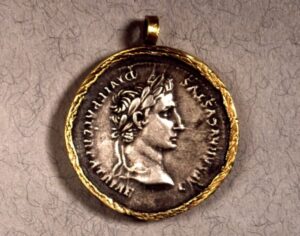
A major manufacturing breakthrough occurred in 1777 with the introduction of die-striking techniques to jewelry production. This innovative method involved stamping and cutting precious metal sheet components using precision-machined steel dies, heavy presses, or mechanical drop hammers. The resulting stamped components were subsequently assembled by hand to create finished pieces.
This efficient, cost-effective manufacturing technique heralded the dawn of the first mass-produced jewelry lines, allowing items to be retailed at a fraction of the cost of entirely handmade wares. Naturally, accessible metals like silver were heavily utilized in this mechanized process, flooding the commercial markets with large quantities of die-struck silver jewelry.
Victorian Silver
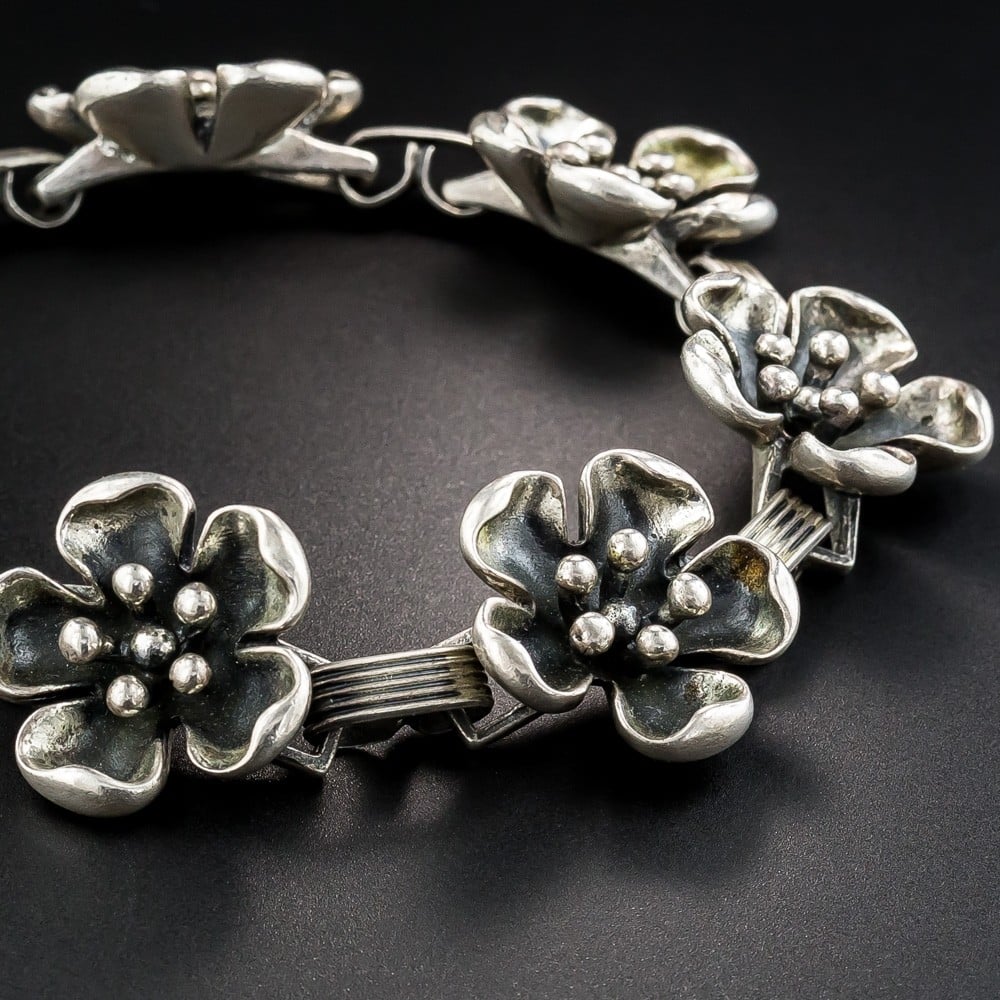
The Industrial Revolution reached its zenith during the Victorian era, profoundly transforming every aspect of commercial manufacturing, including the jewelry trade. Silver was utilized on an industrial scale in mechanical stamping and die-striking operations, perfecting techniques pioneered during the late Georgian period.
Following Queen Victoria and Prince Albert’s acquisition of Balmoral Castle in the Scottish Highlands in 1848, Scottish agate jewelry experienced a major cultural craze across Britain. These distinctive regional pieces were predominantly executed in silver in accordance with fine Northern European craft traditions.
Towards the close of the Victorian era, the Arts and Crafts movement emerged as a direct ideological reaction against the mass industrialization and mechanization of jewelry production. Within this sub-period, artistic design and hand-crafted execution were championed as paramount, while the raw intrinsic value of the underlying metals and gemstones was intentionally relegated to secondary importance.
Arts and Crafts jewelers overwhelmingly favored cabochon-cut gemstones—typically secured within heavy, hand-hammered bezels—over precision-faceted stones, and enthusiastically embraced silver over gold as their primary medium.