






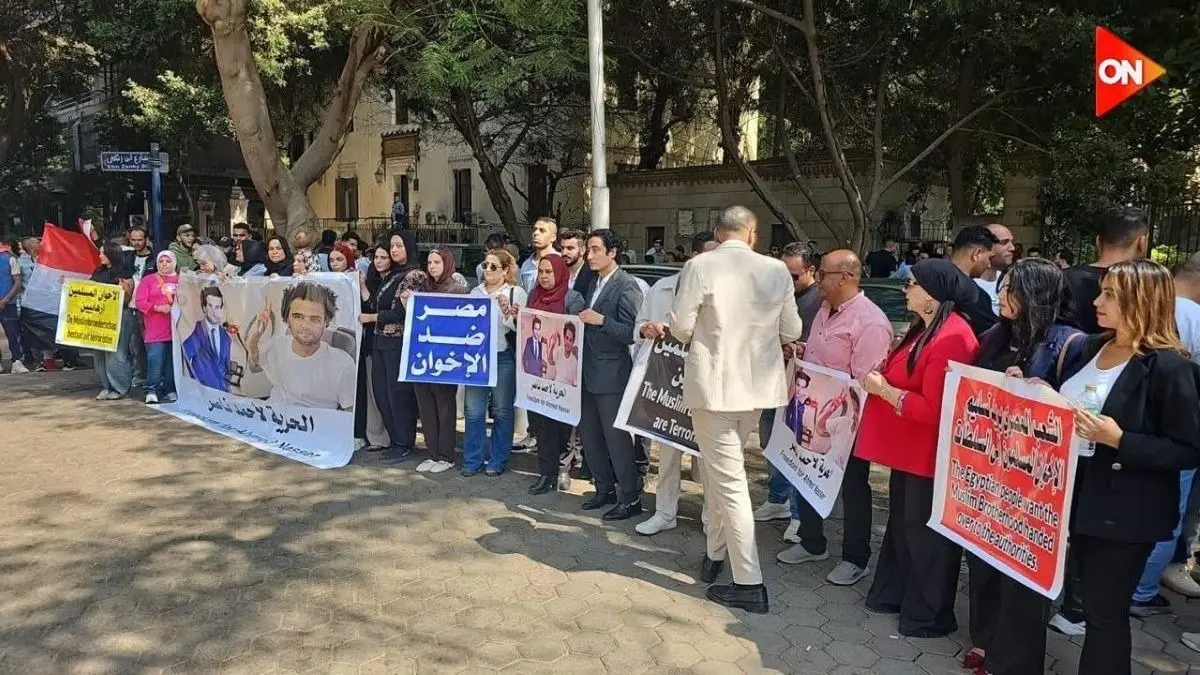
The Dutch embassy in the Egyptian capital of Cairo has officially announced its closure to the general public until further notice. The decision comes in the wake of nine consecutive days of turbulent demonstrations outside the diplomatic compound, a sustained period of civil unrest that ultimately necessitated the emergency evacuation of embassy personnel for their own safety.
The demonstrations, which have drawn significant crowds and heightened security concerns, are rooted in an ongoing diplomatic standoff between the Netherlands and Egypt. Protesters have gathered day after day to voice their anger and demand the immediate release of Ahmed Nasser, the deputy head of a prominent pro-government Egyptian youth organization. Nasser was taken into custody by Dutch authorities upon his arrival in the Netherlands on October 10.
According to reports from Dutch public broadcaster NOS, Nasser was detained on serious legal grounds, specifically on suspicion of making threats against Anas Habib, an Egyptian political activist currently residing in the Netherlands. Following his initial arrest, a Dutch court reviewed the case and extended Nasser’s pre-trial detention by an additional 14 days as investigations continue. However, the precise nature of the alleged threats made against Habib has not been publicly disclosed, and details regarding the specific evidence held by Dutch law enforcement remain limited.
The friction between the two nations and the subsequent protests in Cairo are part of a broader, highly charged chain of events that began during the summer. Anas Habib first commanded international media attention several months ago when he staged a dramatic solo protest outside the Egyptian embassy in The Hague. In a move that was widely circulated on social media, Habib filmed himself locking the heavy iron gates of the embassy with a padlock. His explicit motivation was to protest the Egyptian government’s ongoing policy of keeping the Rafah border crossing with Gaza closed, a humanitarian bottleneck that has drawn fierce international debate.
Habib’s high-profile protest did not remain an isolated incident. Instead, it served as a catalyst, sparking a wave of emulation and anger that quickly spread across the globe. Similar demonstrations and symbolic actions soon erupted outside Egyptian embassies in more than 16 countries worldwide. The cascading protests put the Egyptian government on the defensive, prompting counter-mobilizations. In response to the wave of international criticism, supporters of Egyptian President Abdel Fattah el-Sisi began organizing and gathering outside diplomatic missions in various countries, with the stated objective of "protecting" Egyptian sovereign properties and embassies from further disruptions.
The diplomatic fallout from Nasser’s arrest in October escalated rapidly beyond the streets and into official governmental channels. Just days after Dutch authorities took Nasser into custody, Egyptian Foreign Minister Badr Abdelatty placed a direct telephone call to his Dutch counterpart, Tom Berendsen. During the high-stakes conversation, the Egyptian foreign minister formally demanded Nasser’s immediate release. In addition, Abdelatty pressed for heightened security measures and enhanced protection for the Egyptian embassy and its diplomatic personnel stationed in The Hague, arguing that local authorities needed to do more to shield the mission from activist interference.
Dutch Foreign Minister Tom Berendsen later took to social media to address the diplomatic exchange and the broader security concerns affecting both nations. Berendsen noted that he and Abdelatty had discussed the mutual need for progress on the security of our respective embassies and consular affairs, acknowledging the delicate balance required to maintain diplomatic relations while ensuring public order and the safety of foreign missions on Dutch soil.
Despite these high-level diplomatic communications, tensions on the ground in Cairo continued to escalate rather than dissipate. The persistent demonstrations outside the Dutch diplomatic mission created an increasingly volatile environment, forcing embassy officials to weigh the safety of local and international staff against the imperative of maintaining consular services. With the situation showing no signs of de-escalating after more than a week of continuous protests, embassy leadership made the decisive call to suspend all public-facing operations and close its doors to visitors until further notice.
As the closure takes effect, diplomatic channels remain active as both governments grapple with the fallout from the activist protests in Europe and the resulting retaliatory demonstrations in North Africa. Meanwhile, the legal proceedings regarding Ahmed Nasser’s detention in the Netherlands are expected to move forward in the coming weeks, keeping the spotlight on a tense geopolitical friction point that continues to reverberate between The Hague and Cairo.