When talking about luxury fashion, there are certain conventions that consumers have come to expect: sumptuous materials, opulent detailing, and conceptual—if not impractical—design. These traditional markers of high fashion have long dominated the runways and luxury boutiques of the world, relying heavily on virgin resources, exotic skins, and meticulously manufactured perfection. Fortunately, Freitag designer Anne Bachmann doesn’t dabble in conventions. Instead, she is looking at the landscape of high-end accessories through a decidedly unconventional, sustainable lens.

“I am fascinated by the effortless beauty of objects that were never designed to please,” she says, referring to the weathered, industrial truck tarps repurposed to create Freitag’s newest high-end line. Debuting on October 8, the Reference collection launched with four distinct bag designs that expertly bridge the gap between artistic upcycling and contemporary luxury. Featuring an “elevated, minimalist aesthetic,” the collection highlights what the Swiss brand does best: tell a compelling, authentic story through sustainable, unconventional, and inherently one-of-a-kind materials.
When conceiving the design for the line, Bachmann aimed to transcend the typical bag experience. She set out to create something practical yet elegant, and one-of-a-kind yet ever-evolving over time. When she was presented with used truck tarps—one of the company’s famed upcycled materials historically associated with rugged messenger bags rather than upscale style—she knew she had found the foundational key component of the collection.
“Because we cut our bags from used truck tarps, every one-of-a-kind piece already starts out with its own history, character, and unique patina,” Bachmann explains. “And as you take it out into the world, it picks up your own daily scuffs, and becomes a real companion.” Beyond the philosophical appeal of a shared narrative, it also doesn’t hurt that the sturdy, weather-resistant tarpaulins make for a finished product that is as remarkably durable as it is stylish.
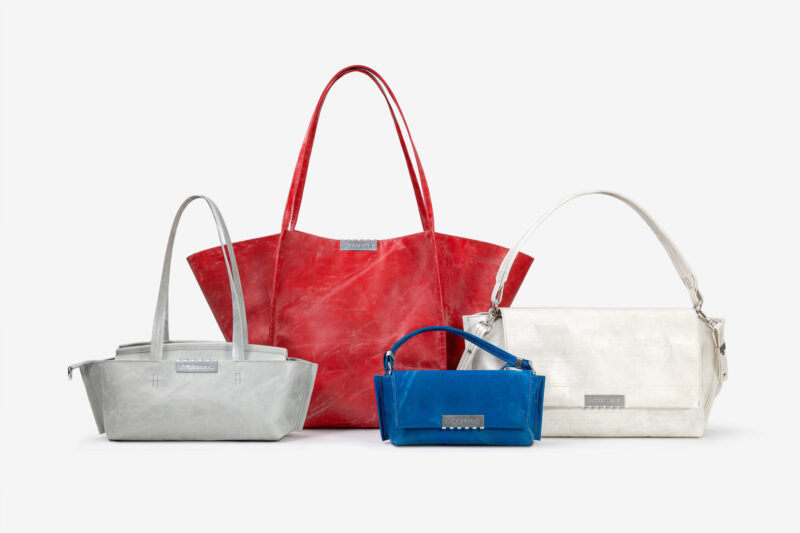
Each of the collection’s four bags—comprising the R201 Elly, the R202 Bates, the R203 Mazie, and the R204 Nan—is designed with a sophisticated trapezoidal silhouette. This intentional geometry creates a light, dynamic visual flow without ever compromising its underlying sculptural elegance. While there are core colorways available to consumers, including crisp white, industrial silver, bold red, striking blue, and a limited-edition black, the inherent variation from bag to bag means each purchase functions essentially as a unique work of art.
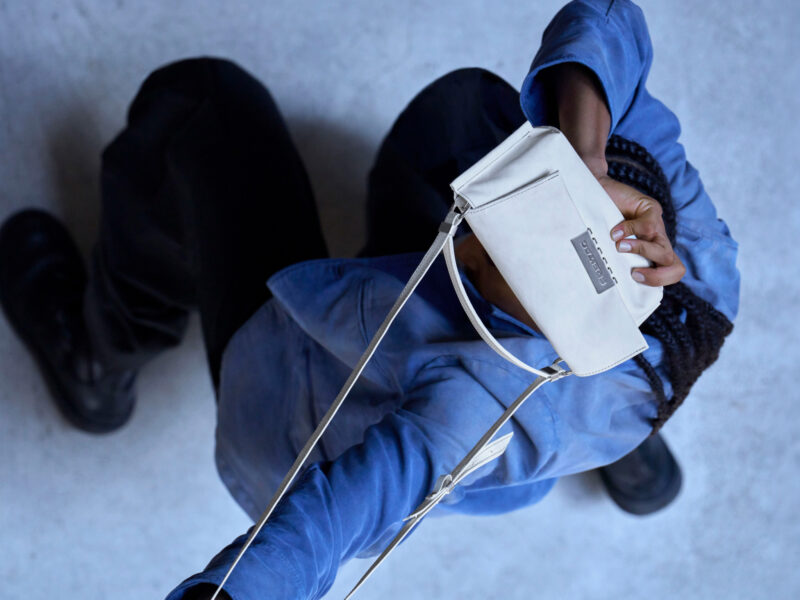
These tarps are sourced from across Europe and hand-selected by Freitag’s dedicated production and sourcing teams based in Zurich, Switzerland. The distinct “patina”—the rich array of markings and weather wear that uniquely adorns each individual bag—was a pivotal consideration when building every single piece in the collection.
“Every tarp ages differently on the road, creating subtle variations in color and character before they reach us,” Bachmann adds, elaborating on the meticulous curation process. “Hand-picking the variations in patina, meaning the beautiful marks that weather, environment, and even tree branches leave behind on the tarp during their first life, became equally as important as the colorways.”

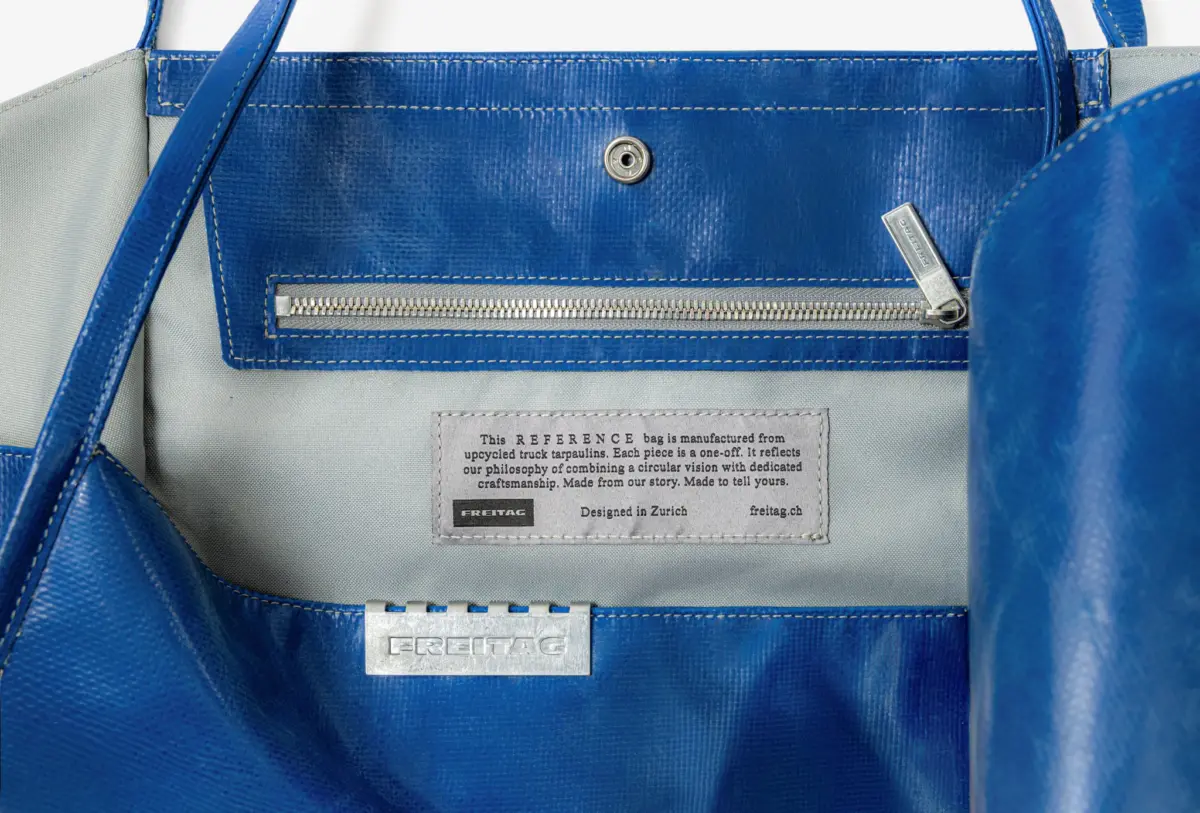
Of course, as the old cliché goes, the devil is very much in the details. That rule holds especially true for a streamlined, minimalist design like the four featured in the Reference collection. To further elevate the design language of the line, each bag features a newly engineered label and a custom magnetic clasp unique to the collection.
To say Bachmann’s inspiration for the distinct clasp was serendipitous would be to discredit the deep thoughtfulness and observation behind the design. Rather than drawing inspiration from traditional jewelry or high-fashion hardware, the idea came to her right inside Freitag’s Zurich factory when she noticed a peculiar hook mechanism resting on heavy-duty industrial shelving.
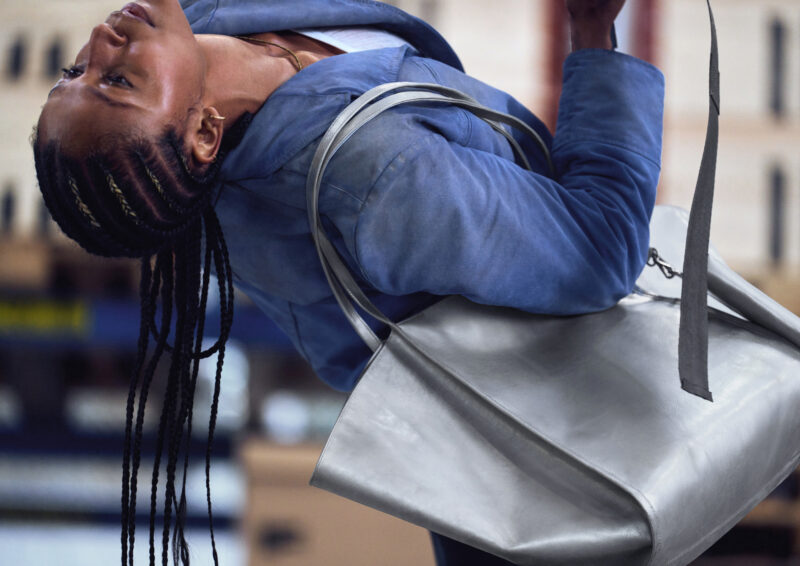
“I would describe it as opportunistic wandering,” she says of the creative moment. “Strolling through a space or an urban environment without a specific destination, keeping yourself completely open and receptive so you actually catch a spark of inspiration when it hits.”
This deliberate intersection of form and function creates a luxury experience that Bachmann hopes will naturally build a lasting emotional attachment transcending typical fashion cycles. In an industry historically plagued by rapid trends and disposable consumption, Freitag is pushing back through design intent. “Emotional attachment prevents waste,” she notes. “What we love and share a history with, we rarely throw away.”
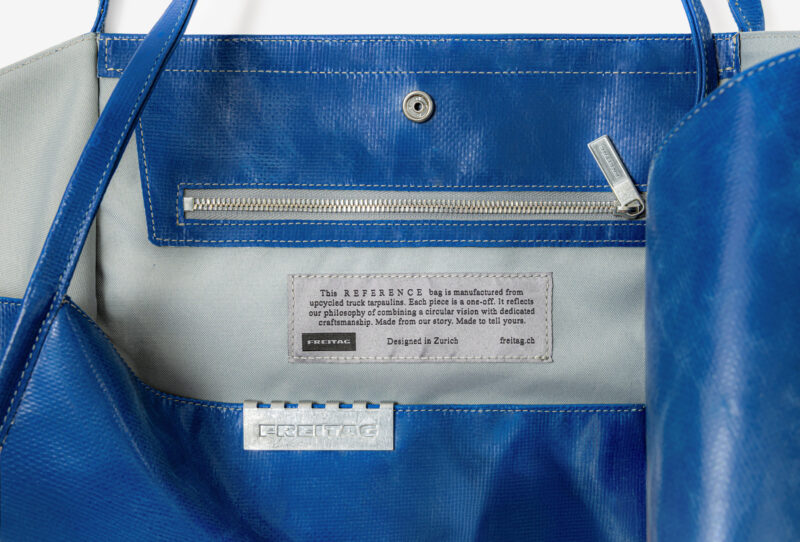
True to Freitag’s enduring ethos, the Reference collection successfully extends the brand’s circular approach without sacrificing an ounce of style, sophistication, or fine craftsmanship. To further encourage a long-term relationship between the bag and its owner, each piece comes equipped with a detachable repair kit. This kit can be taken apart and utilized to repair the bag using its exact, original tarp material should the need ever arise during its lifetime of use.
If there is one tried-and-true element of traditional luxury that remains universally desired, it is exclusivity—the quiet knowledge that the piece you own is the only one of its kind in the entire world. By anchoring high-end fashion in industrial upcycling, meticulous hand-selection, and a capacity for personal evolution, the Reference collection promises that every bag created is uniquely built to grow, weather, and evolve with every single use.