





Silver, a brilliant white metallic element identified by the chemical symbol Ag, occupies a unique and foundational place in human history. Harder than gold yet softer than copper, silver is second only to gold in its exceptional malleability and ductility. Because of its outstanding resistance to oxidation, it is classified among the noble metals. Across millennia, this versatile element has driven technological revolutions, shaped global economies, backed military conflicts, and served as a premier medium for fine jewelry and objects d’art, frequently alloyed with other metals to maintain structural integrity and intricate detail.
Silver Significance
While silver is often viewed today as less expensive and consequently less important than gold or platinum, this assumption overlooks its profound historical weight. At various points in antiquity, silver was valued more highly than gold. Furthermore, the sheer volume of silver utilized in jewelry and decorative arts historically outweighs all other precious metals by a massive factor. This versatile white metal catalyzed far more technological advances in mining and metallurgy than any of its precious metallic counterparts. Entire economic systems have relied on its continuous availability, and access to rich silver deposits has frequently shifted the tides of war, thereby altering the course of history.
Bronze Age Silver
The chronicle of silver begins near the end of the fourth millennium BC, when innovative inhabitants of modern-day Turkey discovered a method to extract silver from lead through the process of cupellation. Although surviving artifacts from this remote era are rare, those that remain demonstrate the remarkable capabilities of Bronze Age silversmiths.
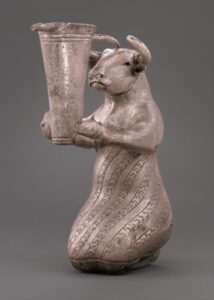
By the dawn of written history, silver functioned as a standard currency in Mesopotamia. Rather than circulating as uniform coins, it was measured strictly by weight or shaped into functional rings. The workshop of the Mesopotamian silversmith mirrored that of the goldsmith, and the two crafts were frequently practiced by the same artisans. Although silver possesses slightly less ductility than gold and requires more frequent annealing during manufacturing, it can be seamlessly cast, hammered into exceptionally thin sheets, engraved, embossed, and decorated using repoussé, filigree, and granulation techniques. Archaeological discoveries of ancient vessels, statuettes, and jewelry confirm that high-purity silver was regularly employed, yielding remarkably soft and detailed objects.
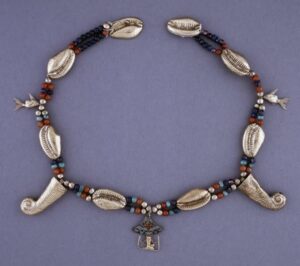
In ancient Egypt, a culture that profoundly cherished the rare and exotic, silver was treated as an elite commodity. While gold could be readily obtained nearby from the mountains of the Eastern Desert and Nubia, pure silver had to be imported along arduous trade routes, such as those that brought prized Lapis lazuli from distant Afghanistan. Consequently, silver was initially valued more highly than gold in Egypt and was restricted strictly to the highest echelons of society.
By approximately 1600 BC, however, the domestic value of silver had declined to roughly half that of gold, reflecting a significant expansion in the metal’s supply. During this period, it became established as an abstract currency of relatively constant value. The popularity of silver in Egyptian burial goods fluctuated with shifting fashions; while King Tutankhamun’s tomb contained scarcely any silver artifacts, later pharaohs like Sheshonq II were entombed in magnificent all-silver sarcophagi.
The Minoans and, subsequently, the Mycenaeans operated as prolific traders, handling substantial quantities of silver. Numerous examples of early Greek silver jewelry have been unearthed at archaeological sites across the Greek mainland, Crete, and Cyprus. Meanwhile, the Phoenicians played an instrumental role across Mediterranean civilizations through expansive maritime colonization and trade. By initiating the large-scale exploitation of Spanish silver deposits, the Phoenicians distributed the metal throughout the classical world, forever altering its status from an exclusive, exotic rarity to a widely accessible commodity.
Classical Silver
For both Greek and Roman societies, a steady supply of silver was vital, as their monetary systems and properly minted silver coins depended entirely upon it. Although fewer silver jewelry items survived from the classical era compared to gold—partly due to the common practice of melting down and recycling older pieces—the surviving specimens demonstrate that the metal was fashioned into finger rings, anklets, armlets, and hair ornaments.
The Romans developed a particular fondness for niello, a surface decoration technique closely related to enameling, but executed using silver sulfate rather than glass. Niello proved far more durable than traditional enamel and offered a distinct metallic luster. During the Roman occupation of Northern Europe, niello craftsmanship spread extensively across the continent, appearing prominently in Anglo-Saxon artifacts in Britain and throughout Eastern Europe.
Writing in his monumental Naturalis Historia, the Roman author Pliny the Elder offered a vivid, skeptical glimpse into his society’s obsession with silver. Pliny detailed the deep underground shafts required to mine the ore, noting that Spanish mines—some originally opened by Hannibal—produced massive daily yields through grueling human labor. He documented the strict testing methods used to evaluate silver quality, such as heating pieces on iron shovels to observe color changes, and lamented the escalating luxury of his contemporaries, who progressed from simple silver plate to adorning banqueting couches, carriages, and even the mules of the imperial court with chased silver.
Celtic Silver
Among Celtic tribes, silver and bronze were utilized extensively for personal adornment. Elaborately decorated brooches, torcs, and lunulae represented the most prevalent forms of Celtic jewelry. Prior to the Roman conquest, Celtic societies did not utilize standard coinage; instead, they employed "ring money"—standardized rings composed of silver, copper, bronze, or gold that served exclusively as a medium of currency rather than worn apparel.
Medieval Silver
Following the collapse of Roman trade routes and supply networks, gold became an extreme rarity in Europe, prompting silver to emerge as the premier metal for jewelry production. Germanic jewelry during this transitional era consisted largely of functional items such as fibulae, disc brooches, penannular brooches, and belt buckles, predominantly crafted from silver and frequently gilded or inlaid with precious stones, with garnets reigning as the most popular choice.
Beginning around 800 AD, Viking raids and conquests along the northwest European coasts channeled immense quantities of silver northward into Scandinavia. There, local silversmiths flourished, establishing a rich cultural tradition of silver jewelry that was further supported by the discovery of Swedish silver deposits around the turn of the first millennium. The Roman tradition of niello also persisted among Germanic tribes, who used the striking black-and-white contrast to accentuate intricate engraving patterns, as seen in masterworks like the ninth-century Anglo-Saxon Fuller Brooch housed in the British Museum.
As European society evolved and trade routes to the East were gradually re-established, gold reclaimed its traditional position as the preferred metal for elite jewelry. Simultaneously, however, this commercial expansion fostered a burgeoning middle class whose members began adorning themselves in fashions previously reserved exclusively for wealthy rulers. For those operating on a tighter budget, silver jewelry offered an accessible and attractive alternative. The functional nature of earlier jewelry gave way to increasingly decorative and symbolic designs, with finger rings, bangles, and pendants widely executed in silver. By the end of the Middle Ages, silver jewelry and silverware became subject to formal assaying and hallmarking regulations.
Renaissance Silver
Spanning roughly from 1500 to 1600, the Renaissance era was rooted in the cultural developments of late thirteenth-century Northern Italy. As European populations gradually recovered from the devastation of the plague, trade with the Levant intensified, and commercial centers expanded rapidly across Northern coastal regions such as the Netherlands, giving rise to a prosperous middle class and rapidly growing cities.
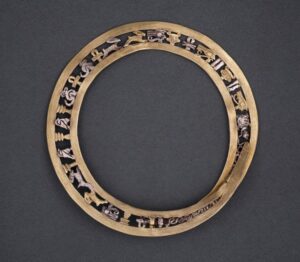
The fall of the Byzantine Empire in 1453 drove numerous scholars and exiles into Europe, carrying classical knowledge that had been obscured during the medieval period. Italy emerged as a central hub of artistic and intellectual innovation, fueled by wealth generated through Asian and European trade alongside the influence of the Church. Following Christopher Columbus’s voyage, the Age of Exploration triggered intense international competition as Spanish, Portuguese, French, Dutch, and English explorers claimed territories across the globe.
Spain and Portugal spearheaded New World exploitation, highlighted by Pizarro’s conquest of the Incas and Cortés’s subjugation of the Aztecs. Following the discovery of major deposits in modern-day Mexico in 1546, vast quantities of silver were shipped across oceans, with a portion traveling directly from South America to China to acquire Asian goods. While traditional silverworking techniques largely mirrored those of the medieval period, the massive influx of American silver into Europe supported a growing population and rising prosperity, ensuring that silver remained vital as both a currency and an affordable precious metal for jewelry.
Baroque Silver
During the Baroque period, spanning from 1600 to 1700, continuous shipments of South American silver flooded European markets. Maritime powers including England, France, and the Netherlands established permanent footholds in the New World, with the newly independent Netherlands emerging as a dominant naval and economic force.
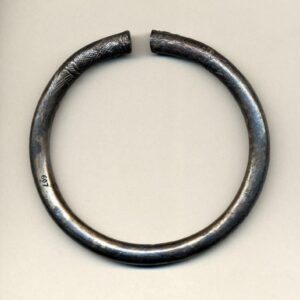
While silversmithing techniques remained largely consistent with previous centuries, notable stylistic shifts occurred. Portable timepieces emerged as complete novelties frequently housed in silver cases. Furthermore, silver began to be utilized for setting diamonds. The cool, white tone of the metal perfectly complemented the absence of color in diamonds, which were arriving in Europe in increasing quantities following the establishment of direct trade routes with Indian dealers by European maritime settlements, bypassing traditional Arabic middlemen.
Georgian Silver
Throughout the Georgian era, continuous new silver discoveries in South America drove production to unprecedented heights. The Baroque fashion of setting diamonds in silver became standard practice. Diamonds flowed into Europe in massive numbers from India and, starting in 1727, from newly discovered deposits in Brazil. While fine jewelry was frequently crafted in gold with silver-topped fronts, entirely silver items remained common, and the characteristic cut-down collet settings of Georgian jewelry were almost universally composed of silver to enhance the white brilliance of the stones.
In 1777, the manufacturing technique of die striking was introduced to jewelry production. This method involved stamping and cutting precious metal components using specialized dies, presses, and drop hammers, which were then manually assembled into finished pieces. This cost-effective technique heralded the advent of mass-produced jewelry, allowing items to be sold at significantly lower prices than entirely handmade wares. Because more affordable metals were frequently utilized in this process, and silver was readily available in large quantities, vast amounts of die-struck silver jewelry soon saturated commercial markets.
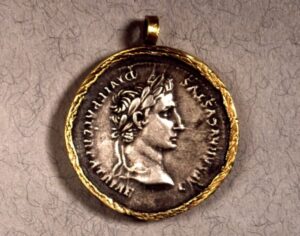
Victorian Silver
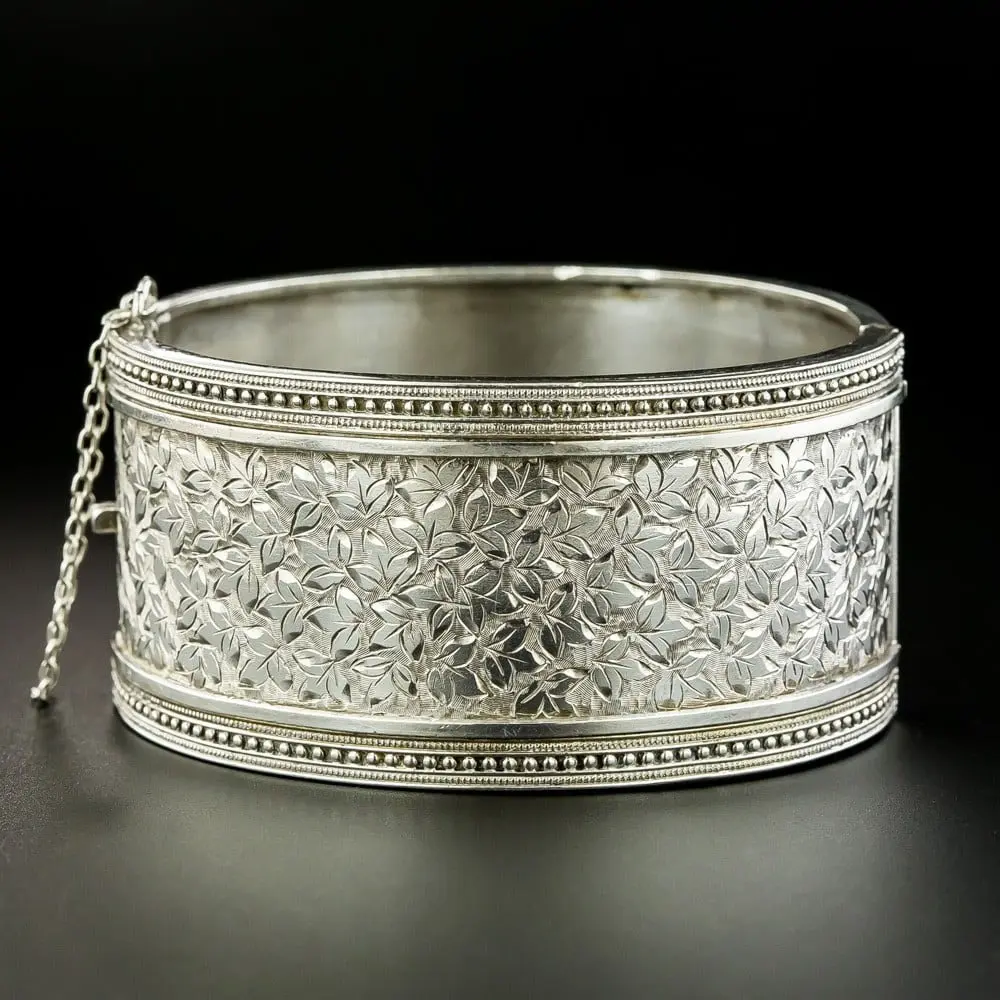
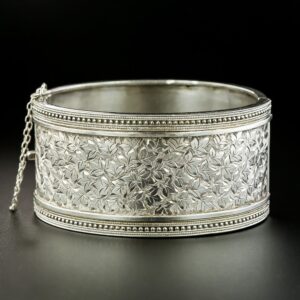
The height of the Industrial Revolution exerted a profound influence on Victorian jewelry manufacturing, with silver being extensively utilized in mechanized stamping and die striking techniques perfected throughout the era. Following Queen Victoria and Prince Albert’s acquisition of Balmoral Castle in Scotland in 1848, Scottish agate jewelry emerged as a major fashion trend, predominantly executed in silver in accordance with Northern European traditions.
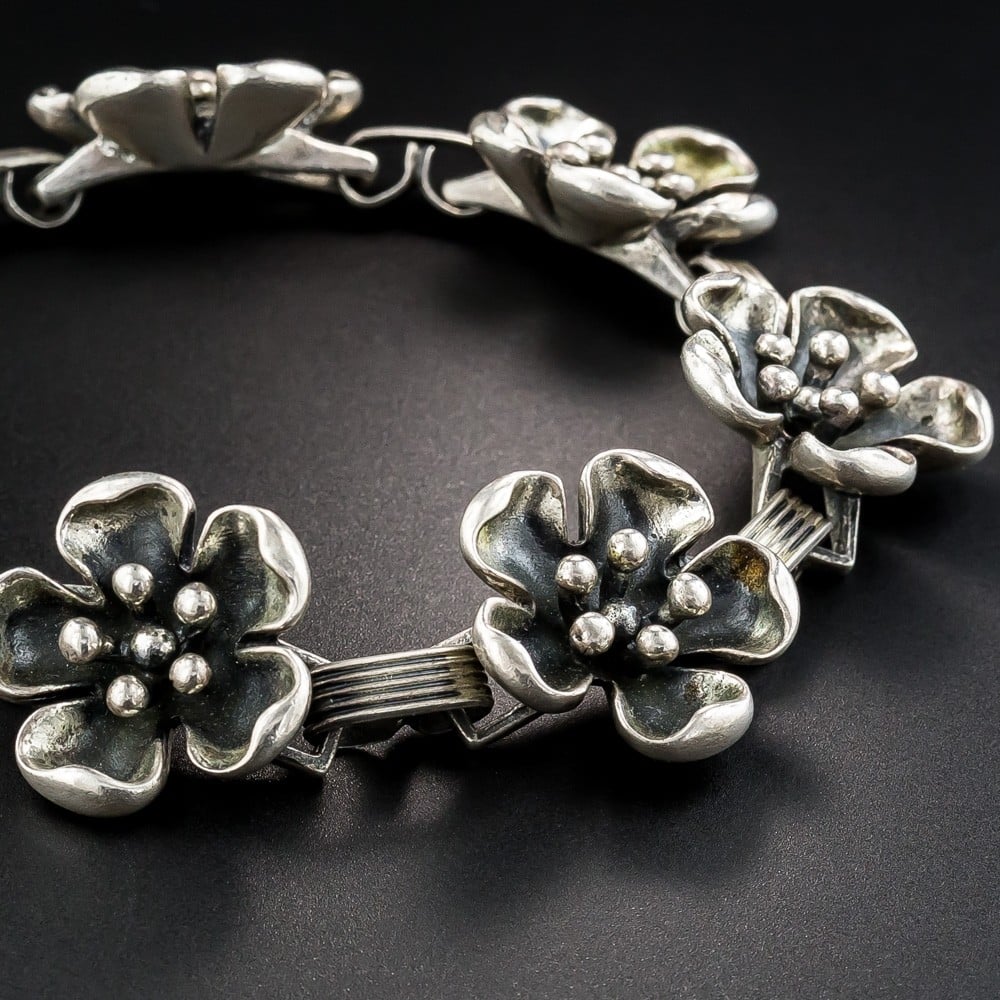
Toward the end of the Victorian period, the Arts and Crafts movement arose as a deliberate aesthetic reaction against the heavy industrialization of jewelry manufacturing. In this sub-period, artistic design and craftsmanship took precedence over the intrinsic market value of metals and gemstones. Arts and Crafts jewelers favored cabochon-cut stones—typically secured in simple bezel settings—and consistently preferred silver over gold, cementing the metal’s enduring artistic legacy.