





“We are not observers of this world. We are participants in it. We always were.”
In a compelling new collaborative project, artist Richelle Ellis and creative director Lawrence Azerrad have united more than 50 artists, astronauts, scientists, ecologists, and cultural thinkers to examine how the perspective of space exploration can fundamentally reshape our understanding of Earth. Published by DelMonico Books, Inploration: Art Exploring Space to Understand Earth investigates how creative practices can translate the profound sense of wonder associated with viewing our planet from the cosmos into a tangible, active form of environmental stewardship.
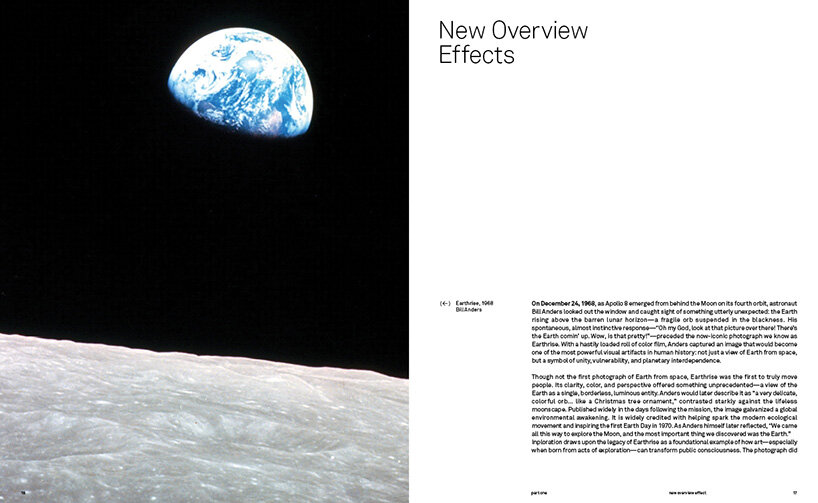
The conceptual foundation of the book traces back nearly six decades to Christmas Eve 1968, when Apollo 8 astronaut Bill Anders captured the iconic Earthrise photograph. Unplanned and absent from the mission’s official shot list, the spontaneous image revealed Earth as a fragile, vibrant blue and white sphere suspended against the infinite dark void of space, completely devoid of visible national borders. The cultural and psychological impact of the photograph transcended the technical achievements of the space program, offering humanity a radically new perspective on its shared home.
Today, in a cultural landscape thoroughly saturated with digital feeds, high-resolution videos, and constant streams of imagery, Ellis and Azerrad grapple with a modern challenge: how to make the psychological phenomenon known as the Overview Effect resonate with individuals who may never leave the surface of the planet. The goal of the publication is not merely to replicate the initial shock of wonder inspired by Earthrise, but to deeply connect that planetary perspective to the everyday choices, policies, and actions of people living on Earth.
Looking Outward to Understand What is at Home
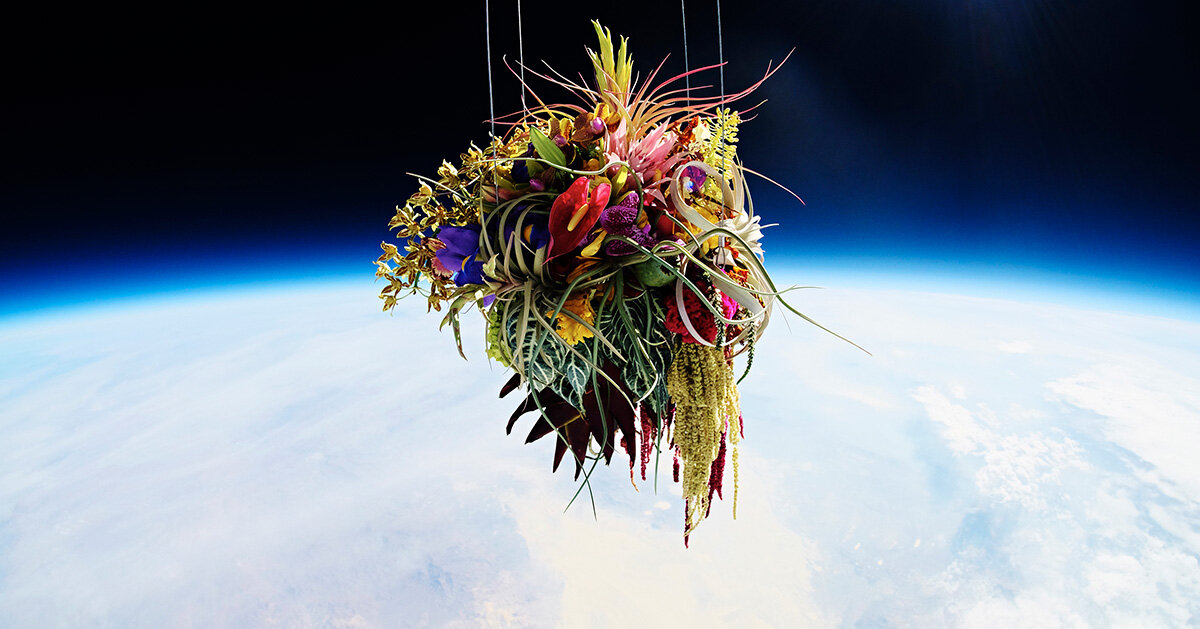
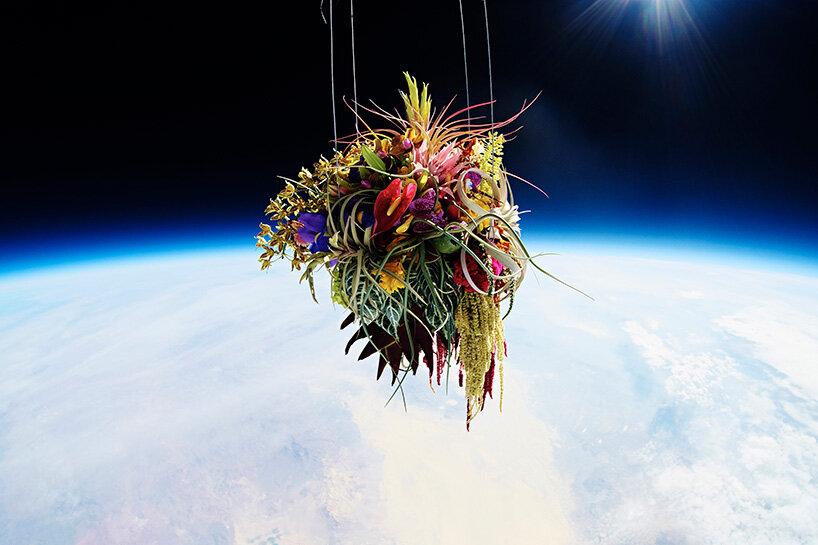
For Richelle Ellis, the dialogue between terrestrial life and extraterrestrial observation reaches far beyond the classic astronaut gaze. Her diverse artistic practice moves fluidly between deep space, the deep ocean, remote terrestrial landscapes, and analog space missions—including pioneering projects that launch artworks beyond the bounds of Earth’s atmosphere. Despite the vast differences in these environments, they all converge on a singular, profound question: what happens to our inherent sense of home when we venture far outside the ecosystems we know?
Ellis argues that the farther we distance ourselves from familiar surroundings, the more starkly apparent our absolute dependence on Earth becomes. While outer space renders geopolitical borders entirely arbitrary and meaningless, the deep ocean reveals hidden, mysterious worlds that remain largely invisible to daily life yet are fundamentally vital to planetary health. Both extreme realms challenge the common human assumption that environments or systems we cannot directly see or experience are somehow separate from our immediate existence.
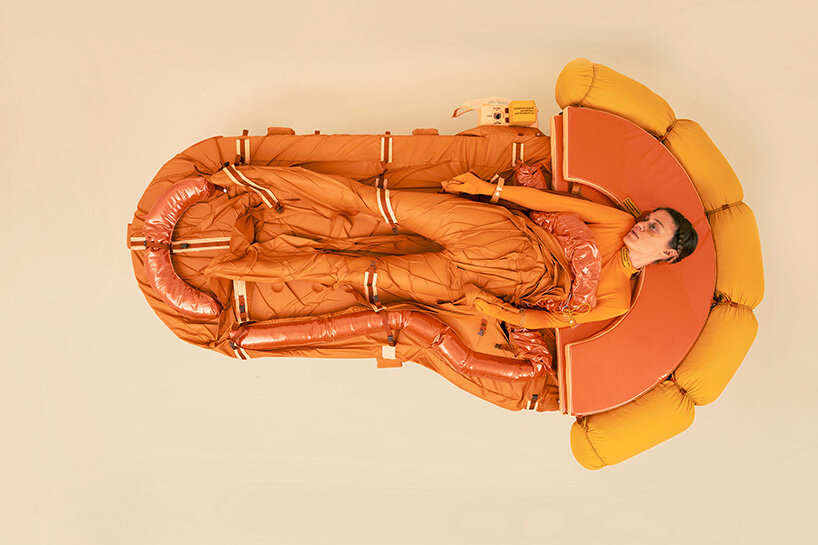
Art serves as a vital bridge in this dynamic, bringing distant or abstract environments closer to everyday human consciousness. Within the pages of Inploration, this intersection of art and science becomes the primary engine for discovery. The publication deliberately brings together practitioners from both disciplines to investigate how humanity comprehends the known and the unknown, suggesting that artists and scientists share a fundamental curiosity, a willingness to question assumptions, and a deep drive to explore the unfamiliar.
Among the prominent contributors to the volume is Amber Straughn, deputy project scientist for the James Webb Space Telescope, whose work helps translate and communicate the breathtaking imagery captured by the observatory to the general public. Reflecting on the broader implications of her field, Straughn notes that astronomy possesses a unique capacity to prompt deeper existential reflection rather than merely presenting isolated scientific facts. The astonishing visuals returned by the telescope invite viewers to reconsider deep time, cosmic scale, and humanity’s delicate place within the universe, particularly given that viewers are literally observing light as it existed far back in the past.
The book’s design and visual curation also reflect the rapid evolution of visual culture. During the final stages of production, the front and back covers were updated to incorporate contemporary images from the Artemis II mission—many of which were captured by crew members using everyday consumer smartphones. Placed in direct dialogue with the historic Hasselblad film photography that defined the Apollo era, these modern snapshots illustrate how the documentation of space exploration continues to evolve across generations. The tools and technology may change rapidly, but the enduring core challenge remains unchanged: how can a remote image from the stars fundamentally alter our understanding of where we stand today?

From the Voyager Golden Record to a New Earthrise
Lawrence Azerrad approaches the project through his extensive background as a creative director, notably including his work on the 40th-anniversary edition of the Voyager Golden Record. Originally launched aboard NASA’s Voyager spacecraft, the historic record was conceived as an interstellar message to potential extraterrestrial intelligence, compiling a rich archive of human sounds, images, music, and cultural information. Although its ultimate audience remains unknown, the record functions equally as a powerful message turned inward toward Earth. The rigorous process of curating what to send into the cosmos required profound collective decisions about what aspects of human civilization matter most to represent.
Azerrad approaches Inploration with a similar philosophical framework, utilizing the project to provoke entirely new modes of seeing and understanding our planet. His creative process is rooted in deep listening and open-ended inquiry, allowing diverse and sometimes contrasting perspectives to coexist harmoniously within the volume.
Further expanding this exploration of time and human scale is the work of renowned artist Cai Guo-Qiang, whose massive pyrotechnic installations exist only in the fleeting moment of their creation, demanding absolute attention from the viewer before vanishing into smoke and memory. Reflecting on Cai’s ephemeral practice, Ellis and Azerrad observe that such works offer a poignant reminder that human existence is anchored entirely in the present moment, while the past and future remain abstract constructs. This realization anchors the book’s broader thesis: true planetary awareness must begin with focused attention on the world as we experience it right now.
Whose Cosmology, Whose Responsibility?
A dedicated section of the book focusing on Indigenous knowledge systems and diverse cultural cosmologies significantly broadens the conversation regarding how different worldviews dictate our relationship with the environment. Rather than treating the cosmos merely as a passive laboratory to be observed, measured, and charted, these traditional perspectives intertwine knowledge directly with reciprocal relationships among communities, the land, surrounding living species, and future generations.
This creates a vital distinction not simply between scientific and spiritual paradigms, but in how different frameworks inform human responsibility. While certain Western scientific approaches have historically categorized nature primarily as an external resource subject to study and extraction, numerous Indigenous cosmologies emphasize mutual respect, care, and the moral obligations inherent in being an active member of a living ecosystem.
Artist Cannupa Hanska Luger articulates this vital synthesis between cultural heritage and scientific understanding succinctly, noting that cultural stories form the foundational cosmology, and that cosmology inherently constitutes the science itself. Within this framework, storytelling functions not as a replacement for empirical knowledge, but as a sophisticated vehicle for transmitting a profound comprehension of natural laws and sustainable human behavior.
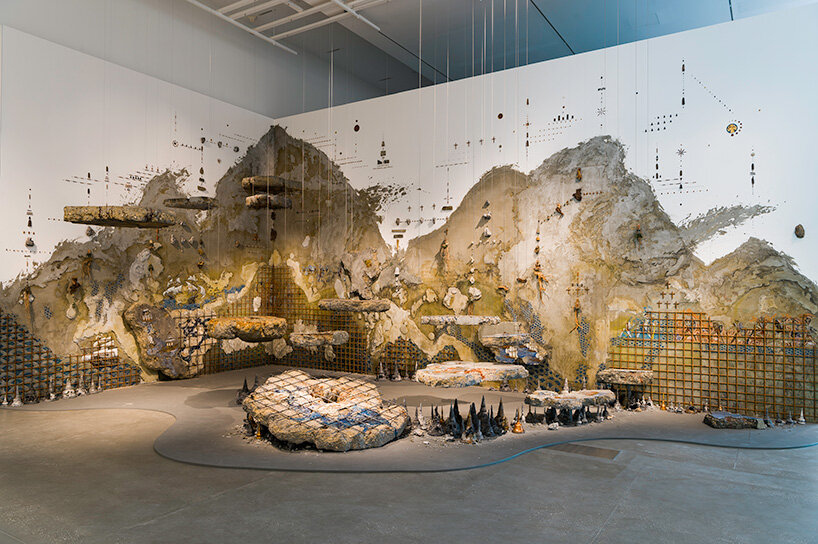
Other contributors challenge readers to rethink the geography of moral and environmental responsibility. Artist Tavares Strachan poses a probing question regarding proximity and care—asking whether our ethical obligations extend only to those in our immediate vicinity or reach far beyond. Similarly, artist Rebeca Méndez prompts readers to consider what the Earth genuinely requires from humanity.
These inquiries complicate the comforting, monolithic image of Earth as a unified global home. While viewing the planet as a single whole from space can foster a powerful sense of collective belonging, the authors emphasize that this sentiment must translate into addressing deep systemic inequalities in how environmental degradation is experienced. It demands rigorous attention to the generational wisdom of indigenous communities and an honest reckoning with the consequences of modern human decisions. Physicist and systems thinker Fritjof Capra echoes these sentiments, stressing the vital necessity of slowing down modern life sufficiently to recognize ecological relationships that are otherwise easily overlooked.
Making the Future Tangible
Inploration: Art Exploring Space to Understand Earth directly confronts the psychological hurdle of moving from intellectual awareness of global crises—such as climate change and biodiversity loss—to feeling empowered to enact meaningful change. In an era dominated by relentless cycles of alarming environmental news, individuals frequently experience psychological paralysis rather than motivation.
Art and design offer essential counterweights to this despair by translating abstract, complex data into evocative sensory experiences. Musician and artist Beatie Wolfe points out that raw data alone often fails to convey the profound emotional weight required to spur action. Art provides the crucial emotional bridge, helping audiences internalize information that might otherwise remain distant or academic. As astronomer Janna Levin summarizes, the ultimate objective of combining these fields is to move people profoundly through knowledge.
Artist Lita Albuquerque describes her own approach to planetary scale by mapping her personal cosmic address, tracing her physical position from a specific temporal coordinate through the Solar System out to the Laniakea Supercluster. Rather than inducing existential dread or feelings of insignificance, the exercise fosters a deep sense of connection, illustrating that looking outward ultimately reveals the intricate web of conditions that make life possible.
Designers and thinkers in the volume further emphasize the agency inherent in human creation. Designer Forest Young observes that any creative brief is fundamentally an exercise in future-building, challenging creators to actively envision alternative trajectories and steer away from destructive paths. Activist Van Jones reinforces this sentiment, asserting that the future is not a predetermined destination we arrive at, but a reality we must construct collaboratively.
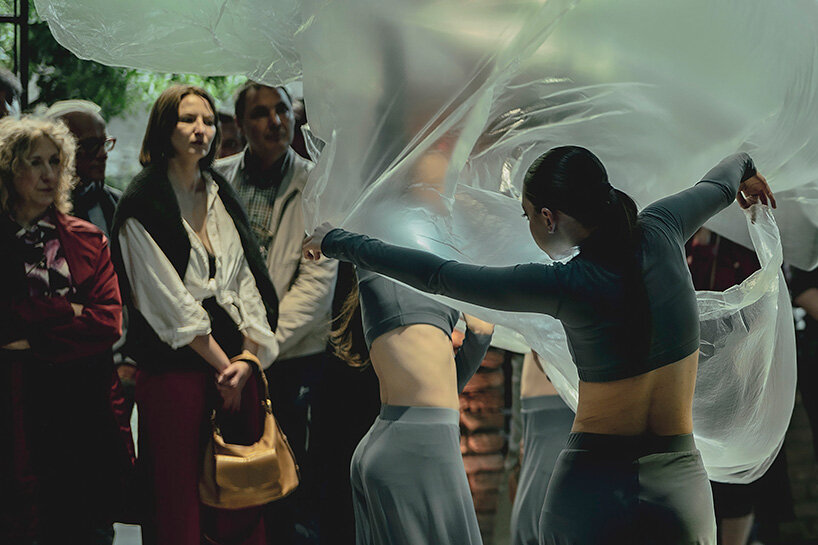
To extend these concepts beyond the printed page, the publication features integrated self-directed exercises designed to encourage readers to examine their own daily relationships with the planet. Furthermore, a comprehensive companion program is currently scheduled to debut at MASS MoCA in November 2027, accompanied by a special companion LP release distributed via Magnolia Record Store.
No Rocket Required
For Richelle Ellis and Lawrence Azerrad, the transformative insight of the Overview Effect is by no means restricted to the elite few who physically leave Earth aboard a spacecraft. It can be ignited just as powerfully by simply looking up at the night sky or cultivating a sudden, mindful awareness of the overlooked natural details surrounding us in daily life.
As Inploration demonstrates throughout its pages, humanity does not require a rocket to perceive our world with fresh eyes. The true challenge lies in sustaining that elevated perspective within our everyday routines—asking how we account for unborn generations, who we choose to include within our definition of global community, and what enduring debts we owe to the shared biosphere we inhabit.
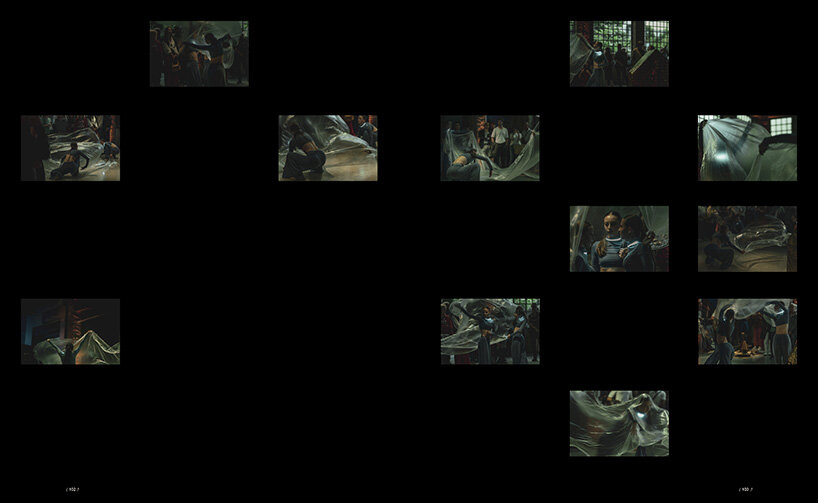
Just as the Earthrise photograph permanently altered how millions of individuals perceived their home planet decades ago, Ellis and Azerrad offer Inploration as a contemporary catalyst to spark that same profound recognition, urging a deeper, more attentive relationship with the world we already call home.