





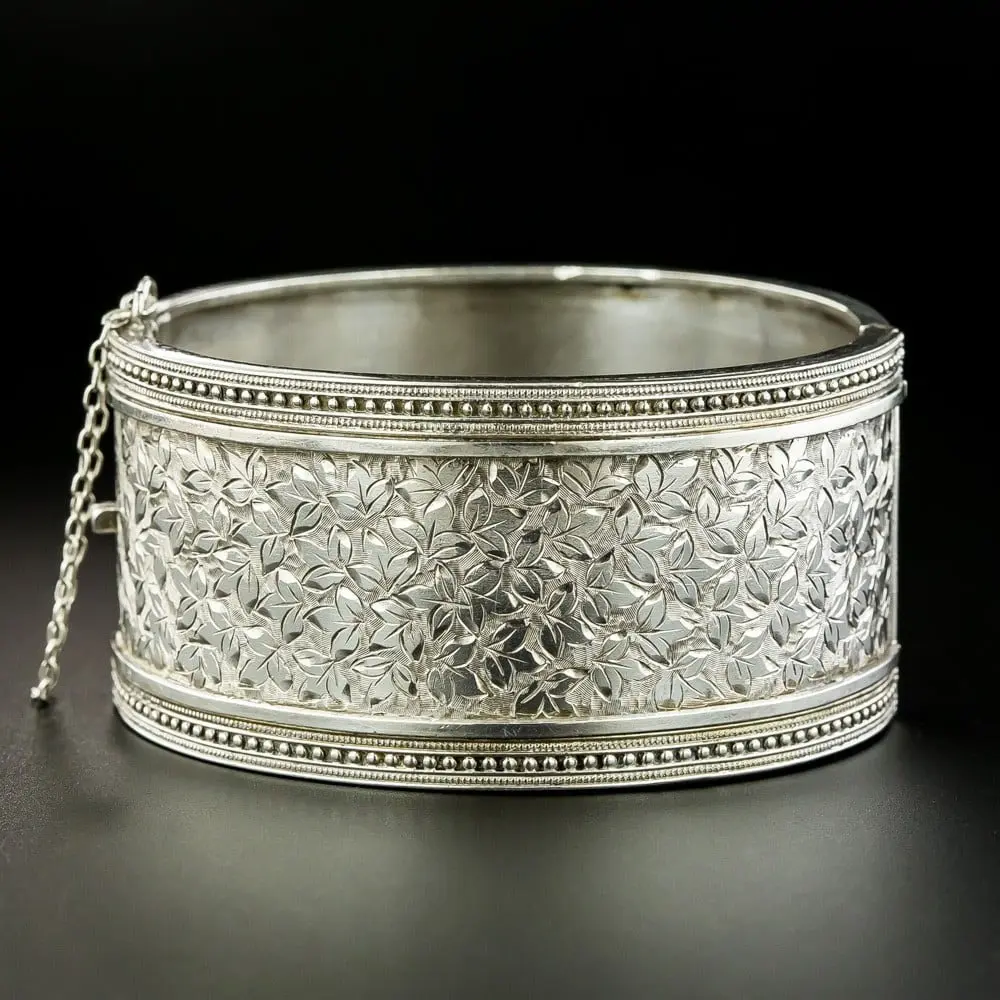
Silver—represented on the Periodic Table of the Elements by the symbol Ag—is a brilliant white metallic element characterized by physical properties that have captivated humanity for millennia. Harder than gold yet softer than copper, silver ranks second only to gold in both malleability and ductility. Because of its exceptional resistance to oxidation, it is classified as a noble metal. Furthermore, it boasts the highest thermal and electrical conductivity of all elements. Throughout history, silver has played a pivotal role in the production of fine jewelry and objets d’art, typically alloyed with other metals to provide the structural rigidity necessary to maintain intricate shapes and fine decorative details.
While modern markets often price silver far below precious counterparts like gold or platinum, dismissing its historical or economic importance would be a grave historical error. At various junctures throughout antiquity, silver was valued more highly than gold. When examining the sheer volume of metal utilized in jewelry production across human history, the use of silver outweighs all other precious metals by a wide margin. Moreover, this versatile white metal catalyzed far more technological advancements in mining and metallurgy than any of its metallic cousins. Entire empires and economies have depended on continuous access to silver deposits, and shifts in the availability of these reserves have repeatedly swung the tide of wars and shaped the course of human history.
Bronze Age Origins and Early Civilizations
The story of silver begins near the close of the 4th millennium BCE, when resourceful artisans in modern-day Turkey discovered that silver could be successfully extracted from lead ores through a metallurgical process known as cupellation. Although surviving artifacts from this nascent period are remarkably rare, those that remain offer profound insights into the sophisticated capabilities of Bronze Age silversmiths.
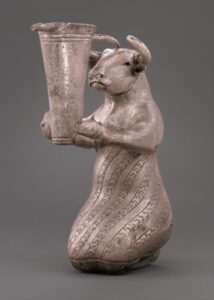
At the dawn of written history, silver served as a primary medium of exchange in Mesopotamia. Rather than circulating as standardized coins, silver functioned as a currency weighed out in bulk or shaped into portable rings. The workshop of the Mesopotamian silversmith closely mirrored—and was frequently shared with—that of the goldsmith. Although silver is slightly less ductile than gold and demands more frequent annealing during manufacturing, it can be readily cast, hammered into ultra-thin sheets, engraved, embossed, worked in repoussé, and adorned with delicate filigree and granulation. Archaeological excavations have recovered vessels, statuettes, and jewelry crafted from high-purity silver, yielding objects of remarkable softness.
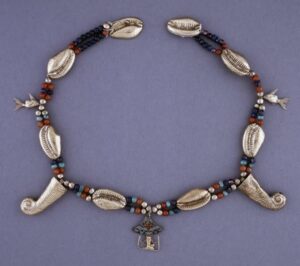
In ancient Egypt, society placed an extraordinary premium on the rare, the exotic, and the distant. Great logistical hurdles were overcome to secure Afghan lapis lazuli, arguably the most prized gemstone of the era. Silver traveled along these very same ancient trade routes, arriving in Egypt to be valued just as highly as lapis as an emblem of supreme exclusivity. While domestic gold was readily accessible from the mountains of the Eastern Desert and Nubia—and electrum likely originated from similar regional sources—pure silver had to be imported from afar. Consequently, early Egyptian silver frequently commanded a higher value than gold, rendering it suitable only for the highest strata of society.
By approximately 1600 BCE, however, the market value of silver had declined to roughly half that of gold, reflecting a substantial increase in global supply. By this era, the metal functioned as a stable, abstract currency. Its popularity waxed and waned according to shifting royal fashions; the tomb of King Tutankhamun contained almost no silver items, whereas Pharaoh Sheshonq II was entombed within a breathtaking all-silver sarcophagus.
Further north and west, the Minoans, and subsequently the Mycenaeans, operated as prolific maritime traders who handled vast quantities of silver. Consequently, numerous examples of early Greek silver jewelry have been unearthed at archaeological sites across the Greek mainland, Crete, and Cyprus. Meanwhile, the Phoenicians played a transformative role in Mediterranean civilization through aggressive colonization and widespread maritime commerce. It was the Phoenicians who initiated the large-scale exploitation of rich Spanish silver deposits, distributing the metal throughout the classical world. Their commercial incentives shattered silver’s exclusive, exotic status, elevating its availability to unprecedented levels.
Classical Antiquity: Greece, Rome, and the Power of Coinage
For both ancient Greek and Roman societies, a reliable supply of silver was an absolute economic necessity, as their monetary systems relied entirely on properly minted silver coinage. While surviving artifacts suggest that silver was employed in jewelry less frequently than gold—partly due to the high rates of remelting and recycling over the centuries—the surviving pieces demonstrate that the metal was fashioned into every conceivable ornament, including finger rings, anklets, and armlets.
Romans developed a profound fondness for niello, a surface decoration technique closely resembling enameling but executed using silver sulfate rather than vitrified glass. Niello proved significantly tougher than traditional enamel, yielding a distinctive metallic luster rather than a glassy finish. During the Roman occupation of Northern Europe, niello techniques spread rapidly across the continent, as evidenced by Anglo-Saxon archaeological finds in Britain and throughout Eastern Europe.
The Roman author and naturalist Pliny the Elder provided enduring insights into Roman life, skepticism, and consumption habits within his monumental encyclopedic work, Naturalis Historia. Pliny chronicled the exhaustive labor required to mine silver in deep subterranean shafts, noting that unlike gold, silver ore offered no sparkling surface indicators. He detailed how Spanish mines originally opened by the Carthaginian general Hannibal remained active centuries later, with underground workers operating continuously by torchlight to drain subterranean rivers of water.
Pliny also documented the evolving, extravagant fashions of Roman silver plate, contrasting them with the rugged frugality of early Roman republicans. He recorded astronomical sums paid by prominent citizens for specialized vessels chased by legendary classical artists such as Mentor, Acragas, Boëthus, and Mys. The influx of wealth and luxury following the conquests of Asia and Achaia fundamentally transformed Roman tastes, cementing an enduring cultural obsession with opulent silver displays.
Celtic Traditions and Medieval Transformations
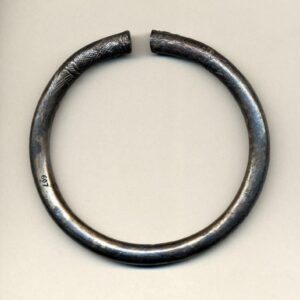
Among Celtic tribes, silver and bronze were utilized extensively for personal adornment. Highly decorated brooches, torque necklaces, and crescent-shaped ornaments known as lunulae represented the most common jewelry forms. Prior to Roman expansion, Celtic societies eschewed standardized coinage in favor of "ring money"—standardized rings of silver, copper, bronze, or gold intended strictly as a medium of exchange rather than for personal wear.
Following the collapse of Western Roman supply networks, gold grew exceptionally scarce across Europe, prompting silver to emerge as the preeminent metal for jewelry and decorative arts. Germanic jewelry of the migration period consisted primarily of functional garment fasteners such as fibulae, disc brooches, penannular brooches, and belt buckles fashioned from silver. These items were frequently gilded or inlaid with precious stones, with red garnets serving as the overwhelmingly popular choice.
Beginning around 800 CE, relentless Viking incursions along the northwest European coasts directed enormous quantities of silver northward into Scandinavia. There, native silversmiths established thriving workshops, turning silver jewelry into a enduring cultural tradition. The subsequent discovery of rich Swedish silver deposits around the turn of the first millennium further accelerated this regional preference. The aesthetic combination of black niello against bright silver—popularized centuries earlier by the Romans—was eagerly adopted by Germanic and Anglo-Saxon tribes to create high-contrast geometric engraving patterns, as famously exemplified by the 9th-century Anglo-Saxon Fuller Brooch housed in the British Museum.
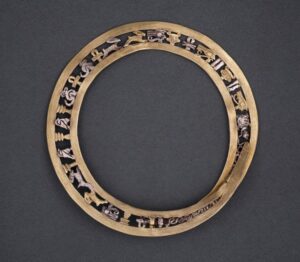
As medieval society evolved and trade routes to the Levant and Asia were re-established, gold reclaimed its traditional position as the primary metal for elite jewelry. Nonetheless, this same commercial expansion fostered a prosperous new middle class whose members began adorning themselves in fashions previously reserved exclusively for ruling elites. Those of more modest means turned readily to affordable silver jewelry. The repertoire of silver ornaments expanded beyond strictly functional fasteners toward purely decorative and symbolic pieces, including finger rings, bangles, and pendants. By the late medieval period, the trade in silver jewelry and plate became subject to strict governmental regulation through formal assaying and hallmarking systems.
The Renaissance, Baroque, and Georgian Eras of Abundance
The Renaissance witnessed a profound cultural and economic revival across Europe, spurred by population recovery following the plague, expanding urban centers in Northern Europe, and the intellectual influx of Byzantine scholars following the fall of Constantinople in 1453. However, the most transformative catalyst for silver came from the Age of Exploration. Following Christopher Columbus’s voyages, Spanish, Portuguese, French, English, and Dutch explorers flooded the Americas.
The conquests of the Inca Empire by Francisco Pizarro and the Aztec Empire by Hernán Cortés placed vast territories under Iberian control. Following the discovery of monumental silver deposits in modern-day Mexico in 1546 and across South America, massive fleets began transporting unprecedented quantities of silver across the globe. While European workshops utilized this abundant metal to sustain robust currency supplies and relatively affordable jewelry lines, a significant portion of American silver was shipped directly across the Pacific to China to purchase Asian luxury goods.
During the Baroque period spanning the 17th century, the steady stream of South American silver into European ports continued unabated. While traditional silverworking techniques remained largely unchanged, new consumer goods emerged, most notably portable timepieces frequently housed in silver cases. Crucially, this era witnessed the birth of a major technological pairing: the use of silver settings for diamonds. Intensified direct trade with India—established after European sailors bypassed traditional Arab middlemen—brought unprecedented quantities of diamonds to Europe. The cool, white luster of silver perfectly complemented the colorless brilliance of these stones.
This diamond-setting technique matured during the subsequent Georgian era. Buoyed by continuous production from South American mines and major new diamond discoveries in Brazil beginning in 1727, fine jewelry often featured gold foundations with silver-topped fronts. The characteristic cut-down collet settings of Georgian jewelry were almost universally crafted from silver to enhance the whiteness of the diamonds they encased.
Furthermore, 1777 marked the introduction of die striking for jewelry manufacture. This innovative method involved stamping and cutting precious metal components using heavy steel dies, presses, and drop hammers, which artisans then assembled by hand. This cost-effective technique heralded the dawn of mass-produced jewelry, allowing silver items to be manufactured and marketed at a fraction of the cost of entirely handmade pieces.
The Industrial Revolution and Victorian Silver
The sweeping technological advancements of the Industrial Revolution profoundly transformed Victorian jewelry production. Die-striking and mechanical stamping techniques, pioneered during the late Georgian period, were perfected throughout the 19th century, allowing silver components to be produced on an industrial scale.
Cultural shifts also dictated jewelry trends. Following Queen Victoria and Prince Albert’s acquisition of Balmoral Castle in Scotland in 1848, Scottish agate jewelry surged in popularity. True to Northern European traditions, these distinctive agate-set pieces were predominantly fabricated in silver.
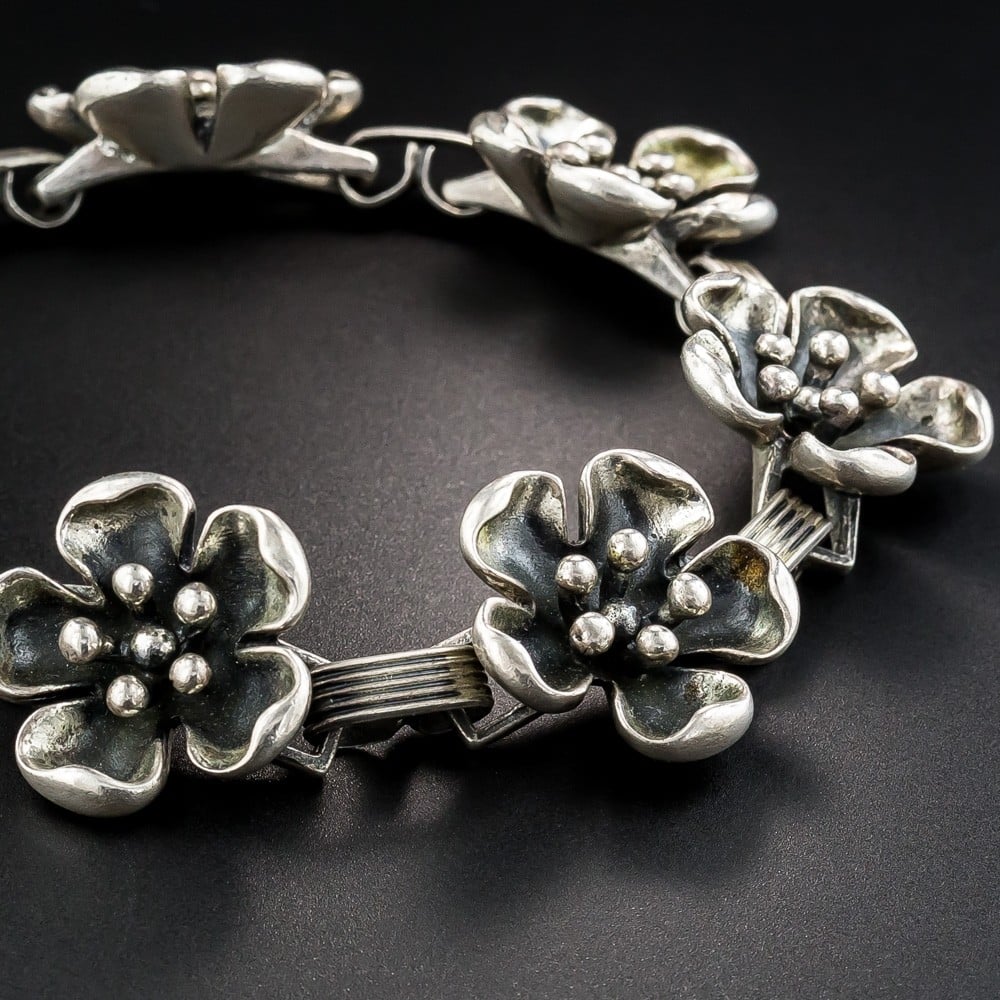
Towards the close of the Victorian era, the Arts and Crafts movement emerged as a direct aesthetic and philosophical reaction against industrial mass production. Arts and Crafts artisans prioritized artistic design and hand-craftsmanship over the intrinsic financial value of raw metals and gemstones. Rejecting faceted stones in favor of bezel-set cabochons, these designers overwhelmingly favored silver over gold, cementing silver’s enduring reputation as a noble medium for artistic expression.