The office of the United States ambassador-at-large to monitor and combat trafficking in persons is an essential diplomatic post charged with confronting some of the world’s most devastating human rights abuses. Historically, it is a sober assignment, characterized by complex international policy negotiations, interagency coordination, and human rights advocacy. It is rarely the kind of appointment that sets social media feeds ablaze or dominates late-night discourse.
That dynamic shifted abruptly when Barbera Thornhill, a Los Angeles philanthropist in her late 70s who previously worked as an interior design executive, was welcomed into the Trump administration as its latest appointee to the role. What followed was an unexpected digital maelstrom. A formal photograph of Thornhill, shared on X by a State Department official alongside an announcement welcoming her to the bureau, rapidly escalated into an internet spectacle, amassing more than 20 million views in short order.
The viral momentum intensified when Callista Gingrich, wife of former House Speaker Newt Gingrich and Donald Trump’s former ambassador to the Vatican and Switzerland, published an image on Instagram showing herself posing alongside Thornhill. The two women stood side by side in sharply tailored, coordinating royal blue skirt suits. Yet the intense public scrutiny that quickly engulfed the platforms had virtually nothing to do with Thornhill’s public service, her career history, or her policy qualifications. Instead, the focus was trained squarely on her physical appearance.
Comment threads under the posts were flooded with harsh descriptors, with users labeling the aesthetic as “botched” or “alien.” Almost overnight, the images spawned a wave of satirical memes, AI-generated video parodies, and Halloween-themed posts that grouped Thornhill with Gingrich and other prominent women in the orbit of the former president. Among those swept into the commentary was Susan Dell, the philanthropist and wife of Dell Technologies founder Michael Dell, whose own appearance during a White House visit just a week earlier had triggered an identical flurry of online critiques.
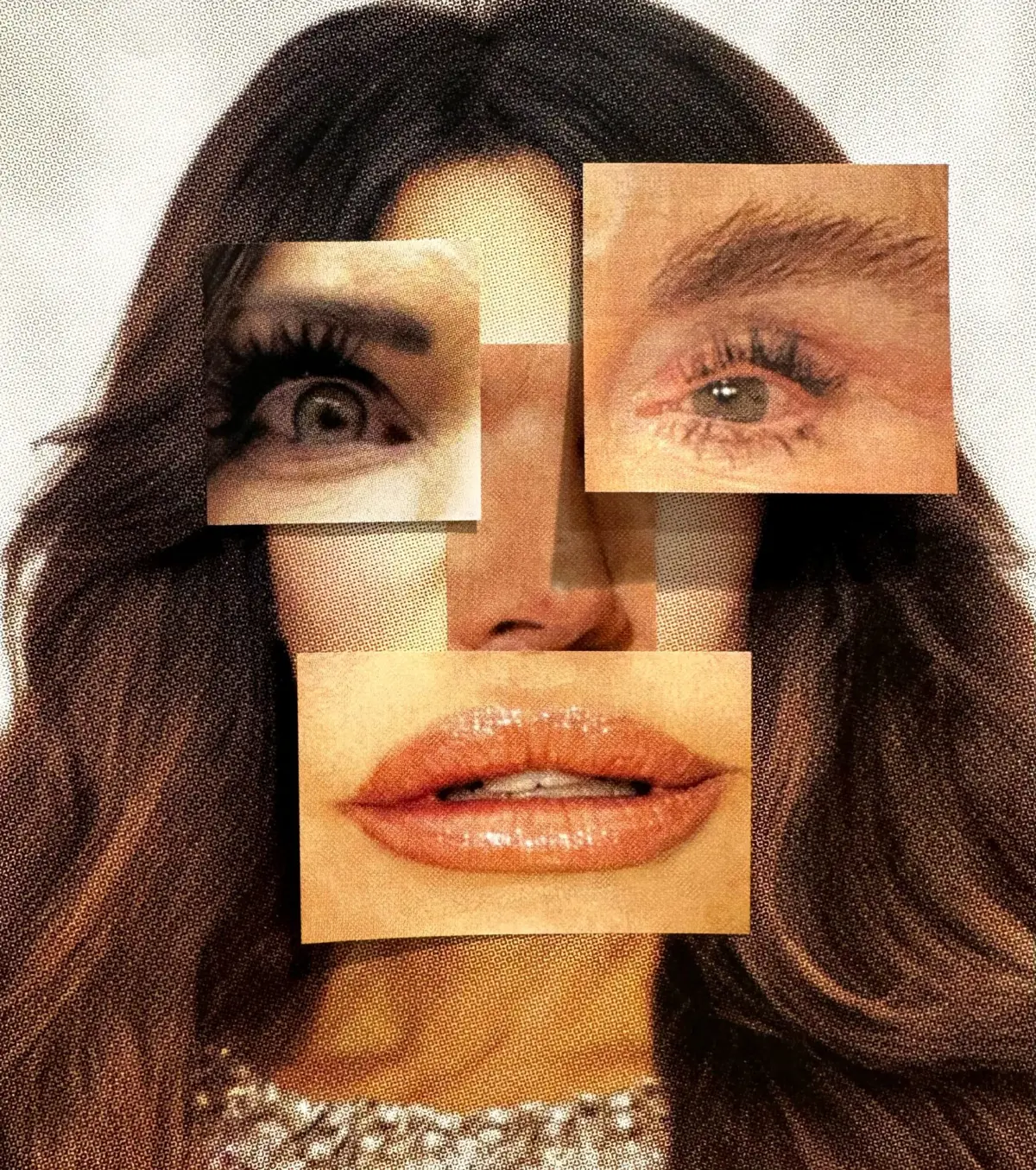
The widespread reaction brought renewed scrutiny to an aesthetic that internet commentators and cultural critics have dubbed “Mar-a-Lago face.” The look is instantly recognizable and remarkably uniform: sharply arched, darkened brows; heavily inflated lips; skin pulled taut across prominent layers of dermal fillers; and eyes tightened into a feline tilt, narrowed to a slit-like angle as if held under tension.
The backlash quickly crossed over from informal social media banter into formal political commentary. Conservative media personality Meghan McCain publicly voiced frustration with the visual narrative taking hold around right-leaning political figures, taking to X to deliver a sharp rebuke. She declared that Republicans urgently need to elevate and highlight women within the party who have not undergone bizarre or botched cosmetic procedures that distract from serious issues and invite widespread mockery across the digital landscape.
When contacted regarding the viral discussion, representatives for Susan Dell and Callista Gingrich could not be reached, while Barbera Thornhill declined to comment.
Yet beneath the biting social media insults and political hand-wringing lies a more nuanced medical and sociological question: Is this exaggerated look truly the result of poor surgical technique, or is it an entirely intentional display of modern elite status?
Dr. Terry Dubrow, the well-known Beverly Hills plastic surgeon and television personality from series like The Swan and Botched, suggests that the general public fundamentally misunderstands the mechanics of these procedures. Dubrow, whose wife Heather Dubrow stars on The Real Housewives of Orange County, notes that weaponizing cosmetic outcomes is an easy way to score partisan points, but medical assessments tell a very different story.
From a purely technical perspective, Dubrow argues, the surgeries being derided online are not clinical failures at all. In fact, he views them as executed with exceptional precision. The issue, he explains, is not that the surgeons made mistakes, but that they delivered precisely what their wealthy clientele demanded: an unapologetic, hyper-tight aesthetic designed to signal power, wealth, and exclusivity.
In certain influential circles, particularly among ultra-wealthy East Coast and Florida networks, subtlety is not the objective. Dubrow observes that this aesthetic operates as an ostentatious marker of financial and personal dominance. In these enclaves, individuals want the world to know that they possess the resources to push anti-aging interventions to their absolute limits. The governing mindset, he notes, rejects any hint of laxity or natural aging. If clients are paying top dollar for a facelift, they demand that the skin be drawn as tightly as humanly possible. If they request a brow lift, they want their brows dramatically elevated. If they undergo an upper-blepharoplasty, they insist on removing every fractional millimetre of excess skin.
Dubrow contrasts this hyper-taut aesthetic with the prevailing trends of modern Hollywood, which he characterizes as centered more around refinement, maintenance, and subtle rejuvenation designed to keep performers looking naturally rested on camera. The distinction presents a curious cultural paradox: a world where Los Angeles—frequently caricatured for its culture of conspicuous cosmetic augmentations, body contouring, and lip fillers—is framed as relatively restrained compared to the extreme facials seen among political and donor elites in Washington and Palm Beach.
Not everyone in the cosmetic industry agrees with framing this debate around political factions. Melinda Anna Farina, a New York-based facelift consultant to high-net-worth individuals known professionally as the Beauty Broker, pushes back aggressively against the idea that extreme cosmetic surgery belongs exclusively to one political party.
Farina, who maintains that she operates entirely outside the partisan political sphere, dismisses the notion that political ideology dictates how someone looks under the knife. In her view, poorly conceived, excessive cosmetic procedures exist across the entire ideological spectrum, and reducing aesthetic criticism to a partisan talking point represents a shallow distraction. She points out that flawed aesthetic judgment does not require a political party card, noting that she has encountered patients across every demographic background who have made ill-advised aesthetic choices.
Farina charges roughly $750 for an hour-long consultation, a service profiled by The New York Times, in which she guides affluent clients toward vetted plastic surgeons capable of delivering natural, anatomically sound results. Her own clinical philosophy stands in direct opposition to the exaggerated, heavily augmented appearances currently trending online. Farina operates a strictly filler-free practice, firmly rejecting artificial volume in favor of structural surgical rejuvenation that keeps clients looking like themselves rather than distorted caricatures.
For Farina, the proliferation of over-tightened, over-injected faces stems from a lack of patient education and an overreliance on unqualified influencers. Having spent decades around operating rooms—she first observed an operation at age 13 through family connections and later worked as a dental assistant—she emphasizes that structural facial work requires immense precision and restraint. She is currently documenting her own multi-surgeon facelift for an upcoming project, highlighting the extreme level of vetting that should accompany any invasive facial procedure.
Beyond the ongoing aesthetic debates, surgeons warn that the physical consequences of the more-is-more approach carry substantial clinical risks. The more aggressively a surgeon pulls facial tissue and removes skin, the higher the risk of complications. Extreme tension increases the likelihood of noticeable scarring, permanent facial nerve damage, distortion of the earlobes, and alopecia along incision lines.
It is precisely these medical risks, coupled with personal aesthetic preferences, that lead practitioners like Dubrow to turn away prospective clients seeking the hyper-pulled look. However, the commercial dynamics of private practice mean that patient demand rarely goes unanswered. When one surgeon declines to perform an extreme procedure, competing practitioners are frequently waiting to accommodate the request to keep their operating schedules full.
Whether the current public outcry will temper demand remains to be seen. Dubrow believes the intense viral mockery surrounding recent political figures may accelerate a cultural shift away from overt, exaggerated surgery. In his view, conspicuous cosmetic enhancements can quickly lose their appeal when they become the subject of relentless digital ridicule. The prominent women at the center of these controversies are not detached from public reaction; they encounter the same social media commentary as anyone else, and the negative visibility may ultimately prompt a retreat from extreme interventions.
Farina, however, takes a more straightforward view of the public obsession with the faces of high-profile women. Rather than dissecting the surgical choices of strangers from afar, she suggests that observers would be far better served by stepping back from the screen and directing their critical attention toward themselves. In an era where public appearances are instantly dissected by millions of amateur online critics, the most constructive approach is to step away from the commentary and let individuals navigate their own personal choices in private.