





The history of the diamond is a narrative woven through millennia of mystery, linguistic confusion, technological evolution, and global trade shifts. While modern society views diamonds as the ultimate symbol of enduring affection and a staple of luxury jewelry, their journey from rough, unyielding stones to the mathematically precise brilliants of today is a testament to human ingenuity. For centuries, the true nature of diamonds—their extreme hardness, directional durability, and unique cleavage properties—remained largely misunderstood, shaped instead by mythology, religious taboos, and rudimentary craftsmanship.
Pre-Roman Diamonds and Ancient Misunderstandings
The early history of the diamond is shrouded in obscurity, leaving historians to question when these remarkable stones first intersected with human civilization. A common source of confusion stems from biblical references, such as the description of the breastpiece of judgment in the Book of Exodus, which lists stones including a "diamond." However, gemological historians confirm that this is an erroneous translation of the Hebrew word yahalom—derived from halam, meaning "to beat"—and the Greek adamas, meaning "indomitable" or "invincible."
While these ancient terms undoubtedly referred to extremely hard minerals, assuming they specifically denoted diamonds is a modern projection. In classical Greek literature, philosophers like Plato used adamas without any concrete proof that actual diamonds were known to the culture. The term was likely applied to certain types of gold, non-noble metals, or perhaps corundum.
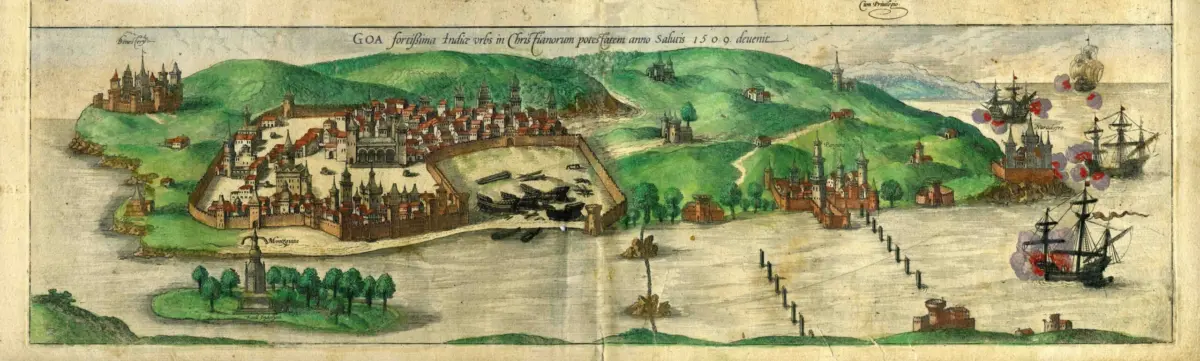
Early gemological historians lacked access to translated Sanskrit texts, obscuring India’s rich historical records. While the exact timeline of the diamond’s discovery remains unknown, its geographical point of origin is entirely certain: India. An ancient Indian text, the Arthasastra, dating back to the 4th century BC, provides the earliest definitive insight into the diamond trade. By this period, diamonds were actively known, traded, taxed, and classified by specialized experts in India, suggesting a long history of prior use.

Roman Diamonds and the Era of Uncut Stones
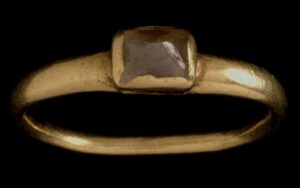
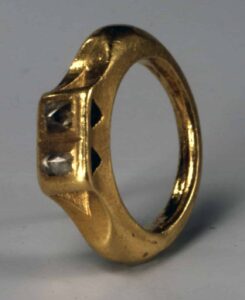
Diamonds were undeniably known to and worn by the Romans, who prized them as ring stones. Several surviving rings featuring uncut diamonds are preserved today in the collections of the British Museum. The Roman writer Pliny the Elder documented diamonds in his Naturalis Historia, describing them as the most valuable of all human possessions. Interestingly, Pliny made no mention of any fashioning or cutting of the stones, focusing instead on their peerless hardness and noting their perfect cleavage without fully understanding the mechanics behind it.
Pliny observed that these stones could resist a hammer blow so forcefully that iron would rebound and anvils would split. When diamonds did break, they fractured into minute particles that engravers utilized to cut other hard substances. However, Pliny’s accounts also included descriptions that conflicted with the actual properties of diamonds, indicating that other minerals were occasionally confused with them. Herbert Tillander, a noted historian of diamond cutting, expressed doubt that the Romans had access to top-tier crystals, as Indian suppliers naturally reserved the finest specimens for their domestic markets.
During antiquity and the early medieval period, diamonds were widely believed to possess protective powers against various misfortunes. It was long believed that these divine crystals would forfeit their mystical properties if altered from their natural state. Consequently, cutting diamonds was viewed with deep hesitation, serving as both a technical challenge and a cultural taboo.
The Introduction of Diamond Cutting and Islamic Scholarship
Following the fall of the Roman Empire, diamonds temporarily vanished from European jewelry. India remained the sole source of diamonds until the 18th century, but the disruption of trade routes with Western merchants severely choked the supply chain to Europe. Simultaneously, the spread of Christianity diminished the gem’s popularity in the West, as the new religion actively condemned the superstitious attributes historically associated with it.
Conversely, the gem retained immense popularity throughout the Indian and Islamic worlds. Historic texts from these regions offer vital clues regarding the evolution of diamond work. The Ratnapariska by Buddha Bhatta, an Indian text dating back at least to the 6th century, advised against using flawed diamonds as gems, noting they were suitable only for grinding down to polish other stones. This indicates the early production of diamond powder.
In the 10th century, the scholar Al-Biruni detailed how Indian lapidary workers and Islamic jewelers pulverized diamonds to polish other gemstones, though he noted that polishing actual diamonds with diamond dust was not yet practiced. By the 13th century, however, medieval Islamic jewelry began featuring simple table-cut diamonds, representing some of the earliest known cut stones in existence. An Indian text, the Agastimata, written shortly after the 13th century, explicitly stated that diamonds could only be polished by means of other diamonds.

European Revival and the 16th-Century Revolution
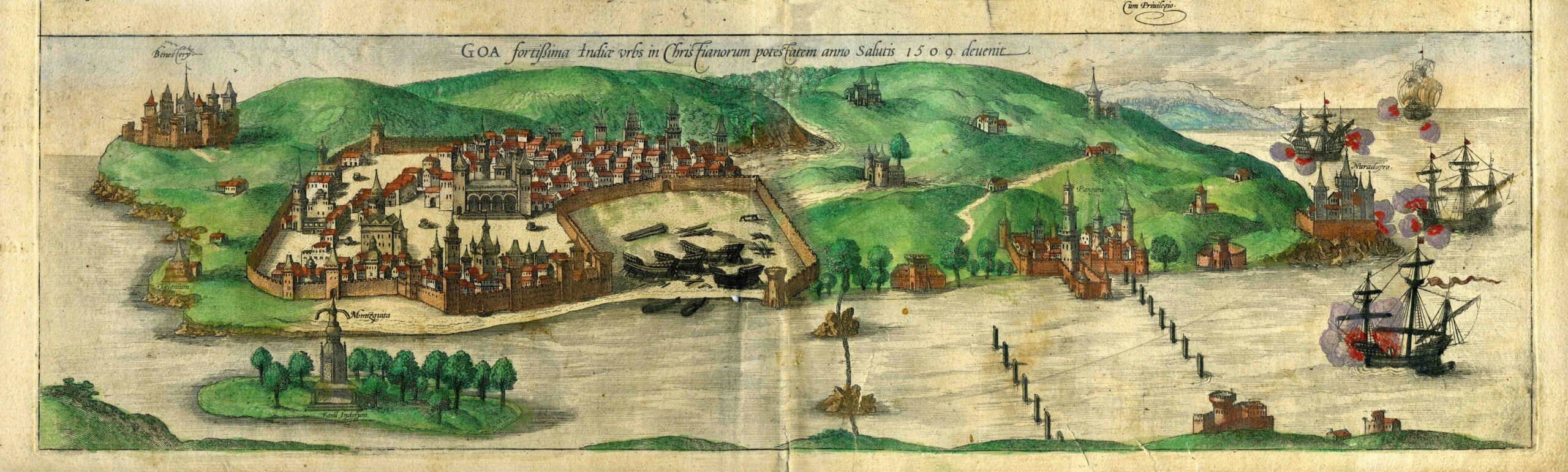
European diamond cutting likely originated in Venice shortly after 1330, following the re-opening of Eastern trade routes by Venetian merchants. Whether cutting techniques traveled directly with these imports remains uncertain, but Islamic merchants who supplied the Venetians were already familiar with cleaving and the production of diamond dust.
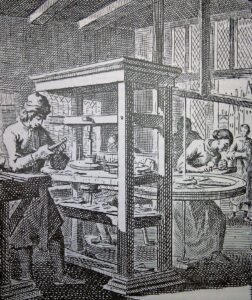
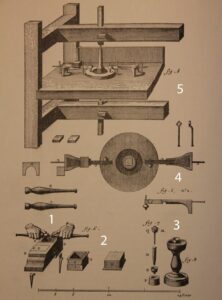
Technical limitations meant early European cutters initially focused on the superficial polishing of natural rough. However, the introduction of continuous rotary motion in craft tools during the 15th century allowed artisans to grind facets into diamonds with greater precision. As the economic center of gravity in Europe shifted northward toward the North Sea, cities like Paris, Bruges, and Antwerp emerged as vital polishing centers.
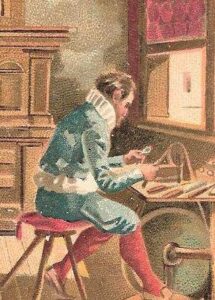
The inclusion of Jewish artisans—who had fled religious persecution in Spain, Portugal, and France—within these northern cutting communities fostered rapid innovation. By the 16th century, the traditional reverence for the natural crystal shape began to fade as cutting techniques advanced. Master goldsmith Benvenuto Cellini documented these practices in his 1568 treatises, describing how cutters rubbed two diamonds together to achieve desired shapes and utilized the resulting diamond powder mixed with oil on steel wheels to finish the stones.
Grinding, Cleaving, and the Birth of New Cuts
Understanding historical diamond cutting requires recognizing the unique physical properties of the stone. Beyond being the hardest substance on earth, diamonds possess "directional hardness," meaning they are harder in certain crystallographic orientations than in others. Furthermore, while diamonds score highest on the hardness scale, they possess perfect cleavage, allowing smooth fractures to occur when force is applied along specific crystallographic planes.
While the practice of cleaving diamonds to create engraving tools dates back to antiquity, its application to gem cutting emerged as a post-medieval invention, noted by de Boodt in 1600 and confirmed by Jean-Baptiste Tavernier in his 1665 accounts of Indian mining practices. The integration of cleaving, along with the later addition of diamond sawing—where a thin wire dressed with diamond powder and oil was drawn across the stone—completed the core techniques of modern diamond processing.
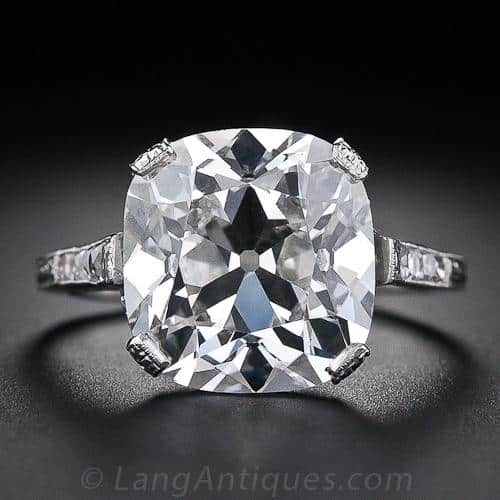
Throughout the 17th and 18th centuries, cutting styles evolved rapidly. The Rose cut grew increasingly popular and standardized, featuring a flat base and a domed crown covered in triangular facets. Meanwhile, the demands of Baroque-era candlelit dinners sparked the creation of early brilliants, designed to maximize sparkle. While these early brilliants lacked the symmetry of modern cuts, they laid the groundwork for future advancements.
The Brazilian Discovery and Modern Industrialization
For centuries, India remained the world’s primary diamond provider. However, around 1725, diamonds were discovered in the alluvial deposits of Minas Gerais, Brazil, in a region later named Diamantina. The subsequent influx of rough diamonds from Brazil dramatically shifted the global market, causing rough diamond prices to drop to roughly 30 percent of their previous levels. This democratization of the gem allowed diamonds to reach a broader segment of society beyond European nobility.
As Brazilian production eventually declined in the mid-19th century, the discovery of the Eureka diamond in South Africa in 1866–1867 revitalized the struggling cutting industries of Amsterdam, London, and Antwerp. This new supply of rough stones coincided with major industrial innovations.
The early 1870s saw the invention of the steam-driven bruting machine by Henry D. Morse and Charles M. Field, followed by electric bruting machines in 1891 and the motorized diamond saw in 1900. These technologies transformed an ancient, labor-intensive craft into a modern, mechanized industry. Innovations such as the Asscher cut in 1902 and the Baguette cut in 1912 expanded the repertoire of available designs, steering the industry toward the standardized round brilliant cut that dominates the modern market today.