




Silver has occupied a central place in human civilization for millennia, serving as a vital medium of exchange, a cornerstone of technological innovation, and a preferred medium for master artisans. While modern markets often pit silver as a secondary precious metal far behind gold or platinum in monetary value, historical perspectives reveal an enduring legacy that frequently eclipsed gold in sheer utility, economic impact, and cultural significance.
Represented on the Periodic Table by the chemical symbol Ag, silver is a brilliant white metallic element. It is harder than gold, softer than copper, and ranks second only to gold in both malleability and ductility. Its exceptional thermal and electrical conductivity, combined with its high resistance to oxidation—earning it classification as a noble metal—have made it indispensable across countless industries. Historically, the metal has played a profound role in the production of fine jewelry and objets d’art. Because pure silver is inherently soft, it is traditionally alloyed with other metals to provide the structural integrity required to maintain intricate shapes and fine decorative details.
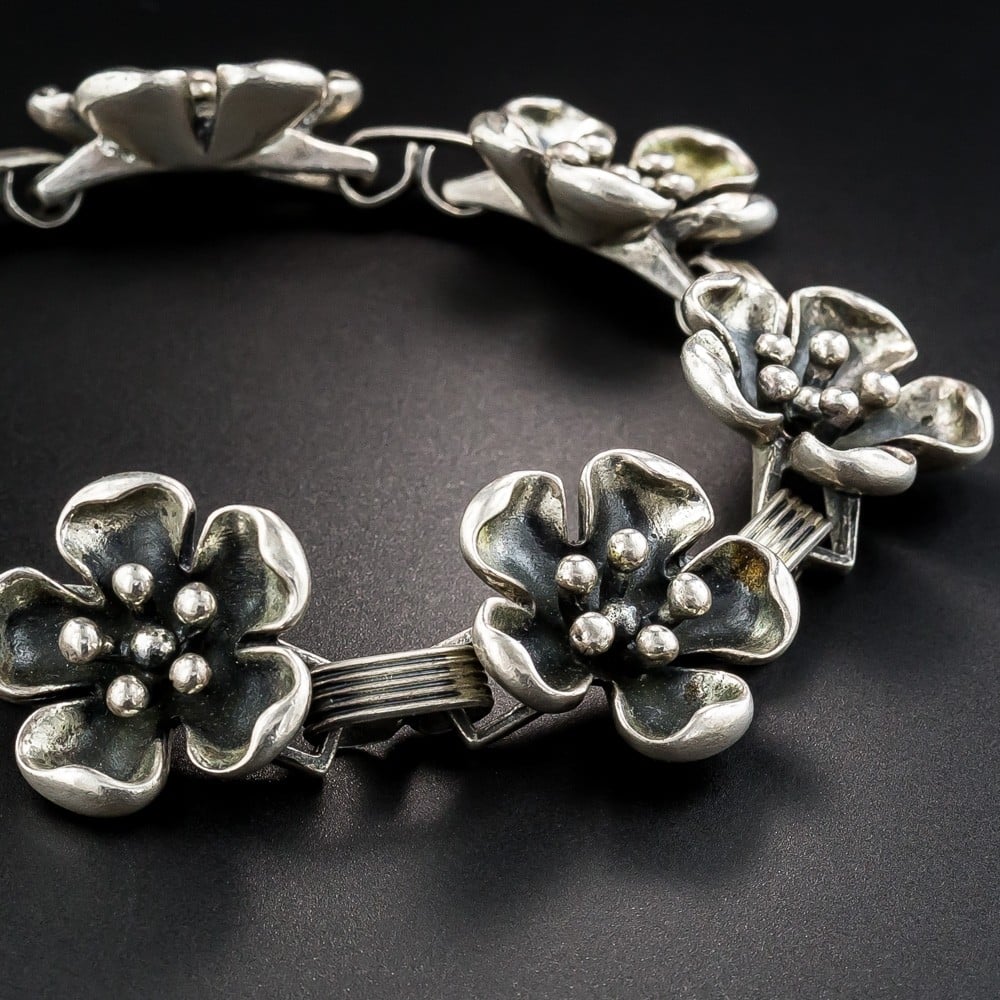
Despite its current affordability relative to other precious metals, dismissing silver as unimportant ignores the historical record. At various points in antiquity, silver was valued more highly than gold. Furthermore, the total volume of silver utilized in jewelry throughout history far outweighs that of any other precious metal. This versatile white metal also spurred significantly more technological breakthroughs in mining and metallurgy than its metallic cousins, while the control of silver deposits has repeatedly shifted geopolitical balances, influenced wars, and shaped the course of human history.
Bronze Age Origins and Early Civilizations
The story of silver stretches back to the closing centuries of the fourth millennium BC, when innovative inhabitants of modern-day Turkey discovered a method for extracting silver from lead ores through a process known as cupellation. Although few artifacts from this nascent period survive, those that remain provide remarkable insight into the sophisticated capabilities of Bronze Age silversmiths.
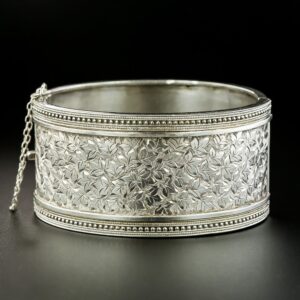
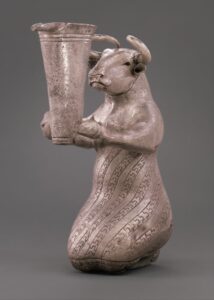
As written history dawned in Mesopotamia, silver emerged as a primary currency. Rather than circulating as standardized coins, the metal was weighed out or circulated in the form of rings. The workshop of a Mesopotamian silversmith closely mirrored—and was often indistinguishable from—that of the goldsmith. Although silver is slightly less ductile than gold and demands more frequent annealing during manufacturing, it can be seamlessly cast, hammered into translucent sheets, engraved, embossed, worked in repoussé, and decorated with delicate filigree and granulation. Archaeological discoveries of ancient vessels, statuettes, and jewelry confirm that high-purity silver was regularly utilized to craft these delicate, albeit soft, objects.
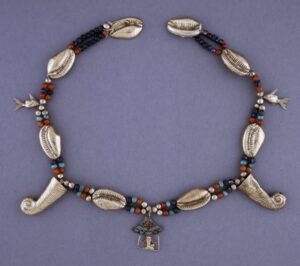
In ancient Egypt, where society placed an immense premium on the rare and exotic, silver was treated as an exceptionally exclusive commodity. While gold was readily accessible from local sources in the mountains of the Eastern Desert and Nubia, pure silver had to be imported along arduous trade routes, such as those that brought prized lapis lazuli from Afghanistan. Consequently, silver was initially valued above gold and reserved strictly for the ruling elite.
By approximately 1600 BC, however, the expanding global supply caused the value of silver to drop to roughly half that of gold, establishing it as a stable, abstract currency. Its popularity subsequently waxed and waned with shifting fashions. Notably, the tomb of King Tutankhamun contained very few silver items, whereas Pharaoh Sheshonq II was interred in a magnificent all-silver sarcophagus.
Across the Aegean, the Minoans and, to an even greater extent, the Mycenaeans engaged extensively in Mediterranean trade, integrating silver deeply into their material culture. Archaeological excavations across the Greek mainland, Crete, and Cyprus have yielded substantial quantities of early Greek silver jewelry. Meanwhile, the Phoenicians played a transformative role by colonizing and trading across the Mediterranean, initiating the large-scale exploitation of Spanish silver deposits. Their commercial network distributed the metal throughout the classical world, pulling silver away from its previously exclusive status and elevating its availability to unprecedented levels.
Classical Innovations and Roman Luxury
For both Greek and Roman societies, a reliable supply of silver was an absolute necessity, serving as the literal foundation of their monetary systems through properly minted silver coinage. While gold dominated the surviving record of classical jewelry—partly due to the continuous remelting and recycling of precious metals—surviving silver artifacts demonstrate its use across a full spectrum of personal adornment, including finger rings, anklets, and armlets.
The Romans developed a particular fondness for niello, a surface decoration technique resembling enameling but executed using silver sulfate rather than glass. Niello yielded a much tougher finish with a distinctive metallic luster rather than a vitreous one. During the Roman occupation of Northern Europe, the technique spread widely across the continent, appearing prominently in Anglo-Saxon finds in Britain and throughout Eastern Europe.
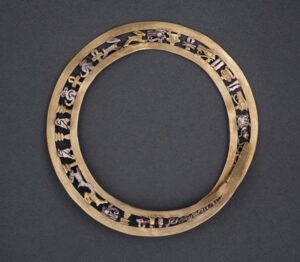
The Roman fascination with silver is vividly captured in the writings of Pliny the Elder. In his seminal work Naturalis Historia, Pliny details the obsession with silver ore, noting that it was found exclusively in deep subterranean shafts without the surface indicators associated with gold. He documented the staggering scale of Roman extraction, observing that the Carthaginian mines opened by Hannibal in Spain—such as the mine known as Bæbelo—yielded three hundred pounds of silver daily, supported by teams of workers constantly bailing water by torchlight.
Pliny also documented the extreme lengths of Roman luxury and the fluctuating caprices of fashion. He recorded the astronomical prices paid for silver plate crafted by legendary artisans such as Mentor, whose works commanded thousands of sesterces per pound, and lamented the evolution of Roman tastes from the austere frugality of early military commanders to an era where aristocratic households adorned their sideboards, tableware, and even travel carriages with lavishly chased silver.
Celtic, Medieval, and Renaissance Transformations
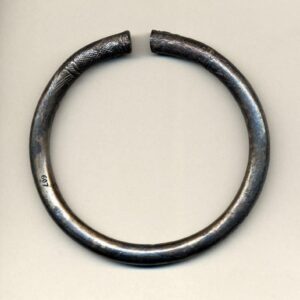
To Celtic tribes across Europe, silver and bronze were the primary metals of choice for personal ornamentation. Elaborate brooches, torcs, and crescent-shaped lunulae stood as the most common expressions of this craft. Prior to Roman contact, the Celts relied on "ring money"—standardized rings of silver, copper, bronze, or gold used exclusively as a medium of exchange rather than for wear.
With the collapse of Roman supply lines, gold grew scarce in Europe, propelling silver to the forefront of jewelry production. Germanic jewelry during this migration period focused heavily on functional items such as fibulae, disc brooches, penannular brooches, and belt buckles, usually crafted from silver and frequently gilded or inlaid with garnets.
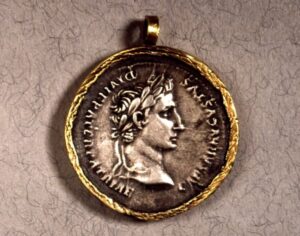
Following the Viking expansions around 800 AD, vast quantities of silver flowed into Scandinavia, fueling a flourishing tradition of silversmithing. This tradition was further accelerated by the discovery of rich Swedish silver deposits around the turn of the first millennium. The Roman appreciation for niello was readily adopted by Germanic tribes, who utilized the stark black-and-white contrast to accentuate intricate native engraving patterns, as exemplified by masterpieces like the ninth-century Anglo-Saxon Fuller Brooch housed in the British Museum.
As medieval society evolved and Eastern trade routes reopened, gold reclaimed its status as the premier metal for elite jewelry. However, this same commercial expansion nurtured a prosperous new middle class eager for personal adornment. Those operating on a tighter budget turned to silver, broadening the versatility of jewelry design beyond purely functional pieces into decorative and symbolic items, including finger rings, bangles, and pendants. By the close of the Middle Ages, the trade in silver items became heavily regulated through the establishment of formal assaying and hallmarking systems.
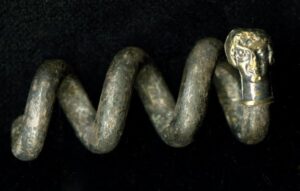
The Renaissance brought further economic vitality, fueled by the revival of trade centers in Northern Europe and the influx of classical knowledge following the fall of Constantinople. The dawn of the Age of Discovery fundamentally transformed the global silver market. Following Christopher Columbus’s journeys to the Americas, Spanish conquistadors such as Pizarro and Cortés subdued the Incan and Aztec empires, unlocking immense mineral wealth. The discovery of massive silver deposits in modern-day Mexico in 1546 unleashed a torrent of silver into global commerce, supplying European markets while simultaneously funding direct trade with China for Asian luxury goods.
Baroque, Georgian, and Victorian Eras
Throughout the Baroque period of the seventeenth century, South American silver continued to pour into European markets. While fundamental silversmithing techniques remained largely unchanged, new cultural trends emerged. Portable timepieces became a major novelty, frequently housed in silver cases. More significantly, silversmiths began utilizing silver settings for diamonds. This white metal perfectly complemented the lack of color in diamonds, which were arriving in unprecedented quantities from newly established trade settlements on the Indian peninsula.
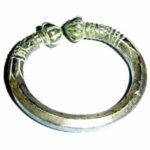
This trend matured during the Georgian era. In addition to Indian imports, new diamond fields were discovered in Brazil in 1727, fueling an explosion in fine jewelry production. While many high-end pieces combined gold bases with silver-topped fronts, all-silver constructions remained common, particularly in the characteristic cut-down collet settings designed to maximize the white brilliance of the diamonds.
The late eighteenth century witnessed a manufacturing revolution with the introduction of die striking in 1777. By using presses, drop hammers, and metal dies to stamp and cut out components that were subsequently assembled by hand, workshops could produce jewelry at a fraction of the cost of traditional handmade items. This technique democratized the jewelry market, allowing large quantities of affordable, mass-produced silver pieces to reach everyday consumers.
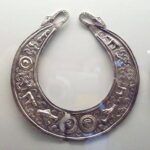
The Industrial Revolution of the Victorian era brought further mechanization to silver manufacturing, perfecting stamping and die striking techniques. Regional trends also flourished, such as the craze for Scottish agate jewelry sparked by Queen Victoria and Prince Albert following their acquisition of Balmoral Castle in 1848, which was predominantly executed in silver.
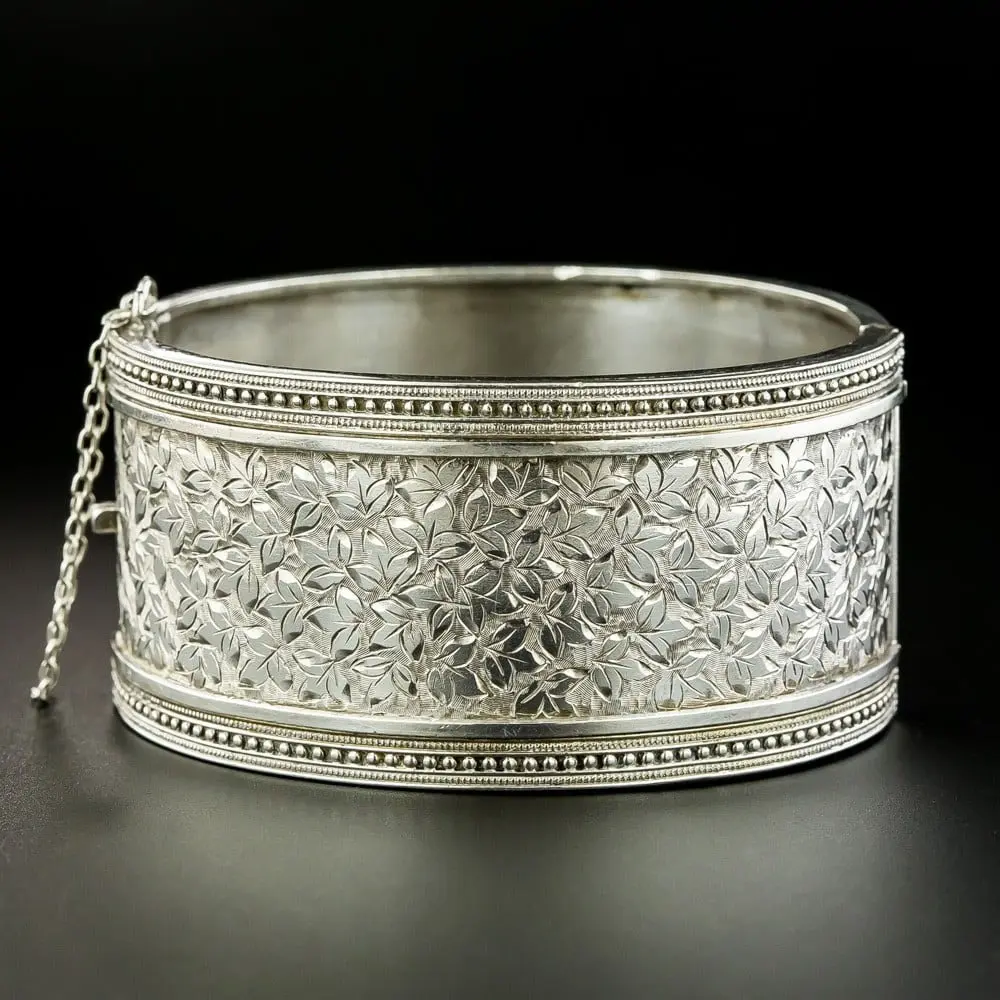
Toward the end of the Victorian period, the Arts and Crafts movement emerged as a direct aesthetic rebellion against industrial mass production. Artisans of this sub-movement prioritized artistic design and handcraftsmanship over the intrinsic financial value of raw materials. Rejecting heavily faceted stones in favor of bezel-set cabochons, Arts and Crafts jewelers overwhelmingly favored silver over gold, ensuring that the ancient metal retained its vital, creative role at the threshold of the modern era.