





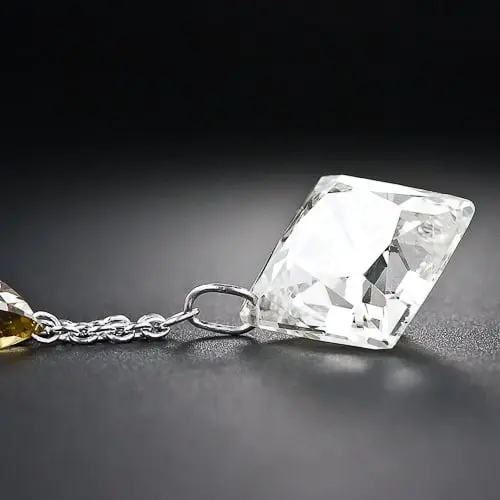
In the specialized world of gemology and mineralogy, the way a gemstone interacts with light is critical to its identification, evaluation, and overall aesthetic appeal. Among the various classifications used by gemologists to describe a stone’s surface reflection—ranging from vitreous and greasy to pearly and metallic—few terms carry as much historical weight or visual impact as "adamantine." Most commonly associated with diamonds, this exceptional quality defines a brilliant, highly reflective finish that has captivated jewelers, scientists, and collectors for centuries.
To understand adamantine luster, one must look closely at the optical properties of the minerals that exhibit it. In gemological terms, adamantine luster is specifically used to describe the brilliant, almost oily or diamond-like reflection seen in gems that possess a high Refractive Index, typically falling between 1.9 and 2.5. The Refractive Index measures how much light is bent, or refracted, as it enters a material. Because gems with an adamantine luster bend light so dramatically, they are able to return a tremendous amount of brilliance and fire to the observer’s eye, setting them apart from stones with standard vitreous, or glass-like, lusters.
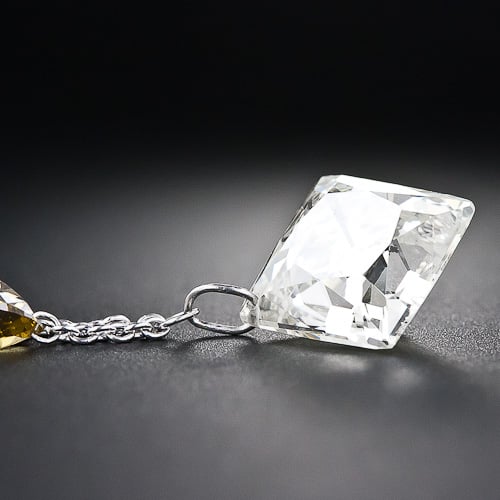
The etymology of the word offers a fascinating glimpse into how ancient cultures perceived these extraordinary materials. The term adamantine originates from the ancient Greek word adamastos, which translates literally to "untameable" or "invincible." Throughout history, the root word "adamant" was widely used in literature, science, and everyday language to describe anything composed of an exceptionally hard substance, whether it was a diamond or another remarkably durable mineral. Over time, the linguistic evolution bridged the gap between physical durability and optical brilliance, as the hardest stones known to humanity frequently displayed the most striking surface lusters.
While diamonds remain the quintessential standard for an adamantine luster, they are not the only minerals that flirt with this high tier of optical brilliance. In many instances, gemologists encounter stones that exhibit what is formally classified as a subadamantine luster. This category describes a reflective quality that is slightly less intense than that of a diamond, yet still noticeably brighter and more brilliant than a standard vitreous finish.
A prime example of a gemstone that falls into this nuanced category is zircon. While zircon is celebrated throughout the gem and jewelry industry for its remarkable dispersion—the ability to split white light into its spectral colors, creating flashes of rainbow fire—its overall surface reflection is traditionally categorized as subadamantine. Despite sitting just below the strict optical threshold of a diamond, zircon still commands immense respect from lapidaries and gemologists for its fiery appearance and impressive refractive properties.
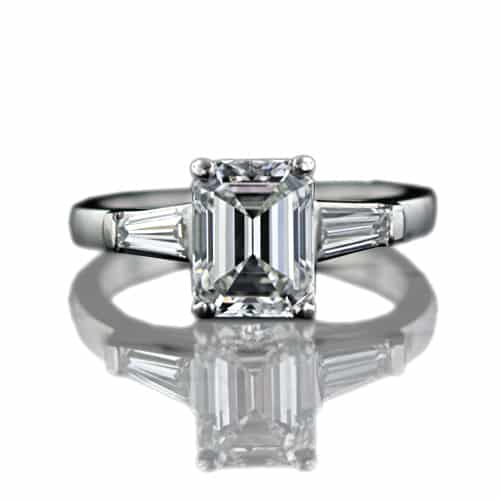
The distinction between adamantine and subadamantine lusters highlights the intricate precision required in gemological identification. When examining a cut and polished stone, experts do not rely on color or size alone; instead, they observe how light plays across the facets, evaluating the sharpness of the reflections and the depth of the brilliance. An adamantine luster projects a uniquely intense, adamantine flash that immediately signals to an experienced eye the presence of a high-refractive-index material.
As the scientific study of gemstones has evolved, terms like adamantine have remained foundational to the vocabulary of mineralogists and jewelry professionals. By bridging precise optical measurements like the Refractive Index with centuries-old linguistic traditions rooted in the concept of unyielding hardness, the term continues to capture the unique dual nature of these remarkable minerals—materials that are as physically resilient as they are visually breathtaking.