





Zenith, the storied Swiss watchmaker founded more than a century ago and globally celebrated for its groundbreaking El Primero high-beat chronograph movement, is preparing to undergo a profound structural overhaul. Owned by luxury conglomerate LVMH, the historic brand is facing years of persistent financial losses that have forced leadership to enact a dramatic pivot. The company plans to significantly reduce its workforce, scale back production volume, and drastically alter its distribution model to reposition itself exclusively as a low-volume, high-horology watchmaker by the year 2029.
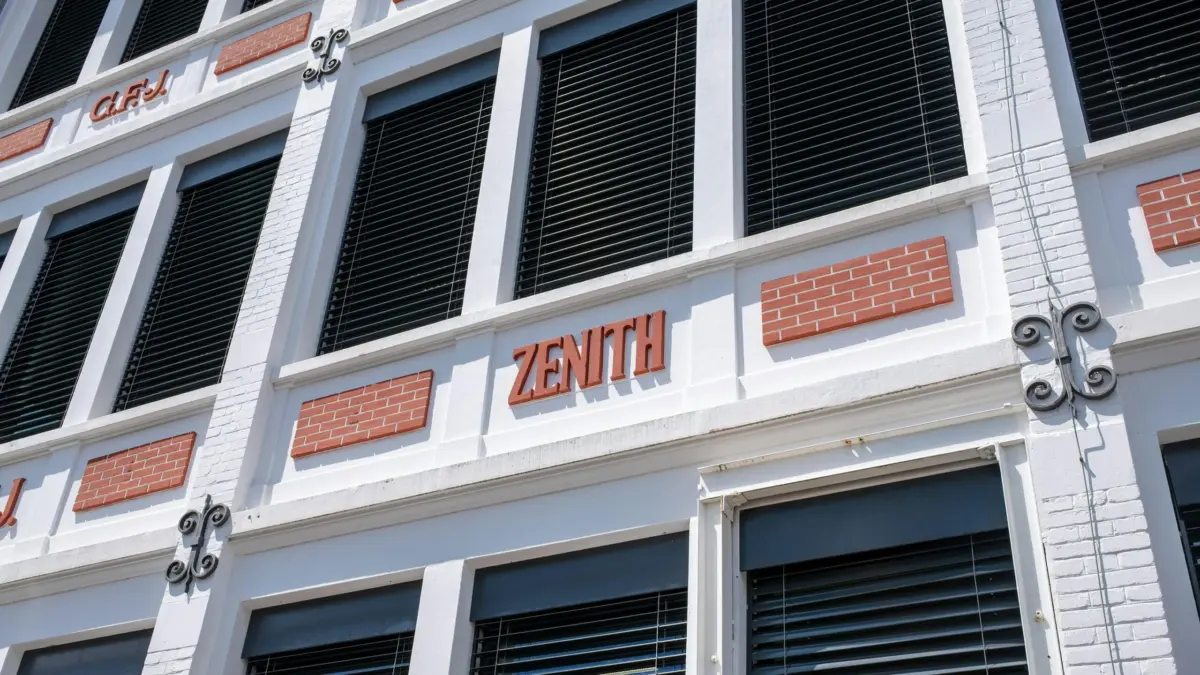
The sweeping transformation was officially communicated to employees this week by Zenith Chief Executive Officer Benoit De Clerck during an address at the brand’s historic headquarters in Le Locle, Switzerland. Founded by visionary watchmaker Georges Favre-Jacot in 1865, the manufacture now faces the grim prospect of eliminating up to 100 jobs, which represents approximately half of its total workforce in Le Locle. Furthermore, as part of the broader multi-year strategy to successfully complete the reorganization, leadership warned that another 100 positions could potentially be cut, including the complete dismantling and restructuring of the brand’s international team.
In the wake of the CEO’s announcement, corporate management and executive teams have entered a formal three-week "consultation process" with employees to discuss the terms of the restructuring and upcoming job losses. The discussions are happening under strict observance of Swiss labor protocols. Meanwhile, Unia, the prominent Swiss employees’ trade union representing the affected manufacturing workers, is scheduled to meet with staff next door and join management at the consultation table. Individuals familiar with the internal developments have spoken strictly on the condition of anonymity, as they are not authorized to make public statements while negotiations are ongoing.

In an official corporate statement, Zenith management acknowledged the turbulent road ahead. "We confirm that a staff consultation process was initiated today concerning a proposed strategic repositioning of the Maison," the company said. A company spokesperson added a note of caution regarding ongoing communications, stating, "Out of respect for this process and for the employees with whom discussions are being held, we will refrain from providing any further information until the consultation process has been concluded."
This painful contraction at Zenith underscores a broader, more systemic wave of restructuring sweeping across the elite Swiss watchmaking sector. Across the industry, legacy brands are struggling to navigate a punishing economic landscape marked by a persistently strong Swiss franc, newly imposed U.S. import tariffs, and a pronounced softening of consumer demand in historically vital markets such as China, Greater Asia, and the Middle East.
Zenith’s core catalog has traditionally focused on the competitive mid-tier price segment, generally ranging from roughly CHF 7,000 to CHF 12,000. In recent years, however, demand within this category has experienced a sharp decline. Consumers and major watchmaking houses alike have increasingly gravitated toward ultra-exclusive, higher-priced timepieces produced in much more restricted quantities. Consequently, the extensive production capacity built into Zenith’s sprawling Le Locle manufacturing facilities has remained significantly underutilized, creating an unsustainable financial burden for the company.

While Zenith has enjoyed a degree of operational synergy by supplying its world-renowned movements—most notably the legendary El Primero caliber—to fellow LVMH luxury stablemates such as Tiffany & Co., Hublot, and Bulgari, these inter-group orders have proven insufficient to plug the widening financial deficit. Moving forward, the brand will continue to supply movements to its sister companies amidst the ongoing reorganization. However, it is expected to phase out production of numerous core commercial catalog collections, including prominent mainstays within the Chronomaster, Defy, and Pilot lines.
In place of these volume-driven lines, the revamped company intends to concentrate its resources entirely on haute horology product categories. This includes high-end creations inspired by pieces like its GPHJ award-winning GFJ models, which proudly bear the initials of the company’s visionary founder, Georges Favre-Jacot.
News of the restructuring first broke publicly through Swiss newspaper Le Temps, which obtained and published a detailed transcript of CEO Benoit De Clerck’s candid address to his workforce. In the leaked transcript, De Clerck articulated the stark economic realities confronting not just Zenith, but a wide swath of the broader Swiss timepiece manufacturing industry.

"All of us in our segment, which is described as mid-range, are going through a very difficult period," De Clerck told his employees, according to Le Temps. "You have seen it in recent months, with the many announcements by our competitors, including right here in Le Locle a few days ago with Montblanc. The strong franc, US tariffs, and the decline of key markets such as the Middle East and Asia: this is not a passing patch of turbulence; the market has changed for the long term. Zenith is not immune to this situation. Yet our house has real strengths to offer: our history, our expertise, our exceptional calibers."
Despite the impending job losses and the wind-down of traditional product lines, sources close to the company indicate that certain vital operational sectors will remain fully intact. Chief among these is Zenith’s extensive after-sales service and repair infrastructure. The brand has long maintained a formidable reputation for its capacity to service, repair, and restore virtually every mechanical watch or clock produced across its more than 100-year history. To support this commitment, the Le Locle manufacture houses an enormous inventory containing more than one million individual components dedicated exclusively to the repair and refurbishment of vintage models.
Zenith’s corporate history has rarely followed a smooth trajectory, having endured multiple periods of intense volatility long before its acquisition by LVMH in 1999. During the height of the quartz crisis in the 1970s, the brand was owned by the U.S.-based Zenith Radio Corporation of Chicago. At the time, corporate American ownership ordered the historic Swiss watchmaker to completely abandon mechanical movement production and pivot entirely to manufacturing electronic quartz movements.

Defying direct corporate instructions, Zenith’s enterprising chief movement engineer, Charles Vermot, took extraordinary risks to preserve the brand’s mechanical legacy. In secret, Vermot hid production stamps, technical blueprints, machinery plans, and critical components for the El Primero chronograph in a secluded attic space within the Le Locle manufacture. That act of quiet defiance ultimately saved the company. Years later, when major luxury volume brands like Rolex and Ebel desperately needed a reliable, high-frequency automatic chronograph movement for their own flagship collections, Zenith was uniquely positioned to supply them with the El Primero, pulling the brand back from the brink of extinction.
The looming redundancies and strategic shift at Zenith arrive amid a broader wave of workforce reductions rippling across the Swiss watchmaking landscape. Similar cost-cutting measures and restructuring initiatives have been reported at several other prominent Swiss names, including IWC, Montblanc, Chopard, and Breitling. Industrial component suppliers feeding the broader watch ecosystem are feeling the pinch as well. To ensure the survival of critical supply chains, high-end titans such as Audemars Piguet, Rolex, Patek Philippe, and Richemont have increasingly found themselves forced to invest in or outright acquire independent component manufacturers.
Though Swiss watch exports continue to achieve record cumulative financial values hovering around CHF 25 billion annually, total production volumes have nearly halved over the past decade. This downward trend in sheer unit numbers has severely squeezed entry-level and mid-tier watch brands that rely heavily on economies of scale.

"Zenith is also held back by more structural difficulties that no longer allow it to turn these strengths into lasting performance," De Clerck told his staff during the Le Locle address. He pointed directly to the pressures of competing against larger houses with vastly superior marketing budgets, alongside an industrial and commercial framework originally sized for production volumes that far exceed current sales realities—a mismatch that continues to weigh heavily on the company’s operating costs.
The formal consultation period involving Zenith employees and union representatives is scheduled to run through November 12. Emphasizing that no enterprise can sustain indefinite financial losses, De Clerck framed the painful restructuring not as a retreat, but as a deliberate choice for survival. By fundamentally reshaping its business model and ascending firmly into the high-end luxury sphere, Zenith management insists the brand is actively choosing long-term recovery.
The sweeping changes at Zenith also coincide with a broader series of high-level executive shuffles across the wider LVMH watchmaking division. These corporate shifts include the departure of senior managers overseeing the niche Daniel Roth and Gérald Genta brands, a leadership change at TAG Heuer, and the strategic appointment of former Audemars Piguet CEO François-Henri Bennahmias as an external consultant for Hublot, which has likewise faced a recent cooling in commercial performance.