





For enthusiasts tracking the fluid and often unpredictable currents of the vintage watch market, navigating the global auction landscape requires a keen eye, a healthy sense of curiosity, and occasionally a willingness to embrace a bit of horological mystery. In this week’s edition of the market column, collectors are treated to an eclectic mix of museum-worthy provenance, mid-century industrial quirks, and classic dive watch design. Beyond the standard crop of stainless steel sports models, the market continues to offer up fascinating anomalies, ranging from high-pedigree complications tied directly to watchmaking royalty to lesser-known jewelry pieces that defy easy categorization.
As is often the case when surveying global sales rooms and specialized dealers, the journey begins with a quick look backward at previous tracking. Recent weeks have seen mixed results across various platforms: a Patek Philippe Calatrava reference 5107 successfully changed hands for €13,500, while an Omega Deville Emerald found a buyer at a modest $650. Meanwhile, other notable lots, such as an Orvis Solunagraph and a LIP Mach 2000 chronograph, have continued to cycle through their respective auction blocks, illustrating the wide valuation spectrum that defines the contemporary vintage collecting scene.

For those whose tastes extend beyond horology into the broader realms of pop culture memorabilia, the auction world currently offers its own peculiar distractions. Chief among them is a comprehensive sale dedicated to items from the collection of Paul Reubens—better known to generations as Pee-wee Herman. Appropriately titled "Paul Reubens’ Big Auction," the event features a wide array of eccentric objects, including a replica bicycle from Pee-wee’s Big Adventure complete with a 2011 Visionary Spike TV Scream Award.
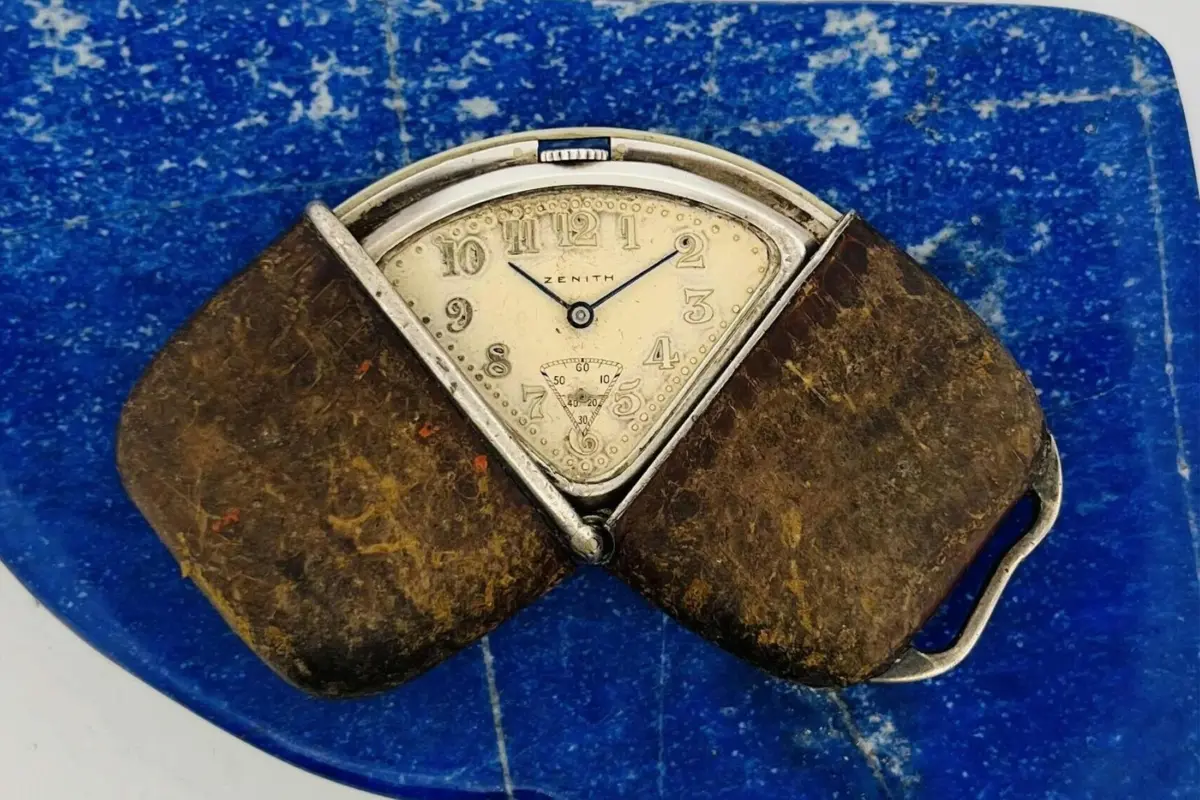
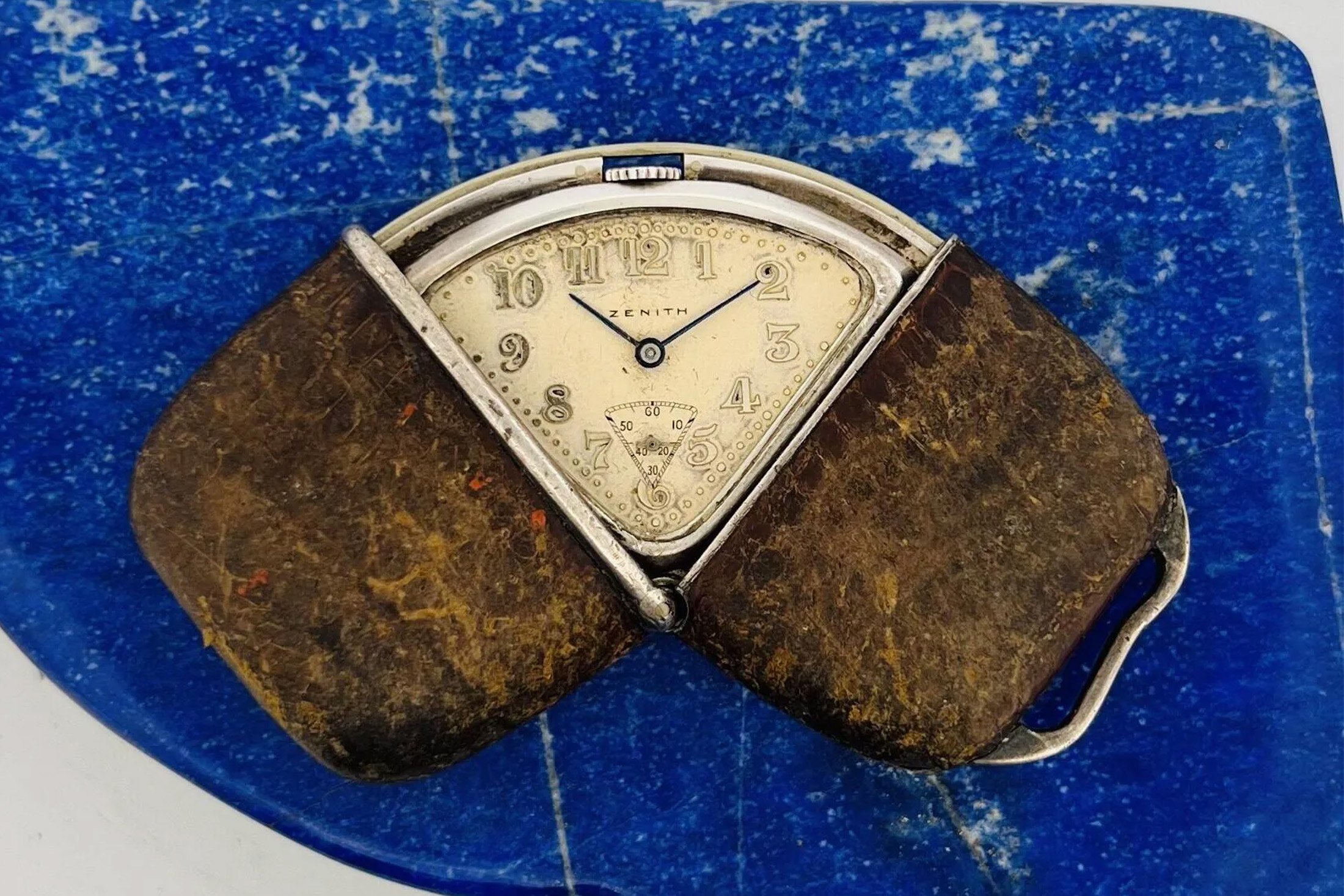
Returning to the primary focus of timepieces, the market offers a diverse array of affordable vintage divers, quirky electronics, and unexpected treasures. Among them is an affordable vintage diver from Invicta—a brand frequently treated as a punchline in modern circles, yet capable of yielding pleasant surprises when looking back at its historical catalog. Alongside space-faring items like Alan Bean’s personal Omega Speedmaster Professional Apollo 11 (BA 145.022-69) and a trio of early electronic Wittnauers that remain strictly for the daring collector given their non-running status, the market features charming finds such as a rose gold Juvenia chronograph and an exceptional Zenith purse watch featuring a triangular steel case. Seiko enthusiasts also have plenty to sift through with a pair of 6139-6002 chronographs, while fans of complex calendar watches are treated to an outrageously clean, rectangular stainless steel Gubelin Ipso-Matic featuring a triple-date and moonphase complication.

A Breguet’s Triple-Date Chronograph With Moon Phase
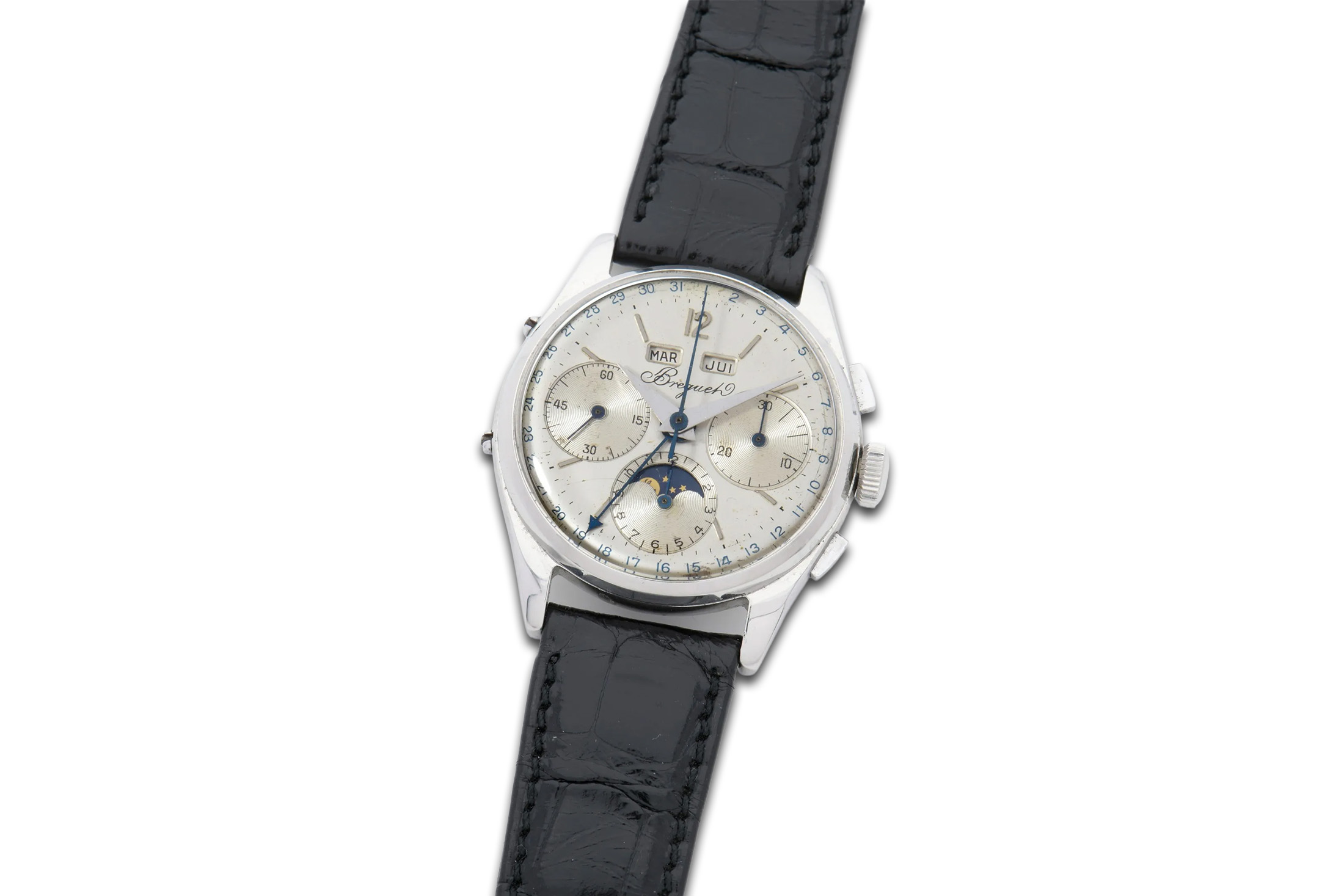
Stainless steel Breguet triple-date chronographs equipped with a moon phase complication are by no means common, though they occasionally surface in elite auction catalogs. Historical market data illustrates their scarcity and value: a similar example offered by Phillips in Geneva back in 2018 achieved CHF 131,250, while Christie’s successfully sold consecutive examples in subsequent years for CHF 300,000 and CHF 176,400 respectively.
What sets the current offering apart from those previous market appearances—aside from the fact that the earlier auction pieces featured somewhat cleaner dials—is an unmatched level of provenance. This specific watch originates directly from the collection of Emmanuel Breguet himself, who serves as the Vice President and Head of Patrimony at Montres Breguet, as well as being a direct relative of the legendary inventor of the tourbillon. In terms of pedigree, it would be difficult to secure a watch with deeper historical significance to the brand.
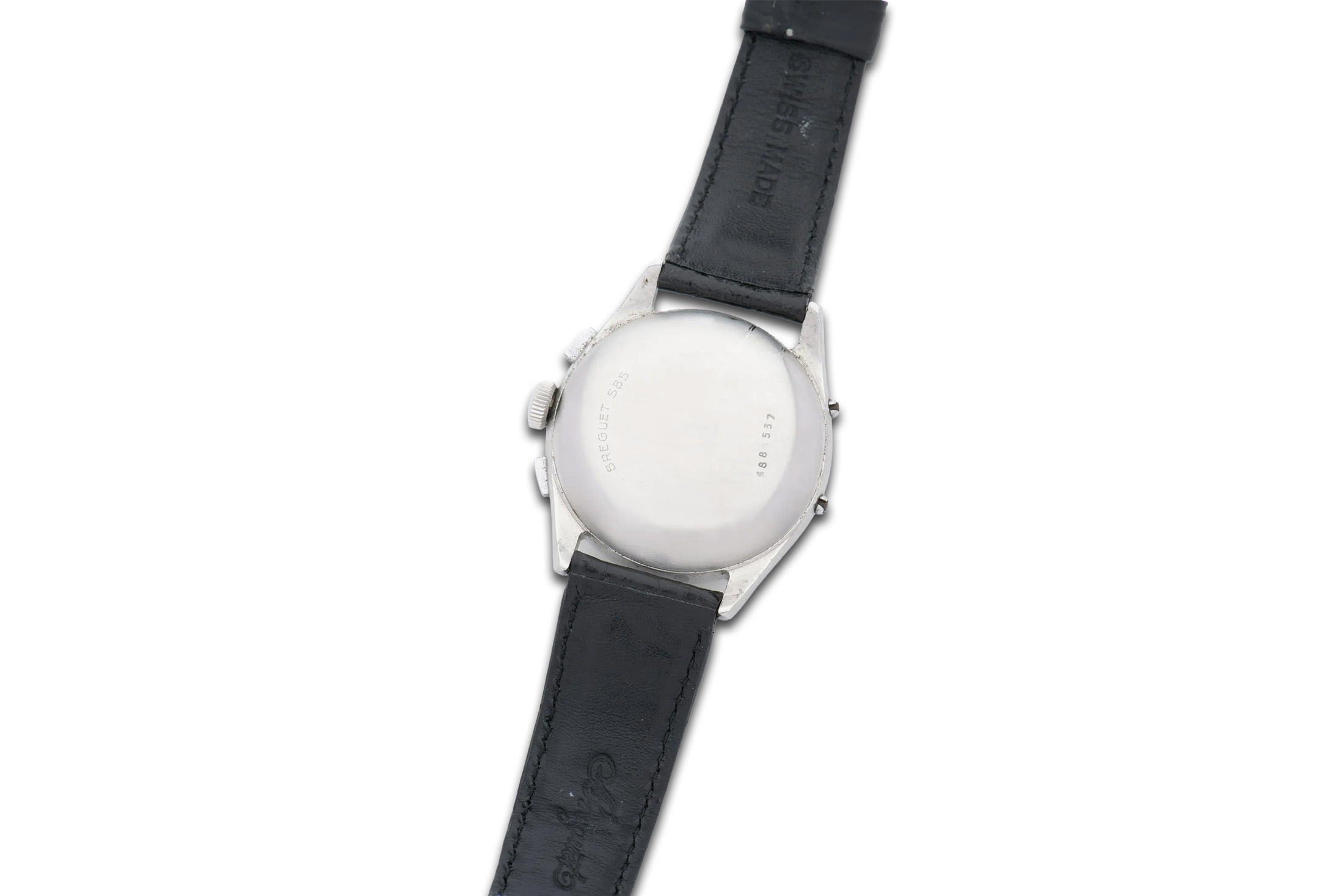
Perfection is rarely the hallmark of deeply historic pieces, and this watch is no exception. The dial exhibits minor flaws that, while not entirely overwhelming, do detract from a pristine, collector-grade condition. Nevertheless, the sheer rarity of the reference combined with its exceptional lineage means that minor cosmetic imperfections are easily forgiven. The case itself presents in fairly good condition, featuring clear engravings on the caseback that underscore its authenticity.
The central question surrounding the piece is how the market will value the unique combination of condition, model scarcity, and direct familial provenance. With an auction estimate set between €80,000 and €160,000, the upcoming sale will provide a definitive answer as to what collectors are willing to pay for a true "Breguet’s Breguet."
LIP ‘Paul Newman’ Chronograph
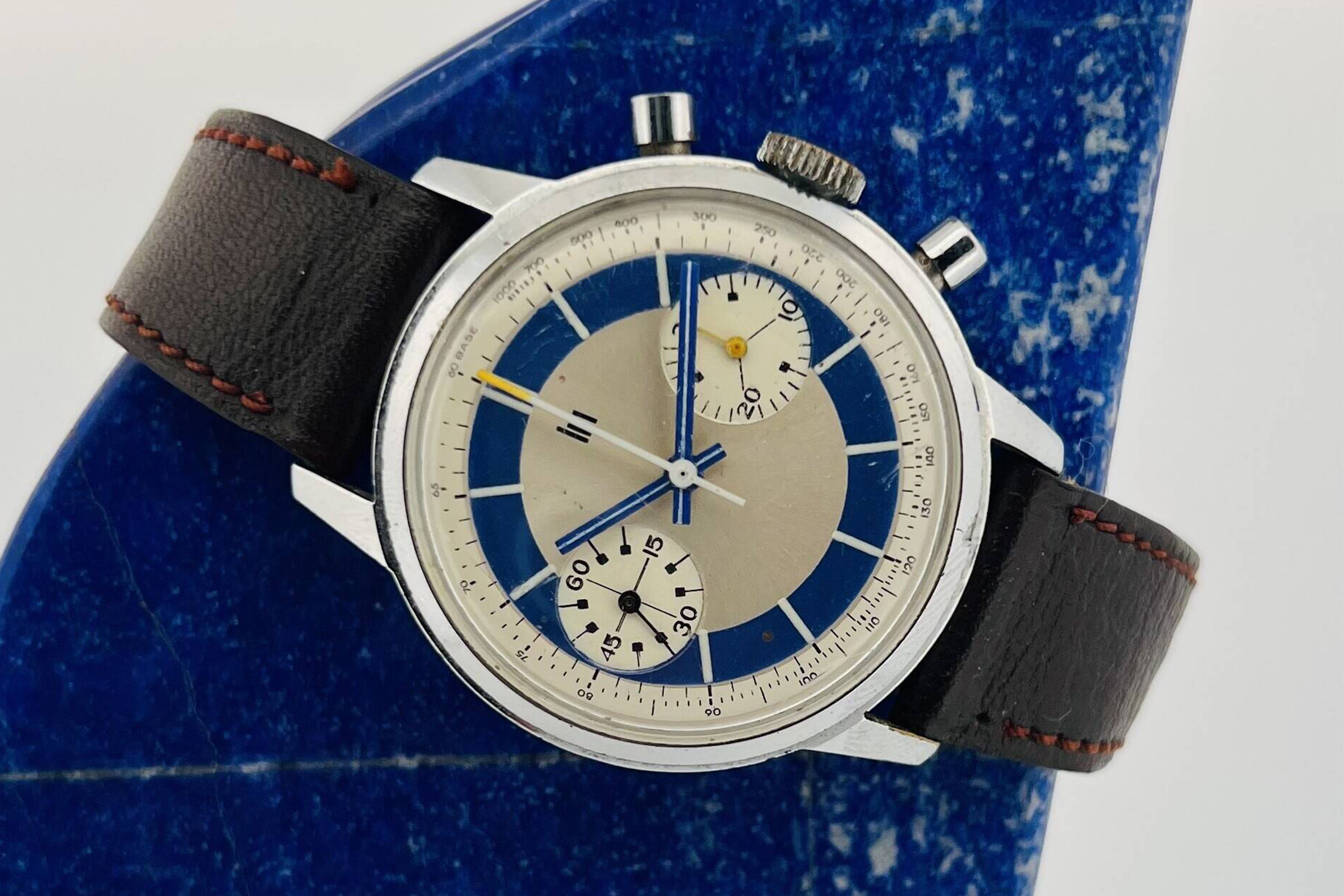
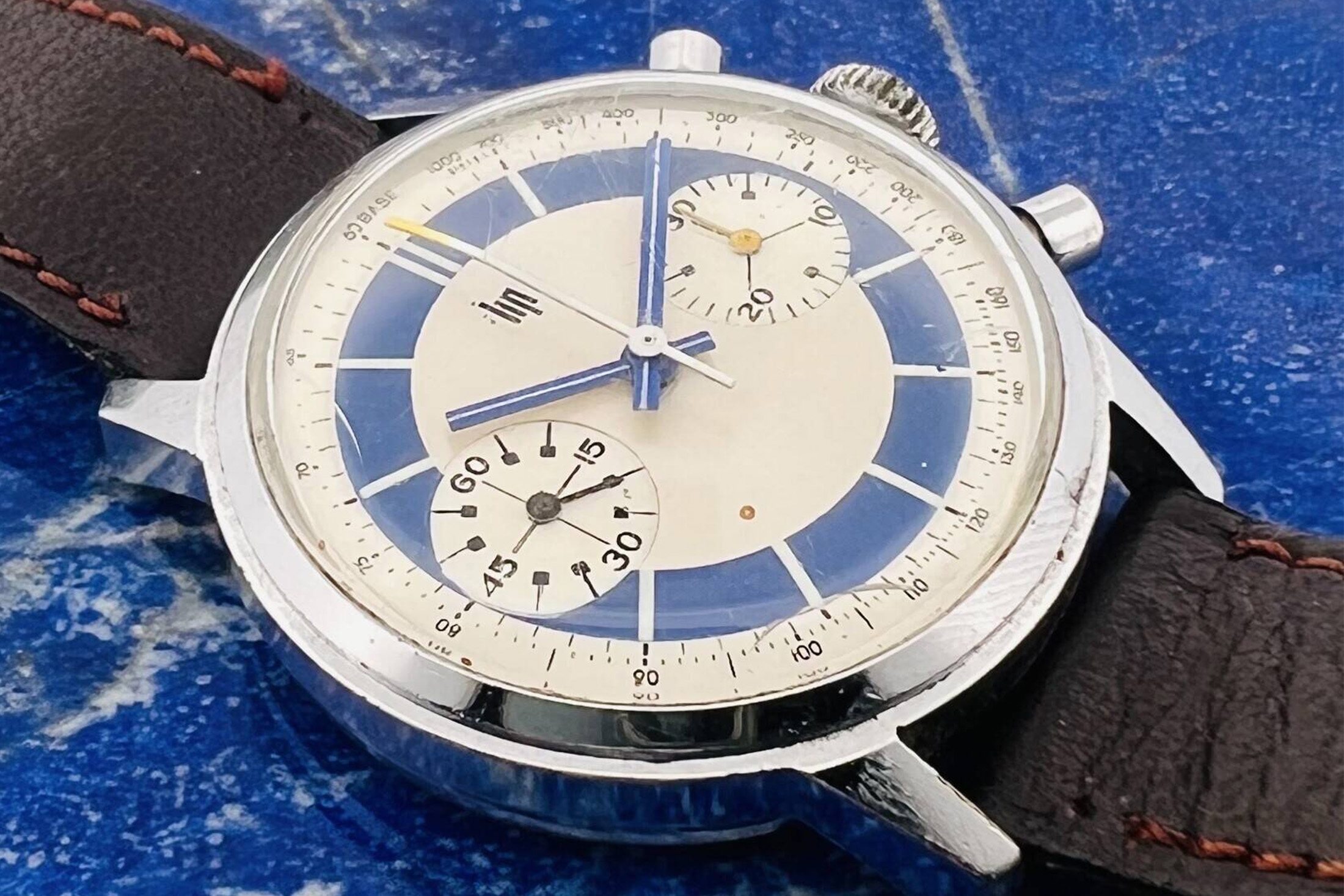
The second notable piece drawing attention is a LIP chronograph featuring the coveted "Paul Newman" style layout. This particular reference has a documented history within vintage watch journalism, having been examined in depth back in 2017. However, studying the specific example currently coming to market reveals subtle complications that do not entirely align with previously recorded benchmarks.
Understanding LIP watches from this era requires acknowledging the existential struggles the French manufacturer faced during the 1970s. During periods of severe financial and operational distress, manufacturers frequently utilized whatever parts were readily available on hand to finish assembling watches, with little thought given to how future collectors would obsess over minor typographical variations, hand configurations, or serial number sequences. Consequently, expecting absolute uniformity across every surviving example of a turbulent era is largely a lost cause, and it is safe to assume this watch was assembled with factory-original parts as circumstances permitted.
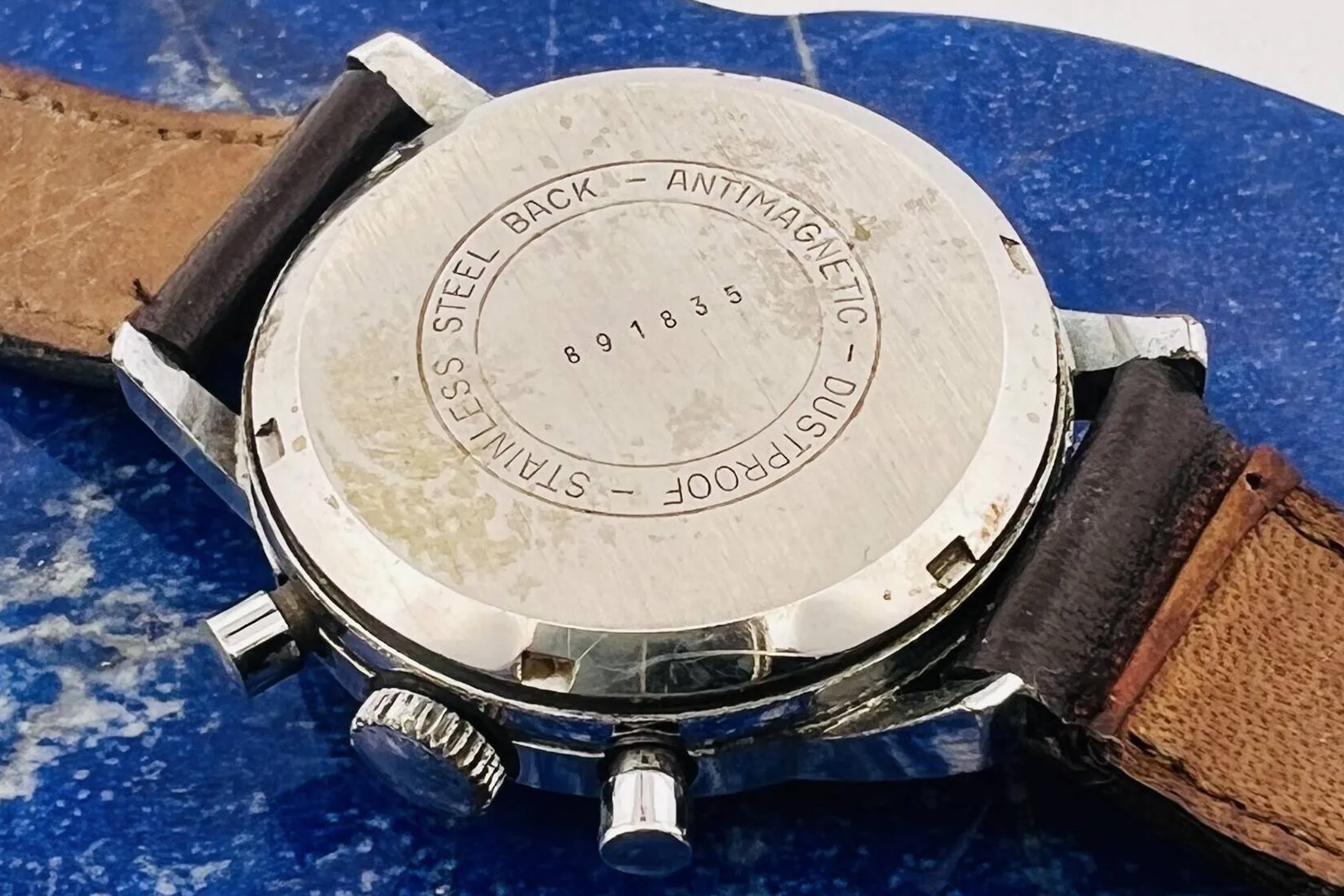
Despite the historical murkiness, the watch possesses undeniable charm. It features a plated 36-millimeter case characterized by sharp, well-defined lugs, though a noticeable ding is present along the bottom of the bezel between the 5 and 6 o’clock positions. The primary focus, however, naturally gravitates toward the dial and handset. Both the running seconds subdial at 9 o’clock and the LIP logo exhibit a slightly smudgy appearance, hinting at a less-than-perfect original overprinting process.
The configuration of the hands has also sparked debate among purists; while the black hand on the running seconds subdial deviates from certain documented iterations, comparable examples with matching hand setups have successfully traded hands in the vintage marketplace. The correct blue hour and minute hands remain intact, while the chronograph seconds and minute hands have faded to a soft, aged orange patina. Powering the watch is a standard Valjoux 7733 movement, which currently requires servicing as the chronograph function is non-functional. Given the ubiquity of the movement, any competent watchmaker should be able to restore it to proper working order without complication. With an aggressive auction estimate ranging from €500 to €800, the watch offers an accessible entry point into quirky 1970s chronographs, sitting alongside other rare offerings from the brand such as the LIP reference 765.
IWC Aquatimer Reference 812
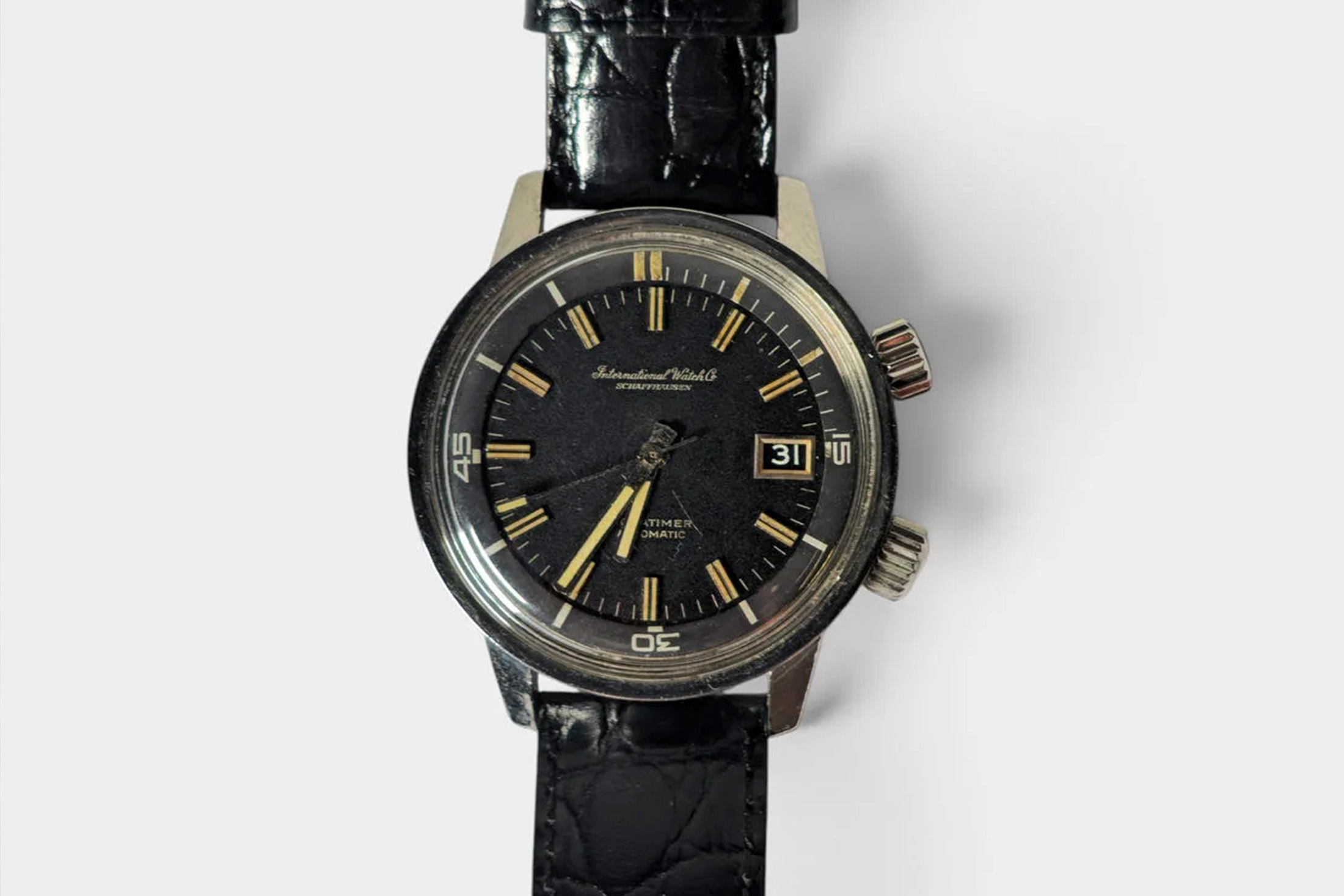
The enduring presence of the Aquatimer in IWC’s contemporary product lineup makes examining the historical roots of the collection a worthwhile endeavor. Beyond its historical importance as the brand’s inaugural dive watch introduced in 1967, the reference 812 stands out primarily for its striking aesthetic execution. As a classic Super Compressor diver utilizing an EPSA-manufactured case from the 1960s, it shares a design language with many of its contemporaries, though few executed the concept with the same level of refinement.
Offering a water resistance rating of 20 atmospheres, the Aquatimer comfortably competed with the leading dive watches of its day. The 37-millimeter stainless steel case exhibits the characteristic stubby profile and short lugs common to compressor-cased watches of the era, yet this particular specimen remains remarkably clean, retaining its original IWC signed crown—a strong indicator that the watch has neither endured a excessively punishing life nor undergone aggressive polishing over the years.
The true highlight of this specific Aquatimer lies in its dial, handset, and internal rotating bezel configuration. While IWC ultimately produced four distinct dial and bezel variations for the reference, the combination featured here represents the earliest and purest expression: a stark black bezel paired with a matching black dial. The tritium lume plots and handset have aged with remarkable consistency, showing virtually no cracking across the heavily filled hands. Furthermore, the distinctive paddle-ended seconds hand ranks easily among the most appealing handset designs found on vintage dive watches.
Underneath the solid caseback sits an IWC caliber 8541, an exceptional automatic movement featuring a Breguet overcoil that was famously shared with the brand’s Ingenieur models of the same period. While the watch lacks its original steel bracelet, its omission may help keep the final acquisition cost slightly more grounded. Estimated between €5,000 and €5,500, the watch represents a compelling piece of late-1960s dive watch history.
Boucheron White Gold Carré
To conclude this week’s survey of the market, attention turns to a true mystery piece from Boucheron. While the jewelry house’s vintage wristwatches have received some scholarly attention in recent years, they remain an understudied segment of the market, making comparative analysis and definitive authentication a genuine challenge. Boucheron watches are, first and foremost, pieces of high jewelry where design and artistic expression take precedence over traditional horological complexity.
This mid-1960s white gold Carré features a striking, stylized hand-painted letter "B" prominently positioned at the exact center of the dial. Encountering such an unusual dial naturally prompts a search for comparable examples to verify authenticity, a process complicated by the scarcity of documentation. While a yellow gold counterpart with a similar dial layout exists within the inventory of the offering dealer, and a solitary white gold reference has surfaced through specialized Japanese vintage dealers, verifying the piece ultimately relied on consulting leading experts and reviewing private collections of similarly signed Boucheron timepieces.
Aesthetic evaluation reveals a genuinely compelling design. Setting aside the prominent central "B," the watch features exquisite applied hour markers, most notably the oversized Roman numeral "XII" at the top of the dial. The case measures a diminutive 24 by 28 millimeters, yet it is crafted from solid white gold, remains unpolished, and retains crisp caseback engravings. True to the mechanical identity of Boucheron’s iconic Reflet models of the period, the Carré utilizes a sliding rail mechanism for strap interchangeability, allowing the strap to be removed via bars that slide out from the top and bottom of the case.
Offered by High End Time with an asking price of $9,150, the watch serves as an ideal acquisition for collectors seeking a rare conversation piece—an exquisite, highly refined jewelry watch with a distinct handcrafted character that remains virtually guaranteed not to be seen on any other wrist.